
The Top 10 Best Hedging Plants Australia Has to Offer in 2026

A well-chosen hedge is more than just a boundary; it’s a living wall that offers privacy, defines garden rooms, and creates a lush, stylish backdrop for your home. It acts as a natural windbreak, a sound buffer, and a vital habitat for local birdlife. But with Australia's diverse climates, from Perth's Mediterranean warmth to Tasmania's cool temperament, selecting the right plant is crucial for success. Choosing incorrectly can lead to a sparse, unhealthy screen that requires constant, costly intervention.
Forget generic advice that doesn't account for our unique conditions. This definitive guide dives deep into the best hedging plants Australia has to offer, balancing fashionable aesthetics with practical, region-specific insights. We'll explore everything from fast-growing privacy screens that establish in record time to elegant, slow-growing formal borders that exude timeless charm. You will learn not just what to plant, but how to plant, space, prune, and maintain it for optimal health and structure.
Whether you're aiming for a dense, water-wise native masterpiece or a classic European-style enclosure, this roundup provides the actionable detail you need. When designing your green sanctuary, it's also wise to consider plants that thrive with less water, which is a key factor in many Australian gardens. For an extensive list of resilient options, explore these top drought-tolerant plants for gardens. Our focus here is on creating green architecture that is both beautiful and resilient, transforming your garden boundary from a simple line on a plan into a thriving, statement feature.
1. Photinia Red Tip (Photinia × fraseri)
A standout choice for Australian gardens, the Photinia Red Tip is a fast-growing evergreen celebrated for its spectacular display of colour. Its most defining feature is the brilliant, crimson-red new foliage that emerges in spring and after each pruning, creating a stunning two-toned effect against the mature, glossy deep-green leaves. This vibrant contrast makes it one of the best hedging plants in Australia for adding visual interest and structure to any landscape.
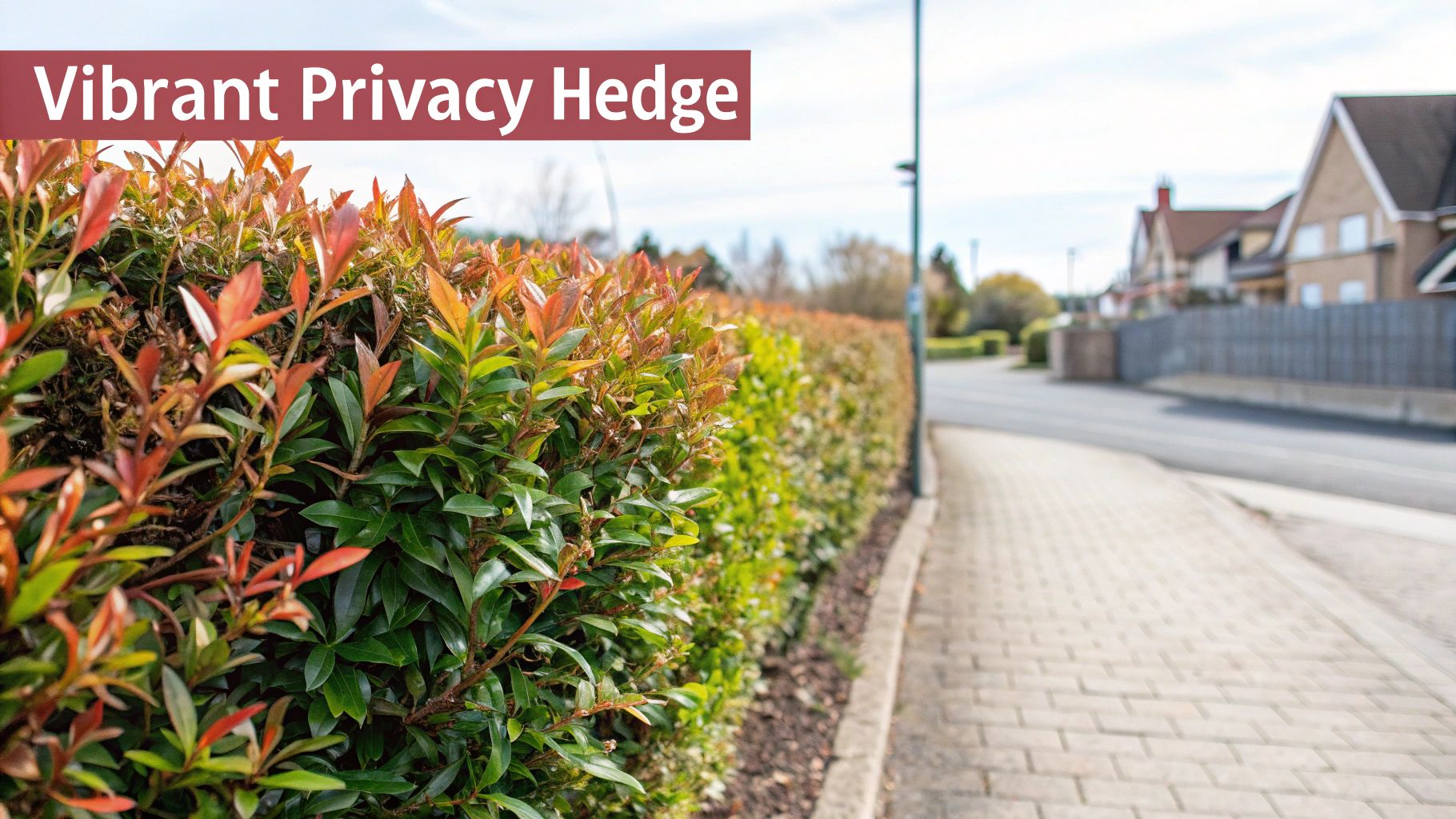
This hardy shrub is exceptionally versatile, making it ideal for creating dense privacy screens, formal clipped hedges, or even informal garden borders. A practical example is using it along a driveway to create an instant 'living fence' that screens out road noise and provides a grand entrance. Fashionably, its vibrant red tips are often used to add a pop of colour against minimalist, modern architecture, breaking up monochrome walls with a splash of natural energy. Its rapid growth rate means it can establish a substantial screen within just a few seasons.
Key Details & Maintenance
Ideal Uses: Perfect for fast-growing privacy screens, formal hedges, and windbreaks.
Climate & Soil: Thrives in full sun to partial shade and adapts to a wide range of well-draining soils. In Perth's sandy soils, it's crucial to amend the soil with organic compost to improve water retention and nutrient levels.
Growth Rate: Fast. Expect up to 60cm of growth per year, reaching a mature height of 3-5 metres if left unpruned.
Planting & Spacing: For a dense hedge, space individual plants approximately 1-1.5 metres apart.
Watering Needs: Requires regular watering during its first 12-18 months to establish a deep root system. Once mature, it is moderately drought-tolerant but performs best with occasional deep watering during extended dry spells.
Pruning & Care: Prune in late spring and late summer to encourage new flushes of red growth and maintain a compact shape. Knowing the right time to trim is key for a healthy, vibrant hedge. For tailored advice, especially for those in Western Australia, it's helpful to understand the nuances of when to prune hedges for a perfect Perth garden. A quarterly application of a balanced, slow-release fertiliser during the growing season will ensure vigorous growth.
Maintaining the crisp, formal look of a Photinia hedge requires skill and the right equipment. For a professional finish that enhances your property's kerb appeal, contact the experts at Swift Trees Perth for all your hedge trimming and maintenance needs.
2. Privet (Ligustrum sinense & Ligustrum ovalifolium)
A timeless classic in Australian landscaping, Privet has been a go-to hedging plant for over a century due to its incredible hardiness, dense foliage, and adaptability. It's a semi-evergreen to deciduous shrub, depending on the variety and climate, known for its small, fragrant white flowers in spring followed by dark berries. This traditional choice offers an affordable and reliable solution for creating beautifully structured garden boundaries.
This plant's resilience makes it a familiar sight in various Australian settings. A practical use is on large suburban blocks where an affordable, fast-growing boundary is needed to define the property line quickly. Its dense growth habit provides excellent privacy and a lush green backdrop, making it one of the most dependable and best hedging plants in Australia for both aesthetic and functional purposes. However, it's vital to check local council regulations before planting, as some species are considered invasive in certain areas.
Key Details & Maintenance
Ideal Uses: Excellent for formal clipped hedges, privacy screens, and defining property boundaries.
Climate & Soil: Exceptionally adaptable, tolerating a wide range of conditions from full sun to partial shade. It thrives in most soil types, provided they are well-draining. In Perth's sandy soils, adding organic matter will help it establish more successfully.
Growth Rate: Fast. Can grow over 60cm per year, reaching 3-4 metres in height if left to grow naturally.
Planting & Spacing: For a thick, impenetrable hedge, space plants 60-90cm apart. Planting in autumn is recommended to allow the root system to establish over the cooler, wetter months.
Watering Needs: Water regularly during the first year. Once established, Privet is remarkably drought-tolerant, requiring minimal supplementary watering except during prolonged periods of heat and drought.
Pruning & Care: Responds extremely well to regular trimming. Prune 2-3 times during the main growing season (spring and summer) to maintain a sharp, formal shape and encourage dense, bushy growth. It requires very little fertiliser to perform well.
Crafting a perfectly manicured Privet hedge that enhances your home's classic appeal takes precision. For expert hedge trimming that guarantees a clean, professional look, trust the team at Swift Trees Perth to handle all your garden maintenance needs.
3. Buxus (Box Hedge) - Native and Imported Varieties
The quintessential choice for classic, formal gardens, Buxus is revered for its dense, fine-leaved foliage and slow-growing nature. This evergreen shrub, commonly known as Box Hedge, is the ultimate plant for creating perfectly manicured low borders, intricate parterre gardens, and elegant topiary. Its ability to be clipped into precise, sharp lines makes it one of the best hedging plants in Australia for defining garden beds and creating timeless structure.
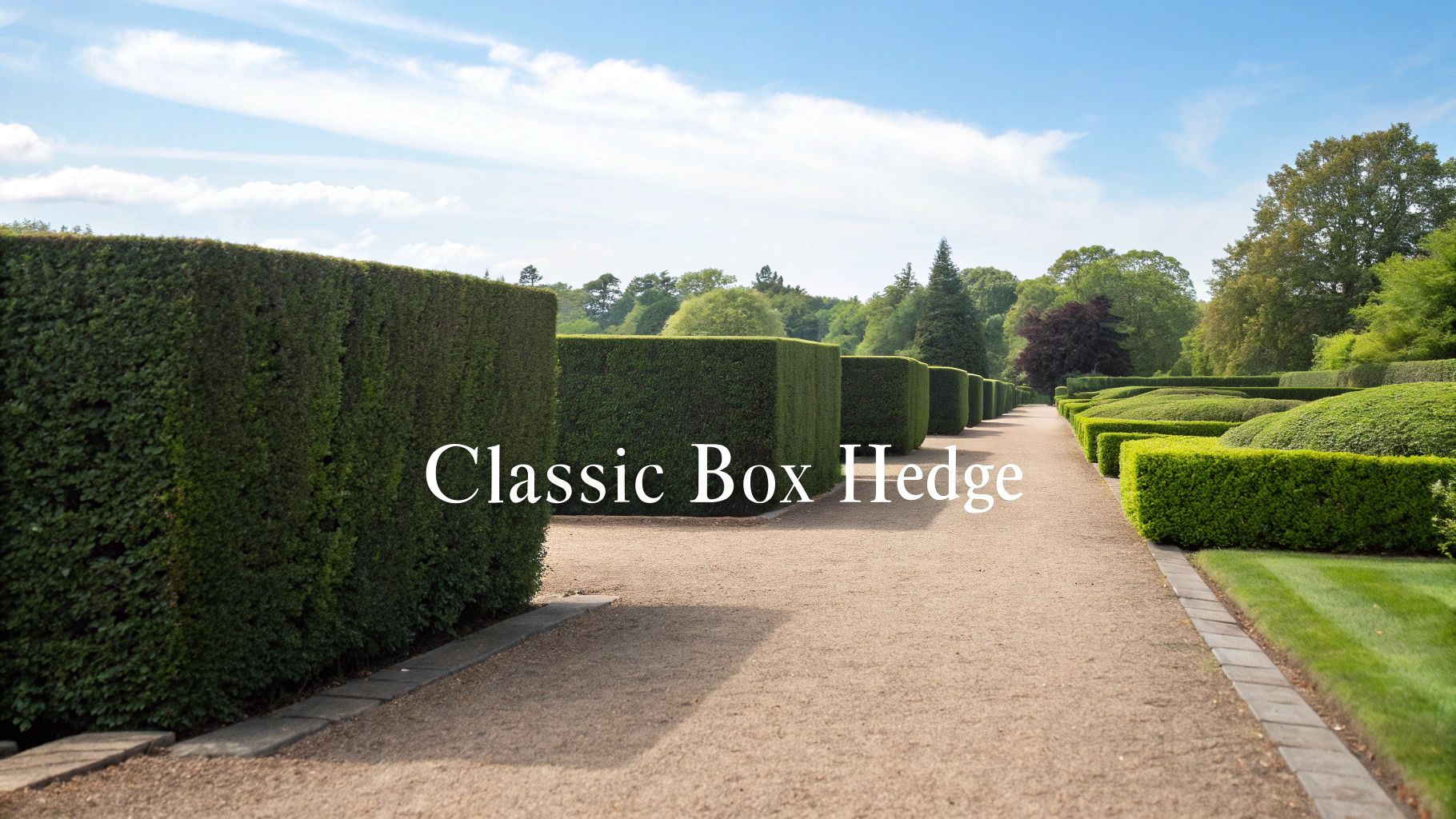
From the heritage properties throughout Adelaide's established suburbs to high-end Sydney gardens with European influences, Buxus provides a touch of sophistication that few other plants can match. A very fashionable application is using low Buxus hedging to create 'green trim' around formal rose beds or along the edges of a crisp white paved patio, providing a sharp, architectural contrast. While slower to establish than other options, its longevity and classic appeal are undeniable. Common varieties include the traditional English Box (Buxus sempervirens) for cooler climates and the more heat-tolerant Japanese Box (Buxus microphylla) for warmer regions.
Key Details & Maintenance
Ideal Uses: Perfect for low formal hedges, garden edging, parterres, and topiary.
Climate & Soil: Prefers well-draining soil and benefits from afternoon shade in hot climates to prevent leaf scorch. In Perth's hot summers, planting on the south or east side of a building is ideal.
Growth Rate: Slow. Typically grows 5-15cm per year, reaching a mature height of 1-2 metres but is usually kept much lower.
Planting & Spacing: For a dense, gap-free hedge, space plants 30-60cm apart depending on the variety and desired speed of establishment.
Watering Needs: Requires consistent moisture, especially during establishment. Avoid overhead watering to minimise the risk of fungal diseases like buxus blight. A drip irrigation system is highly recommended.
Pruning & Care: Prune once or twice a year in late spring or early summer to maintain its shape. Monitor for signs of buxus blight and remove any affected branches immediately. For a detailed guide on achieving a perfect cut, explore our advice on how to prune hedges in Perth. Apply a specialised slow-release fertiliser in spring.
The precision required to shape a perfect Buxus hedge demands expertise. To achieve that flawless, formal look that elevates your property's entire aesthetic, contact the professionals at Swift Trees Perth for expert hedge trimming services.
4. Hawthorn (Crataegus monogyna)
For a classic, impenetrable boundary with a touch of old-world charm, Hawthorn is an outstanding choice. This traditional deciduous hedging plant is highly valued for its dense, thorny structure, making it one of the best hedging plants in Australia for security and creating wildlife-friendly habitats. Its seasonal interest is a major drawcard, beginning with a profusion of delicate white or pink flowers in spring, followed by lush green foliage, and finishing with vibrant red berries (haws) in autumn that attract native birds.
The sharp spines and interwoven branches create a formidable natural barrier, ideal for defining property lines and deterring unwanted visitors. A practical example is its use on rural properties to create a stock-proof fence that is both functional and beautiful. It is particularly popular in cooler Australian climates, often seen forming the boundaries of traditional English-style gardens in Tasmania, marking out rural farm perimeters in southern Victoria, and gracing heritage properties across the Adelaide Hills. Its hardiness and tolerance for exposed sites make it a practical and beautiful choice for both form and function.
Key Details & Maintenance
Ideal Uses: Perfect for creating stock-proof, secure boundary hedges, windbreaks, and informal country-style garden screens.
Climate & Soil: Thrives in cooler, temperate climates. It tolerates a wide range of conditions, including poor soil and windy, exposed sites, but performs best in well-drained soil with full sun.
Growth Rate: Moderate. Can grow up to 40-60cm per year and will reach a height of 4-8 metres if left unpruned, but is easily maintained at a lower height.
Planting & Spacing: For a thick, impenetrable hedge, plant in a staggered double row with individual plants spaced approximately 60-90cm apart. Autumn is the ideal planting time in cooler regions.
Watering Needs: Requires consistent watering during its first couple of years to establish. Once mature, it is remarkably tough and requires minimal supplemental watering except in prolonged drought.
Pruning & Care: Prune after flowering or in late winter to maintain its shape and density. Minimal input is required once established, but an annual trim will keep it looking tidy and encourage dense growth. Its thorny nature means protective gear is essential during maintenance.
Managing the sharp spines and structure of a Hawthorn hedge requires experience and the right safety equipment. To ensure your boundary hedge is secure, healthy, and beautifully shaped, trust the professionals at Swift Trees Perth for expert trimming services.
5. Westringia (Australian Rosemary)
Embracing the rugged beauty of the Australian landscape, Westringia, or Australian Rosemary, is a superb native choice for a resilient, low-maintenance hedge. Celebrated for its fine, grey-green aromatic foliage and delicate white, mauve, or blue flowers that appear throughout most of the year, it offers a softer, more naturalistic aesthetic than traditional formal hedges. Its incredible hardiness makes it one of the best hedging plants in Australia for challenging conditions, particularly in coastal and drought-prone areas.
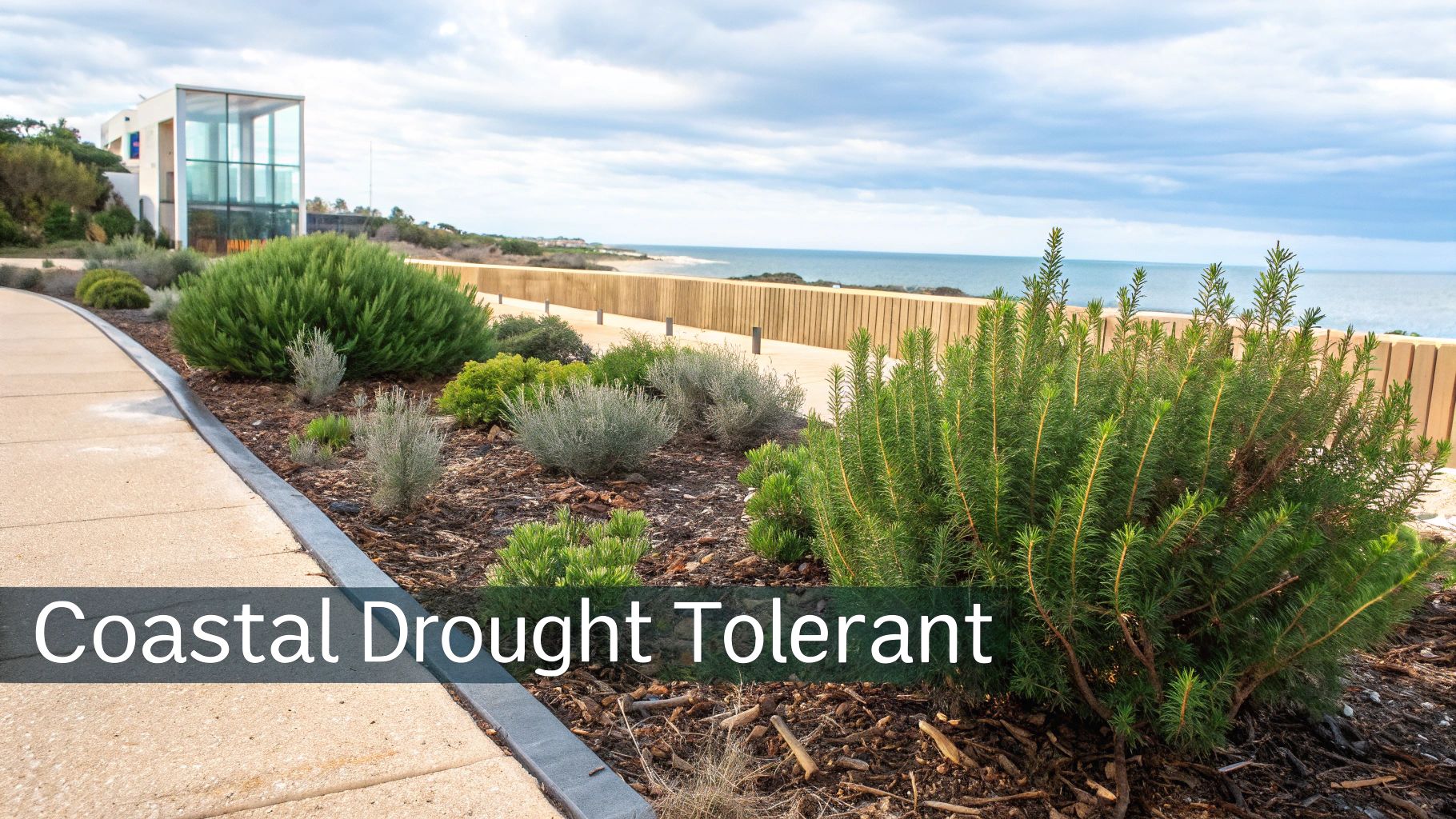
This versatile native is a favourite for creating everything from neat, low borders to informal medium-sized screens. It is a fashionable choice for modern garden designs, where its soft, silvery foliage provides a stunning textural contrast against dark-coloured fences or the sharp lines of a contemporary home. You'll see it thriving as a windbreak hedge in coastal Tasmanian gardens, used extensively in water-wise Western Australian landscapes, and featured in xeriscaping projects across the Adelaide Hills. Its tolerance for salt spray and dry spells makes it a reliable performer that brings texture and colour to the garden with minimal fuss.
Key Details & Maintenance
Ideal Uses: Excellent for low to medium informal hedges, coastal gardens, native-themed landscapes, and poolside planting.
Climate & Soil: Prefers full sun for best flowering but tolerates part shade. Exceptionally adaptable, it thrives in poor, sandy, or clay soils, provided they are well-draining. It is a fantastic choice for Perth's sandy coastal plains.
Growth Rate: Moderate. Typically grows 30-50cm per year, with various cultivars reaching heights from 1 to 2 metres.
Planting & Spacing: For a continuous hedge, space plants approximately 1-1.2 metres apart.
Watering Needs: Requires watering during its establishment phase but is extremely drought-tolerant once mature. Avoid overwatering and waterlogged conditions, as it is susceptible to root rot.
Pruning & Care: Responds well to light, frequent pruning to maintain a dense, compact shape. A couple of light trims per year are far better than one hard prune. Westringia is a champion of low-maintenance gardening and is a key feature in many modern garden designs for Perth. It generally requires no supplementary fertiliser once established.
Keeping a Westringia hedge looking its best involves skilful shaping to enhance its natural form. For expert trimming that respects the plant's growth habits and boosts your property's appeal, contact the professionals at Swift Trees Perth.
6. Laurus nobilis (Bay Laurel)
An elegant and aromatic choice, the Bay Laurel brings a touch of Mediterranean sophistication to Australian gardens. Celebrated for its dense, glossy dark green leaves, this evergreen shrub is as practical as it is beautiful, with its aromatic foliage being a staple in culinary kitchens. Its naturally compact and symmetrical growth habit makes it an outstanding candidate for formal hedging, providing structure and a classic aesthetic year-round.
This versatile plant is perfect for creating refined privacy screens, defining garden rooms, or as a stately topiary specimen. A practical and stylish application is using it to frame an outdoor kitchen or BBQ area, keeping fresh bay leaves within arm's reach for cooking. You'll find it thriving in the Mediterranean-style gardens of Adelaide and Perth, bringing formal elegance to temperate Sydney suburbs, and adding lush greenery to sheltered Brisbane courtyards. Its moderate growth rate makes it a more manageable option than some faster-growing alternatives.
Key Details & Maintenance
Ideal Uses: Perfect for formal clipped hedges, privacy screens, topiary, and container planting. Its aromatic leaves are a bonus for the home chef.
Climate & Soil: Prefers full sun to partial shade and requires well-draining soil to prevent root rot. It is particularly well-suited to Perth's climate, provided the sandy soil is enriched with organic matter to improve structure and water retention.
Growth Rate: Moderate. It typically grows around 30-40cm per year, reaching a mature height of 2-4 metres when maintained as a hedge.
Planting & Spacing: For a dense formal hedge, plant individual shrubs approximately 1-1.2 metres apart.
Watering Needs: Water regularly while establishing. Once mature, it is quite drought-tolerant but will benefit from deep watering during prolonged hot and dry periods, especially in summer.
Pruning & Care: Prune in late spring or early summer after the main growth flush to maintain its shape and density. Avoid pruning too late in autumn, as new growth may be damaged by frost. A balanced, slow-release fertiliser applied in spring will support healthy foliage.
Achieving the sharp, clean lines of a formal Bay Laurel hedge requires precision and expertise. To ensure your hedge is a magnificent feature of your property, trust the professionals at Swift Trees Perth for expert trimming and ongoing care.
7. Ilex (Holly) - Aquifolium and Crenata Varieties
With its distinctive spiky, glossy foliage and vibrant red berries, Ilex, or Holly, is a timeless and traditional choice for creating formal, structured hedges. It offers a classic, elegant appearance that brings a touch of European sophistication to Australian gardens. The deep green leaves provide a dense, year-round screen, while the bright red berries on female plants (when pollinated) add spectacular seasonal colour through autumn and winter.
This evergreen shrub is particularly prized for its ability to be tightly clipped into sharp, architectural forms, making it one of the best hedging plants in Australia for formal designs. A practical example is using it as a strong, defensive hedge along a vulnerable property boundary, where its spiky leaves deter intruders. You'll often see it defining the boundaries of heritage gardens in Melbourne, creating stately formal estates in the cooler climate of Tasmania, or adding a touch of class to high-end properties in Sydney and Adelaide. Its shade tolerance also makes it a valuable option for areas where other hedging plants might struggle.
Key Details & Maintenance
Ideal Uses: Excellent for formal hedges, security barriers (due to spiky leaves), and adding traditional structure.
Climate & Soil: Prefers cool, temperate regions and performs best with afternoon shade. It thrives in acidic, moist, well-draining soil. In Perth's alkaline soils, amending with acidic compost and soil conditioners is essential for healthy growth.
Growth Rate: Slow to moderate. It will form a dense hedge over time but requires patience. Ilex crenata (Japanese Holly) is often a faster-growing alternative to Ilex aquifolium (English Holly).
Planting & Spacing: For a tight, formal hedge, space plants 60-90cm apart. To ensure berry production, plant at least one male variety for every three to five female plants.
Watering Needs: Requires consistent moisture, especially during establishment and in warmer months. It does not tolerate waterlogged conditions, so good drainage is crucial.
Pruning & Care: Prune in late spring after the last frost to maintain its shape. Always wear gloves, as the leaves can be very sharp. Holly requires minimal fertiliser; a light application of a slow-release azalea or camellia food in spring is sufficient. Avoid overfeeding, as this can reduce berry production.
Crafting a perfect Holly hedge demands precision and a careful hand. For expert shaping and maintenance that brings out the best in this classic plant, trust the professionals at Swift Trees Perth to handle all your hedge trimming needs.
8. Elaeagnus (Silverberry/Oleaster)
For gardeners facing challenging conditions, Elaeagnus, also known as Silverberry or Oleaster, is a remarkably tough and reliable choice. This fast-growing evergreen shrub is highly valued for its beautiful silvery or variegated foliage that shimmers in the sunlight, creating a unique, light-reflecting hedge. Beyond its appearance, its true strength lies in its incredible resilience, making it one of the best hedging plants in Australia for difficult coastal or dry inland locations where other plants might struggle.
The adaptability of Elaeagnus is its standout feature. It excels in creating dense windbreaks and privacy screens in coastal areas like those found along the New South Wales and Western Australian coastlines, as it tolerates salt spray and strong winds with ease. A highly practical use is for screening unsightly features like water tanks or sheds on rural properties where irrigation is limited. Its silvery foliage is a fashionable choice for 'moon gardens', where the light-reflecting leaves create a beautiful glow in the evening.
Key Details & Maintenance
Ideal Uses: Excellent for fast-growing privacy screens, hardy windbreaks, and hedging in challenging coastal or dry environments.
Climate & Soil: Thrives in full sun, which enhances its foliage colour. It is exceptionally tolerant of a wide range of soils, including poor, sandy, or clay types, and is well-suited to coastal conditions.
Growth Rate: Fast. Can grow over 60cm per year, reaching a mature height of 2-4 metres if left unpruned.
Planting & Spacing: For a dense hedge, space plants 1-1.2 metres apart. Ensure the planting hole is twice the width of the pot to encourage root establishment.
Watering Needs: Requires watering during its initial establishment phase but is extremely drought-tolerant once mature, needing minimal supplementary water.
Pruning & Care: Prune once or twice a year in late winter or early summer to maintain a neat shape and encourage dense growth. It requires very little feeding; avoid fertilising in poor soil as this can lead to leggy growth rather than a bushy habit. Note: Some Elaeagnus varieties can be invasive in certain regions, so it's wise to check with your local council before planting.
Crafting a perfectly shaped hedge from a fast-growing plant like Elaeagnus requires precision and experience. To ensure your hedge is an asset to your property, contact the professionals at Swift Trees Perth for expert hedge trimming and maintenance services.
9. Duranta (Golden Dewdrop/Pigeon Berry)
For gardens in Australia's warmer climates, Duranta is an exceptional choice, offering a vibrant, multi-seasonal display. This evergreen shrub, also known as Golden Dewdrop, is prized for its fine, bright green foliage that creates a lush backdrop for its stunning cascades of purple-blue flowers. These delicate blossoms are followed by chains of ornamental, golden-yellow berries, providing continuous colour and interest throughout the year.
Duranta is particularly suited to creating ornamental hedges that are both beautiful and functional. A fashionable trend is to use the variegated variety, 'Geisha Girl', as a vibrant feature hedge around a pool area, where its bright foliage and purple flowers create a stunning tropical resort feel. It's a popular sight in Brisbane’s tropical gardens and adds a splash of colour to coastal gardens along Sydney's northern beaches. Its dense growth habit makes it an effective screen, while its weeping flowers and bright berries add a soft, decorative touch that few other hedging plants can match.
Key Details & Maintenance
Ideal Uses: Perfect for ornamental hedges, colourful screening, living fences, and feature plants in tropical or subtropical gardens.
Climate & Soil: Thrives in warm, frost-free climates (zones 9-11) and prefers full sun to partial shade. It adapts well to most soil types, provided they are well-draining. For Perth's sandy soils, enriching the planting area with organic matter is essential for moisture retention.
Growth Rate: Fast. Can grow up to 60cm per year, reaching a mature height of 2-4 metres.
Planting & Spacing: For a continuous hedge, space plants approximately 1-1.2 metres apart.
Watering Needs: Requires consistent moisture, especially during its establishment phase and the main growing season. While it can handle brief dry periods once mature, regular watering will ensure the best foliage and flower production.
Pruning & Care: Prune after flowering has finished to maintain a tidy shape and encourage dense growth. Be aware that the leaves and berries are toxic if ingested, so it's best to handle them with care and consider placement if you have pets or small children. A monthly feed with a balanced fertiliser during the growing season will promote vigorous health and abundant flowering.
Keeping a fast-growing, ornamental hedge like Duranta perfectly shaped requires regular, skilled trimming. To ensure your hedge remains a stunning feature, contact the professionals at Swift Trees Perth for expert trimming and maintenance services.
10. Murraya paniculata (Orange Jasmine/Mock Orange)
A treasure for warmer climates, Murraya paniculata, commonly known as Orange Jasmine or Mock Orange, is a sensory delight. This lush, evergreen shrub is prized for its glossy, dark green compound leaves and dense growth habit. Its crowning glory, however, is the profusion of intensely fragrant, creamy-white flowers that bloom intermittently throughout the year, filling the air with a sweet, citrus-like perfume. These blooms are followed by small, ornamental red berries, adding another layer of visual appeal.
This plant’s dense foliage and attractive form make it one of the best hedging plants in Australia for creating elegant and fragrant privacy screens in tropical and subtropical regions. A practical example is planting it around an outdoor entertaining area or patio, where its beautiful fragrance can be enjoyed during evenings. It's a common sight enhancing high-end resorts in Cairns and Far North Queensland, providing privacy for coastal properties in Brisbane, and adding a touch of the tropics to gardens in northern NSW. Its refined appearance makes it equally suitable for formal clipped hedges or more relaxed, informal screens.
Key Details & Maintenance
Ideal Uses: Perfect for fragrant ornamental hedges, dense privacy screens, and formal garden borders in warm, frost-free areas.
Climate & Soil: Thrives in full sun to partial shade in warm, humid climates. Prefers rich, well-draining soil. In Perth's coastal suburbs, amending sandy soil with significant amounts of organic matter is vital for its success.
Growth Rate: Moderate to fast. Can grow up to 50cm per year, reaching a mature height of 3-4 metres if left unpruned.
Planting & Spacing: For a thick, seamless hedge, space plants approximately 1-1.2 metres apart.
Watering Needs: Requires consistent moisture, especially during establishment and hot, dry periods. While established plants have some drought tolerance, regular watering ensures lush growth and prolific flowering.
Pruning & Care: Responds exceptionally well to pruning. Trim after a major flowering flush to encourage bushy growth and maintain the desired shape. A light, regular trim is better than an infrequent hard prune. Be mindful of spider mites in hot, dry conditions. A quarterly feed with a balanced, slow-release fertiliser during the growing season will promote healthy foliage and abundant flowers.
Crafting a perfectly manicured Murraya hedge that remains dense and healthy requires precise trimming techniques. To ensure your fragrant screen is a stunning feature, contact the experienced team at Swift Trees Perth for professional hedge shaping and maintenance.
Top 10 Australian Hedging Plants Comparison
Plant | Implementation Complexity 🔄 | Resource Requirements ⚡ | Expected Outcomes ⭐ 📊 | Ideal Use Cases | Key Advantages 💡 |
|---|---|---|---|---|---|
Photinia Red Tip (Photinia × fraseri) | Medium (regular pruning to avoid legginess) 🔄 | Moderate — regular water first year; space 1–1.5m ⚡ | High screening & visual impact ⭐⭐⭐ 📊 Dense evergreen 2–4m | Privacy screens, formal hedges in temperate/subtropical gardens | Striking red new growth; tolerates varied soils; prune in late spring 💡 |
Privet (Ligustrum spp.) | Low (easy to establish; frequent shaping) 🔄 | Low — minimal water once established; space 60–90cm ⚡ | Reliable all-purpose hedge ⭐⭐ 📊 Affordable, adaptable 2–4m | Budget hedging, cottage/suburban borders, large runs | Very hardy and cheap; responds well to pruning; check local invasiveness 💡 |
Buxus (Box Hedge) | High (precision pruning/topiary skill; slow progress) 🔄 | High — costly to establish; well-drained soil; patient ⚡ | Excellent formal, long-lived results ⭐⭐⭐ 📊 Precise geometric hedges | Formal gardens, topiary, heritage properties | Timeless formal look and longevity; monitor for blight; prune sparingly 💡 |
Hawthorn (Crataegus monogyna) | Medium (thorn handling; prune after flowering) 🔄 | Low–Moderate — tolerant once established; space 60–90cm ⚡ | Security barrier & wildlife habitat ⭐⭐ 📊 Dense, thorny boundary 2–5m | Rural boundaries, security hedges, cool-climate sites | Effective security hedge with seasonal flowers/berries; hardy in cool zones 💡 |
Westringia (Australian Rosemary) | Low (low-maintenance; occasional shaping) 🔄 | Low — drought/tolerant; space 1–1.2m ⚡ | Good coastal/dry performance ⭐⭐ 📊 Informal, pollinator-friendly hedges | Coastal, water-wise and modern gardens | Native, drought and salt tolerant; prune lightly to avoid woodiness 💡 |
Laurus nobilis (Bay Laurel) | Medium (regular pruning; protect from cold) 🔄 | Moderate — well-draining soil; space 1–1.2m ⚡ | Aromatic, dense evergreen hedge ⭐⭐ 📊 Formal/culinary hedging 2–4m | Mediterranean-style gardens, edible/formal hedges | Culinary leaves and attractive form; prefer sheltered sites, avoid severe frost 💡 |
Ilex (Holly) | High (slow growth, needs male/female selection; careful pruning) 🔄 | Moderate–High — slow to establish; gloves advised ⚡ | Striking year‑round appearance with berries ⭐⭐⭐ 📊 Dense formal privacy 2–3m | Formal hedges in cool temperate gardens, festive seasonal interest | Evergreen with red berries (female plants); very hardy but slow-growing 💡 |
Elaeagnus (Silverberry) | Low (fast, tolerant; simple pruning) 🔄 | Low — minimal water once established; space 1–1.2m ⚡ | Rapid privacy screening & silvery foliage ⭐⭐ 📊 Quick cover, coastal resilience | Coastal windbreaks, dry-site screening, quick privacy screens | Extremely tough and fast; variegated interest; some varieties invasive — check locality 💡 |
Duranta (Golden Dewdrop) | Medium (prune after flowering; pest monitoring) 🔄 | Moderate — needs regular moisture in dry seasons; frost sensitive ⚡ | High ornamental value (flowers/berries) ⭐⭐ 📊 Colourful tropical screens 2–3m | Tropical/subtropical hedges, wildlife and decorative gardens | Showy flowers and berries; attracts birds/butterflies; requires warm climate & pest care 💡 |
Murraya paniculata (Orange Jasmine) | Medium (regular pruning for density; pest watch) 🔄 | Moderate — consistent moisture; space 1–1.2m ⚡ | Fragrant, dense evergreen hedge ⭐⭐⭐ 📊 Attractive, pollinator-friendly 2–4m | Tropical/subtropical ornamental hedges, courtyards | Highly fragrant flowers and dense screening; frost tender — prune frequently for bushiness 💡 |
From Planting to Perfection: Expert Care for Your Living Fence
Choosing the right hedge from our list of Australia's best is a significant first step, but the journey from a line of saplings to a dense, vibrant living fence is a marathon, not a sprint. We've explored a diverse palette of options, from the fiery new growth of Photinia 'Red Robin' to the classic, formal elegance of Buxus and the hardy resilience of native Westringia. Each plant offers a unique combination of texture, colour, and function, perfectly suited to the varied climates and garden styles across Australia, especially here in Perth.
The core takeaway is that the 'best' hedging plant is deeply personal; it’s the one that aligns perfectly with your specific goals. Are you desperate for a fast-growing screen to block out new neighbours? A vigorous grower like Murraya paniculata might be ideal. Do you desire a low, formal border to frame a garden bed with architectural precision? A slow-growing Buxus or Ilex crenata is your answer. This article aimed to empower you with the knowledge to make that choice confidently.
Key Learnings for Your Hedging Success
Mastering the art of hedging goes beyond the initial selection. The long-term health, density, and aesthetic appeal of your living wall hinge on a few critical principles we've discussed:
Right Plant, Right Place: This cannot be overstated. A sun-loving Elaeagnus will languish in deep shade, while a moisture-loving plant will struggle in Perth's sandy, free-draining soils without proper amendment. Understanding your local microclimate, soil type, and sun exposure is non-negotiable for a thriving hedge.
Establishment is Everything: The first 12-18 months are crucial. Consistent watering, mulching to retain moisture and suppress weeds, and applying a slow-release native fertiliser will set the foundation for a robust, resilient hedge that can withstand future stresses like heatwaves or drought.
Pruning: The Art and the Science: Pruning is not just about size control; it's about stimulating the dense, multi-stemmed growth that creates a solid screen. The "little and often" approach, especially in the formative years, is far more effective than letting a hedge get out of control and then attempting a drastic renovation. Remember to always taper your hedge, keeping the base slightly wider than the top to ensure sunlight reaches the lower branches, preventing that dreaded bare, leggy look.
Beyond the Basics: Elevating Your Hedge Game
A well-maintained hedge is more than just a boundary; it's a dynamic architectural element in your landscape. Think of it as a fashionable backdrop that can elevate your entire garden design. A crisp, formally sheared Buxus hedge can make a cottage garden look more organised and intentional, while a loosely clipped Westringia provides a soft, naturalistic frame for a native garden.
The true value of investing time and care into your hedge is the creation of a private, peaceful sanctuary. It's about muffling traffic noise, creating secluded outdoor 'rooms' for dining or relaxing, and providing a lush, green view that enhances your sense of wellbeing. A healthy hedge acts as a windbreak, protecting more delicate plants, and serves as a vital habitat for small birds and beneficial insects, contributing to your local ecosystem. By mastering these concepts, you transform a simple property line into a valuable, living asset that adds beauty, function, and financial value to your home.
Ready to ensure your hedge reaches its full potential without the guesswork and hard labour? For professional shaping, ongoing maintenance, or expert advice on the best hedging plants Australia has to offer for your Perth property, trust the specialists.
The team at Swift Trees Perth brings over two decades of horticultural and arboricultural experience to every job, delivering precision trimming and comprehensive tree care services.
Contact us today for a free, honest quote and let us help you cultivate the perfect living fence.
Comments