
How to Prune Hedges: A Guide for Perth Gardens

Learning how to prune a hedge is about so much more than just giving it a quick haircut. It’s all about making strategic cuts that encourage the plant to grow dense and healthy, all while creating the shape you’re after. It comes down to using the right tools at the right time of year and applying techniques that let sunlight reach every part of the plant, stopping it from getting sparse and leggy at the base.
Mastering the Art of Pruning Hedges in Perth
Welcome to your guide on getting hedge pruning right, tailored specifically for Perth's unique climate and local garden styles. This isn't about hacking away at overgrown branches; it’s a careful process that keeps your hedges healthy, thick, and a standout feature of your property for years to come.
Getting your head around how Perth’s brilliant sunshine and distinct seasons affect plant growth is really the first step.
Proper pruning is a bit of an art and a bit of a science.
On one hand, you're sculpting a living part of your garden—whether that’s a sharp, modern rectangle or a soft, natural-looking screen. On the other, you're using proven horticultural techniques to boost the plant's health and vitality.
Why Pruning Is So Important in Perth
Here in Perth, our sunny climate means popular hedging plants like Lilly Pilly or Murraya can shoot up incredibly fast. If you don't give them regular attention, they can quickly get woody, thin out at the bottom, and just look unruly.
A consistent pruning schedule achieves a few key things:
Boosts Density: Every single cut you make encourages the plant to sprout new shoots just below the trim line. The result? A much fuller, more lush-looking hedge.
Controls Size and Shape: Regular trimming is how you maintain your desired height and form, stopping the hedge from taking over your garden or blocking paths.
Improves Plant Health: Getting rid of dead, damaged, or diseased branches improves air circulation and lets more sunlight in, which is a massive help in preventing pests and diseases.
Enhances Kerb Appeal: Let's be honest, a well-kept hedge makes a powerful statement. It frames your home and garden beautifully and gives its visual appeal a significant lift.
A beautifully manicured hedge can be a stunning focal point in any garden, but if it's left to its own devices, it can quickly look messy and neglected. The goal is to create a structure that's not only attractive but also sustainable for the plant's long-term health.
The importance of this regular maintenance can't be overstated. For a deeper dive, you can learn more about why hedge trimming is so important in our detailed guide. Hopefully, this will give you the confidence and know-how to tackle the job yourself.
But look, if your hedges are ridiculously tall, growing near hazards, or you simply want that guaranteed professional finish, don't hesitate to call in the experts.
The team at Swift Trees Perth has the experience and the right gear to handle any hedge maintenance job, ensuring a perfect result every single time.
Your Essential Hedge Pruning Toolkit
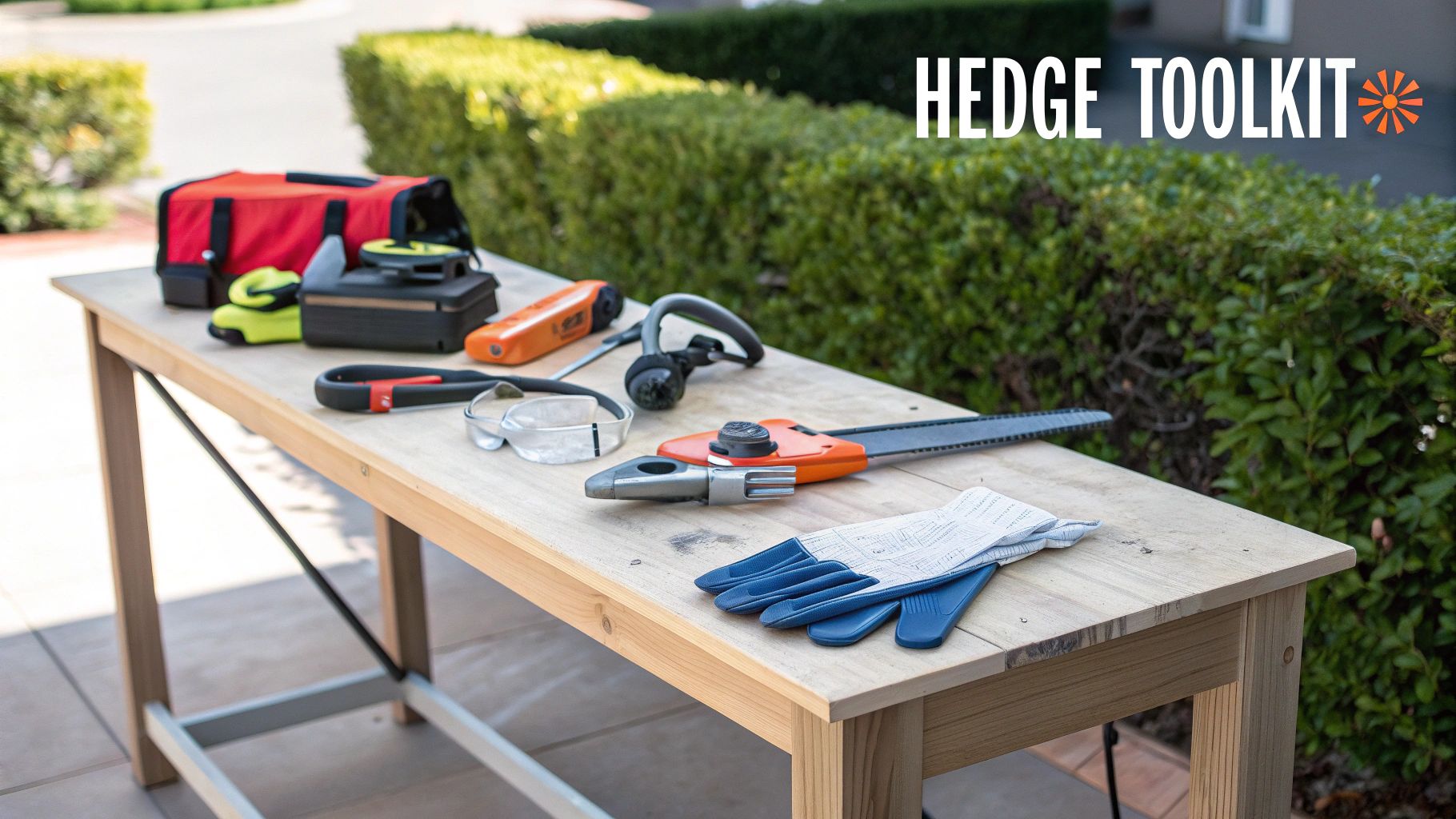
Before you even think about making that first cut, it’s worth taking a moment to get your gear sorted. Trying to prune a hedge with the wrong equipment is a recipe for a messy job, and it can be genuinely dangerous. The right tools don't just make the work easier and safer; they’re the secret to getting that sharp, professional finish every Perth homeowner is after.
Think of it like a chef’s knife set – each tool has a specific purpose. You wouldn't use a cleaver for delicate garnishes, and the same logic applies here. A small but well-chosen toolkit will have you ready for anything, from a quick tidy-up to a major reshape.
Cutting Tools for Every Situation
The heart of your kit is, of course, the cutting tools. What you need really comes down to the size of your hedge and how thick its branches are. Having a few different options on hand means you can work efficiently without knackering yourself or damaging the plant.
Hand Shears: These are your go-to for precision work. They’re perfect for shaping smaller hedges, snipping off fresh growth, or getting creative with topiary. For example, if you’ve got a young Murraya hedge that just needs a light trim to encourage it to bush out, hand shears give you the control you need for clean, accurate cuts.
Loppers: When you hit branches too thick for shears (usually anything over 1.5 cm), you’ll be glad you have a pair of loppers. Their long handles give you the leverage to slice through woody stems cleanly, which is much healthier for the plant. They’re brilliant for thinning out older, more established hedges.
Powered Hedge Trimmers: For those big, formal hedges like a classic Lilly Pilly screen, a powered trimmer is an absolute game-changer. Whether it’s electric, battery, or petrol-powered, these machines make short work of long, straight lines. They’ll save you a huge amount of time and are the key to achieving those perfectly flat tops and sides.
Pruning Saw or Secateurs: It's always handy to have a small pruning saw or a tough pair of secateurs for getting into the guts of the hedge. They’re ideal for selectively removing any thick, dead, or diseased branches without disturbing all the healthy growth around them.
Personal Protective Equipment Is Non-Negotiable
Honestly, this is the part people often skip, and it's a massive mistake. Between flying debris, sharp branches, and powerful tools, there are plenty of risks you need to take seriously. Your safety should always come first, and the right PPE is your best defence.
Just picture a small twig flying off a trimmer blade at high speed – without eye protection, that could cause a serious injury. Likewise, grabbing prickly or sappy branches without gloves can leave your hands irritated and cut up.
Protecting yourself isn't just a suggestion; it's a fundamental part of the job. A five-minute safety check before you start can prevent an injury that lasts a lifetime.
Your essential safety kit should always include:
Safety Glasses or Goggles: To shield your eyes from wood chips, dust, and anything else that gets flicked up.
Sturdy Gardening Gloves: Protect your hands from blisters, cuts, thorns, and sap.
Durable Footwear: Closed-toe boots are a must. Steel caps are even better to protect your feet from falling branches or tools.
Hearing Protection: If you’re firing up a petrol-powered trimmer, earmuffs or earplugs are essential to prevent hearing damage.
Getting yourself properly equipped sets you up for a successful prune. With the right tools and safety gear, you can get stuck in with confidence.
Of course, if your hedges are particularly tall, complex, or you just want a guaranteed professional finish without the hassle, the team at Swift Trees Perth is here to help. Contact us today for all your tree and hedge maintenance needs.
Finding the Perfect Pruning Schedule for Perth
Timing is everything when it comes to gardening. Knowing how to prune hedges is as much about when as it is about how. Perth's unique Mediterranean climate—those hot, dry summers and mild, wet winters—sets a very specific rhythm for garden maintenance.
Get the timing wrong, and you can stress your plants, leading to sunburn or weak regrowth. But get it right? You’ll be rewarded with a hedge that’s dense, vibrant, and perfectly shaped all year round.
The trick is to work with your hedge’s natural growth cycle, not against it. Every snip you make is a signal for the plant to grow. By timing these signals correctly, you can direct its energy into producing that lush, compact foliage you want, exactly where you want it. It's a strategic approach that guarantees a healthy, resilient hedge that thrives in our local conditions.
Aligning Pruning with Perth's Seasons
First things first: you need to know if you're dealing with an evergreen or a deciduous hedge. These two types have completely different growth patterns, so they need different approaches to truly flourish.
The evergreen varieties so popular across Perth—think vibrant Lilly Pilly, fragrant Murraya, or the ever-reliable Viburnum—are all about encouraging continuous, dense growth. Since they keep their leaves year-round, they respond best to trims that line up with their active growing seasons.
Deciduous hedges, on the other hand, drop their leaves in winter and are best pruned while they’re dormant. This is a huge advantage, as you can clearly see the branch structure and make foundational cuts without all the foliage getting in your way. Pruning them while they're "asleep" also means the plant can pour all its energy into producing vigorous new growth come spring.
Timing your prune is like giving your hedge a roadmap for the season ahead. A well-timed cut tells the plant, "Grow here, now," leading to a much stronger and more beautiful result than a random trim ever could.
Evergreen Hedges: The Late Spring Sweet Spot
For most of Perth’s evergreen hedges, late spring is the golden hour for their main structural prune. The soil has warmed up, the sun isn't at its peak ferocity, and the plant is absolutely surging with energy. A good trim now allows the hedge to recover quickly and fill out, covering any bare spots with a flush of fresh leaves.
A second, lighter tidy-up in early autumn is a great idea. This helps maintain the hedge's shape after its summer growth spurt and gets it looking neat and tidy for the cooler months.
Whatever you do, avoid heavy pruning in the peak of summer. The intense sun can easily scorch newly exposed leaves and put the whole plant under a huge amount of stress. For more detailed seasonal advice, you can explore our complete guide on the best time to prune trees in Australia, as many of the same principles apply.
Deciduous Hedges: The Winter Restructure
If your garden features deciduous hedges, your main pruning window is late winter, just before new buds start to appear. With all the leaves gone, the plant’s framework is on full display, making it incredibly easy to spot and remove any crossing, dead, or awkwardly placed branches.
This dormant-season prune is your chance to really correct the hedge's overall structure and set it up for a brilliant season of growth. Cutting at this time minimises stress and sap loss, ensuring the plant has maximum energy reserves ready to burst into life when spring arrives.
So, how often should you be out there with the shears? Horticultural standards in Australia suggest most established hedges do best with about two trims a year, usually in autumn and late spring. This schedule lines up perfectly with their main growth spurts, helping maintain a compact form and preventing them from getting out of hand. You can find more insights on hedge pruning frequency over at Jim's Mowing.
For a newly planted hedge, though, more frequent light trims are the secret to building a dense, bushy foundation right from the ground up.
To make it even easier, here's a quick reference guide for some common Perth hedges.
Perth Hedge Pruning Calendar
Hedge Type | Primary Pruning Season | Secondary Tidy-Up | Notes |
|---|---|---|---|
Lilly Pilly | Late Spring | Early Autumn | Prune after flowering to encourage dense growth. Responds well to hard pruning if needed. |
Murraya (Mock Orange) | Late Spring | Mid-Autumn | Trim after its main flowering period to shape and encourage more blooms. |
Viburnum | Late Spring | Early Autumn | Very hardy. Can handle a good structural prune to maintain size and shape. |
Photinia (Red Robin) | Late Spring | Summer | Prune after the red flush of new growth to encourage a second colourful display. |
Pittosporum | Late Spring | Early Autumn | Regular light trims keep it dense. Avoid cutting into old, hard wood. |
Deciduous Hedges | Late Winter | N/A | Prune while dormant to see the structure. Avoid pruning once buds have broken in spring. |
Of course, every garden is different, and sometimes life gets in the way of the perfect schedule. If your hedges have gotten a little unruly and need an expert touch to bring them back into line, Swift Trees Perth is here to help.
Contact us for professional advice and maintenance to keep your hedges looking their absolute best.
Mastering Pruning Techniques for Shape and Health
Alright, once your tools are sorted and you’ve picked the right day, it’s time for the satisfying part: actually shaping your hedge. This is where the real craft comes in, turning a simple row of plants into a standout feature of your garden. The right cuts aren't just about making things look tidy; they're critical for the long-term health and density of the hedge itself.
The main goal here is to make precise cuts that encourage the plant to produce thick, lush growth from the very top right down to the bottom. It’s about more than just a quick trim to keep the size in check—you’re nurturing a living, breathing structure.
The Foundation of a Healthy Hedge Shape
There are really two ways to think about pruning a hedge: formative shaping and maintenance thinning. They might sound similar, but they do very different jobs in creating a thriving, beautiful boundary for your property.
Formative shaping is all about the look. This is how you create and maintain the hedge's overall form, whether you’re after those sharp, modern lines or something a bit softer and more natural. You're establishing the height and width, making sure the final shape fits your garden’s style.
Maintenance thinning, on the other hand, is purely for the plant’s health. This involves reaching into the hedge and selectively removing some of the older, thicker stems from the inside. This is a vital step because it improves airflow and lets sunlight penetrate deeper, which dramatically cuts down the risk of fungal diseases and encourages fresh, new growth from the base. A hedge that's only ever trimmed on the outside will eventually become a thin green shell over a dead, woody interior.
The One-Third Rule and Why It Matters
If there's one golden rule in horticulture, it's the one-third rule. This principle is especially important here in Australia with our often harsh climate. It's simple: never remove more than one-third of the hedge's total volume in a single pruning session.
Sticking to this stops the plant from going into shock. A massive cut forces the hedge to use a huge amount of energy just to recover, leaving it wide open to pests and diseases. For really overgrown hedges, this means you need to be patient and tackle the job over several seasons instead of cutting it all back in one go. As any local expert will tell you, this cautious approach prevents dieback and makes sure the hedge has the strength to bounce back properly. You can discover more insights about trimming overgrown hedges on Hedge Works.
A good prune should almost look like you were never there. The idea is to enhance the hedge’s natural beauty and health, not leave it looking scalped and stressed out. Patience is your most valuable tool.
Tapering for Sunlight and a Fuller Base
Ever seen a hedge that’s lovely and full on top but all sparse and twiggy down below? That’s a classic sign that the lower branches aren't getting enough sun. The fix is a pro technique called tapering.
This just means pruning the hedge so the base is slightly wider than the top, creating a subtle 'A' shape. Even a tiny slope is enough to let sunlight hit the entire surface of the hedge, from the top leaves right down to the soil. Honestly, this one technique is the secret to getting that dense, green foliage from top to bottom. Without it, the top growth will eventually shade out the bottom, leaving you with those bare, woody "legs."
Practical Example: Trimming a Murraya Hedge
Let’s apply these ideas to a Perth favourite: the Murraya (Mock Orange). It’s loved for its fragrant flowers and speedy growth, which also means it needs regular pruning to stay looking its best.
Creating Straight Lines: For that formal, laser-straight look, you can't beat a good old string line.
Bang two stakes into the ground at each end of the hedge.
Tie a builder's line or taut string between them at your target height.
Use a line level to check it's perfectly horizontal. This simple guide is foolproof for avoiding a wavy, uneven top.
Making the Cuts: With your powered hedge trimmer, just follow the string line for the top cut. Keep the blade flat and use a slow, steady sweeping motion. For the sides, remember that taper. An easy way to think about it is to lean the trimmer blade slightly inward as you move up from the bottom of the hedge. This ensures you’re taking just a fraction more off the top than the base.
Finally, grab your hand shears or secateurs for any finishing touches. Snip off any stray bits the trimmer missed and take the chance to do a little maintenance thinning by selectively removing a few older branches from inside the hedge to open it up.
Finding Your Garden's Fashionable Edge
The techniques you choose will ultimately define your garden's style. Right now, two distinct looks are very popular:
Clean, Modern Lines: Think sharp, geometric shapes—perfect rectangles with crisp edges. This look is perfect for contemporary homes and formal gardens but requires meticulous, regular pruning to keep it sharp.
Soft, Organic Shapes: For a more relaxed, naturalistic garden, you might go for gently curved tops and less rigid sides. This style is much more forgiving and works beautifully with cottage or coastal themes. It still needs pruning for health, but there's less focus on perfect geometry.
No matter if you're working with new shoots or established hedges, having a clear plan makes all the difference.
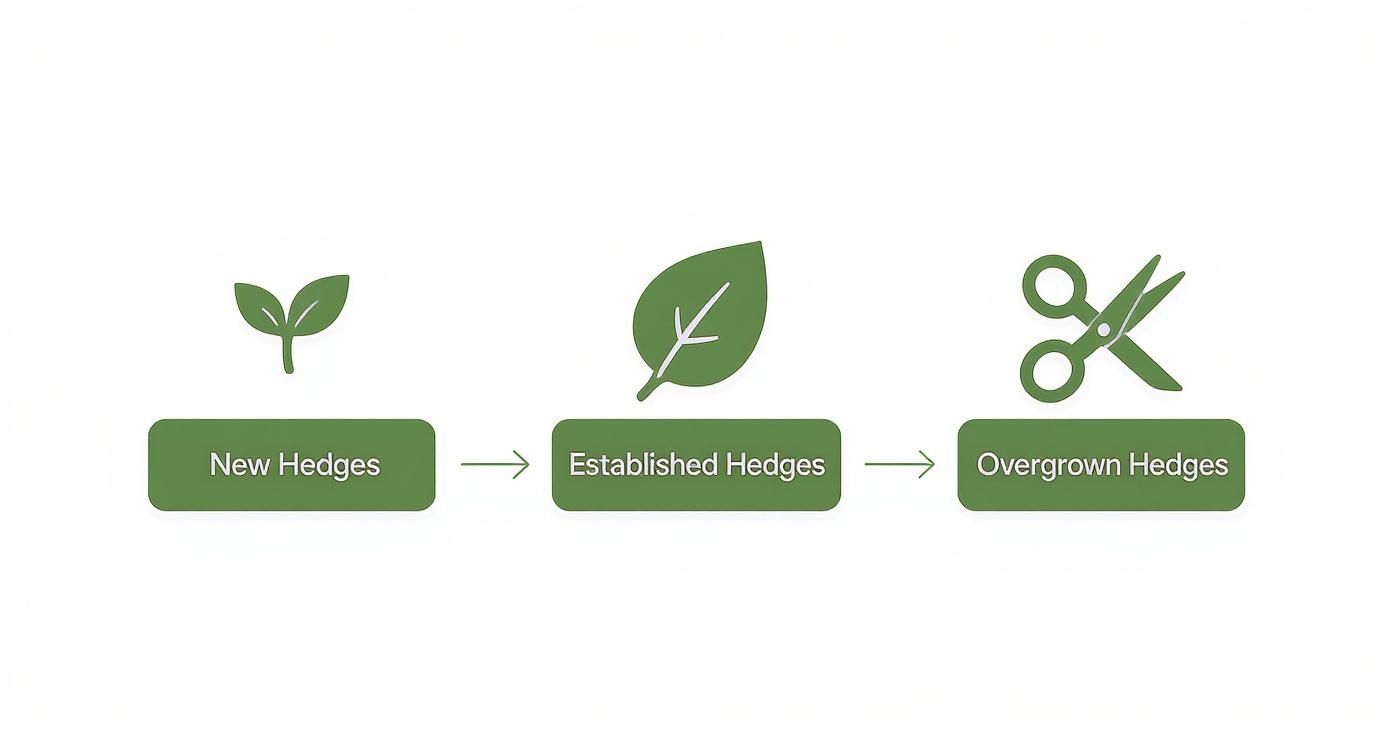
As the visual guide shows, your pruning strategy has to change as the hedge matures—moving from frequent light trims to structured maintenance and, if things get out of hand, careful rejuvenation.
Mastering these pruning techniques takes a bit of practice, but the payoff is a stunning, healthy hedge that makes your whole property look better.
If your hedges are just too big, complex, or you simply want a flawless result without the guesswork, the professional team at Swift Trees Perth is ready to help. Contact us today for expert tree maintenance and bring your garden vision to life.
How to Revive an Overgrown Hedge
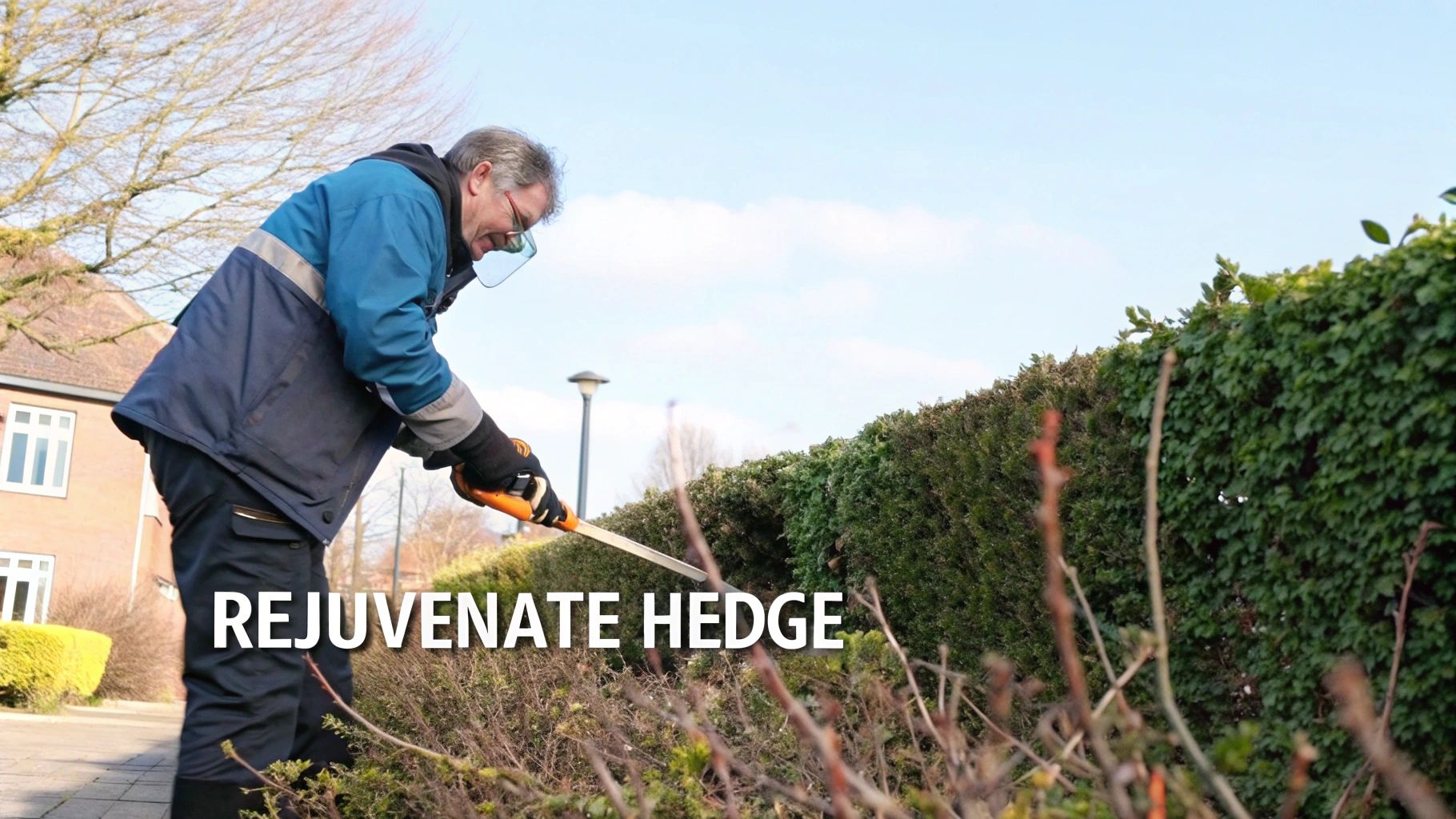
We’ve all seen them – hedges that have escaped their neat boundaries and become a tangled, woody mess. Standing in front of one can feel completely overwhelming. But before you grab the chainsaw and decide to start from scratch, there's a powerful technique called rejuvenation pruning that can bring it back from the brink.
This isn't your average trim. Rejuvenation is a hard, strategic cutback designed to shock the plant into producing a flush of dense, new growth from the base. It’s a project that demands a bit of patience, often taking a season or two, but the payoff is huge. You can transform that gappy, leggy eyesore back into the lush, green feature it was meant to be.
Can Your Hedge Actually Be Saved?
First things first, you need to play detective. Is there enough life left in the old hedge to make the effort worthwhile? Get in close and look for signs of life on the lower, older branches.
You're looking for:
Green, pliable stems (not just dry, brittle sticks)
Small buds or even a few stubborn leaves near the main trunks
No major signs of widespread disease or rot
If all you see is dead wood, or if the plant is riddled with disease, replacing it is probably the smarter move. But if you spot healthy, active growth—even if it's patchy—you’ve got a great candidate for a comeback. The whole idea is to wake up those dormant buds down low and give them a reason to grow.
Tackling an overgrown hedge is a renovation project, not a simple tidy-up. The key is to be bold but methodical, giving the plant a chance to reset and grow back stronger than before.
A Staged Approach for a Strong Recovery
The secret to a successful hard prune is not to do it all at once. Spreading the work over two years gives the plant a fighting chance, ensuring it always has enough foliage to photosynthesise and power its recovery.
Year One: The Big Chop
In the first year, you'll focus your attack on one side and the top of the hedge. It's going to look brutal, but trust the process.
Attack One Side: Choose one side and cut it back hard, getting to within 15-30 cm of the main trunks. Yes, it will look incredibly bare, but this is what triggers that vital new growth.
Lower the Top: At the same time, reduce the hedge's height to just below where you ultimately want it to be. This allows the new growth to fill in and reach your target height, creating a dense top.
Leave the other side completely alone for this year. That untouched foliage is the plant's engine room, producing the energy needed to heal and push out new shoots on the pruned side.
Year Two: Finishing the Job
Fast forward a year. The side you pruned should now be covered in vigorous, fresh growth. That's your green light to finish the job. Simply repeat the process, cutting the remaining untouched side back just as hard as you did the first. This two-step method dramatically reduces the shock to the plant and sets it up for a full, dense recovery.
Case Study: The Unruly Privet Hedge
Let's take a common Perth scenario: a Privet hedge that's been left to its own devices. Privet is famously tough and responds brilliantly to this kind of drastic pruning. Timing is everything here. In Australia, the ideal time to tackle a privet is during its winter dormancy, just before the spring growth spurt begins.
With a severe rejuvenation, you can confidently cut back up to 50% or more of the hedge's mass, sometimes taking it right down close to ground level to force a complete reset.
There's no doubt that this is a major undertaking. If your hedge is particularly large, old, or you just want the peace of mind that comes with professional expertise, don't hesitate to call for backup. The experienced team at Swift Trees Perth specialises in this kind of complex tree and hedge work, and we can create a plan to bring your hedge back to life safely and effectively. Contact us today to have a chat about your garden.
When to Call a Professional for Your Perth Hedges
Knowing how to prune your own hedges is a fantastic skill for any Perth homeowner. But even the most dedicated DIYer will eventually come up against a job where calling in the professionals is the smartest, and safest, move. Knowing when to put the tools down and pick up the phone protects both your plants and your property.
Sometimes, it really just comes down to the sheer scale of the job. If your hedge is getting seriously tall or wide, standard home equipment just won't cut it. To get that clean, uniform finish without risking a fall, you really need specialised gear like long-reach trimmers or even elevated work platforms.
Signs You Need an Expert Hand
Beyond just size, professional help becomes crucial in high-risk situations or for more complex horticultural tasks. A qualified arborist doesn't just cut; they bring a level of precision and plant knowledge that guarantees a healthy, beautiful result for years to come.
It’s probably time to call in the pros if you’re facing:
Hedges growing near power lines. This is a non-negotiable. Professionals are trained to work safely in these hazardous environments. It's never worth the risk.
A major rejuvenation project. Trying to bring a beloved but severely overgrown hedge back from the brink requires a strategic, multi-season approach. An expert can properly assess its health and create a smart recovery plan.
A lack of time or confidence. Let's be honest, achieving a perfectly sculpted, fashionable hedge takes a lot of time and practice. If you're after a flawless result without the trial and error, a professional service is your best bet.
When your hedge trimming feels less like simple maintenance and more like a major landscaping project, that's your cue to call for backup. The right expertise not only saves you a weekend of hard labour but also invests in the long-term health and beauty of your garden.
If you are looking for the right team, our guide on how to find top hedge trimming services near you offers some great tips.
For all your tree and hedge maintenance needs here in Perth, the team at Swift Trees Perth brings local expertise and a real commitment to creating beautiful landscapes. Contact us for a professional consultation and rest easy knowing your hedges are in the best possible hands.
Your Perth Hedge Pruning Questions, Answered
Even with the best plan, it's easy to second-guess yourself when you're standing there, shears in hand. Getting the finer details right is what separates an okay hedge from a great one. Let's tackle some of the most common questions we get from local gardeners right here in Perth.
Can I Prune My Hedge in Perth's Hot Summer?
I’d strongly advise against any heavy pruning during the peak of a Perth summer. The intense heat puts enormous stress on a freshly cut plant. You risk scorching newly exposed leaves and slowing down the hedge's recovery right when it's most vulnerable.
If you absolutely must tidy things up, stick to a very light shaping trim. The most important thing is to give the hedge a deep watering before and after to help it cope. For any major structural work, you're far better off waiting for the milder weather in late spring or autumn.
How Do I Get My Hedge Thicker at the Bottom?
A sparse, leggy base is a problem we see all the time. It’s almost always caused by one thing: the lower branches aren't getting enough sun. The top of the hedge literally shades out the bottom, stopping that dense foliage from growing.
The secret is a professional technique called tapering. It sounds fancy, but it just means pruning the hedge into a subtle 'A' shape, so the base is always slightly wider than the top. This tiny change lets sunlight hit the entire plant, encouraging lush, thick growth right from the ground up.
Combine this with regular, light tip pruning throughout the growing season, and you'll encourage the plant to get bushier, not just taller.
What's the Difference Between a Hedge Trimmer and Shears?
These tools look similar but are designed for very different jobs. Honestly, having both in your shed is a huge advantage.
Powered Hedge Trimmer: This is your tool for efficiency. Its long blade is perfect for quickly cutting large, flat surfaces, making it ideal for maintaining the shape of big, formal hedges.
Hand Shears: Shears are all about precision and control. They’re the go-to for smaller hedges, detailed shaping like topiary, or for trimming delicate plants that a powerful trimmer might chew up.
Knowing which tool to grab for the task at hand makes the job easier and gives you a much cleaner, more professional result.
At the end of the day, achieving that perfect hedge takes a bit of practice and the right approach. If you’re facing a hedge that’s gotten out of control, or you simply want a flawless finish without all the hard work, Swift Trees Perth is here to help. Our experienced team provides expert tree and hedge maintenance all across the Perth area.
Ready for a beautiful, healthy hedge that boosts your curb appeal? Contact Swift Trees Perth for your tree maintenance needs and let our experts give your garden the professional touch it deserves. Visit us online to get your free estimate today!

Comments