
Mulch on Trees: A Practical Guide to Healthy Growth

Spreading mulch around your trees is one of the best things you can do for your garden. It’s far more than just a decorative touch; it’s a fundamental investment in the long-term health and resilience of your trees, particularly in Perth’s tough climate. A good layer of organic mulch acts like a protective blanket, conserving moisture, keeping weeds at bay, and creating a stable, healthy environment where roots can flourish.
Why Mulching Trees Is a Smart Investment for Your Garden

Think of mulch as a slow-release power pack for your soil. It’s not just another garden chore, but a core strategy for nurturing strong, healthy trees that can handle whatever the weather throws at them. In a place like Perth, where long, dry spells can stress even the hardiest native plants, mulch is your number one defence against water loss and poor soil.
By covering the soil, a layer of mulch on your trees dramatically cuts down on evaporation. This keeps the ground cooler in summer and a bit warmer in winter, protecting the delicate feeder roots from extreme temperature swings so they can do their job all year round. It’s an essential buffer that helps your trees cope with our harsh weather.
The Immediate Payoffs of Mulch
The benefits of applying mulch are often visible almost immediately. One of the biggest wins is weed suppression. A decent layer of mulch, usually around 5-10 cm deep, blocks sunlight from reaching weed seeds and stops them from sprouting. That means less competition for your trees, leaving more water and nutrients for them.
On top of that, mulching gives you several other key advantages:
Water Conservation: A good mulch layer can slash water evaporation from the soil by up to 70%. You'll find yourself watering less often while your trees stay perfectly hydrated.
Soil Health Improvement: As organic mulch breaks down, it slowly releases vital nutrients back into the soil. This improves the soil structure and creates a thriving ecosystem for beneficial microbes.
Erosion Control: Mulch helps hold your valuable topsoil in place, preventing it from being washed away by heavy rain or blown away by the wind. To dig deeper, check out our detailed article on why mulch is important for Perth WA gardens.
Proper mulching is one of the simplest and most effective things you can do to promote tree health. It mimics the natural environment of a forest floor, where a layer of fallen leaves and organic debris constantly nourishes and protects the soil.
This simple practice sets the stage for a vibrant, self-sufficient garden. By understanding these foundational benefits, you're taking the first step towards professional-grade tree care, ensuring your trees don't just survive, but truly thrive.
For expert advice on all your tree maintenance needs, from mulching to pruning, the team at Swift Trees Perth is here to help. Contact us for a consultation and discover how we can enhance the health and beauty of your garden.
Choosing the Best Mulch Type for Your Trees
Picking the right mulch for your trees is a bit like choosing the right diet; what helps one thrive might not be the best for another. The world of mulch is really split into two camps: organic and inorganic. Each has its own pros and cons, especially when you're dealing with Perth’s unique climate. Getting your head around these differences is the first step to giving your trees exactly what they need to flourish.
Organic mulches are simply materials that were once alive. We’re talking about things like wood chips, bark, pine needles, straw, and even nutrient-packed options like lucerne hay. As these materials break down, they do a lot more than just sit there—they actively feed the soil, slowly releasing nutrients that build a healthier, richer foundation for your tree over time.
Inorganic mulches, on the other hand, are non-living materials like pebbles, gravel, or crushed stone. They won't do much for soil fertility, but they are incredibly durable and can give your garden a clean, modern look. Their main jobs are to keep weeds down and moisture in, and they do that very well without needing to be replaced every year or two.
Organic Mulch: A Fashionable and Functional Choice
For most trees in a home garden, organic mulch is hands-down the best choice. It does a fantastic job of mimicking what happens on a forest floor, where fallen leaves and twigs decompose to create a rich, life-sustaining layer of humus. This process doesn't just feed the tree; it also creates a bustling underground ecosystem full of beneficial microbes and earthworms.
A brilliant and effective option for many Perth gardens is a coarse, woody mulch, often the kind you can get from local arborists. This stuff is particularly well-suited for native trees like Eucalyptus and Banksia. It breaks down slowly, offering long-lasting protection and improving the soil structure without dumping a huge load of nutrients all at once, which can be a bit much for some of our native species.
Expert Insight: For fruit trees or other hungry exotic species, a richer organic mulch like lucerne hay or composted manure can give them an extra kick. These types break down faster, delivering more nitrogen and other key elements to support strong growth and a good harvest.
Inorganic Mulch: When Form Meets Function
While organic mulches usually win for soil health, inorganic options definitely have their place. They’re a fantastic low-maintenance solution for creating sharp, clean lines in a modern landscape design or for areas where you want to stop anything from growing permanently. A current fashionable trend is using dark-coloured slate chips or polished river stones to create a striking contrast against lush green foliage in minimalist or architectural gardens.
You might want to think about using pebbles or gravel in a few specific situations:
Fire-Prone Areas: If you live in a high bushfire risk zone, inorganic mulch is a much safer bet as it won’t burn.
Succulent Gardens: Many drought-loving plants, like succulents and cacti, do better with the drier conditions created by inorganic mulch, which stops the base of the plant from staying too damp.
High-Traffic Zones: Gravel can double as a durable and good-looking pathway or feature around trees where people walk often.
The main catch, however, is that inorganic mulches can get incredibly hot, soaking up the sun and radiating that heat back into the soil. This can really stress a tree’s roots during one of Perth’s scorching summer days.
Organic vs Inorganic Mulch for Perth Gardens
So, which one is right for you? It really comes down to what you’re trying to achieve—are you focused on building great soil, getting a certain look, or just keeping maintenance to a minimum? This table breaks it down.
Feature | Organic Mulch (e.g., Wood Chips, Bark) | Inorganic Mulch (e.g., Pebbles, Gravel) |
|---|---|---|
Soil Health | Excellent - improves fertility and structure as it decomposes. | Poor - adds no nutrients and can compact the soil underneath. |
Moisture Retention | Very Good - absorbs water and reduces evaporation effectively. | Good - slows evaporation but doesn't hold moisture itself. |
Weed Suppression | Good - blocks light effectively, though some weeds may grow through. | Excellent - provides a strong physical barrier against weeds. |
Temperature Control | Excellent - insulates soil, keeping it cooler in summer and warmer in winter. | Fair - can absorb and radiate heat, significantly increasing soil temperature. |
Longevity | Requires topping up every 1-3 years as it breaks down. | Permanent - does not decompose and rarely needs replacement. |
Aesthetics | Offers a natural, soft look that blends into garden beds. | Provides a clean, modern, and structured appearance. |
Ultimately, choosing the best mulch on trees depends on the tree itself and the specific spot it's in. By moving beyond a one-size-fits-all approach, you can pick a mulch that perfectly suits both your tree’s health and your garden’s style.
If you’re still not sure which mulch is right for your trees or you need a hand with the application, the experienced team at Swift Trees Perth is here to help. Contact us today for expert advice and all your tree maintenance needs.
The Art of Applying Mulch Correctly
Knowing what mulch to use is only half the battle. How you actually apply it is just as crucial for the health of your trees. A professional-grade application isn't complicated, but it does demand a bit of attention to detail. Get it right, and your trees will soak up all the benefits without any of the potential downsides.
Before you start spreading mulch, a little prep work goes a long way. First things first, clear the area around the base of the tree. Pull out all the weeds, grass, and any other debris in a circle extending out to the tree's dripline (the very edge of its canopy), if you can. A clean slate stops weeds from stealing water and nutrients from your tree.
Once the area is clear, give the soil a good, deep watering. If you apply mulch over dry, compacted earth, you can accidentally create a barrier that stops rain from soaking in later on. Watering beforehand makes sure the soil under the mulch is a moist reservoir, ready to support your tree.
Finding the Goldilocks Depth
When it comes to how deep your mulch should be, you’re looking for that 'just right' zone. For most organic mulches, the sweet spot is between 5 to 10 centimetres. This is thick enough to smother weeds and lock in moisture, but not so thick that it suffocates the tree’s roots by blocking oxygen.
Too thin (<5 cm): A shallow layer won't stop weeds from popping through and dries out too quickly to do much good.
Too thick (>10 cm): An overly deep layer can get waterlogged, starving roots of oxygen. It can also trick roots into growing up into the mulch itself, rather than down into the stable soil where they belong.
Whether you go for an organic or inorganic mulch really depends on your goals—from improving the soil to creating a certain look in your garden.
Avoid the Dreaded Mulch Volcano
Here is the single most important rule of applying mulch: never pile it directly against the tree trunk. A common mistake we see is the "mulch volcano," where mulch is mounded right up against the bark. It might look tidy to some, but this practice is incredibly damaging to a tree’s health.
Instead, you need to create a "mulch donut." This just means leaving a gap of at least 10-15 centimetres of bare soil all the way around the trunk.
Piling mulch against the trunk traps moisture directly against the bark, creating a permanently damp environment. This is a perfect breeding ground for fungal diseases like collar rot and invites pests such as termites and borers to attack the softened, vulnerable wood.
This simple gap allows air to circulate freely around the base of the trunk, keeping it dry and healthy. It also ensures the trunk flare—the point where the trunk widens out as it meets the roots—isn't buried. Covering the trunk flare can lead to girdling roots and, eventually, the decline of the tree. To learn more about seasonal application, check out our guide on the best time to apply mulch.
Mastering these techniques is how the experts at Swift Trees Perth guarantee fantastic results. By preparing the area properly, applying the correct depth, and creating that all-important mulch donut, you can give your trees the best possible care right in your own garden.
Unlocking the Long-Term Benefits of Mulching
Applying a good layer of mulch around your trees is about so much more than just a tidy garden bed or saving a bit of water. Think of it as a long-term investment in the very foundation of your garden. Over months and years, that layer of organic mulch becomes a bustling hub of life, slowly transforming the soil beneath it into a rich, self-sustaining ecosystem.
This incredible process kicks off as the organic material—like wood chips or bark—begins to decompose. As it breaks down, it steadily releases vital nutrients, acting like a natural slow-release fertiliser that feeds your tree the way nature intended. This avoids the harsh boom-and-bust cycle you get with chemical fertilisers and builds a far more resilient soil structure over time.
Building a Thriving Soil Ecosystem
A healthy layer of organic mulch is the ultimate welcome mat for a thriving underground community. It creates the perfect habitat for a vast microbiome of beneficial fungi and bacteria. These microscopic workers are the true unsung heroes of your garden, carrying out critical jobs that directly boost your tree's health.
Mycorrhizal fungi, for instance, form a symbiotic relationship with tree roots, essentially extending their reach and dramatically improving their ability to soak up water and nutrients. At the same time, beneficial bacteria get to work breaking down organic matter, making those nutrients readily available for the tree to use.
This hidden world beneath the mulch is the engine of a healthy garden. By cultivating this diverse soil life, you are building a system that can better support itself, leading to stronger trees that are less reliant on constant human intervention.
This upgrade to the soil's structure and biology leads to tangible, visible results above ground. Trees with access to this nutrient-rich environment develop more extensive and robust root systems, anchoring them firmly while giving them access to deeper water reserves.
Boosting Resilience Against Drought and Disease
A stronger root system directly translates to a more resilient tree. When Perth’s scorching, dry summers hit, trees in well-mulched soil are far better equipped to handle drought stress. Their improved root network allows them to draw moisture from deeper in the soil, keeping them hydrated when unmulched trees start to look tired and wilted.
This resilience also extends to fending off pests and diseases. A well-nourished, properly hydrated tree is simply less vulnerable to attack. It has the energy reserves to fight off common ailments, which means less need for you to resort to chemical sprays and treatments. It’s a proactive approach that sits at the heart of sustainable, modern gardening.
The profound impact of mulch is especially clear in challenging climates. For instance, in the arid landscapes of northern Australia, a landmark study showed that mulching delivered incredible results. Mulched plots saw a 45% increase in soil organic carbon, a 62% improvement in water infiltration, and a 35% surge in nitrogen levels. This resulted in an 80% tree survival rate, compared to just 55% in unmulched areas, showcasing how critical mulch is for establishing healthy trees in dry conditions. You can read the full study about these soil quality findings to learn more.
Ultimately, mulching is about creating a self-sufficient garden that works with nature, not against it. It reduces your long-term workload by cutting down on watering, weeding, and fertilising.
If you’re ready to invest in the long-term health and beauty of your trees with professional mulching services, the team at Swift Trees Perth is here to help. Contact us today to discuss your tree maintenance needs and see how we can build a more resilient garden for you.
Common Mulching Mistakes and How to Avoid Them
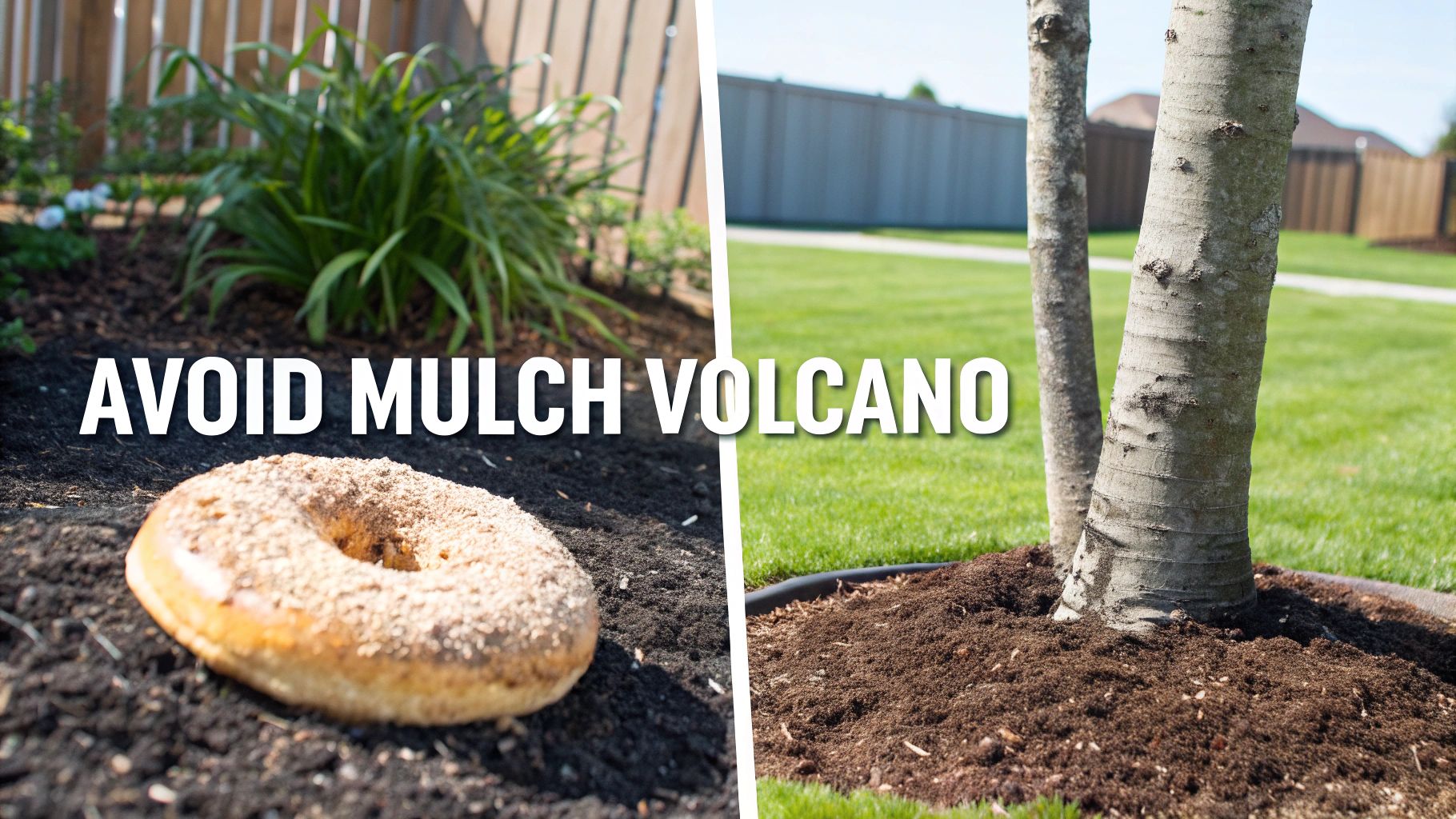
Even with the best intentions, it’s surprisingly easy to get mulching wrong. A few simple slip-ups can turn this brilliant practice into a source of stress for your trees, causing more harm than good. Getting familiar with these common pitfalls is the key to making sure your hard work pays off.
The most frequent—and damaging—mistake is creating the dreaded "mulch volcano". This is when mulch is piled high against the tree trunk in a cone shape. It might look neat to some, but it’s a direct invitation for trouble, effectively suffocating the tree and rolling out the welcome mat for pests and rot.
The Problem with Mulch Volcanoes
When mulch is packed against the bark, it traps a huge amount of moisture. Tree trunks are designed to stay dry; keeping them constantly damp softens the bark. This makes it a prime target for wood-boring insects and nasty fungal infections like collar rot, which can girdle and kill the tree.
This constant moisture also tricks the tree into growing shallow, circling roots up into the mulch pile instead of down into the soil where they belong. These adventitious roots are weak, unstable, and can eventually strangle the main trunk as they thicken—a fatal condition known as root girdling.
The fix is simple but absolutely critical: always create a "mulch donut".
Pull all mulch back to leave a 10-15 cm gap between the material and the tree trunk. This space provides essential airflow, keeps the bark dry, and makes sure the root flare—where the trunk widens at the soil line—stays exposed and healthy.
Mistake Two: Applying Mulch Too Deeply
Piling on the mulch too thick is another common error. While a thin layer won’t do much, a layer deeper than 10 centimetres can be just as bad as a mulch volcano. An overly deep mulch bed can get compacted and waterlogged, blocking oxygen from reaching the soil and suffocating the tree's root system.
This dense, wet layer also stops rainwater from soaking down to the roots where it's needed most. Instead of a helpful moisture-retaining blanket, you’ve created a waterproof barrier. Always aim for that "Goldilocks" depth of 5-10 cm to get the balance just right.
Mistake Three: Using Improper Materials
Not all organic stuff makes good mulch, especially when it’s fresh. One of the worst offenders is fresh lawn clippings. Piling them around a tree creates a slimy, dense mat that repels water and can overheat as it rapidly decomposes, literally cooking the tree’s delicate feeder roots.
Similarly, using raw wood chips from certain trees (like walnut) can release chemicals that stunt plant growth. The best mulch on trees is partially composted, coarse material that allows air and water to move freely.
Practical Example: Instead of dumping fresh green grass clippings, spread them out thinly on a tarp to dry in the sun for a day or two. Once they are dry and brown (like hay), they can be safely used as a light mulch layer or mixed with other materials.
Solution: Stick to properly aged, arborist-grade wood chips or a quality commercial bark mulch.
The right approach to mulching does more than just save water; it’s a powerful thermal regulator for the soil. In Australia's southwest, a multi-year trial found that mulch dramatically moderates soil temperature swings. It kept soils 3.7°C cooler during summer peaks and 2.1°C warmer during winter lows compared to bare ground. This stability slashed winter trunk cracking by 40% and boosted moisture retention by an incredible 89%. You can read more about these mulching trial results to see the full impact.
Avoiding these common mistakes ensures your trees get all the benefits mulching has to offer. If you suspect your trees are suffering from bad mulching or just want to make sure the job is done right from the start, professional guidance is invaluable.
For expert tree maintenance and mulching services tailored to Perth’s conditions, contact Swift Trees Perth today. We’ll help protect your investment and keep your trees thriving for years to come.
Using Mulch for Natural Pest Management
Forget reaching for the chemical sprays at the first sign of trouble. A healthy layer of mulch around your trees is one of the smartest, most effective tools in your natural pest control kit. It’s not just for looks or keeping moisture in; by building a balanced little ecosystem right at the base of your trees, you can stop pests in their tracks and invite their natural enemies to do the hard work for you.
This is a cornerstone of modern, sustainable gardening. Organic mulch acts as a physical barrier, making life difficult for pests that rely on the soil to complete their lifecycle. Insects that need to lay eggs or pupate just under the surface will find their plans completely ruined by a thick, coarse layer of wood chips or bark.
Creating a Habitat for Garden Allies
At the same time, that protective layer creates the perfect home for beneficial insects. Spiders, predatory mites, ground beetles, and centipedes absolutely thrive in the cool, moist, and complex world that organic mulch provides. Think of these critters as your garden's personal security team, actively hunting down the very pests you want gone.
This simple shift changes your garden from a sterile battlefield into a living, balanced community. Instead of reacting with chemicals, you’re building a resilient system where nature helps manage itself.
By applying the right mulch, you're not just feeding your trees—you're recruiting a microscopic army of allies. This ecological approach strengthens your garden's overall health and reduces your reliance on artificial inputs.
To take a holistic approach to your garden's health, it’s worth looking into Integrated Pest Management strategies, which pair cultural practices like mulching with other smart, eco-friendly methods.
Practical Examples of Mulch as Pest Control
This isn't just theory; the impact of mulch on pest numbers is real and measurable. Here in Western Australia, one study showed that applying organic mulch cut the emergence of adult citrus thrips by a massive 85%. To put that in perspective, the unmulched areas averaged nearly 23 thrips per trap, while the mulched plots had only 3.5. That’s a huge deal when you consider thrips can cause up to 30% rind damage on your fruit.
Even better, the number of beneficial predatory mites actually tripled under the mulch, showing how it both suppresses pests and encourages their predators. You can read more about this powerful pest management tool and its benefits.
By choosing to mulch for pest control, you're not just improving the health of one tree—you’re boosting the entire ecosystem of your garden, saving money on chemicals, and building a more resilient landscape.
If you’re ready to use professional mulching techniques to create a healthier, pest-resistant garden, the team at Swift Trees Perth is here to help. Contact Swift Trees Perth today for specialised advice on all your tree maintenance needs.
Partner with Professionals for Complete Tree Care
Getting the mulching right is a massive step towards a healthier tree, but it's really just one piece of the puzzle. A perfect mulch donut lays the groundwork for a thriving tree, but keeping your landscape safe, vibrant, and beautiful often calls for an expert eye—especially when things get complicated.
Knowing when to hang up the gardening gloves and call in a qualified arborist is one of the smartest things you can do for your trees. Some jobs just aren't meant for a DIY approach and demand a level of skill and equipment that only the pros have.
When to Call an Arborist
Certain situations are best left to the experts. You should always get professional help for these high-risk tasks:
Managing Large, Established Trees: Pruning mature trees or dealing with hazardous limbs high up in the canopy is dangerous work. It requires specialised training, safety gear, and a deep understanding of tree dynamics.
Diagnosing Hidden Issues: If a tree looks sick even after you’ve done everything right with mulch on trees, an arborist can dig deeper. They can spot underlying problems like soil deficiencies, sneaky root diseases, or pest infestations that are invisible to the untrained eye.
Major Tree Works: Big jobs like significant pruning, complete tree removal, and stump grinding should always be handled by professionals. They have the right gear and know-how to get it done safely and efficiently.
When you do decide to bring in a professional team, look for signs of a well-run business. Tree care companies often streamline their operations to provide better customer service. For instance, many use a dedicated landscaping answering service to make sure they never miss a call and can communicate clearly with clients.
Think of professional tree care as an investment in the long-term health, safety, and value of your property. An arborist doesn't just fix problems; they offer proactive care that stops issues before they even start, ensuring your trees remain a stunning asset for years to come.
If you’re curious about the business side of things, our article on professional tree mulching services in Perth provides some great local insights. Partnering with a team that gets Perth’s unique climate and soil conditions means your trees get the best possible care, from the roots right up to the highest branches.
Ready to put your trees in the best hands? The friendly, knowledgeable team at Swift Trees Perth is here to help with all your tree maintenance needs, from expert mulching to tricky removals. We are passionate about creating healthy, beautiful, and thriving landscapes for our clients. Don't leave your tree care to chance. Contact Swift Trees Perth today for a free, no-obligation quote, and let's work together to make your garden the envy of the neighbourhood.
Comments