
When to Prune Hedges for a Perfect Perth Garden

Updated: Oct 29, 2025
When it comes to your garden, one of the most common questions we hear from Perth homeowners is, "When is the right time to prune my hedges?" The answer isn’t a single date on the calendar, but a seasonal strategy. For most common evergreens, a good, hard prune in late winter sets them up for an explosion of growth in spring, while lighter trims in autumn keep them looking sharp without stressing them before the summer heat kicks in.
The Secret to Perfect Perth Hedges Is All in the Timing
Pruning is more than just a garden chore; it's a conversation with your plants. The timing of your cuts sends a clear message, telling the hedge whether it’s time to push out dense new foliage, hold its current shape, or just have a general tidy-up. Getting this timing right is the secret to a lush, healthy, and beautifully structured hedge that adds real value and style to your property.
Understanding how to work with Perth's unique climate is key. For evergreen favourites like lilly pillies and photinia ‘Red Robin’, the ideal window for a substantial trim is during late winter or early spring. The plants are less active then, so they’re not as stressed by the cuts. This allows them to conserve energy for the vigorous growth season just around the corner, promoting a dense and healthy structure. You can find more great insights into pruning schedules over at lawn.com.au.
Knowing this simple principle takes the guesswork out of hedge care. Instead of trimming whenever you get a spare moment, you can work in harmony with your plant’s natural cycle.
A well-timed prune acts as a catalyst, encouraging your hedge to become fuller and more resilient. It’s not just about shaping; it’s about strategically stimulating healthy growth for a flawless finish.
For that perfectly manicured look that truly elevates your landscape, precision is everything. To help you plan your year, here’s a quick guide to pruning some of Perth’s most popular hedge varieties.
Perth Hedge Pruning Calendar Quick Guide
Hedge Type | Best Pruning Time | Primary Pruning Goal |
|---|---|---|
Lilly Pilly (Syzygium) | Late Winter/Early Spring | Encourage dense, bushy growth. |
Photinia 'Red Robin' | Late Winter & Summer | Shape the hedge and promote vibrant red new growth. |
Viburnum | After flowering (Spring) | Maintain shape without sacrificing the flower display. |
Buxus (Boxwood) | Late Spring & Autumn | Light trims for formal shaping and density. |
Murraya (Orange Jessamine) | After flowering (Summer) | Control size and encourage repeat blooming. |
Westringia (Coastal Rosemary) | Late Winter or Late Summer | Hard prune for rejuvenation or light trim for shape. |
This calendar gives you a solid starting point for the year, ensuring you’re pruning at the best possible time to get the results you want. Remember, every garden is a little different, but following these seasonal guidelines will keep your hedges looking their absolute best.
If you want guaranteed results without the hassle, the team at Swift Trees Perth has the expertise to handle all your professional tree and hedge maintenance needs.
Understanding Perth's Unique Pruning Seasons

Pruning isn't just about grabbing the shears and having a go; it’s about working with your hedge's natural growth cycle. Here in Perth, our distinct seasons dictate the best times to get the job done, turning a simple chore into a powerful strategy for a healthier, denser hedge.
Think of a hard prune in late winter as a strong cup of coffee for your hedge. It's a wake-up call that signals the plant to pour all its upcoming spring energy into producing a huge flush of vigorous new growth. This is how you get that full, lush screen everyone wants.
On the flip side, a light trim in autumn is more like a gentle tidy-up before bed. The goal is to maintain shape without encouraging a bunch of vulnerable new shoots right before the intense summer heat hits. The last thing you want is for that fresh growth to get scorched.
The Science of Seasonal Timing
So, what's the secret? It all comes down to the plant's hormones. Throughout the year, plants shift their priorities, and if you time your pruning right, you can take advantage of these natural cycles.
Winter Dormancy: During the cooler months, most plants are in a resting phase. Pruning now is far less stressful for them, allowing them to conserve energy for the big growth spurt in spring.
Spring Growth: As things warm up, plants are flooded with growth hormones. A good prune just before this surge channels all that energy into creating a thick, vibrant hedge.
Generally, in Australia, autumn and late spring are fantastic times for a hedge trim. The weather is mild, which helps the plant recover without the stress of extreme heat or damp conditions that can invite fungal infections. This is especially true for more delicate species like Box hedges, which really benefit from a trim after their new growth has had a chance to harden off.
By aligning your pruning schedule with the seasons, you stop fighting against nature and start collaborating with it. You're not just cutting branches; you're guiding the plant to achieve stunning results.
This seasonal awareness is key for all your trees and shrubs, not just hedges. You can dive deeper into this topic in our guide to essential seasonal tree care tips for Perth gardens.
Getting these principles right is the difference between a struggling hedge and a thriving one. If you need expert help tailored to your garden, contact Swift Trees Perth for professional tree maintenance services.
Pruning Schedules for Perth's Most Popular Hedges
General rules are a great starting point, but let’s get specific. You need practical advice for the hedges you actually have in your Perth garden. Every plant has its own rhythm, and knowing the ideal schedule for your specific hedge is the secret to a landscape that’s not just surviving, but thriving.
We’ll focus on a few local favourites, chosen for their resilience and good looks in our unique Western Australian climate. Understanding their growth cycles turns vague advice into a solid plan you can use with confidence.
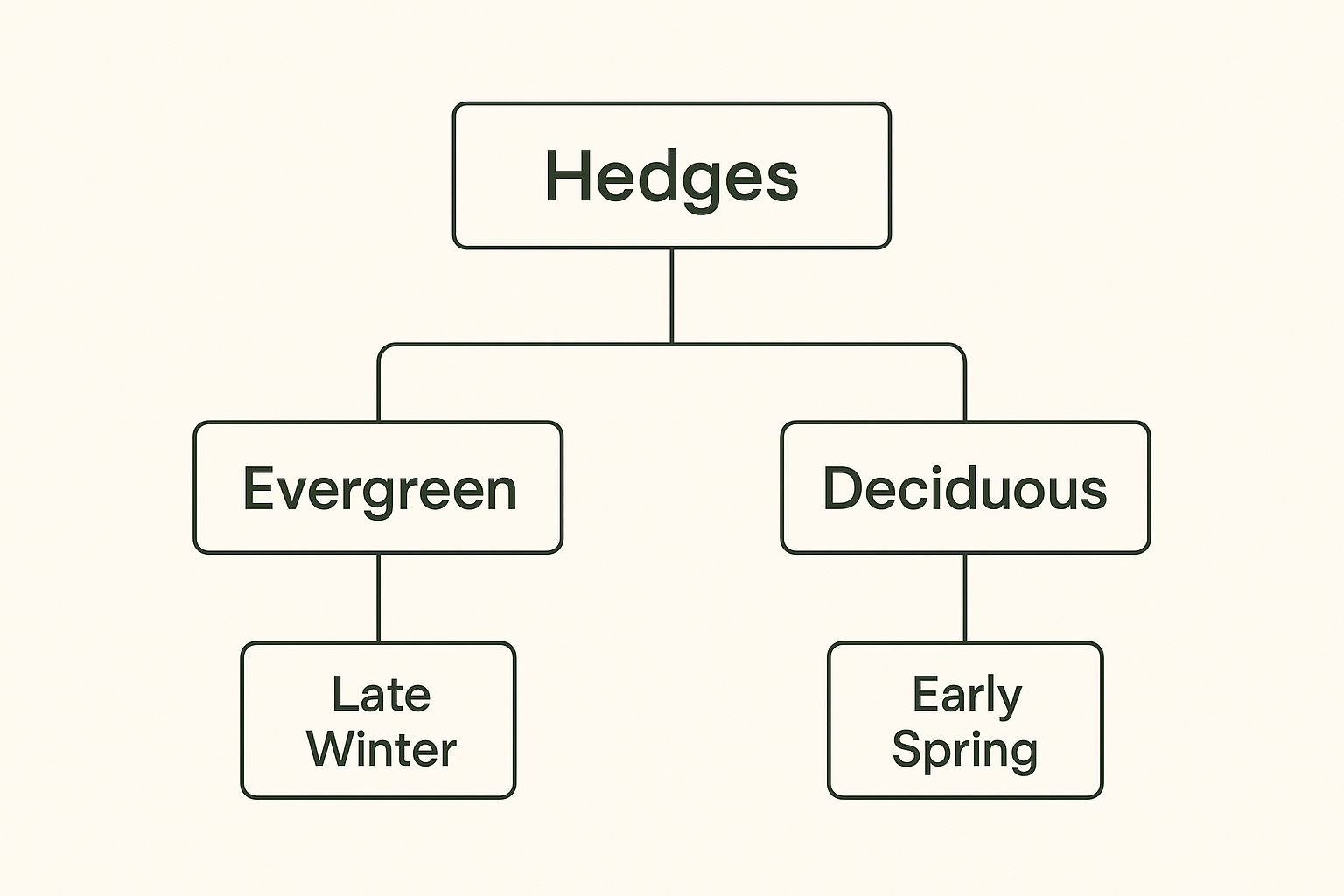
This simple diagram confirms the basics: evergreens get their main haircut in late winter, while deciduous types prefer theirs in early spring before they wake up.
Lilly Pilly (Syzygium smithii)
The humble Lilly Pilly is everywhere in Perth for a reason—it’s a fast-growing native that makes a fantastic privacy screen. But that rapid growth means it needs regular attention to stop it from getting leggy and thin.
Major Prune: Give it a hard cut back in late winter or early spring. For a practical example, if your lilly pilly has become sparse at the bottom, this is your chance to cut it back by up to a third, forcing new growth from the base.
Maintenance Trims: Pencil in two to three lighter trims through the main growing seasons (spring and autumn) just to keep it looking sharp and tidy.
Photinia 'Red Robin'
Known for its stunning red new growth, the Photinia is a real showstopper. The trick is to time your pruning to get as much of that vibrant colour as possible.
A great visual cue for Photinia is to wait until the brilliant red new leaves start to fade and harden off into their mature green colour. Pruning right after this happens encourages another brilliant burst of red.
For a spectacular effect, give it a light trim in summer after its first colourful display. This will stimulate a second wave of red leaves, keeping your hedge looking dynamic through the seasons.
Murraya paniculata (Orange Jessamine)
Prized for its beautifully fragrant white flowers, the Murraya needs a slightly different game plan. If you prune at the wrong time, you’ll be cutting off all the potential blooms.
The best time to shape a Murraya is immediately after its main flowering period finishes up in summer. For example, once the last of the fragrant white flowers have dropped, you can take up to 20cm off the top and sides to maintain that neat, formal look popular in modern garden design.
Knowing when to prune is a mix of science and simply paying attention to your plants. By following these specific schedules, you can make sure your garden's stars are always looking their best. Of course, if you'd rather leave it to the pros, just contact Swift Trees Perth for expert hedge maintenance tailored to your garden.
Mastering Essential Pruning Techniques
Knowing when to prune is half the battle; knowing how turns a hedge into a masterpiece. The right technique makes all the difference between a dense, vibrant screen and a patchy, thin mess. The good news is, a few professional tricks can dramatically lift your game and ensure every single cut counts.
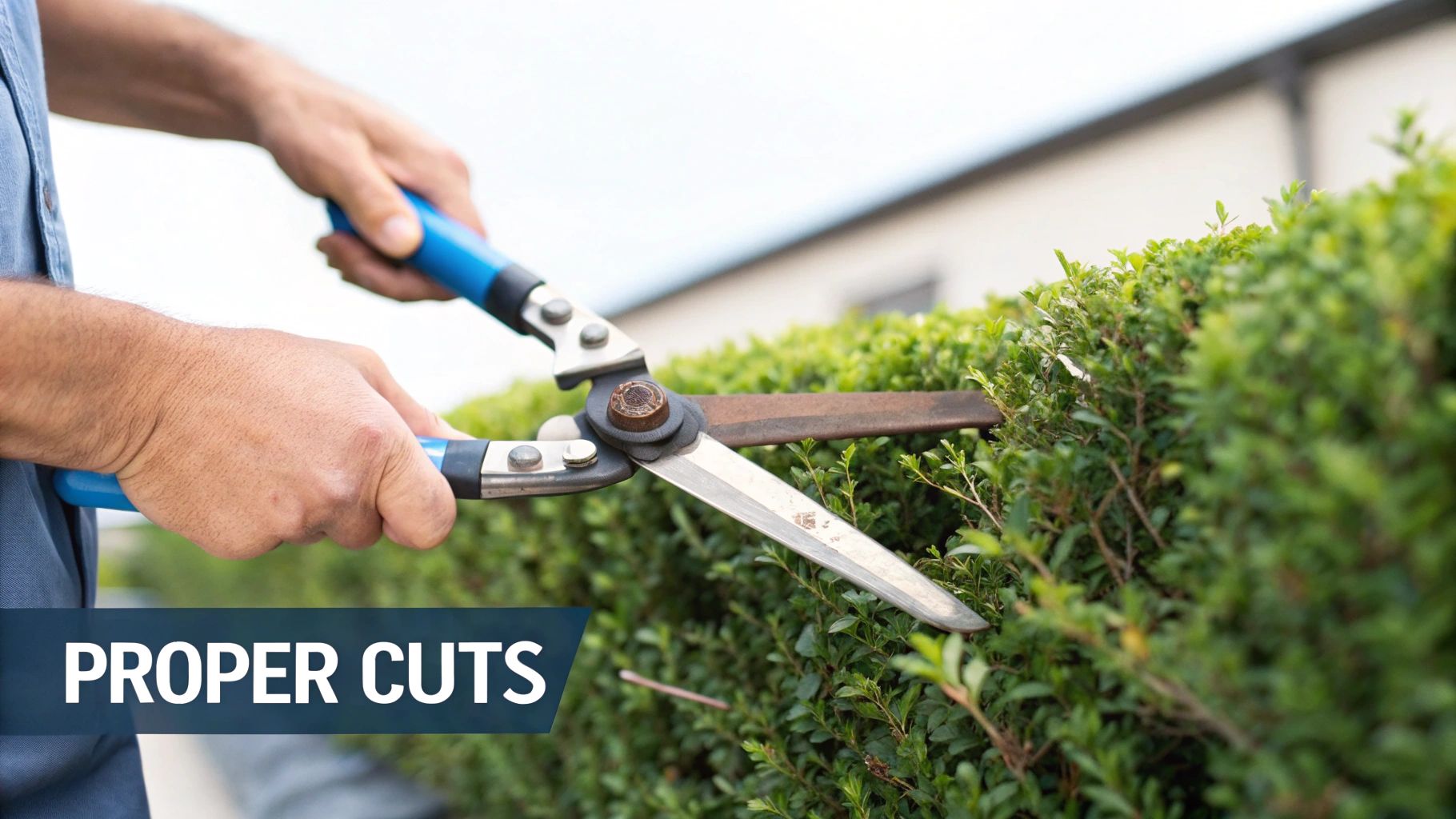
There are two main approaches you'll hear about: the light ‘tip prune’ and the heavy-duty ‘renovation prune’. A tip prune is your regular maintenance cut, just trimming the outer foliage to keep the shape crisp and encourage the hedge to get bushier. A renovation prune, on the other hand, is a more drastic measure, cutting back into old, woody growth to rescue a hedge that’s become overgrown or unhealthy.
The Professional Tapering Trick
Here’s one of the most valuable secrets in the business: always shape your hedge so it's slightly wider at the base than at the top. Think of a gentle 'A' shape. This slight taper is crucial because it allows sunlight to reach the lower branches, preventing that dreaded leggy look where the bottom becomes sparse and bare. Without enough light, those lower leaves simply die off, leaving you with a top-heavy, sad-looking hedge.
This simple tapering technique is a game-changer. It ensures even, dense growth from top to bottom, giving you a solid green wall instead of a patchy fence with bare spots near the ground.
Choosing the Right Pruning Technique for Your Goal
Not every trim has the same goal. Are you after a quick tidy-up, a complete overhaul, or something in between? Choosing the right method is key to getting the results you want without stressing your plants.
This table breaks down the most common pruning techniques to help you match the method to your mission.
Technique | Best For | Tools Needed | Frequency |
|---|---|---|---|
Tip Pruning | Maintaining shape and encouraging dense, bushy growth. The go-to for formal hedges. | Hedge trimmers (electric or manual), secateurs for fine-tuning. | 2-3 times per year, during the growing season. |
Structural Pruning | Correcting shape, removing crossing branches, and establishing a strong framework on young hedges. | Secateurs, loppers. | Once a year, typically in late winter or early spring. |
Renovation Pruning | Rescuing overgrown, leggy, or unhealthy hedges by cutting them back hard to stimulate new growth from the base. | Loppers, pruning saw, hedge trimmers. | Only as needed, usually once every 5-10 years. Best done in stages over a couple of years. |
Deadheading | Removing spent flowers from flowering hedges like Escallonia or Viburnum to encourage more blooms and a tidier look. | Secateurs or even just your fingers. | As flowers fade throughout the blooming season. |
Understanding these different approaches helps you work with your hedge's natural growth habits, not against them.
For those keen to dive deeper, we've put together a collection of other expert hedge trimming tips that cover everything from tool selection to getting those perfectly straight lines.
Of course, mastering these skills takes practice. For overgrown or particularly tricky hedges, calling in a professional is often the safest and most effective option. If your hedge needs a serious reduction or expert shaping, don't risk its health with guesswork.
Why Proper Pruning Is Your Hedge's Best Defence
A good trim does far more than just keep your hedge looking tidy. Think of it less as a garden chore and more as preventative healthcare for your plants—it’s one of the most important things you can do for their long-term health and strength.
Strategic pruning is your hedge’s first line of defence against common garden invaders. By snipping away dead, dying, or diseased wood, you're immediately getting rid of weak spots where pests and infections love to set up shop.
This proactive approach is especially critical in Perth, where our climate can sometimes encourage plant diseases. In fact, a proper pruning routine can slash the risk of disease by up to 25% by simply removing vulnerable areas before they become a real headache.
Promoting Vigorous Growth and Density
Beyond keeping nasties at bay, well-timed cuts are like a direct instruction to your hedge to grow back stronger and thicker. Every trim encourages the plant to produce a flush of new, dense foliage, which is the secret to transforming a sparse barrier into a lush, effective privacy screen.
This process works by improving two critical factors for plant health:
Sunlight Penetration: Thinning out the outer layers allows sunlight to reach the inner and lower branches. This is crucial for achieving that full, even growth from top to bottom.
Air Circulation: Opening up the hedge lets air move freely through the foliage. This helps leaves dry out quickly after rain, preventing the damp, stagnant conditions that fungal infections thrive in.
Pruning isn't about controlling your hedge; it's about empowering it. Each cut is an investment in its vitality, encouraging a structure that is both beautiful and robust enough to defend itself.
A healthy hedge is also a functional one, offering better privacy and sound insulation. If you're keen to understand why hedge trimming is so important for your garden’s entire ecosystem, our detailed guide dives even deeper.
For expert care that turns your hedges into a stunning and healthy feature, contact Swift Trees Perth for all your tree maintenance needs.
Get That Flawless Finish with Swift Trees Perth
We’ve covered the what, when, and why of keeping your hedges in good nick. Now it’s time to talk about getting that perfect, professionally manicured look that really pulls a garden together.
While there’s a certain satisfaction in DIY pruning, achieving those flawless lines and ensuring your plants stay healthy takes real expertise, the right gear, and a whole lot of time. For homeowners in Perth who want guaranteed results without the guesswork, Swift Trees Perth is your local partner. Our team knows Perth’s climate inside and out, combining that local knowledge with professional techniques to keep your hedges healthy, beautiful, and impeccably shaped all year round.
Just imagine a perfectly sculpted lilly pilly screen giving you total privacy, or a formal box hedge with razor-sharp edges boosting your home’s kerb appeal. That’s the polished, stylish finish we deliver every time. We handle everything from the delicate formative pruning on young hedges to large-scale reductions on overgrown privacy screens that have gotten out of hand.
Don't leave your garden's most important features to chance. Investing in professional care ensures your hedges not only look stunning but also contribute to a healthier, more resilient landscape for years to come.
Ready to transform your property? Contact Swift Trees Perth today for a friendly chat and see how our professional tree and hedge maintenance services can make all the difference.
Got Questions About Hedge Pruning? We’ve Got Answers.
Even with the best intentions, it’s easy to feel a bit stuck when you're standing in front of your hedge, shears in hand. Here are some quick, practical answers to the questions we hear most often from Perth homeowners.
Common Hedge Head-Scratchers
How often should I be trimming a fast grower like a lilly pilly? For those vigorous hedges that seem to grow overnight, you’ll want a two-part strategy. Give them one good structural prune in late winter or early spring to set the shape for the year. After that, plan for two to four lighter touch-ups throughout the main growing seasons (spring and autumn) to keep them looking sharp and full. Just be sure to avoid any heavy cutting in the peak of summer heat.
What are the signs I’ve over-pruned my hedge, and can I fix it? If you’re seeing big bare patches, a distinct lack of new growth, or a hedge that looks more like a collection of sticks than leaves, you’ve likely gone too far. The fix? Step away from the shears. Seriously. Let it be for a full season. Give the plant some love with a quality slow-release fertiliser, add a layer of mulch to keep the soil moist, and water it consistently. Once it’s had time to recover, you can attempt a very light trim on the new growth only.
The biggest mistake we see is people trying to "fix" an over-pruned hedge by pruning it even more. Patience is your best friend here. Let the plant heal itself before you step in again.
Can I prune a hedge way back to shrink it down? Absolutely. This is what we call a renovation or rejuvenation prune, and it’s best done in late winter when the plant is dormant. The golden rule is to never remove more than one-third of the plant’s total size in one go. If you need a serious size reduction, it's much safer for the plant to stage the process over two seasons. Hitting it too hard at once can send it into shock, and it may never recover.
Getting that perfectly manicured, healthy hedge takes a bit of know-how, the right timing, and the proper tools. Whether you're aiming for a crisp, formal look or a more natural screen, the principles remain the same. If you’d rather get a flawless result without the guesswork, it’s best to trust the experts.
For professional tree maintenance that brings out the best in your garden, contact the team at Swift Trees Perth. We’re here to help your hedges thrive.

Comments