
When Should You Prune Apple Trees: A Simple Guide for Healthier Fruit

Knowing the right time to prune your apple trees is the secret to a healthy, productive tree year after year. There are two key windows to focus on: a major prune during dormant winter to shape the tree's structure, and a light summer prune to manage growth and boost the quality of your fruit.
Your Quick Guide to Timing Apple Tree Pruning
Think of your apple tree’s annual cycle like building a house. Winter pruning is when you frame the structure and build a strong skeleton—it’s essential for the tree's long-term stability and health. With all the leaves gone, the branch structure is laid bare, making it easy to see where to make precise, strategic cuts that set the tree up for a great season.
Summer pruning, on the other hand, is like adding the finishing touches. It’s all about managing the interior to make sure every room gets enough light. For an apple tree, that means trimming back excess growth so sunlight can reach the developing fruit, leading to a better harvest. This guide will walk you through both seasons, helping you understand the 'why' behind every cut you make.
The Two Seasons for Pruning
Here in Perth, the single most important time to prune your apple tree is in winter, when it’s fully leafless and dormant. Expert advice for Australian conditions is clear: prune in mid-winter on a dry day to minimise the risk of disease getting into the fresh cuts. For most of us in southern Australia, that means sometime between June and August. You can find more great advice on fruit tree care from the team at Sustainable Macleod.
This simple timeline shows the two main pruning windows for apple trees in our local climate.
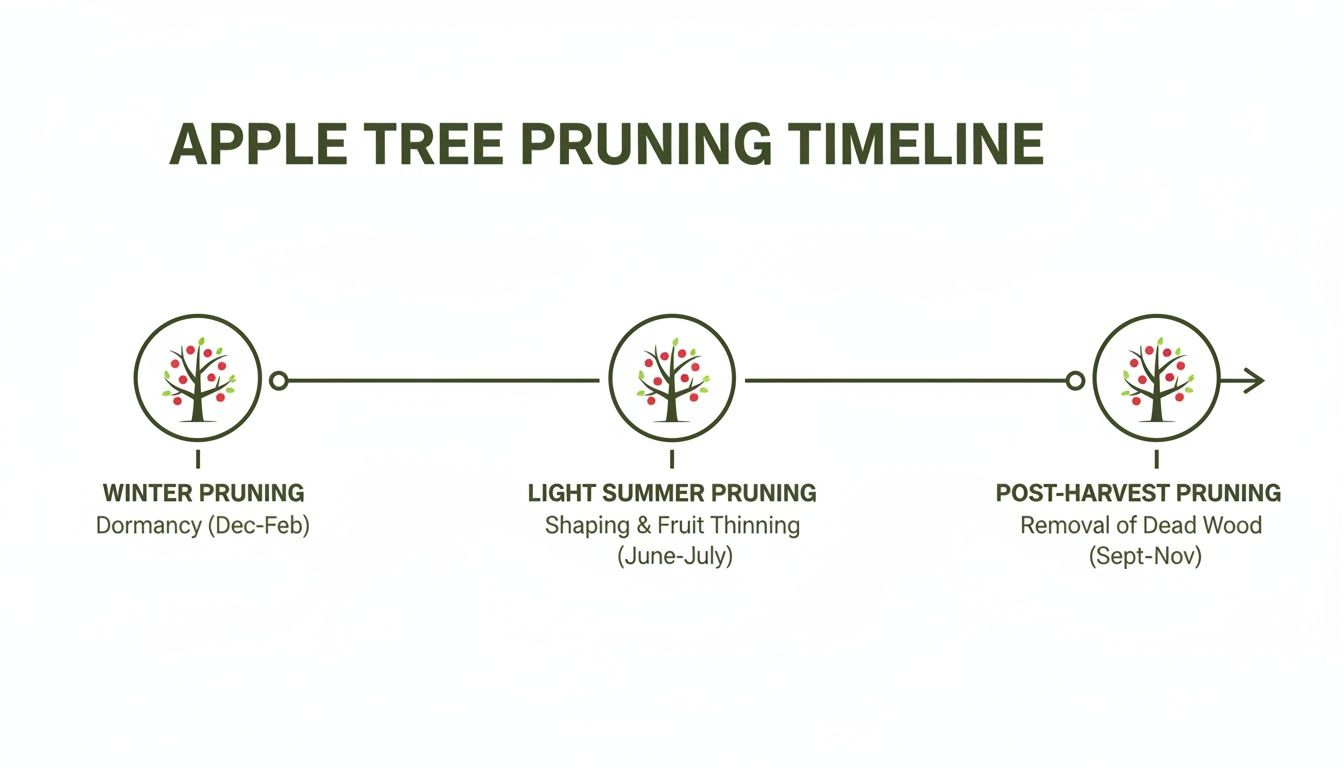
As you can see, the heavy lifting and major structural work is best done in winter, while the finer adjustments to manage new growth are perfect for a summer trim.
To help you keep track, here’s a quick summary of what to do and when.
Apple Tree Pruning Calendar at a Glance
Pruning Season | Primary Goal | Best Time in Perth | Focus of Cuts |
|---|---|---|---|
Winter (Dormant) | Shape the tree's main structure | June – August | Removing dead, diseased, or crossing branches. Creating an open framework. |
Summer | Improve sunlight & air circulation | December – February | Removing vigorous new growth (water sprouts) and thinning the canopy. |
Getting to know these two distinct seasons is your first step. But mastering the art of pruning comes from understanding what each season achieves. If you need to make big structural changes or tackle a seriously overgrown tree, winter is your non-negotiable starting point. For fine-tuning an already healthy tree to get the best possible fruit, that light summer trim can make all the difference.
If you’re staring at your tree and not sure where to begin, or if you have a mature tree that needs an expert eye, the team at Swift Trees Perth is here to help with all your tree maintenance needs.
Mastering Winter Pruning for Structure and Vigor
Winter is when the real magic happens for shaping your apple tree. Once the leaves have dropped, the entire branch structure is laid bare – it's like having X-ray vision into the tree's skeleton. This crystal-clear view is exactly why winter is the absolute best time for major structural pruning here in Perth.
Making those big cuts during dormancy is a game-changer. It means the tree’s stored energy isn't wasted on leaves and fruit; instead, it's funnelled directly into powerful new growth come spring. Think of it as giving your tree a strategic blueprint for the season ahead, telling it precisely where to focus its efforts for a healthy, productive year.
Why a Cool, Dry Day is Your Best Friend
Picking the right season is one thing, but picking the right day is just as crucial. For any pruning job, a cool, dry winter day is what you're looking for. Cutting into branches on a damp or wet day is like rolling out the welcome mat for fungal diseases, which can sneak into the fresh wounds and cause serious long-term health problems.
When you prune in dry weather, you give those cuts a chance to start callousing over right away. This minimises stress on the tree and acts as a natural barrier against common infections. It’s a simple trick of the trade that seasoned gardeners swear by to keep their trees in top shape.
Creating the Perfect Shape
The main goal of a good winter prune is to create an open, vase-like shape. This isn't just about aesthetics; it's fundamental to the tree's health. An open canopy allows sunlight and air to get right into the centre of the tree, which is a massive help in preventing fungal diseases and ensuring all your fruit ripens evenly.
When you head out with your secateurs, your primary targets should be the "Three Ds":
Dead Branches: They contribute nothing and can be a haven for pests and diseases.
Diseased Branches: Get these out immediately to stop any infection from spreading further.
Damaged Branches: Broken or rubbing limbs are open wounds, creating easy entry points for trouble.
After that, look for any branches that are crossing over each other or growing back in towards the trunk. These just create a tangled mess that chokes out light and stops air from moving freely.
A well-pruned tree should look balanced, with branches spaced out nicely. The old gardener's rule of thumb is that a bird should be able to fly straight through the middle of the tree without its wings touching a branch.
Practical Examples from Perth Backyards
Let's bring this home with a couple of common Perth scenarios. Picture a big, old apple tree in a Floreat backyard that's gotten way too tall. Winter is the perfect time to bring its height down, which will let more sun hit the lower branches and make it a whole lot easier to pick the fruit come harvest time. A practical first step would be identifying the main vertical leader and reducing its height by a third, encouraging outward growth.
Or, think of a younger tree in a Kingsley garden that’s growing all bunched up and crowded in the middle. A strategic winter prune can open it right up by removing those inward-facing branches. For example, you would select three or four strong, outward-facing branches to be the main 'scaffold' and remove the weaker ones that are cluttering the centre. This boosts air circulation – a non-negotiable for preventing problems in our sometimes-humid climate. Nailing these techniques is a core part of professional tree pruning services.
It's also fascinating to see how technology is starting to shape these age-old practices. Innovations are emerging in areas like intelligent hedge trimming via robotics and AI, giving us a glimpse into the future of managing plant structure.
For now, though, your best tools are a sharp pair of secateurs and a clear plan. If your tree's structure looks a bit complicated or you're just not sure where to start, don't guess. Get in touch with Swift Trees Perth for some professional advice to make sure your tree is perfectly set up for a fantastic harvest.
Using Summer Pruning for Better Fruit Quality
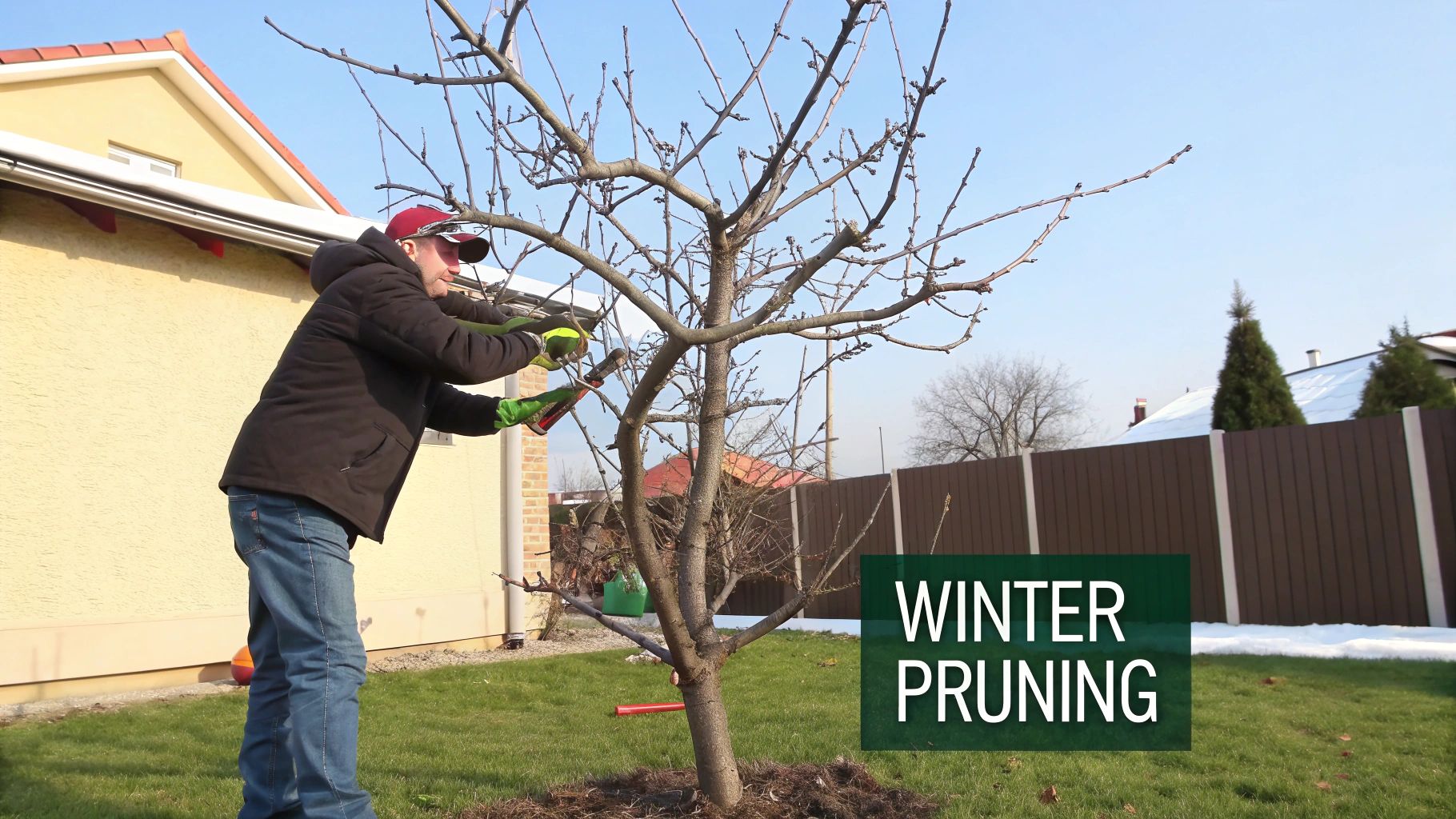
If winter pruning is all about building the strong, foundational structure of your apple tree, think of summer pruning as the expert touch-up. It's a lighter, more strategic trim focused on one thing: getting a better harvest.
This isn't about making big cuts. Instead, it’s about redirecting the tree's energy right where you want it to go. By snipping away some of the excessive leafy growth, you're telling the tree to stop wasting precious resources on leaves and instead pump all that goodness into developing bigger, juicier, and sweeter apples.
It’s also a clever way to encourage more fruit buds to form for next year’s crop, setting you up for future success.
Maximising Sunlight for Sweeter Fruit
One of the biggest wins from a summer prune is thinning out the canopy to let more sunlight hit the fruit. That light exposure is absolutely vital for ripening the apples evenly, helping them develop that beautiful colour and, most importantly, their delicious sweetness.
When the canopy is too dense and leafy, it casts too much shade on the developing fruit. The result? Apples that are often smaller, a bit pale, and lacking in flavour. By selectively removing some of the new leafy shoots, you ensure every single apple gets its time in the sun. It's a simple trick that makes a world of difference to the final taste.
Summer pruning is not about changing the tree's shape; it's about managing its energy. The focus is on removing the vigorous, upright shoots known as 'water sprouts' that grow rapidly but produce no fruit.
When to Time Your Summer Pruning in Perth
While winter is the main event for pruning, many Aussie gardening experts now see a late-summer trim as the perfect follow-up. This is best done in late summer or early autumn, ideally after you've picked all the fruit. This timing helps you avoid accidentally knocking apples off the branches while also keeping aggressive regrowth under control.
For those of us gardening in Perth, the sweet spot for this task is typically during March and April.
Practical Scenarios in Perth Gardens
So, what does this look like in a real Perth backyard?
Picture an apple tree in a Scarborough garden, where the salty, humid air can sometimes encourage fungal problems. A light summer prune opens up the canopy, letting the breeze flow through. A practical action here is to snip off the top 20cm of this season's vigorous, leafy shoots. This improved air circulation is a game-changer for keeping the tree dry and healthy.
Or, imagine a young, energetic apple tree in Morley that’s going wild with leafy growth. A careful summer trim can help slow it down and keep its size manageable without stunting its long-term fruit production. A specific technique is to target the 'water sprouts'—those fast-growing vertical shoots—and remove them right at their base. This kind of work is much more delicate than a big winter prune, and expert tree trimming can ensure it's done just right.
Ultimately, summer pruning is your secret weapon for turning a decent harvest into a truly spectacular one. It’s a proactive step that gives you more control over the quality of your fruit. If you’re not quite sure where to start or want to make sure your tree is perfectly balanced for a brilliant crop, the team at Swift Trees Perth can help.
Learning to Read the Signs Your Tree Needs Pruning
While the calendar gives you a great starting point for when to prune your apple trees, the tree itself is your best guide. Think of it less like following a strict schedule and more like learning its language. Your tree is always communicating, and once you know what to look for, you can give it exactly what it needs to thrive.
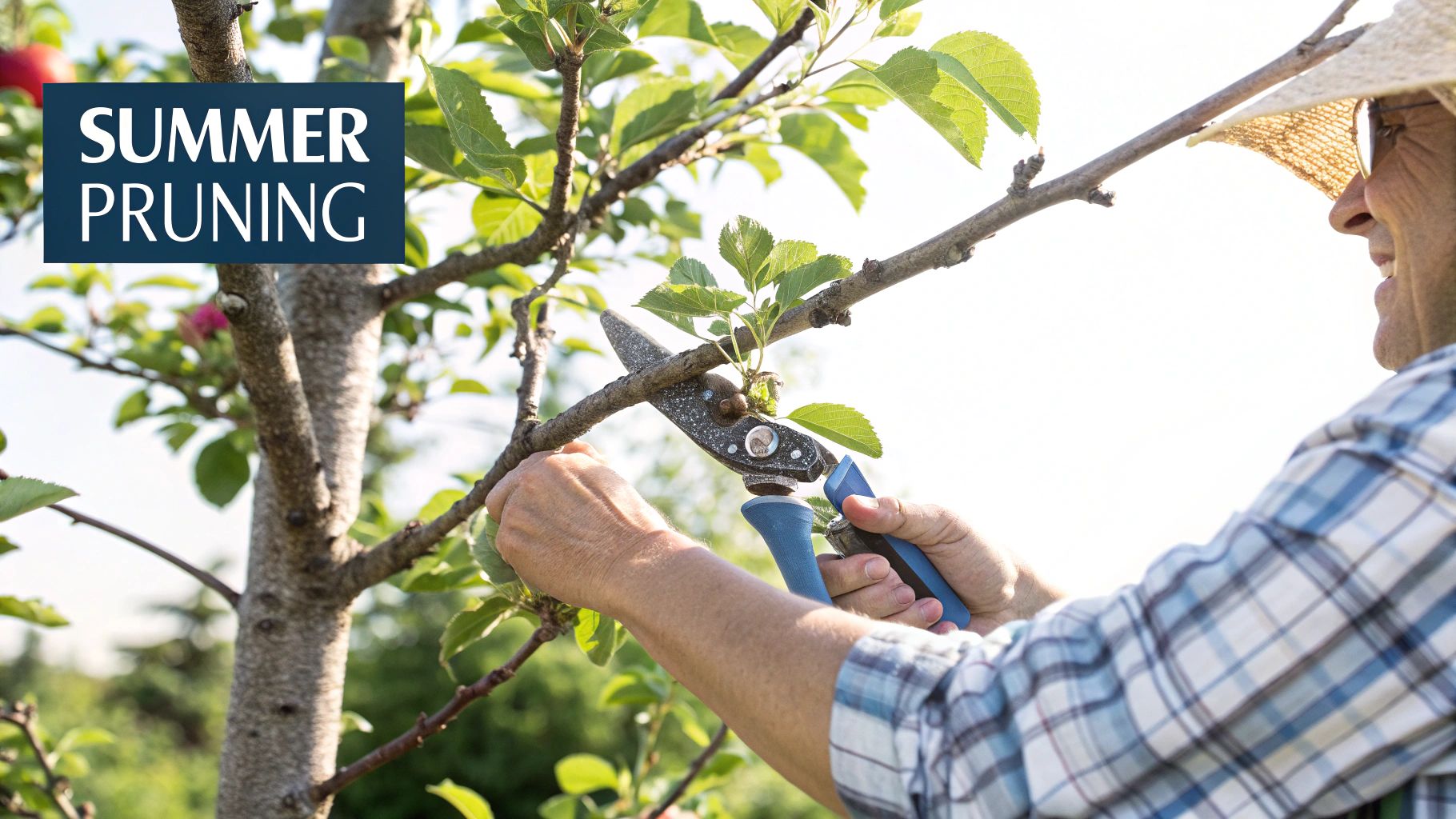
One of the easiest signs to spot is a canopy so thick it looks like a solid wall of leaves. There’s an old arborist’s trick: if a small bird can’t fly through the middle of the tree, it’s too dense. A crowded canopy is a flashing red light, signalling poor air circulation and a perfect breeding ground for fungal diseases.
Obvious Signs of Trouble
Beyond a packed canopy, certain structural issues are screaming for attention. Keep an eye out for these tell-tale signs:
Rubbing or Crossing Branches: Look for branches that are touching, chafing, or growing over one another. This constant friction creates wounds, leaving your tree vulnerable to pests and rot.
Weak or Downward-Growing Branches: Branches pointing straight down or growing at very sharp, narrow angles are structurally weak. On a tree in a Wembley backyard, these are the first to snap under the weight of a heavy fruit load.
Dead, Damaged, or Diseased Wood: This is the most urgent signal. Any branches that look brittle, discoloured, or show signs of disease need to be removed immediately to stop the problem from spreading.
Connecting Poor Fruit to Pruning Needs
Sometimes, the clearest message comes from the harvest itself. Have you noticed your tree is producing masses of leaves but very few apples? Or maybe the fruit you do get is small, bland, and lacks that vibrant colour you’re hoping for? This is often a direct result of an overgrown tree.
An unpruned tree wastes a huge amount of energy making excess wood and leaves. Pruning is how you redirect that energy back into what matters most—a delicious and abundant crop.
For instance, if you see a tangled, unproductive interior on an apple tree in Mount Lawley, that’s a clear sign. The inner branches are starved of sunlight and can’t develop healthy fruit spurs. A good, selective prune opens everything up again, breathing new life into the tree’s fruit-bearing potential for next season.
Learning to spot these visual cues helps you become a proactive caretaker, catching small issues before they become big headaches.
A Visual Checklist for Pruning Needs
To make it even easier, here's a quick checklist comparing a healthy tree with one that’s overdue for a prune.
Symptom to Look For | What It Signals | Recommended Action |
|---|---|---|
Open, airy canopy where you can see daylight through the branches. | A healthy structure with good airflow and light penetration. | Continue with routine annual pruning. |
Dense, tangled branches that block light and air. | Overgrowth, which increases disease risk and reduces fruit production. | Thin out the canopy by removing crossing or crowded branches. |
Upward and outward-facing branches with strong, wide angles. | Strong, productive growth habits. | Encourage this structure by removing poorly angled branches. |
Downward-growing or crossing branches that rub against each other. | Weak structure and potential entry points for disease. | Remove these branches immediately to prevent damage. |
Healthy, vibrant wood and no signs of decay. | Good tree health. | Monitor and remove any deadwood as it appears. |
Brittle, discoloured, or dead branches (deadwood). | Disease, stress, or natural die-off. | Cut out all deadwood right away to keep the tree healthy. |
Abundant, colourful fruit that ripens evenly. | A productive tree getting enough sun and nutrients. | Enjoy your harvest! |
Small, poorly coloured fruit or a lack of fruit altogether. | The tree's energy is going into wood and leaves, not fruit. | Prune to redirect energy back into fruit production. |
This table should help you quickly diagnose your tree's health just by looking at it. A few minutes of observation can tell you everything you need to know.
If you’ve spotted these signs on your own apple tree but feel a bit overwhelmed by the task ahead, don’t hesitate to get some expert help. For professional tree care tailored to Perth’s unique conditions, contact Swift Trees Perth for a free, no-obligation quote.
Tailoring Your Pruning to the Tree's Age and Energy
Knowing when to prune your apple tree is only half the battle. The other half is understanding what your tree needs right now, and that all comes down to its age and energy.
A young sapling just getting started in a Woodvale garden requires a completely different approach than a grand old veteran that’s been fruiting for decades in Victoria Park. Think of it like this: you wouldn't give a toddler the same haircut as a senior citizen. Each stage of life has its own unique requirements, and tailoring your pruning style is the secret to a long, healthy, and productive tree.
Pruning Strategies for Every Life Stage
Your tree will generally fall into one of three categories, each with a clear goal and a specific type of pruning to match.
Formative Pruning (Young Trees): For the first two or three years, it’s all about creating a solid foundation. The goal here isn't fruit, but structure. You're selecting three to five strong 'scaffold' branches and removing any that compete with them. This creates that classic open vase shape, which is crucial for letting in light and supporting the weight of future harvests.
Maintenance Pruning (Mature Trees): Once your tree is well-established, your focus shifts to keeping it healthy and productive. This is your annual winter prune, where you tackle the "Three Ds"—dead, damaged, and diseased wood. You’ll also thin out any crowded areas to improve air circulation and manage the tree's height to make harvesting easier.
Restorative Pruning (Old or Neglected Trees): Bringing an overgrown or neglected tree back to its former glory is a marathon, not a sprint. This careful process should be spread out over two to three years. You should never remove more than a third of the canopy in one go, as this can send the tree into shock. It’s a slow and steady job of reclaiming its shape and health.
Managing Your Tree's Energy Levels
Beyond its age, you also need to read your tree's ‘vigour’—basically, its energy for growth.
A heavy winter prune acts like a strong coffee for the tree, stimulating a burst of vigorous new growth. This is perfect for waking up a tired, slow-growing tree. On the flip side, a light summer prune can gently calm down an overly energetic tree that’s putting all its effort into leaves instead of fruit. This is a fashionable insight in modern horticulture, moving beyond simple tidying to actively directing the tree's biological processes.
This concept of managing vigour is a cornerstone of modern apple growing in Australia. Professional growers even have a target for balanced growth, aiming for an annual shoot length of 20–30 cm. This scientific approach helps them maintain consistent, high-quality fruit production year after year. You can learn more about how pruning affects tree vigour from Apple and Pear Australia Ltd (APAL).
When you learn to read your tree’s age and energy, you graduate from simply cutting branches to actively sculpting a healthier, more fruitful plant. It's the difference between a quick trim and a professional style designed for long-term success.
If you’re not sure how to assess your tree's needs or want to make sure its structure is set up for a long and productive life, getting an expert opinion can be invaluable. Contact us today to look after your tree maintenance needs.
Partner with Perth's Pruning Professionals
Knowing the theory behind when to prune your apple trees is one thing. But getting out there with the loppers and making the right cuts is a whole different ball game.
While tackling a smaller tree can be a really satisfying weekend job, going after large, overgrown, or awkwardly placed apple trees comes with some serious risks. This is where calling in a professional really makes a difference. An incorrect cut can set your tree back for seasons to come, and working up a ladder without the right safety gear is a recipe for disaster.
Why Bring in a Professional Arborist?
Getting an expert to handle the job ensures it’s done right the first time, protecting your tree’s future and keeping your property safe.
Expert Pruning Techniques: We don’t just cut branches. We use proven arborist methods to improve your tree’s structure, encourage airflow, and maximise your fruit yield for next season.
Safety Is Everything: Our team is fully trained and equipped to handle the tricky stuff—like pruning trees tangled in powerlines or hanging over fences and homes.
Decades of Local Know-How: Swift Trees Perth has been looking after backyards across the city for years, from Duncraig down to Mullaloo. We know Perth’s climate and what your trees need to thrive in it.
Don't gamble with your tree's long-term health or your family's safety. A professional assessment means every single cut is made with a clear purpose, paving the way for a beautiful, productive tree for years to come.
Your apple tree is a real asset to your garden, so it deserves proper care. For expert advice and a free, no-obligation quote on your tree maintenance, contact Swift Trees Perth today. Let's get it thriving together.
Your Apple Tree Pruning Questions Answered
We get a lot of questions from Perth homeowners about the nitty-gritty of apple tree pruning. Let's tackle some of the most common ones.
What Happens If I Prune My Apple Tree at the Wrong Time in Perth?
Timing really is everything, and a poorly timed prune can seriously stress your tree and ruin your harvest.
For example, if you prune too late in autumn, you can accidentally encourage a flush of new growth right before the cooler weather hits. This tender new growth is easily damaged by the cold, which wastes the tree’s precious energy.
On the other hand, pruning too late in spring after the buds have already burst is like literally snipping off your future apples. Big cuts in summer can also lead to sunburn on newly exposed bark and branches. For major structural work, sticking to that dry, dormant winter window is always the safest bet in Perth's climate.
How Much Should I Cut Off My Apple Tree When I Prune It?
The golden rule is to never remove more than 25-30% of the tree's entire canopy in a single year. Honestly, for a tree that's been looked after, you'll be cutting off far less than that.
Your first targets should always be the 'Three Ds': any wood that's visibly dead, damaged, or diseased. After that, look for structural problems, like branches that are crossing over and rubbing against each other. Finally, you can thin out any really crowded areas to let more sunlight and air flow through the tree.
The real aim here is to build a strong, open framework for the tree to grow on—it's not just about giving it a haircut. If you're dealing with a seriously overgrown tree, it's much better to spread the pruning out over two or three years to avoid sending it into shock.
Can I Save a Very Old and Neglected Apple Tree?
You absolutely can, but it’s a marathon, not a sprint. This job calls for a special technique known as 'restorative pruning', which is a multi-year recovery plan to gently bring an old tree back to good health.
We typically spread this work across three years:
Year One: Start by clearing out all the deadwood. Then, tackle about one-third of the worst structural problems, like poorly angled or crossing branches.
Years Two & Three: Continue to chip away at the remaining problem branches, slowly guiding the tree back into a healthier shape and encouraging strong, productive new growth.
This patient, methodical approach stops the tree from panicking and throwing out a heap of weak, vertical shoots (called watershoots) that won't produce fruit. For a beloved old tree, getting some professional guidance is the best way to ensure it survives and thrives for years to come.
If your apple tree's pruning needs feel a bit out of your depth, or you'd just rather have the peace of mind that comes with an expert touch, the team at Swift Trees Perth is ready to help. Proper tree maintenance is key to a healthy garden and a bountiful harvest. Don't let uncertainty hold you back—reach out to the professionals. Contact us today for a free, no-obligation quote on all your tree maintenance needs.
Comments