
How to Trim a Palm Tree: A Perth Homeowner's Guide

Knowing how to correctly trim a palm tree is a skill every Perth homeowner should have. In our unique Mediterranean climate, a well-cared-for palm isn't just a garden feature; it's a statement piece that enhances your property's entire aesthetic. This isn't about giving it a quick haircut—it's about understanding how to keep the tree thriving and protecting your property in style.
Why Proper Palm Tree Trimming Matters in Perth
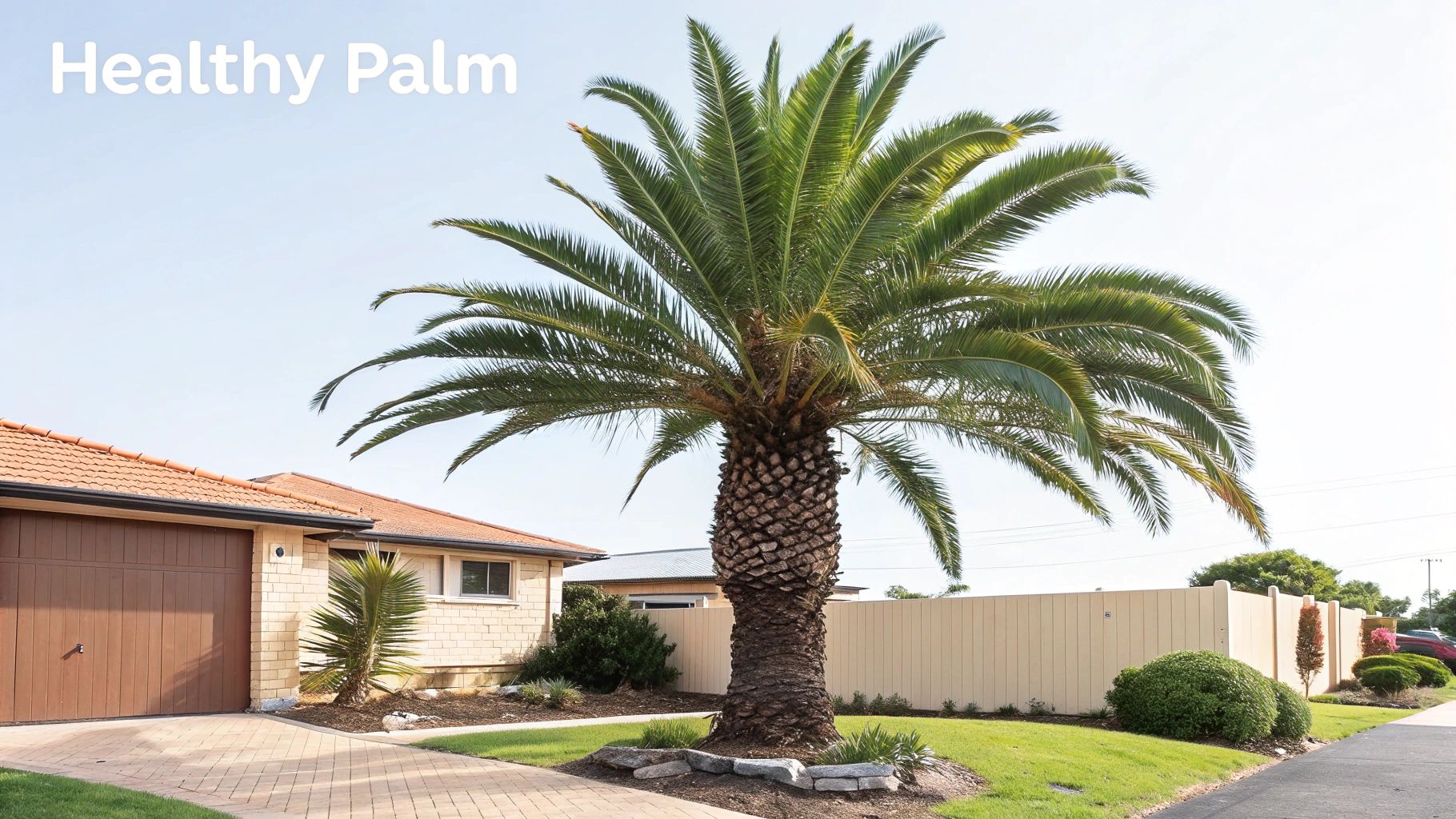
Trimming a palm correctly is vital. Over our 20+ years of experience in Perth, we’ve seen countless cases where incorrect pruning has done more harm than good. A common mistake is the harsh "pineapple" cut, where healthy green fronds are stripped away to create a specific shape. While some might think it looks neat, it's actually starving the tree of vital nutrients. For instance, aggressively trimming a healthy Foxtail Palm can ruin its naturally full, lush canopy, which is its main fashionable feature.
This kind of stress can weaken the trunk, invite pests, and slow down the palm's growth for years.
More Than Just a Pretty Palm
Proper trimming is more like a health check-up for your tree. From Duncraig down to Mount Lawley, the benefits of doing it right are obvious.
Boosts Tree Health: When you remove dead or dying fronds, you're helping the palm focus its energy on new growth. It also gets rid of the decaying matter where fungal diseases love to grow.
Enhances Safety: Loose, heavy fronds can be a real hazard, especially when Perth’s infamous gusty winds pick up. A good trim prevents them from falling and damaging your home, car, or fences.
Deters Pests: That thick skirt of dead fronds is the perfect hideout for rats, cockroaches, and other unwanted visitors. Cleaning up the trunk sends them packing.
A healthy palm tree is a resilient one. Selective pruning of only brown or yellowing fronds ensures the tree retains its natural defence mechanisms, making it better equipped to handle the stresses of a hot Perth summer.
Ultimately, the goal is to work with the palm’s natural growth cycle, not against it. This approach ensures your palm remains a stunning and safe centrepiece in your garden for years to come.
Before you even think about picking up a saw, understanding why you're making each cut is the most important step. If you're ever unsure about the health of your palm or the best way to trim it, don't hesitate to contact the experts at Swift Trees Perth for professional advice and service.
The Best Time of Year to Prune Your Palm
Knowing how to trim a palm is only half the battle. Knowing when to do it is just as crucial for its long-term health and survival.
In gardening, timing is everything, and your palm tree is no different. Pruning at the wrong time of year can put it under enormous stress, leaving it wide open to disease or damage from the harsh Perth elements.
Think of it like trying to recover from surgery during a scorching heatwave—it’s a lot harder on the body. Your palm feels the same way. By working with its natural growth cycle, you give it the best possible chance to heal quickly and get back to thriving. This isn't about circling a date on a calendar; it's about understanding the seasons and learning to read your tree’s signals.
The Prime Pruning Window in Perth
For our Mediterranean climate here in Perth, the sweet spot for palm trimming is late spring, from September to October.
This period offers the perfect balance. The winter chill has passed, and the palm is kicking into its most active growth phase. Pruning now means the tree can use all that increasing sunlight and milder weather to heal its wounds quickly, long before the intense heat of summer kicks in.
Autumn can also be a decent window for a tidy-up. As the weather cools and the rains start, a light prune prepares the tree for its slower winter period without disrupting its peak growth.
Timing is everything in Perth's unique climate. Early spring is the prime season, mirroring advice from Australian experts for optimal recovery and growth. Waiting until the winter rains have passed but before summer's peak temperatures allows palms to heal quickly.
Seasons to Approach with Caution
While spring and autumn are your best bets, summer and winter are seasons where you need to be a bit more careful.
Summer Risks: Pruning in the peak of summer, especially during a heatwave, can cause serious stress. Fresh cuts lose moisture fast and become easy entry points for pests and diseases. In fact, industry observations suggest that over 30% of heat-stressed trees are more susceptible to these issues.
Winter Risks: In winter, your palm’s growth slows right down. If you prune during this dormant phase, the tree will take much longer to heal. This leaves it exposed to potential fungal infections during our damp, cool weather.
Getting the timing right is a cornerstone of good palm care. For a deeper dive into how the seasons affect different species, have a look at our guide on the best time to prune trees in Australia.
Ultimately, a healthy, beautiful palm is the result of patient and well-timed maintenance. If the timing feels off or the job just seems too big, it’s always smart to get an expert opinion. For advice tailored to your specific palm, contact Swift Trees Perth for your tree maintenance needs.
Your Essential Toolkit for Palm Trimming
Before you even think about starting to trim a palm tree, getting the right gear together is non-negotiable. Trying to make do with the wrong equipment isn't just a waste of time; it can seriously damage your palm and, more importantly, put your safety on the line.
Think of your tools as a long-term investment in your garden’s health. Quality gear delivers clean, precise cuts that help your palm thrive, not harm it. A blunt saw, for instance, won't slice cleanly—it'll tear at the bark, leaving a jagged wound that’s an open invitation for pests and disease. Likewise, a cheap pair of gloves won't do much against the surprisingly sharp edges of palm fronds.
Core Tools for Clean Cuts
For most homeowners in Perth, a small collection of key tools will handle the job perfectly. You don’t need a whole workshop, just the right items to get the pruning done safely and effectively.
A Sharp Pruning Saw: This will be your go-to tool. A curved pruning saw is perfect for getting into that tight spot right at the base of the fronds. Its sharp teeth make sure you get a clean slice through the tough fibres without any tearing.
Lopping Shears: For thinner flower stalks or smaller, more accessible fronds, a good pair of long-handled lopping shears will give you excellent leverage for a quick, clean snip.
Pole Saw: If your palm is taller than you can comfortably reach from the ground, a pole saw is an absolute must-have. It allows you to trim from the safety of solid ground, completely avoiding the risks that come with balancing on a ladder.
Pro Tip: Always sterilise your tools before and after you use them. A quick wipe-down with a rag soaked in rubbing alcohol or a diluted bleach solution is all it takes to stop the spread of diseases from one plant to another. A healthy palm really does start with clean equipment.
Personal Protective Equipment Is a Must
Palm trimming comes with its own set of hazards, from falling seed pods and fronds to sharp spikes you didn't see coming. Never, ever skip on Personal Protective Equipment (PPE).
Sturdy Gloves: Palm fronds can be deceptively sharp and spiky. A pair of thick, durable gardening gloves is essential to protect your hands from nasty cuts and scrapes.
Safety Glasses: Dust, tiny fibres, and other bits of debris will almost certainly start falling as you work. Protect your eyes properly with a pair of wraparound safety glasses or goggles.
Long Sleeves and Trousers: Wearing protective clothing is a simple way to prevent scratches and skin irritation from the palm's rough bark and fronds.
For a more detailed look at the equipment the professionals use, you can check out our pro guide to using palm tree trimmers for some extra insights.
If you find yourself needing to use a ladder, safety is paramount. Always maintain three points of contact—that means two feet and one hand, or two hands and one foot on the ladder at all times. And, of course, make sure it’s placed on stable, level ground before you even think about climbing it.
To make things easier, here’s a quick checklist to make sure you have everything you need before you start.
Palm Trimming Toolkit Checklist
Item | Purpose | Pro Tip |
|---|---|---|
Pruning Saw | For clean cuts on thick fronds close to the trunk. | A curved blade helps get into tight angles. Keep it sharp for the best results. |
Lopping Shears | Ideal for snipping off thinner flower or seed stalks. | The long handles provide extra leverage, making cuts easier and cleaner. |
Pole Saw | Essential for reaching high fronds safely from the ground. | Choose an extendable model for versatility. Practice on a lower branch first to get a feel for it. |
Sturdy Gloves | Protects hands from sharp frond edges and spikes. | Leather or reinforced synthetic gloves offer the best protection. |
Safety Glasses | Shields eyes from falling dust, fibres, and debris. | Wraparound styles offer more complete protection than standard glasses. |
Protective Clothing | Prevents scratches and irritation from bark and fronds. | A long-sleeved shirt and sturdy trousers are a must. |
Sterilising Solution | Prevents spreading diseases between plants. | A simple mix of 1 part bleach to 9 parts water or rubbing alcohol works perfectly. |
With the right tools and safety gear ready to go, you’re all set to tackle the job with confidence. But remember, if your palm is just too tall or you feel the slightest bit uneasy about the task, don't hesitate. It's always better to be safe than sorry.
A Practical Guide to Trimming Your Palm Tree
Alright, with your tools clean and sharp, it’s time to get down to the actual trimming. This is where a bit of technique and a healthy dose of patience really pay off, ensuring your palm not only looks fantastic but stays healthy for years.
Before you even think about making a cut, take a good look at the tree. Do a full walk-around and pinpoint exactly what needs to go. You’re hunting for fronds that are completely brown, yellow, or obviously broken. This quick assessment is your best defence against over-pruning, which can do more harm than good.
Mastering the Art of the Cut
The aim here is to make clean, deliberate cuts that the palm can seal over quickly. The way you’d tackle the thick, overlapping ‘skirt’ of dead fronds on a big Washingtonia palm, for instance, is completely different from the delicate, selective snipping a Kentia palm needs.
Leave a Small Stub: Whatever you do, don't cut a frond flush against the trunk. This creates a big wound—what we call scarring—that leaves the palm wide open to pests and diseases. Instead, always leave a small piece of the frond base, maybe two to three inches, still attached to the trunk.
Remove Flower and Seed Stalks: While they're a normal part of a palm’s life, old flower stalks and heavy seed pods suck energy away from new growth. Plus, they make a huge mess. Snip these off near where they sprout from between the frond bases.
This visual guide breaks down the essential gear for a safe and effective palm trim.
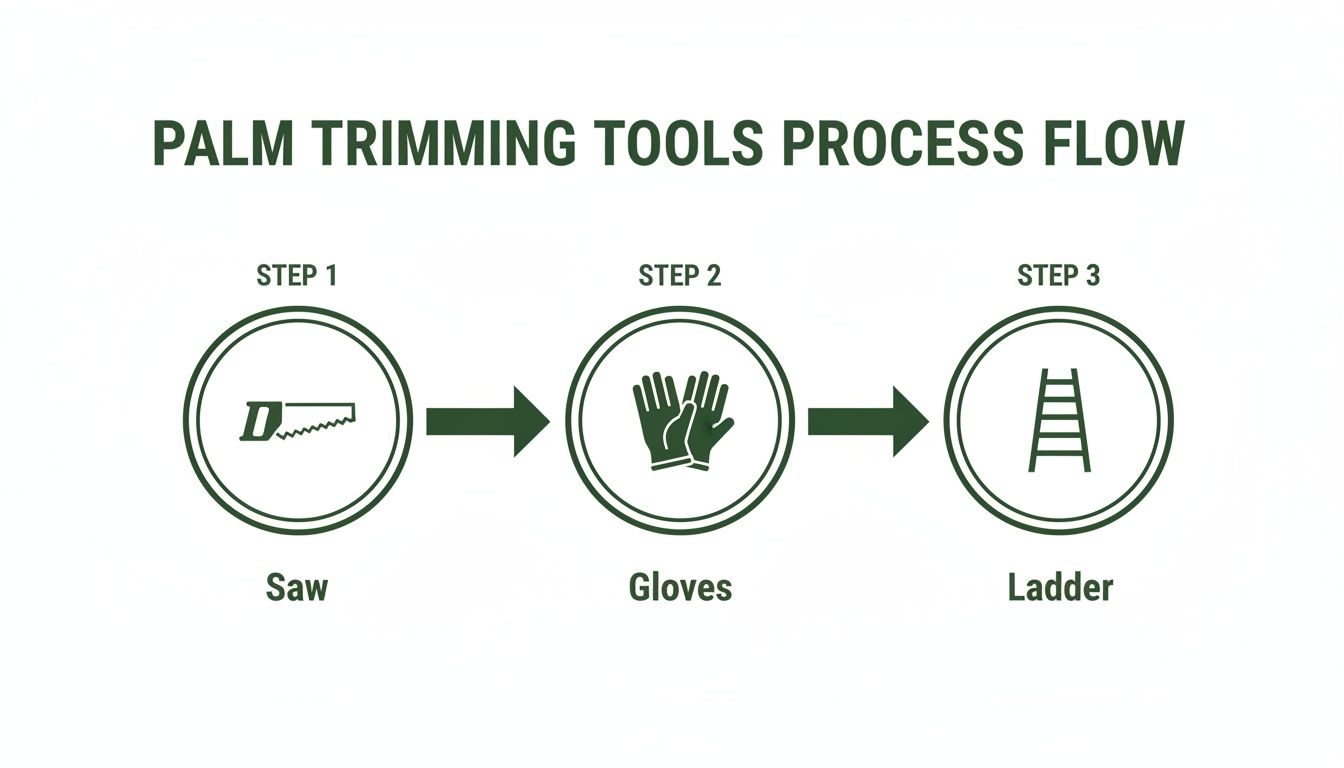
As the chart shows, a sharp saw for the fronds, good protective gloves, and a stable ladder for reaching higher up are the absolute basics for any palm trimming job.
The Golden Rule of Palm Trimming
If you remember only one thing, make it this: what arborists call the ‘9 to 3’ rule. Picture the head of your palm like a clock face. You should only remove fronds hanging below the horizontal 9 and 3 o’clock line. Simple as that.
Any fronds growing at or above this imaginary line are still green and actively photosynthesising, even if they look a bit droopy. They’re the tree's solar panels, busy making food. Cutting them off starves the palm of energy and can seriously weaken it.
The '9 to 3' rule is non-negotiable for your palm's health. Cutting into the green canopy can shock the tree, stunt its growth, and make it far more vulnerable to the stress of a hot Perth summer.
A Real-World Palm Case Study in Perth WA
Let's say you have a common Queen Palm in your Perth backyard. You spot several brown, drooping fronds at the bottom and a couple of heavy seed stalks hanging down. With a sharp pruning saw, you’d cut off each brown frond, remembering to leave that small stub against the trunk. Next, you'd use loppers or the saw to remove the seed stalks right where they meet the canopy.
You’d have to resist the urge to "tidy up" any green fronds pointing upwards, even if their tips are a little yellow. This selective approach is what keeps the palm healthy and strong.
Once you’ve perfectly trimmed your palm, you'll be left with a fair bit of green waste. It’s worth looking into efficient disposal options like utilizing green waste skip bins to handle the cleanup without a fuss.
This careful, step-by-step method will give you a professional-looking result without putting your tree's health at risk. But if you're standing there looking at your palm, feeling a bit unsure, or if the job involves working at height, our team is always here to help.
For expert advice and a professional finish, contact Swift Trees Perth for your tree maintenance needs. We can handle the trimming safely and efficiently, ensuring your palm remains a beautiful feature of your property.
Knowing When to Call a Professional Arborist
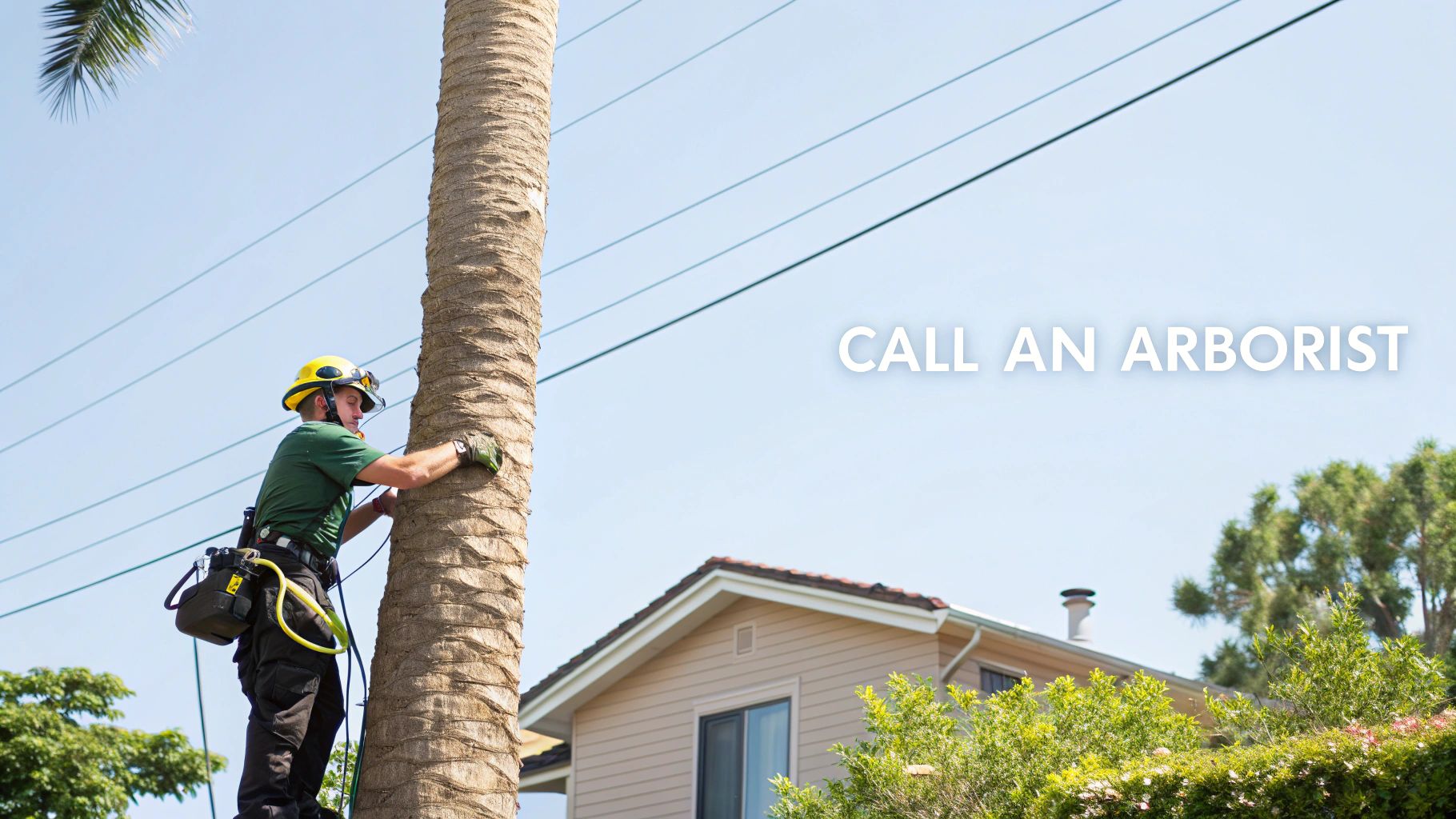
While the satisfaction of a well-executed DIY project is undeniable, knowing how to trim a palm tree also means knowing your limits. Safety has to be the top priority, and some jobs are simply too big or too risky for a homeowner to tackle alone.
It’s about making a smart, informed choice that balances your can-do spirit with a healthy respect for the very real dangers involved. It’s easy to underestimate the weight of a falling frond or misjudge the stability of a ladder, especially when you’re focused on the task at hand.
When the Risks Outweigh the Rewards
Certain scenarios dramatically increase the risk of injury or property damage. These are clear signals that it’s time to step back and call in a qualified arborist who has the training, insurance, and specialised equipment to handle the job safely.
You should always bring in a professional for these high-risk situations:
Tall Palms: If your palm is taller than a single-storey house (roughly 4-5 metres), it's well out of DIY territory. Working at that height on a ladder with a saw is extremely hazardous.
Proximity to Hazards: Any palm growing near power lines, your house, your neighbour’s fence, or over a busy footpath requires a professional assessment. The potential for disaster is just too high.
Signs of Disease or Damage: If you notice fungal growth, deep cracks in the trunk, or a significant lean, the tree's structural integrity could be compromised. An expert needs to evaluate it before any trimming begins.
The decision to call a professional isn't an admission of defeat; it's a mark of a responsible homeowner. Recognising when a job requires expert skills is crucial for protecting yourself, your family, and your property.

The Reality of Tree Work Dangers
The risks aren't just theoretical. Tree-related work in Western Australia carries significant dangers. In fact, trimming and lopping operations account for a startling 20% of all serious injuries and fatalities among professional tree workers in WA.
This stark statistic hits close to home for Perth homeowners, where palms are a common sight in suburbs like Bassendean and Floreat. If the pros face these risks with all their training, it highlights the dangers for an amateur.
For a clearer understanding of the skills and qualifications involved, our guide on what an arborist does provides valuable insight into their specialised role.
A professional arborist doesn’t just cut branches; they assess tree health, identify potential hazards, and use industry-standard safety protocols to manage complex jobs. They bring experience that simply can't be matched by watching a few online tutorials.
If your palm trimming job involves any of the risks mentioned above, don’t hesitate. Your safety is worth far more than the cost of a service call.
Your Local Partner for Palm Care in Perth
Knowing how to properly trim a palm tree is a great skill to have, but the real secret is knowing when to call for backup. The fundamentals are pretty straightforward: only ever trim dead or dying fronds, stick to the ‘9 to 3’ rule to avoid harming healthy growth, and always put safety first.
But when the job starts to feel too big, too high up, or just plain risky, getting a professional in isn't just a matter of convenience—it's essential.
This is exactly where our team at Swift Trees Perth comes in. With over 20 years of hands-on experience helping communities from Duncraig to Mount Lawley, we’ve built our name on providing safe, expert tree care. We’re more than just a service; we are fully qualified arborists who genuinely care about the long-term health and beauty of your palms.
Why Choose a Local Perth Expert?
Going with a local professional means you’re hiring someone who gets Perth’s unique climate and environment. It’s a practical move, too. Here in Perth, the cost for palm tree trimming can run anywhere from $250 to over $2,500, all depending on the tree’s height, how easy it is to access, and what’s nearby.
This price range reflects the specialised work needed to safely handle palms in suburbs like Greenwood and Mullaloo, where falling fronds can be a serious risk. You can learn more about local palm tree service costs on abtrees.com.au.
When you're looking for a trusted local partner for palm care, it's also a good idea to reach out to specialised landscaping professionals in your area, as they often have great connections to qualified arborists.
A professional arborist doesn’t just give your tree a haircut; they assess its overall health, spot potential hazards, and do the job with a level of precision that protects both your property and the tree itself.
Our team brings together that crucial local knowledge with industry-best practices, making sure every single cut supports the tree's health and keeps your property safe. We show up with all the right gear, the right skills, and a solid promise to leave your garden even cleaner than we found it. We take care of the entire job, from the first look to the final clean-up, leaving you with nothing but peace of mind and a perfectly looked-after palm.
Ready to give your palms the professional attention they deserve? Trust the local experts who know Perth’s trees best. For a free, no-obligation estimate, contact Swift Trees Perth today and see what a difference our expertise can make.
Your beautiful, healthy palms are just a call away, so don't hesitate to reach out to us for all your
tree maintenance needs.

Comments