
Pruning a Palm: A Stylish Guide to Pruning Your Palm Safely

Pruning a palm tree is about much more than just a quick tidy-up. It's a critical task for the tree's health and the safety of your property. The goal is to selectively remove only the dead or dying fronds—usually the ones drooping below a horizontal line—to prevent hazards and steer the tree toward healthy new growth. When you get it right, your palm looks fantastic, enhances your property's aesthetic, and poses zero risk.
Why Proper Palm Pruning Is Non-Negotiable
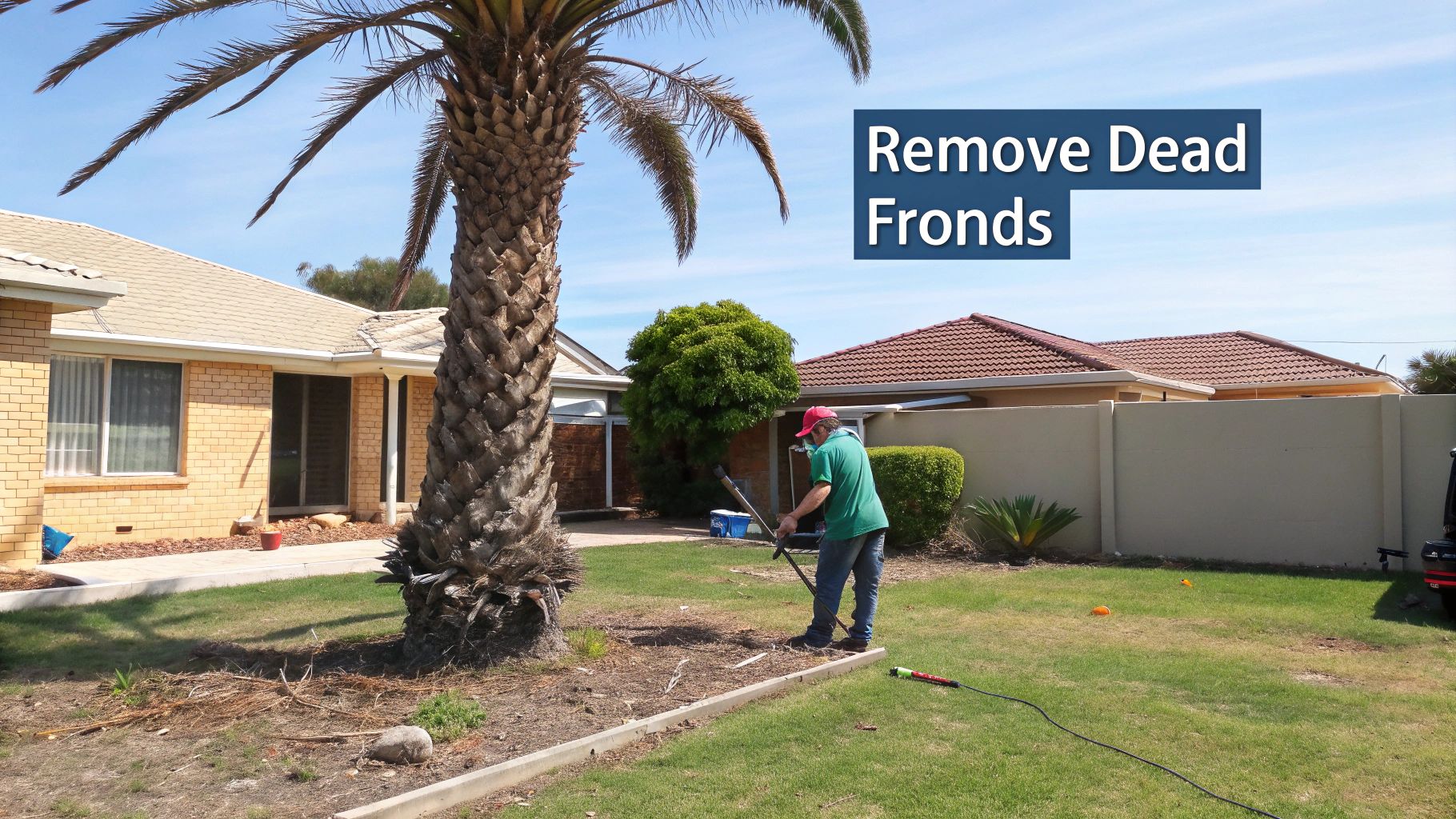
Many Perth homeowners love their palms for that low-maintenance, tropical vibe, but letting them go can cause some serious headaches down the track. Proper pruning isn't just about aesthetics; it's about being a responsible tree owner. Those dead, drooping fronds are more than an eyesore—they're a genuine hazard waiting to happen.
During one of Perth’s infamous storms, those heavy, dead fronds can turn into dangerous projectiles, putting your home, car, or even people at risk. Picture a classic Perth southerly buster rolling in; an unpruned palm can shed fronds that could easily damage a patio roof or a parked car. On top of that, a dense thatch of dead leaves is an open invitation for pests like rats and insects, which can easily find their way into your home.
The Benefits Beyond Aesthetics for Pruning your Palm Safely
Beyond just managing the risks, a smart approach to palm pruning brings huge health benefits to the tree itself. By clearing out the dead foliage, you're massively improving air circulation through the canopy, which is your best defence against fungal diseases taking hold.
This also means the palm can redirect its precious energy and nutrients towards new, healthy growth instead of wasting it on fronds that are on their way out. A well-maintained palm is simply a stronger, more resilient tree. These ideas are a core part of our top tree maintenance tips for Australians.
Pruning isn't just about what you remove; it's about what you leave behind. The goal is to support the palm's natural lifecycle by clearing away only what is dead or truly dying, allowing the healthy, green fronds to thrive.
Finding the Right Rhythm
It can be tempting to get out there and prune frequently for that perfectly manicured look, but over-pruning will do more harm than good. You need a balanced approach.
Most arborists agree that for landscape palms in Australia, pruning every one to two years is the sweet spot. This schedule keeps the tree healthy without causing it unnecessary stress.
Understanding these basic principles is the first step toward feeling confident about looking after your palms. If your trees are starting to look a bit wild or you’re just not sure where to begin, getting some professional guidance is always the safest bet.
For expert tree maintenance tailored to Perth’s unique conditions, contact Swift Trees Perth for a professional consultation.
Finding the Perfect Time to Prune Perth Palms
Timing the prune for your palm isn't about circling a date on the calendar; it's about listening to the tree's natural rhythm. Just like us, palms have seasons of high energy (when they're growing like mad) and seasons of rest. The trick is to prune during that energetic, growing phase for a quick recovery and a healthy, vibrant tree.
For those of us here in sunny Perth, that perfect window opens in late spring and stretches right into early summer. This is when your palm is pushing out new growth. Any cuts you make will heal incredibly fast, almost like a small scratch on your skin. This rapid "wound sealing" is your best line of defence against pests and diseases looking for an easy way in.
The Risks of Winter Pruning
It’s tempting to get all the garden jobs done during the cooler months, but when it comes to palms, pruning in winter is a big mistake. A palm's growth slows right down in the cold, entering a state of near-dormancy to save energy.
If you prune then, you're leaving open wounds that might take weeks or even months to properly heal. Those slow-healing cuts are an open invitation for fungal infections, especially with Perth’s winter dampness creating the perfect breeding ground for disease.
Practical Scenarios for Perth Palms
Let's ground this in some real-world examples you might see in your own garden.
The Pre-Summer Tidy-Up: You've got a magnificent Canary Island Date Palm. By late November, it's likely collected a fair few brown, drooping fronds over winter. Pruning it now not only gets it looking sharp for Christmas but also removes a potential fire hazard before the summer heat really kicks in.
Post-Winter Cleanup for Cocos Palms: Cocos (or Queen) Palms can often look a bit battered after a wet, windy winter. Early spring is the ideal moment to snip off any yellowing or broken fronds. This allows the palm to channel all its energy into producing a lush new canopy as the weather warms up.
The golden rule is simple: listen to your tree. Pruning during its active growth season works with its natural cycle, not against it. This minimises stress and sets your palm up for a season of strong, healthy development.
Across Australia, the best time to prune a palm really depends on the local climate. While folks in southern regions might prune in late winter, the expert advice for subtropical and temperate areas like ours always points to the active growth period. As any local arborist will tell you, this ensures quick wound closure and encourages vigorous new frond production. You can read more about the best time to prune palms to understand why timing is so crucial.
Perth Palm Pruning Season Guide
To make it even clearer, here’s a simple breakdown of the year from your palm’s perspective. This table cuts through the noise and gives you a straightforward guide for your Perth garden.
Season | Recommended Action | Reasoning |
|---|---|---|
Late Spring to Early Summer (Optimal) | Prune. Remove dead or dying fronds. | The palm is in its active growth phase, meaning wounds will heal quickly and the risk of disease is low. |
Mid-Summer to Autumn | Monitor. Only remove fronds that are an immediate safety hazard. | The tree is still growing, but intense heat can add extra stress. It's better to wait if possible. |
Winter (Avoid) | Do not prune. Leave the tree be. | Growth is dormant. Slow healing makes the palm vulnerable to fungal infections and pest infestations. |
Following this simple schedule takes the guesswork out of palm maintenance. It ensures that when you're out there with the saw, you’re actually helping, not harming, its long-term health.
If the timing feels confusing or your palm's needs seem a bit more complex, getting some professional advice is always a smart move.
For a personalised assessment and a maintenance plan perfectly suited to your palm species and Perth’s climate, contact the experienced team at Swift Trees Perth today.
Choosing the Right Tools for the Job
Heading out to prune a palm without the right gear is like trying to cook a gourmet meal with a butter knife – you'll make a mess, but you won't get the results you're after. Using the proper equipment isn't just about getting the job done faster; it's absolutely fundamental for your safety and the long-term health of your palm tree.
The right tool makes a clean, surgical cut. Why does that matter? A clean cut helps the tree heal much faster and wards off disease. Think of it this way: a surgeon wouldn't use a dull scalpel. Every single cut on your palm should be made with a sharp, clean blade. Ragged, torn cuts from blunt tools create bigger wounds that are slow to heal, leaving your palm wide open to pests and fungal infections, which just love Perth’s more humid seasons.
Your Essential Palm Pruning Arsenal
Putting together your toolkit doesn't need to be overwhelming. For most small-to-medium palms you'll find around Perth, a few key pieces of equipment will see you through.
Hand Pruners or Shears: These are your go-to for smaller, younger palms. They're also perfect for snipping off thin flower stalks and seed pods with precision, especially when working close to the trunk.
Loppers: With their long handles, loppers give you that extra bit of leverage you need to slice through the thicker stems of mature fronds that your hand shears just can't handle. They’re a fantastic middle-ground tool.
Pruning Saw or Pole Saw: When you're up against larger, tougher fronds or branches that are just out of reach, a pruning saw is essential. A pole saw is even better, as it extends your reach and lets you prune higher fronds safely from the ground—which is always the smartest option.
A great tip for any modern gardener is to invest in ergonomic tools. Newer designs with cushioned grips and geared mechanisms seriously reduce the strain on your hands and wrists. It makes the whole job more comfortable, and your body will definitely thank you after an afternoon of garden work.
The single most important rule for your tools? Keep them clean. Always sterilise your blades before you start and especially between trees. A quick wipe with a rag soaked in a simple solution of bleach and water is all it takes to stop the spread of devastating diseases from one plant to the next.
Safety Is Non-Negotiable
Beyond the cutting tools, your personal protective equipment (PPE) is just as critical. You might be surprised, but palm fronds can have incredibly sharp edges and thorny stems that can give you some nasty cuts.
First things first: protect your eyes. A pair of safety glasses is an absolute must to shield them from falling dust, debris, and annoying little bits of foliage.
Next up, your hands. Safety gear like selecting appropriate cut-resistant gloves is paramount to protect your hands from nicks and deeper wounds while you're trying to make precise cuts. And if you want a deeper dive into the specific tools for the job, have a look at our pro guide to using palm tree trimmers.
When it comes to taller palms, the temptation to just grab a ladder is strong. Resist it. This is where a straightforward DIY job can become incredibly dangerous. Trying to balance on a ladder while wielding a sharp pole saw is a recipe for disaster. It's a task best left to professionals with proper training and safety equipment like harnesses. The risk of a fall and serious injury is simply too high.
Pruning a palm safely means knowing your limits. If the job requires you to leave the ground, that's your cue to call in the professionals. Your safety is worth far more than any money you might save by tackling a high-risk task yourself.
For any palm pruning that feels out of your comfort zone, especially those tall, imposing trees, the safest and smartest choice is to seek expert help.
For professional tree maintenance using the right tools and safety protocols, contact Swift Trees Perth for a hassle-free quote.
The Art of Making the Perfect Cut
Right, you’ve got your clean tools and safety gear sorted. Now for the hands-on part. Pruning a palm isn't about wildly hacking away at it; there's a real art to it, one that respects the tree's biology. A good, clean cut helps the palm thrive, while a careless one can cause some serious, lasting damage. Think of it as surgery, not a brute-force trim.
First thing's first: take a good look at the tree. Before you even think about cutting, walk around your palm and properly assess it. You’re not just removing anything; you’re targeting specific fronds that are no longer helping the tree.
You're looking for the obvious signs:
Dead Fronds: These are the easiest to spot. They're completely brown, dry, and usually drooping down.
Dying Fronds: Look for any fronds that are mostly yellow or have a lot of browning at the tips.
Damaged Fronds: If a frond is broken, bent, or creased from wind or something hitting it, it’s best to get it off.
This quick inspection makes sure you only take what's necessary. The healthy, green fronds need to stay—they're doing all the hard work of photosynthesis.
The Arborist's Golden Rule
The single biggest mistake people make is cutting off healthy fronds. To avoid this, we arborists have a simple trick: the '9 and 3 o'clock' rule.
Picture the head of your palm like a clock face. Any frond growing between the 9 and 3 o'clock position—basically, the whole top half of the canopy—is strictly off-limits.
These upward-facing green fronds are the tree's engine room. They produce all the energy it needs to grow and stay healthy. Cutting into this 'green zone' puts the palm under a huge amount of stress, can stunt its growth, and leaves it wide open to disease. Your focus should only be on the fronds hanging below this imaginary horizontal line.
A well-pruned palm should still look full and rounded. If yours ends up looking like a skinny feather duster, it’s a classic sign of over-pruning. This "hurricane cut" or "pineapple cut" might look tidy to some, but it's incredibly damaging to the tree.
For Perth homeowners, this visual guide is your best friend. Imagine your Bangalow palm in the garden; you only want to snip off those lower, droopy fronds that have gone yellow or brown. Leave the lush, green arching fronds at the top alone. That’s what keeps the tree strong.
Here’s a simple guide to the tools you might use for smaller jobs, helping you visualise the workflow.
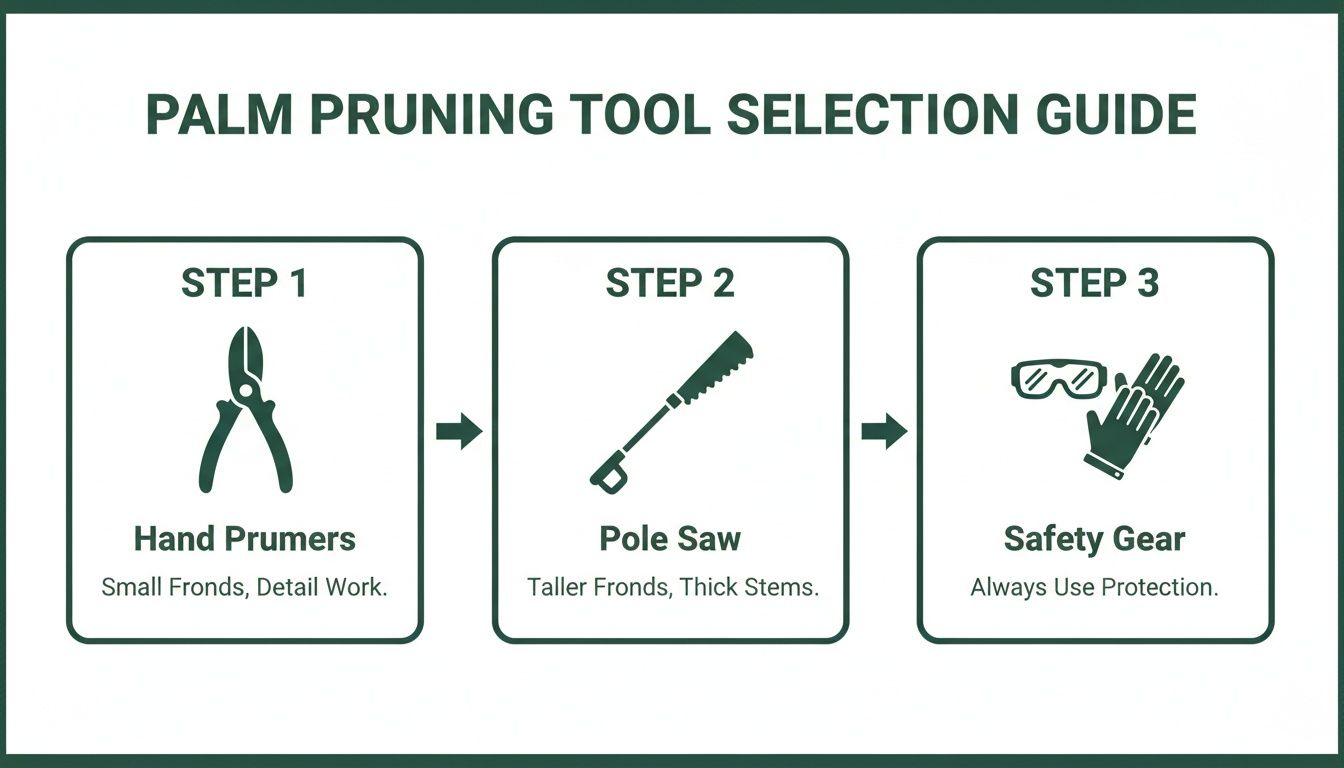
This shows how you adapt your tools to the task at hand—from hand pruners for the easy-to-reach bits to a pole saw for what's higher up, all while keeping safety gear front and centre.
Making the Cut Clean and Safe
Once you’ve picked your target frond, the next step is figuring out where to cut. You never want to cut flush against the trunk. Doing so can slice into the trunk’s protective outer layer, basically creating an open door for pests and diseases.
Instead, leave a small base of the leaf stalk, which we call a 'boot'. A good rule of thumb is to cut at least 2-3 centimetres away from the trunk. This little stub will dry out and fall off on its own over time, or you can remove it later when it's fully dead. The point is to keep the trunk itself unharmed.
Use your sharp, sterilised tool and make a single, clean cut. For thicker fronds, you’ll probably need a pruning saw. Whatever you do, don't try to rip or tear the frond off. That just creates a jagged wound that takes forever to heal.
Avoiding Permanent Damage
Besides over-pruning, the most destructive thing you can do is aggressive 'skinning'. This is when people forcibly rip the old leaf bases—the boots—from the trunk to get a smooth look.
While some palms shed these naturally, tearing them off prematurely rips the living tissue of the trunk. It creates massive, permanent scars and exposes the palm's vascular system. It's like leaving a giant open wound that never properly heals, often leading to fatal infections. It's far better to appreciate the natural, textured look of the trunk; it tells the story of the tree’s life.
Correctly pruning a palm takes a bit of patience and a gentle touch. It’s about working with the tree, not against it. For smaller palms, these techniques will help you get a professional-looking result. But as they get taller, the job gets a lot more complex and dangerous.
If your palm is taller than you can safely reach from the ground, or if you're just not sure which fronds to remove, it’s always best to call in the experts. For safe, precise, and professional palm maintenance that guarantees the health of your trees, contact Swift Trees Perth for a free, no-obligation quote.
Handling Green Waste and Perth Council Rules
The hard work isn’t quite over once the last frond hits the ground. Now you’re left with the clean-up, which can be a bigger job than most people expect. Dealing with the aftermath means figuring out what to do with a huge pile of green waste while navigating Perth's local council rules.
Palm fronds are notoriously bulky and fibrous. They’re awkward to handle, don't compact well, and will overwhelm your standard residential green waste bin in no time. For example, pruning just one mature Cocos Palm can easily produce a trailer-load of debris, far more than a single bin can handle.
Understanding Perth's Council Regulations
Before you fire up the chainsaw for a major prune, it’s always a good idea to check in with your local Perth council. While most routine tidying doesn't need permission, some councils maintain a Significant Tree Register to protect important trees. If your palm is particularly old, large, or a rare species, it might just be on that list. This means you could need a permit before doing any substantial work.
The labour intensity and local regulations across Australia make palm pruning a unique challenge. In some areas, councils have specific local laws protecting certain palm species or those over a certain size, requiring permits for major pruning or removal. As industry professionals often highlight, trying to do this work without the right approvals can lead to some pretty hefty fines. You can find more insights into the complexities of palm tree removal on camerontreeservices.com.au. A quick call to your local council is the easiest way to get clarity and avoid any accidental breaches.
Here’s a little tip for the eco-conscious gardener: think about upcycling. Some creative Perth locals use the sturdy central ribs of palm fronds as rustic garden stakes or to create unique borders for their flower beds. It’s a great way to turn waste into a stylish garden feature.
Your Green Waste Disposal Options
Once you're sure you’re following the local rules, you need a solid plan for that mountain of fronds. Trust me, trying to stuff them all into your weekly bin is usually a losing battle.
Here are the most practical options for Perth residents:
Council Verge Collections: This is often the cheapest route. Most Perth councils have scheduled bulk green waste collections, but you’ll need to check your council’s website for the dates and their specific guidelines on how to stack the waste properly.
Hire a Skip Bin: If you’ve done a really big job, hiring a small skip bin for green waste is a fantastic solution. It keeps the mess contained and gets it all hauled away in one go.
Use a Professional Service: Honestly, the easiest and most hassle-free method is to let a professional tree service handle everything. We don't just prune the palm; we also chip the waste right there on-site and take it all away, leaving your property looking immaculate.
Thinking about your clean-up strategy before you even make the first cut will save you a world of time and stress. It ensures the whole process is smooth from start to finish, without any last-minute headaches over council compliance or massive piles of debris.
If you’d rather not deal with the mess and the fine print of waste disposal, let us handle it all for you. For a complete, tidy, and professional palm pruning service, contact Swift Trees Perth for your free, no-obligation quote today.
Knowing When to Call a Professional Arborist
The DIY spirit is great, and there’s a real satisfaction in looking after your own garden. But when it comes to trees, especially palms, smart homeownership means knowing your limits.
While tidying up a small, manageable palm is a perfectly fine weekend task, there are clear signs that it’s time to put the tools down and call in a professional. Recognising these moments isn't just about getting the job done right—it's about protecting yourself, your property, and the long-term health of your tree.
The most obvious signal? Height. If you need anything more than a sturdy step-ladder to reach the fronds, or if the palm towers over your house, you’ve entered professional territory. Trying to balance on a tall ladder while wrestling with a pole saw is a recipe for disaster. It’s a serious safety risk that qualified arborists are trained and equipped to handle every day.
Red Flags That Demand an Expert
Sometimes, the decision to call for help is immediate and non-negotiable. It’s crucial to spot these scenarios before an accident happens or you cause irreversible damage to your palm.
Keep a sharp eye out for these clear indicators:
Proximity to Hazards: Are fronds creeping over power lines, touching your roof, or hanging over the neighbour's fence? Don't take the chance. A professional has the skills, insurance, and equipment to navigate these tricky situations without causing thousands of dollars in damage. For example, safely removing fronds tangled in power lines is a highly specialised skill that requires coordination with utility companies.
Signs of Sickness or Pests: If you’re seeing strange discolouration, deep cracks in the trunk, or evidence of a serious pest infestation, a simple prune isn't the solution. An arborist can properly diagnose the underlying problem and recommend a treatment plan to save the tree.
Large or Heavy Fronds: Mature palms, like the iconic Canary Island Date Palm, have incredibly heavy fronds. If these are cut incorrectly, they can drop unexpectedly, causing significant damage to whatever—or whoever—is below. Professionals use specific techniques and rigging to lower them safely.
A qualified arborist brings a lot more to the job than just a taller ladder. They have specialised high-access equipment, expert disease diagnosis skills, and the critical knowledge to know the difference between a simple trim and a complex tree health emergency.
The Value of Professional Peace of Mind
Hiring a professional isn't just about offloading a difficult job; it's an investment in your property's value and your own peace of mind. It’s also helpful to understand the different roles in tree care, which you can learn about in our article comparing arborists vs tree surgeons. While Perth’s climate has its own unique challenges, looking at how experts operate elsewhere, like the local palm care services in Palm Desert, California, highlights a universal standard of professional care.
When a job goes beyond a simple tidy-up, calling in a pro is the only way to guarantee it's done right.
For peace of mind and expert handling of all your complex tree maintenance needs, contact the fully insured team at Swift Trees Perth today.
Your Palm Pruning Questions Answered
Even after going through the steps, it's natural to have a few more questions. Over the years, we've heard just about everything from Perth homeowners when it comes to their palms. Here are some of the most common queries we get, with straight-to-the-point answers.
How Much Does It Cost to Have a Palm Tree Pruned in Perth?
This is the big one, and the honest answer is: it depends. The price for a professional palm prune can vary quite a bit based on a few key factors. We need to look at the palm's height, how easy it is to get to, and what condition it's in.
A smaller, easily accessible palm in your front garden might just be a few hundred dollars. But if you have a massive Canary Island Date Palm that needs a cherry picker and specialised safety gear, it’s going to be a more significant job. For instance, pruning a 15-metre palm near power lines will require more complex safety protocols and equipment than a 5-metre palm in an open yard, which is reflected in the cost.
That’s why at Swift Trees Perth, we always come out for a proper site assessment. It allows us to give you a clear, no-obligation quote so you know exactly what you’re paying for.
Can I Kill My Palm Tree by Pruning It Incorrectly?
Yes, you absolutely can. It’s unfortunately one of the easiest ways to cause serious, sometimes fatal, damage to a palm. The biggest mistake we see is over-pruning, what some people call a "hurricane cut," where far too many healthy green fronds get lopped off. This starves the tree, robbing it of its ability to make food through photosynthesis.
Another critical error is cutting into the trunk itself or damaging the palm's heart—the central growing tip. If you're tackling this yourself, the safest rule is to only ever touch the fronds that are completely brown and hanging well below a horizontal line. Anything more than that, and you're better off calling in a professional.
Is Removing the Fruit and Flower Stalks Necessary?
While it’s not strictly essential for the palm’s survival, getting rid of old fruit and flower stalks is a brilliant move for general maintenance and safety. These stalks can get surprisingly heavy and pose a real hazard if they fall on people, cars, or your roof.
Think of it as proactive property management. Clearing out these stalks not only tidies up the look of your palm but also removes a major food source for pests like rats, which is always a win for your home and garden.
It’s a simple step that keeps your palm looking clean and your outdoor spaces much safer for everyone. This is a standard part of any comprehensive palm care service we offer.
Ready to take the guesswork out of pruning your palm? For professional, safe, and efficient tree maintenance that leaves your property looking its best, trust the experts. Don't wait for your palms to become an overgrown hazard. Ensure they remain a beautiful and safe feature of your landscape.
Contact Swift Trees Perth at https://www.swifttreesperth.com today for your free, no-obligation quote and let our experienced team handle all your tree maintenance needs.
Comments