
Acacia Tree Removal in Perth: What Homeowners Need to Know

A wattle leaning towards your Colorbond fence after a summer storm is more than an eyesore. It may be a native tree, an invasive native species, or a declared pest, and each category can change whether you're allowed to remove it, which method is suitable, and how much follow-up the job needs. The safest approach to acacia tree removal in Perth starts before anyone lifts a chainsaw.
Identify the species first. Then check Western Australian and council rules, inspect the tree for structural hazards, decide whether the work suits a homeowner or a certified arborist, choose the removal method, obtain a written quote, and plan for regrowth. A fast cut can create a larger problem if the stump reshoots, the tree lands on a structure, or the work breaches clearing controls.
When an Acacia Has to Go and Why It Matters in Perth
A hot Perth afternoon reveals dead branches above the roof. After winter rain, a wattle leans towards the driveway, or its roots lift pavers beside the front path. These are removal decisions, not automatic chainsaw jobs. Acacias can regrow vigorously after disturbance, while brittle limbs and declining trunks can threaten fences, roofs, vehicles and people.
Height is only one part of the assessment. A short tree beside a powerline may present greater risk than a taller specimen in open ground. Species and legal category matter too, because a declared pest, native garden tree and invasive plant can require different responses. Start by asking: what species is this, and what category does it fall into?
Start with the decision, not the equipment
Work through the job in this order:
Confirm the species. Photograph leaves, flowers, bark, thorns and seed pods, then compare them with a reliable resource, including this guide to identifying Australian trees.
Identify the removal constraints. Check whether the tree is native vegetation, council-controlled, covered by a local protection policy, or listed as a declared pest. Deal with the specific approval requirements before cutting.
Inspect the structure. Look for dead limbs, trunk cracks, root movement, fungal growth, sudden canopy decline and contact with buildings or services.
Match the work to the risk. An experienced homeowner may handle one accessible stem. A multi-stem tree beside a roof, fence or pool needs professional planning.
Select the method. Open-space felling, sectional dismantling and stump grinding suit different access and impact conditions.
Plan the follow-up. A low stump does not prove the root system is dead. Include regrowth treatment and monitoring in the written scope.
Safety-first rule: If a falling branch could reach a person, building, vehicle, powerline or neighbouring property, do not start with DIY cutting. Arrange a site assessment.
Removal can also be part of longer-term pest control rather than a single cleanup. Prickly acacia was first recorded in New South Wales in 1803, spread after 1900 as a shade and ornamental tree in Queensland, and was recommended for sheep-production shade in 1926. Queensland declared it noxious in 1957. Later planning records described infestations over 6 million hectares and a potential threat footprint of roughly 50 million additional hectares. (Queensland parliamentary planning history) That history is a practical warning: removing the visible tree may not finish the job if regrowth and nearby spread remain unaddressed.
Know Your Acacia Before You Remove It
A homeowner labels every wattle “just an acacia,” books a crew, then discovers the species changes the approval path and the treatment needed to stop regrowth. Perth properties contain several acacia problems, from deliberately planted feature trees to invasive plants spreading through bushland. Identify the tree before discussing height, access or price.
Three categories matter
Desirable native acacias may serve as feature trees, screens or habitat. Perth examples include Acacia rostellifera and Acacia saligna. Native status does not automatically protect a tree from removal, but it does mean you should check local tree-preservation rules and native vegetation requirements first. A useful starting point is this guide to identifying Australian trees.
Declared pest acacias fall under biosecurity requirements. DPIRD identifies acacia with thorns as a declared pest and directs people to report its presence before control. (DPIRD guidance on acacia as a declared pest) Do not remove a thorny plant first and assume reporting can follow.
Acacia category | Common Perth species | Removal pathway |
|---|---|---|
Desirable native | Acacia rostellifera, Acacia saligna | Confirm council and native vegetation requirements before removal |
Invasive native | Species spreading into bushland, verges or unmanaged areas | Check clearing rules, notifications and land category |
Declared pest | Thorny acacia covered by DPIRD requirements | Report before control, then use an appropriate treatment plan |
Why the wrong label gets expensive
A dangerous-looking tree is not automatically exempt, and a small tree is not automatically unrestricted. In Western Australia, clearing native vegetation generally requires a permit under the Environmental Protection Act 1986, unless an exemption applies or the regulator confirms a permit is unnecessary after referral. The WA native vegetation clearing permit guidance sets out that pathway.
Photograph the foliage, flowers, thorns and seed pods. Identify the species, mark the tree on your block plan, then ask the relevant council or regulator which rules apply. Get the approval position settled before accepting a removal quote. Species identification and regrowth risk often determine the method and final cost more than tree height.
Warning Signs That Removal Is the Right Call
Acacia removal makes sense when the tree has become a foreseeable risk or is damaging property, not merely because it drops leaves or blocks a view. You can inspect several warning signs from the ground, but don't climb the tree or stand beneath suspect limbs to get a closer look.
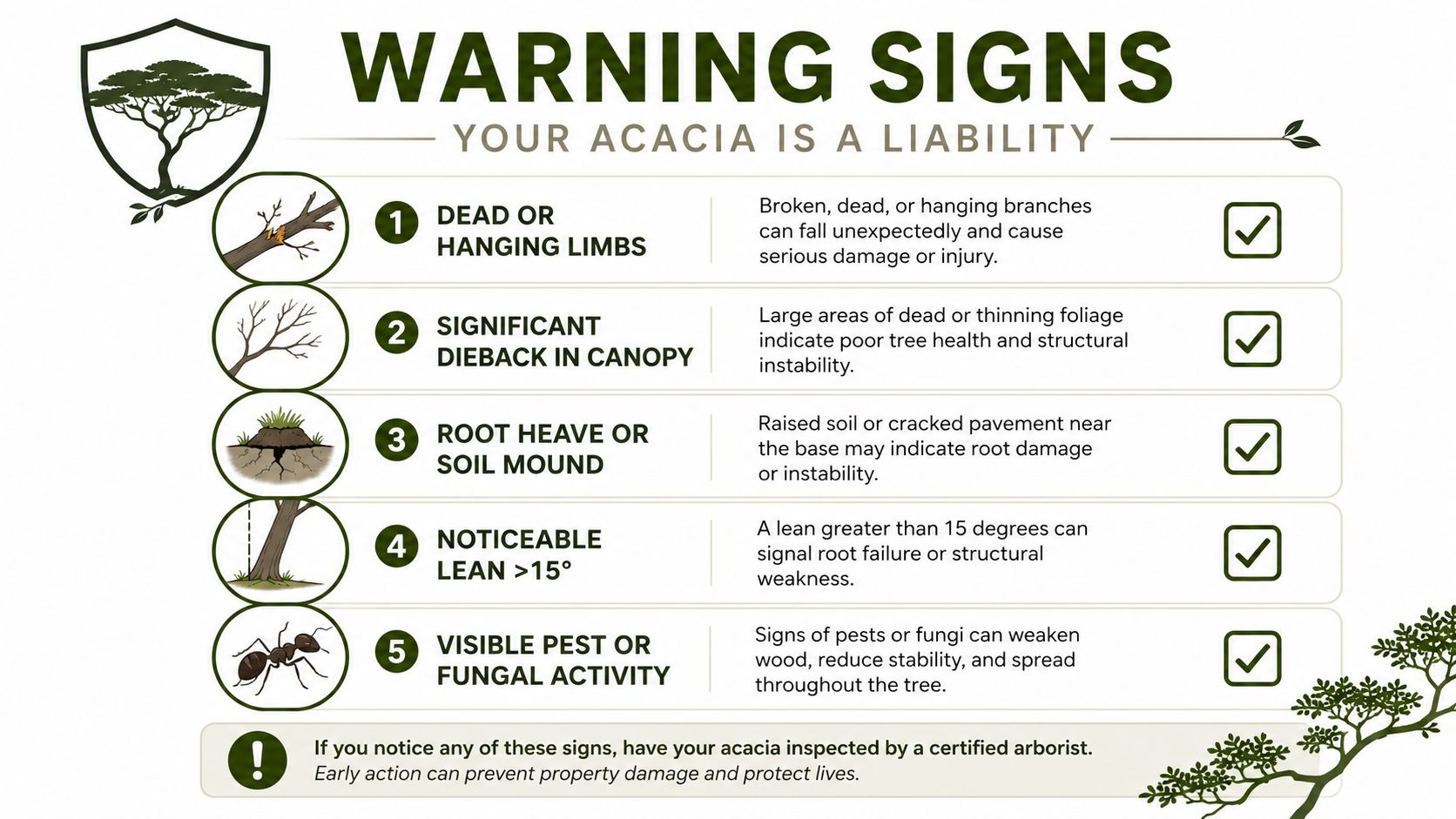
Check the canopy and trunk
Dead or hanging limbs deserve immediate attention after a storm. A branch caught in the canopy can fall later, even when the tree looks stable from the street. Keep people and pets away from the drop zone until an arborist checks it.
Significant canopy dieback is a separate warning. Rapid loss of foliage may reflect borer activity, root problems or disease rather than ordinary dry-weather stress. A tree that is declining quickly needs assessment because deadwood can spread through the crown and change the removal method.
A developing lean matters most when it comes with soil movement or cracking. Wet winter conditions can loosen the root plate, particularly where clay soils hold moisture and then shrink as the season dries. Measure the change visually over time, but don't rely on an angle alone to decide whether a tree is safe.
Inspect the base without disturbing it
Look for a raised soil mound, lifted paving, cracked ground, fungal brackets, bark splits around the root collar or a trunk flare pressed against a retaining wall. Root plate heave is especially concerning when the tree leans in the same direction as the lifted soil.
Proximity adds risk even when the tree itself appears healthy. Branches over a roof, roots lifting a driveway, growth towards sewer infrastructure, or a trunk rubbing against a wall can justify removal or staged reduction. The right choice depends on whether pruning can solve the conflict without leaving a structurally compromised tree.
Practical threshold: Two or more warning signs together are a good reason to arrange a professional tree assessment rather than assuming the tree is safe.
DIY Removal vs Hiring a Certified Arborist
The useful question isn't whether you're handy. It's whether the job can be completed without exposing you, your neighbours, your property or your insurer to an avoidable risk. Acacia work changes sharply between a single short stem in open ground, dense multi-stem regrowth beside a fence, and a mature canopy over a roof.
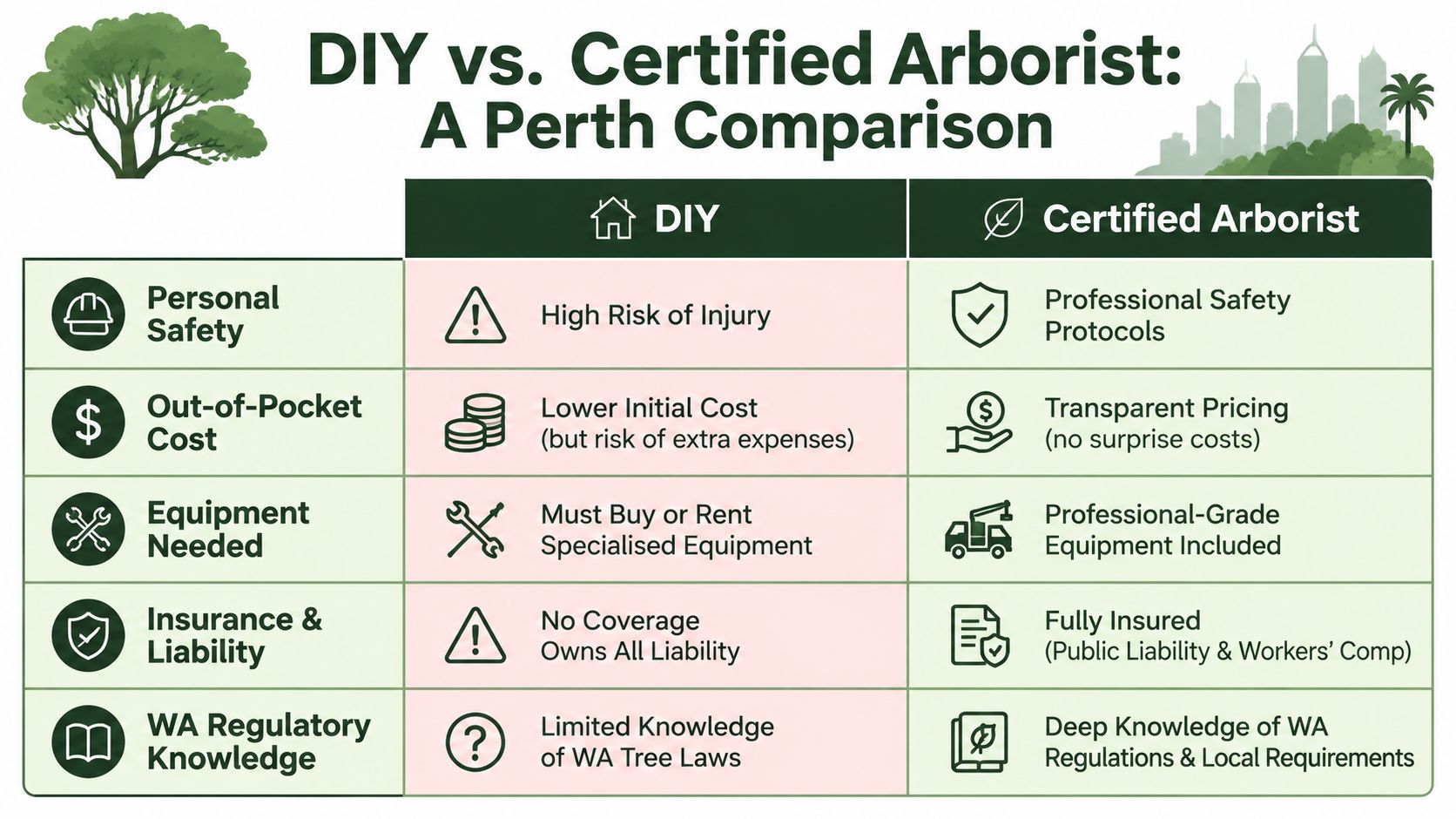
Match the method to the job
A single small stem under three metres, clear of structures, services and boundaries, may suit a confident homeowner with the right cutting experience and a safe disposal plan. Even here, don't work alone, don't cut above shoulder height, and don't use a ladder as a substitute for proper access equipment.
A multi-stem plant near a Colorbond fence is a contractor job. The stems can load each other unpredictably, and a cut section can swing into the fence or garden. You also need someone who understands stump treatment, herbicide labels and how to keep chemical applications away from drains and waterways.
A mature tree overhanging a roof, pool, driveway or powerline needs a qualified arborist with the appropriate climbing, rigging and traffic-control competence. The crew may need to dismantle the tree in sections rather than fell it, and a written arborist report for tree removal can help document the reasoning for owners, councils or insurers.
Decision factor | DIY work | Certified arborist |
|---|---|---|
Personal safety | Kickback, falling timber and unstable stems remain your responsibility | Planned exclusion zones, rigging and professional procedures |
Equipment | Chainsaw, PPE, wedges, ropes and disposal capacity | Climbing, rigging, lowering and specialist cutting equipment |
Liability | Damage to fences, roofs or services may fall on the owner | Insured contractor scope and documented controls |
Compliance | Easy to miss native vegetation or pest requirements | Practical knowledge of permits, species and site constraints |
Cleanup | You arrange transport and disposal | Removal and site cleanup can be written into the scope |
A chainsaw can kick back violently in stressed wood, and acacia stems don't always release or fall as expected. Herbicide misuse near drains creates a separate environmental problem. Fallen timber also isn't automatically “just cleanup” from an insurance perspective.
Use this rule: if the tree can reach anything you can't afford to damage, hire an arborist. A free or low-cost preliminary quote is cheaper than learning about rigging after a branch has landed on the roof.
Removal Methods Explained for Perth Properties
The correct method is determined by landing space, access and the tree's condition. A wide rural block may allow controlled felling, while a narrow inner-suburban lot demands sectional dismantling even when the tree isn't especially tall.
Straight felling suits open ground
Straight felling uses a planned notch and back cut to direct the trunk into a clear landing zone. It works best where there are no buildings, fences, pools, gardens, vehicles, services or public areas inside the fall path. The crew still needs an exclusion zone, escape routes and a plan for the crown and trunk.
Deadwooding may come first if large dead limbs could break during the felling cut. Removing selected hazardous limbs reduces uncontrolled movement, but it isn't a substitute for a full structural assessment.
Sectional dismantling protects tight sites
On inner-suburban properties, crews usually remove the crown in manageable sections, using ropes, rigging hardware and controlled lowering. This is the sensible choice around Colorbond boundaries, pool fences, rooflines, sheds and narrow side access. It takes more setup and coordination, but it prevents the “one cut, one damaged fence” outcome common in DIY work.
Stump grinding is separate from above-ground removal. If you want to replant, design the outdoor space, or build over the area, specify grinding to at least 300 mm below grade in the quote. The exact depth should reflect the future use of the site and the grinder's access.
Method | Best for | Equipment needed | Key limitation |
|---|---|---|---|
Straight felling | Open rural blocks and clear landing zones | Chainsaw, wedges, ropes and PPE | Needs generous fall space |
Sectional dismantling | Suburban sites near roofs, fences and pools | Climbing gear, rigging ropes, lowering devices and chainsaws | More setup and skilled labour |
Stump grinding | Garden replacement or future building areas | Dedicated stump grinder and debris-handling equipment | Doesn't automatically stop root regrowth |
A transplant can occasionally be preferable where a valuable tree is healthy, accessible and covered by a permit-driven retention plan. It isn't the default for a stressed, invasive or hazardous acacia, and success depends on species, root condition, timing and aftercare.
What Acacia Tree Removal Really Costs in Perth
The cost of acacia removal in Perth can vary considerably depending on the tree’s size, condition and location. Access restrictions, nearby buildings or powerlines, the need for sectional dismantling, stump grinding, waste removal and follow-up regrowth treatment can all affect the final price. For that reason, the most reliable way to establish the cost is to arrange a site-specific written quote that clearly sets out what is included.
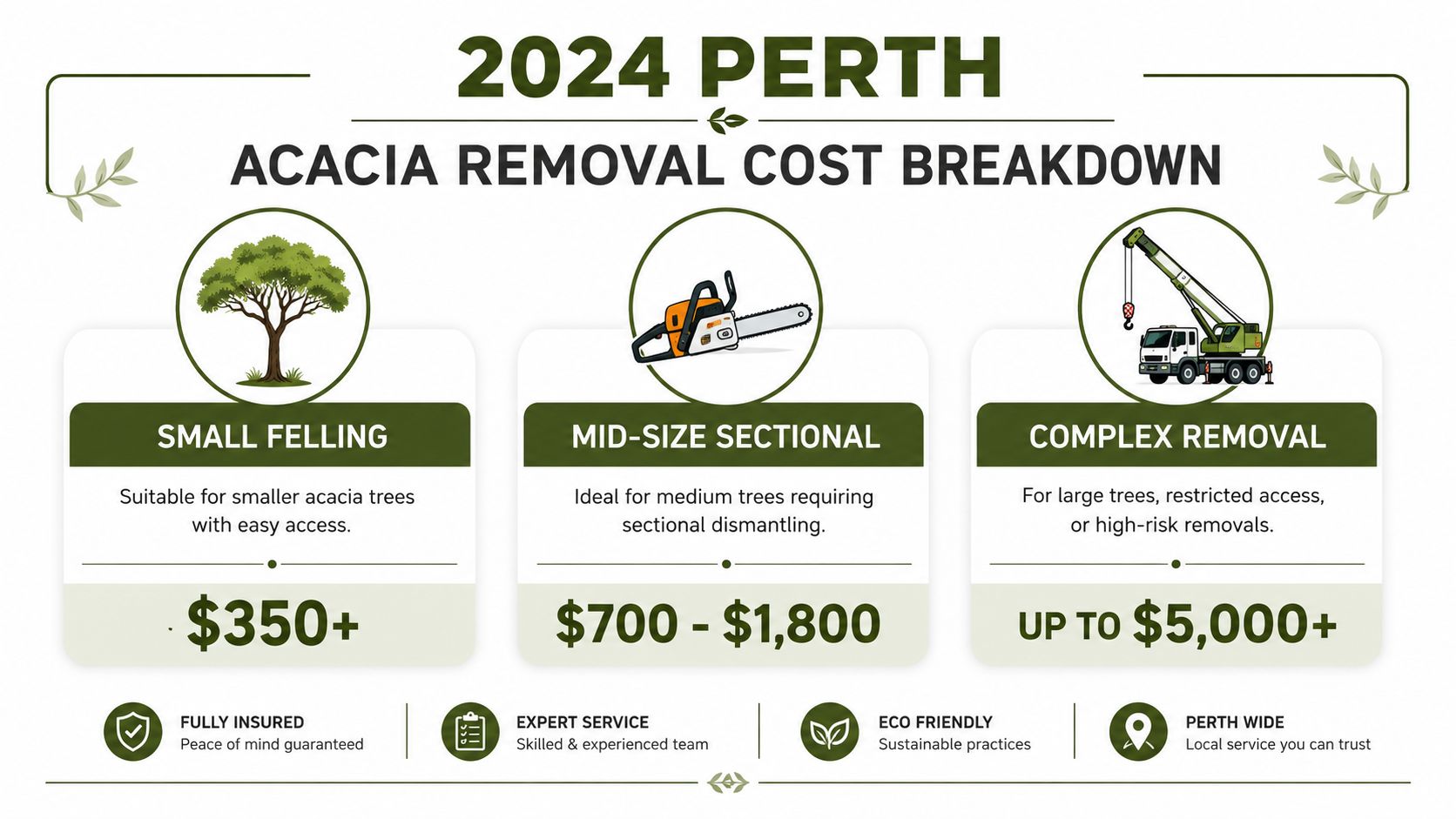
Read the quote line by line
A reliable proposal separates each task instead of hiding the work under “tree removal”. Check for:
Setup and protection: Site access, exclusion zones, ground protection and traffic controls.
Felling or dismantling: Whether the crew will fell the tree or lower it in sections.
Limb and trunk disposal: Chipping, green-waste removal, firewood stacking or a customer-managed option.
Stump grinding: Confirm whether it is included, excluded or priced separately.
Regrowth treatment: Declared pests and vigorous resprouting may require a separate treatment plan.
Documentation: Request a fixed scope, public liability certificate and any required arborist or permit paperwork.
What pushes the price upwards
Height above 6 metres, side access under 3 metres, powerlines, rooflines, emergency attendance and difficult waste handling all add labour, equipment or risk. A tree that must be dismantled in sections costs more to remove than one with a safe fall zone. An acacia that resprouts strongly, or is a declared pest, may also need follow-up treatment after cutting.
The lowest quote can leave out the work that prevents later costs. Ask who owns the stump, whether all timber leaves the property, how the crew will protect the roof and fence, and whether waste handling is included. If the contractor cannot explain the method plainly, reject the quote rather than choosing on price alone.
Permits and Perth Council Rules You Cannot Ignore
A homeowner can face different approval requirements for trees that look identical. Before anyone starts a saw, identify the acacia, confirm the land category and check which authority controls the site. Species status and location often determine the legal method before height affects the quote.
Use a simple decision tree
Native vegetation on private or commercial land: Confirm whether clearing approval applies under the Environmental Protection Act 1986. Native vegetation may be protected unless an exemption applies or the regulator confirms that approval is unnecessary. Check the current WA clearing permit information before booking removal.
Declared pest: Establish the plant's status before control work begins. Declared pests can require reporting and species-specific control, particularly on rural-edge properties. Use the DPIRD declared pest instructions to check the applicable process.
City-controlled or street tree: Leave it alone until the council confirms what is allowed. The City of Perth does not permit unauthorised pruning or removal of City trees, and its City of Perth Tree Protection Policy sets the relevant protection framework.
Routine garden specimen: Private ownership does not automatically remove every restriction. Check local tree-preservation controls, development conditions, the verge boundary and nearby powerlines. Get the answer before a contractor arrives.
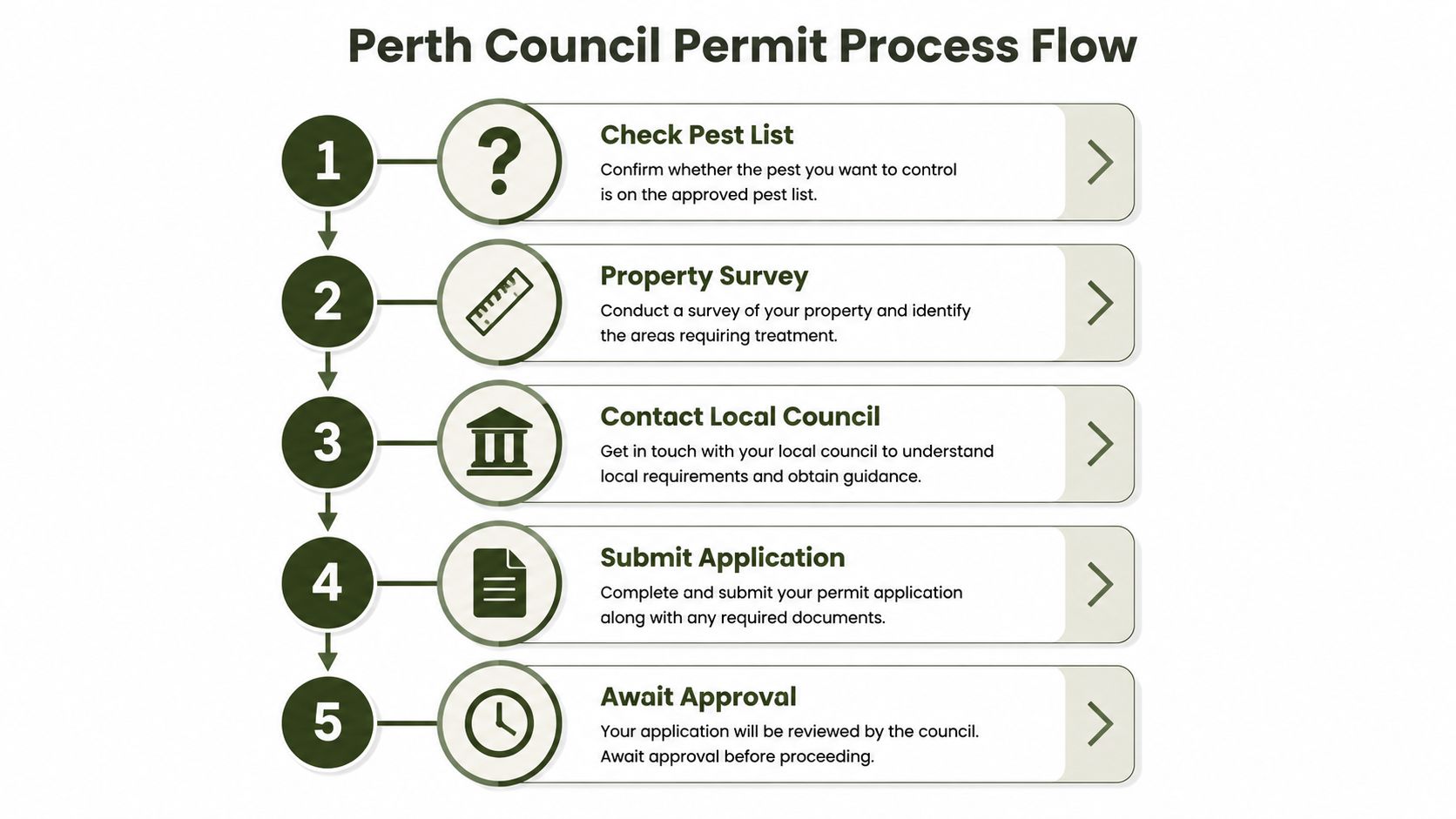
Get the requirement in writing
Rules differ between municipalities, land categories and tree locations. A tree on the road reserve is not yours to remove because it blocks a driveway. A native tree on a redevelopment site may also need environmental screening before clearing.
Ask the council or relevant WA regulator to confirm the requirement in writing. Use this Perth tree removal permit guide to prepare your questions, then follow the authority's decision rather than a contractor's assumption. Keep the approval, exemption or written advice with the job records.
Stopping Regrowth and Getting a Free Perth Estimate
Many poor acacia removals look finished on the day and fail later. The crew cuts the stem, removes the branches and leaves a tidy stump, but surviving cambial tissue or roots send up new shoots. Prickly acacia control guidance recommends cutting stems horizontally as close to ground level as possible, immediately swabbing or spraying the cut surface and stem with the appropriate herbicide mixture. (Queensland prickly acacia control guidance)
Treat the stump immediately
For cut-stump control, the timing matters. WA guidance for eastern-state wattles says the cut should be as close to ground level as possible, leaving no more than a 10 cm stump, and specifies immediate treatment of the exposed surface with a 50% glyphosate solution in the cited council guide. (Mundaring cut-stump guidance) Follow the product label and use a qualified operator where the site, chemical or declared-pest status makes professional treatment appropriate.
For large mature declared plants, DPIRD guidance includes basal bark treatment at 1:60, spot treatment at 4 mL per spot, and one spot for every metre of tree height up to 5 m. (DPIRD acacia control fact sheet) Those instructions are species and product dependent, so don't copy a rate onto an unidentified tree.
Monitor and replace thoughtfully
Inspect the treated area through the first 12 months, particularly after rainfall and during the following spring. Remove or treat fresh shoots promptly, and don't mow them repeatedly while leaving the root system alive. Prickly acacia control has relied on mechanical work alongside biological suppression, with six agents released after surveys in Pakistan, Kenya and South Africa, but only two becoming established in the field, Bruchidius sahlbergi and Chiasmia assimilis. (Australian biological-control history)
Choose replacement planting for the actual site, not just the space left by the old tree. Slower-growing natives such as Eucalyptus gomphocephala or Allocasuarina can provide structure without recreating the same aggressive regrowth problem, subject to site suitability and council requirements
Contact Swift Trees Perth for a free written estimate covering safe acacia removal, the appropriate dismantling or felling method, stump and regrowth treatment, site cleanup and insurance documentation. Send photos of the tree, its location and nearby structures so the team can recommend the right next step before work begins.
Comments