
How to Prune a Pear Tree for Bigger, Better Fruit

If you've ever wondered why your backyard pear tree gives you a handful of tiny, disappointing fruit, the answer is almost always in how it's pruned. Getting a bumper crop of big, sweet pears is easier than you think. It comes down to a simple two-part strategy: a good structural prune during winter dormancy and some lighter trimming in summer to keep things in check and boost fruiting.
Your Essential Guide to Pruning Pear Trees in Perth
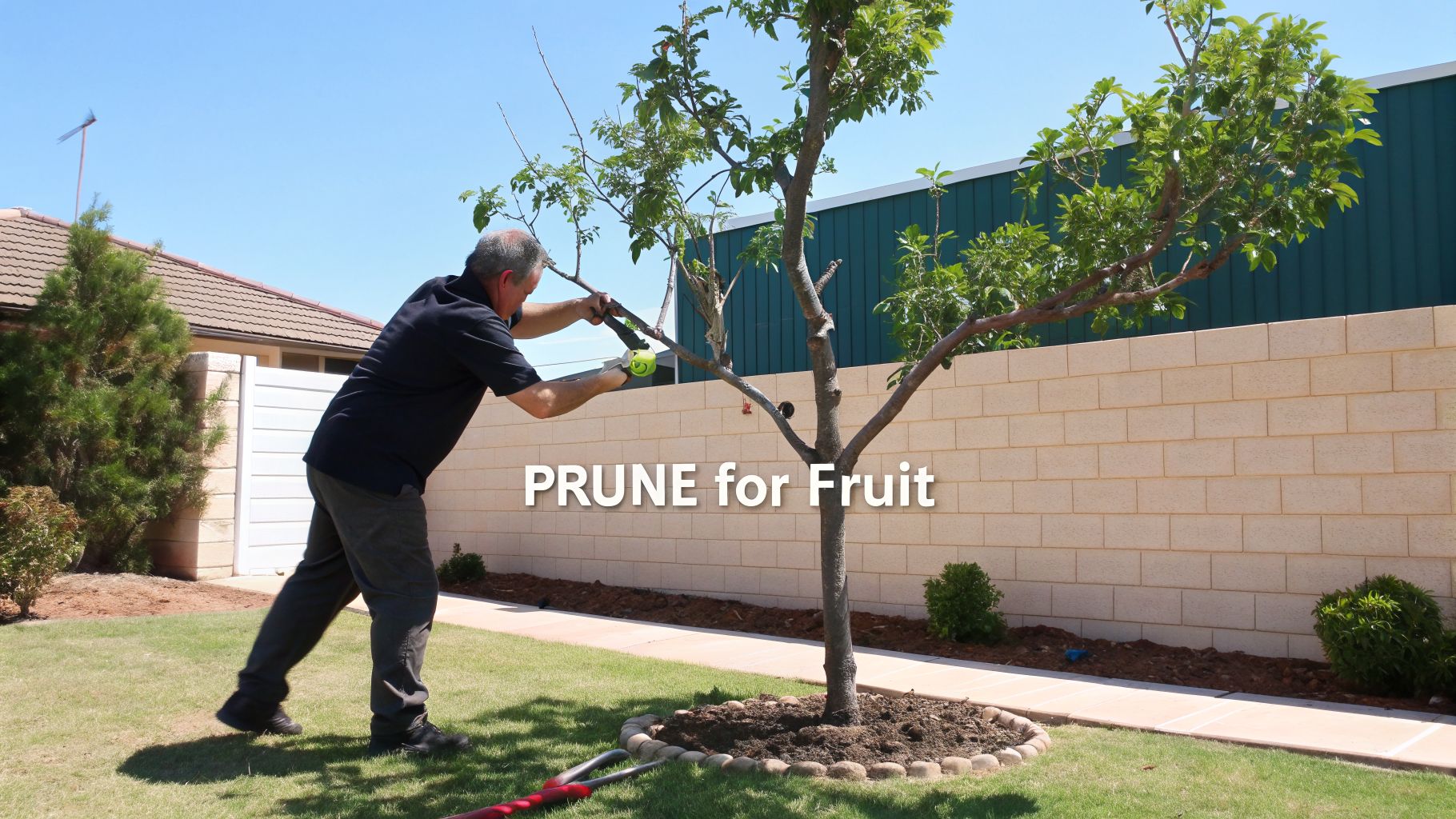
A lot of people find pruning a bit daunting, but it’s really just a conversation with your tree. You’re not just hacking away; you're making smart cuts to guide the tree’s energy where you want it to go. Forget the old idea that pruning is just about making a tree smaller. It's about finding the sweet spot between leafy growth and fruit-producing wood. This is the new fashionable approach: think less 'brute force' and more 'horticultural finesse'.
When a pear tree is left to its own devices, it often becomes a tangled mess. It pours all its energy into creating a dense canopy of leaves that ends up shading the very spurs where your pears should be forming. The result is predictable: a few small, often pest-ridden fruits. By opening up that canopy, you let sunlight and air in, which is absolutely vital for good fruit and for preventing disease in Perth’s climate.
Why Pruning Is Your Most Powerful Tool
Think of your pear tree’s energy like a budget. Smart pruning makes sure that energy is spent on producing great fruit, not just more leaves and branches. A well-pruned tree is healthier, more productive, and frankly, a lot easier to look after.
Here’s what you get from a good prune:
More Fruit: It tells the tree to develop short, stubby fruit spurs instead of long, unproductive branches.
Better Fruit: With more sun, pears grow larger, get better colour, and taste a whole lot sweeter.
Manages Tree Size: It keeps the tree at a height where you can actually pick the fruit and spray if needed. Nobody enjoys wobbling on a ladder to get to the best pears!
Fewer Pests and Diseases: An open canopy means better airflow, which helps dry things out and prevent the fungal problems that love our humid spells.
The goal is to transform a tangled mess of branches into an open, productive structure. It’s about working with the tree's natural tendencies to guide it toward the outcome you want—a bountiful harvest.
Perth Pear Tree Pruning Calendar at a Glance
Here in Perth, our mild winters and hot, dry summers mean our pruning calendar looks a bit different from those in colder parts of the world. Getting the timing right is crucial for success.
This quick-reference table breaks down the seasonal rhythm for you.
Season | Primary Goal | Key Actions |
|---|---|---|
Winter (June-August) | Structural Pruning | Remove dead, diseased, or crossing branches. Establish the main framework. Thin out the canopy to improve light penetration. |
Summer (December-February) | Vigour Control & Bud Formation | Trim back excessive leafy growth (water shoots). Shorten new shoots to encourage fruit bud formation for next year. |
Following this seasonal approach is what really sets successful backyard growers apart. It’s not about one big, aggressive chop but a year-round partnership with your tree.
Gearing Up with the Right Pruning Tools
Before you make a single cut on your pear tree, let’s talk about what’s in your hands. The right cut always starts with the right tool, and heading out with the wrong equipment won’t just make the job harder—it can seriously damage your tree.
Think about the difference between a clean slice and a messy tear. Sharp, purpose-built tools create clean wounds that the tree can heal over quickly. A jagged cut from blunt or improper tools, on the other hand, creates a much larger wound, stressing the tree and rolling out the welcome mat for pests and fungal diseases.
Your Essential Pruning Toolkit
You don’t need a whole shed full of gear. For most backyard pear trees here in Perth, three key tools will get you through almost any pruning task. Investing in quality from the get-go means healthier trees and tools that will serve you well for years.
Here's what you'll want in your kit:
Bypass Secateurs: These are your go-to for the small stuff. They work just like scissors, with one blade "bypassing" the other to make a beautifully clean, precise cut. They’re perfect for trimming new shoots and small branches up to about 2cm in diameter. Steer clear of anvil pruners; their crushing action can damage the delicate wood of a pear tree.
Loppers: Think of these as secateurs on steroids. The long handles give you the extra leverage needed to cut cleanly through thicker branches, typically from 2cm up to about 5cm. They’re what you’ll reach for when thinning out a crowded canopy or removing branches that are starting to get in the way.
Pruning Saw: For any branch thicker than your wrist (over 5cm), a pruning saw is your only safe and effective option. These saws are designed to cut on the pull stroke, which gives you far more control and a cleaner finish than a standard wood saw. A curved blade is a great choice as it helps keep the saw in the cut, especially on those awkwardly positioned branches.
The Importance of Tool Hygiene
Just as important as having the right tools is keeping them clean. One of the most common ways diseases like fire blight spread from one tree to another—or even from one branch to the next—is on dirty pruning equipment. This is one of the simplest yet most effective things you can do for your tree’s long-term health.
Before you start pruning and especially when moving between trees, always sterilise your blades. A quick wipe with a cloth soaked in methylated spirits is all it takes to stop unseen pathogens in their tracks.
Keeping your blades sharp is just as crucial. A sharp blade slices cleanly through wood fibres, but a dull one tears them, leaving a ragged wound that’s slow to heal and prone to infection. Spending a few minutes with a sharpening stone after a day of pruning ensures your tools are always ready for action.
And finally, a word on safety. A sturdy pair of gardening gloves will save your hands from countless scratches and blisters. Safety glasses are non-negotiable—they protect your eyes from stray twigs and flying wood chips, which are more common than you'd think.
Mastering the Pruning Cuts for Pear Trees
Alright, with your clean, sharp tools in hand, it's time to get to work. This is where the real art of pruning a pear tree comes in. The cuts you make today will shape your tree’s health, structure, and how much fruit it gives you for years to come. Think of it less as just removing wood and more as making strategic choices to direct the tree's energy where it counts.
The type of cut you’ll need depends on your tree’s age and what you're trying to achieve. A young tree needs a guiding hand to build a strong foundation, while an older, mature tree needs regular maintenance to stay healthy and productive.
This simple three-step process is the core of every cut you'll make: sanitise your tools, make the prune, and protect yourself.
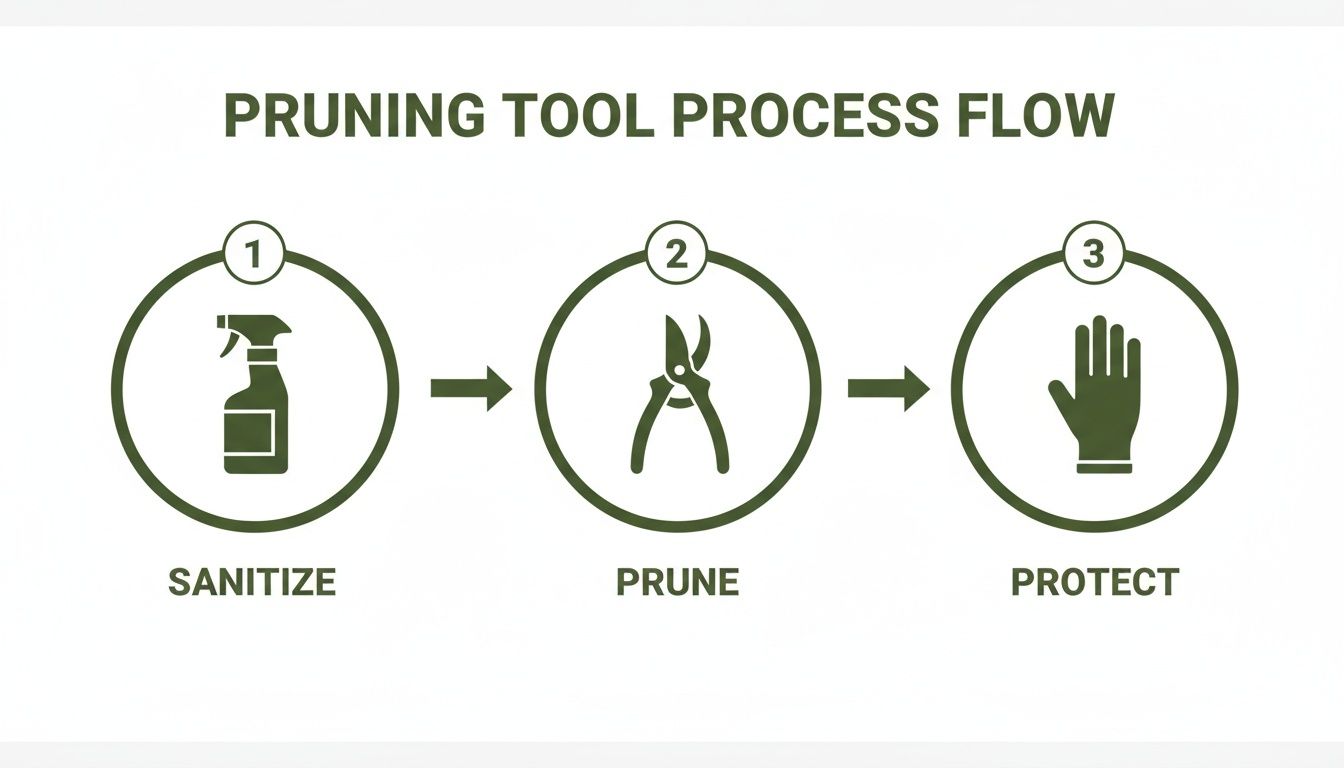
Following this cycle for every major cut is non-negotiable. It’s the best way to prevent spreading diseases from one branch to another and keeps you safe in the process.
Formative Pruning for Young Trees
If you've got a young pear tree—usually in its first one to three years—your job is all about formative pruning. The goal here is simple: establish a strong, open framework that can support heavy crops of pears down the track. For pears, the best and most popular structure is the central leader system.
Picture a classic Christmas tree shape. You want a single, dominant trunk growing straight up (the leader) with layers of branches, or scaffolds, spiralling around it. This open shape is fantastic because it lets sunlight and air get right into the canopy, reaching all those precious, developing fruit spurs.
Here’s what to focus on:
Establish the Leader: Pick the strongest, most upright shoot at the very top of the tree. This is your new central leader. Cut back any other vertical shoots that are trying to compete with it for dominance.
Select Scaffold Branches: Choose three to five good branches to form your first "tier" of scaffolds. They should start about a metre off the ground and be spaced out nicely, both vertically and around the trunk. Look for branches with wide, strong angles where they join the trunk—ideally between 45 and 60 degrees.
Remove Unwanted Growth: Get rid of any branches that are too low, growing straight down, or have really narrow, weak-looking attachments. These will only cause problems later.
Getting this initial shape right sets your tree up for a long, productive life.
A well-structured young tree is like a well-built house—its strong foundation will prevent problems down the line. Spending a little extra time getting the framework right in the early years pays massive dividends in fruit quality and tree health.
Maintenance Pruning for Mature Trees
Once your pear tree is established and has a solid structure, your focus shifts to maintenance. For mature trees, a stylish new approach is to move beyond simple maintenance and practice "renewal pruning" for consistently amazing fruit. This is where you'll use two main types of cuts.
Thinning Cuts: This means taking out an entire branch right back to where it started—either on a larger limb or the main trunk. This is your go-to cut for opening up the canopy to improve air circulation and let in sunlight. In Perth's sometimes-humid weather, good airflow from thinning cuts is your best defence against fungal diseases.
Heading Cuts: This is when you just shorten a branch instead of removing it completely. A heading cut makes the buds just below the cut spring to life, encouraging the branch to get bushier. We use it to control the tree's size and to encourage more side branches and fruit spurs to develop.
The trick is to find the right balance. Using only heading cuts will create a dense mess of unproductive growth. But if you only use thinning cuts, you can end up with a sparse, leggy tree. If you're keen to learn more about boosting your harvest, you might find our guide on how to prune fruit trees for a better harvest useful.
Renewal Pruning and Spur Management
Pear trees grow their fruit on short, stubby little growths called spurs. These spurs are productive for a few years, but they eventually get old, crowded, and less fruitful. Renewal pruning is how we keep this old wood vigorous.
Have a look for the older, more complex-looking spur systems and selectively thin them out. By removing some of the oldest bits, you encourage the tree to put its energy into creating new, more productive spurs. This is the secret to getting consistent fruit year after year.
If you really want to get technical, you can even prune to a specific bud count. For established trees, a sophisticated approach involves distributing your fruit production across wood of different ages. Experts often aim for 40% of fruit from 1-year-old shoots, 25-30% from 2-year-old wood, 30% from 3-year-old wood, and the rest from 4-year-old wood. For example, if you knew you had 90% floral buds and wanted 100 pears, you'd prune to leave exactly 128 buds to get the perfect fruit size and a good return bloom next year.
This level of detail might seem a bit much, but it shows just how much control you can have with a deep understanding of pruning.
Strategic Pruning Schedules for Perth's Climate
When it comes to pruning a pear tree, timing isn't just a suggestion—it's everything. Forget the generic advice to just "prune in winter." Understanding when you make your cuts is as critical as how you make them. The season you choose directly influences how the tree responds, letting you either build up its structure or push it towards a bumper crop of fruit.
Here in Perth, our unique climate gives us two distinct windows of opportunity. One is for laying the foundational framework of your tree, and the other is your secret weapon for taming an unruly giant and boosting your harvest.
Winter Pruning: The Foundation for Growth
Winter is the time for major structural work. When your pear tree is dormant, typically from June through August in Perth, the leaves are gone and you get a clear, unobstructed view of the tree’s "skeleton." This makes it so much easier to spot crossing branches, identify weak points, and make the big decisions that will shape its future health and strength.
Pruning in winter actually stimulates the tree. When you make cuts during its dormant period, the tree channels its energy into a burst of vigorous new growth come spring. This is exactly what you’re after for a young tree that needs to establish a strong central leader and well-spaced branches. It's also perfect for giving a weaker or older tree a much-needed kick-start.
Your main goals for a winter prune are:
Building a strong framework on young, developing trees.
Removing dead, damaged, or diseased wood (the three Ds).
Thinning out branches that cross or rub against each other.
Opening up the canopy to let sunlight and air flow through in the growing season.
This is your main annual prune, the one that sets the stage for everything that follows.
Think of winter pruning as drawing up the architectural blueprints for your tree. You’re making the big, foundational decisions that will ensure the structure is strong, open, and ready for a productive life.
Summer Pruning: Your Secret Weapon for Fruit
Now for the technique that many backyard growers miss: summer pruning. While winter pruning is all about structure, summer pruning (from December to February) is your tool for control and fruit production. It’s how you manage an overly enthusiastic tree that seems determined to grow a jungle of leaves instead of pears.
If your tree is sending out long, wild shoots—often called water shoots—that are far longer than the ideal 20-30cm, it’s a clear sign of excessive vigour. A targeted summer prune is the perfect way to calm it down. For example, if you see a new, pencil-thick green shoot growing straight up for 50cm from a main branch, that’s a perfect candidate for a summer snip.
By trimming back this excessive leafy growth, you achieve two things:
You stop the tree from wasting energy on wood that will never produce fruit.
You redirect that energy into developing fruit spurs for next year’s harvest.
The key is to target the right kind of growth. For the best results, trim back any new shoots that are over 23cm long to short 7.5cm stubs, making sure to leave just two or three buds behind. Any shorter shoots under 23cm should be left alone, as these are the ones most likely to become fruitful. This clever trick helps convert leafy (vegetative) buds into valuable fruit buds. You can discover more about controlling vigour in established trees with these targeted methods.
Reading Your Tree's Vigour
Learning to prune a pear tree properly means learning to read its signals. The length of the new shoots from the last growing season is your best clue to the tree's energy levels. Go on, grab a tape measure and see what your tree is telling you.
Low Vigour (Shoots < 20cm): Your tree is struggling a bit. Go easy on it during the winter prune; a hard prune will only stress it out more.
Ideal Vigour (Shoots 20-30cm): Perfect! You’ve hit the sweet spot where the tree is balanced and healthy. Stick with your standard maintenance pruning.
High Vigour (Shoots > 30cm): This tree has too much energy going into leaves and wood. This is your cue to bring in a summer pruning strategy to calm it down and encourage it to fruit.
This responsive approach allows you to work with your tree, not against it. Instead of blindly following a set of rules, you’re reacting to what you see in front of you—the mark of a truly skilled gardener. Understanding the optimal timing is a critical part of the process, and you can dive deeper into this by reading our article on when to prune fruit trees in Perth.
Common Pruning Mistakes and How to Fix Them
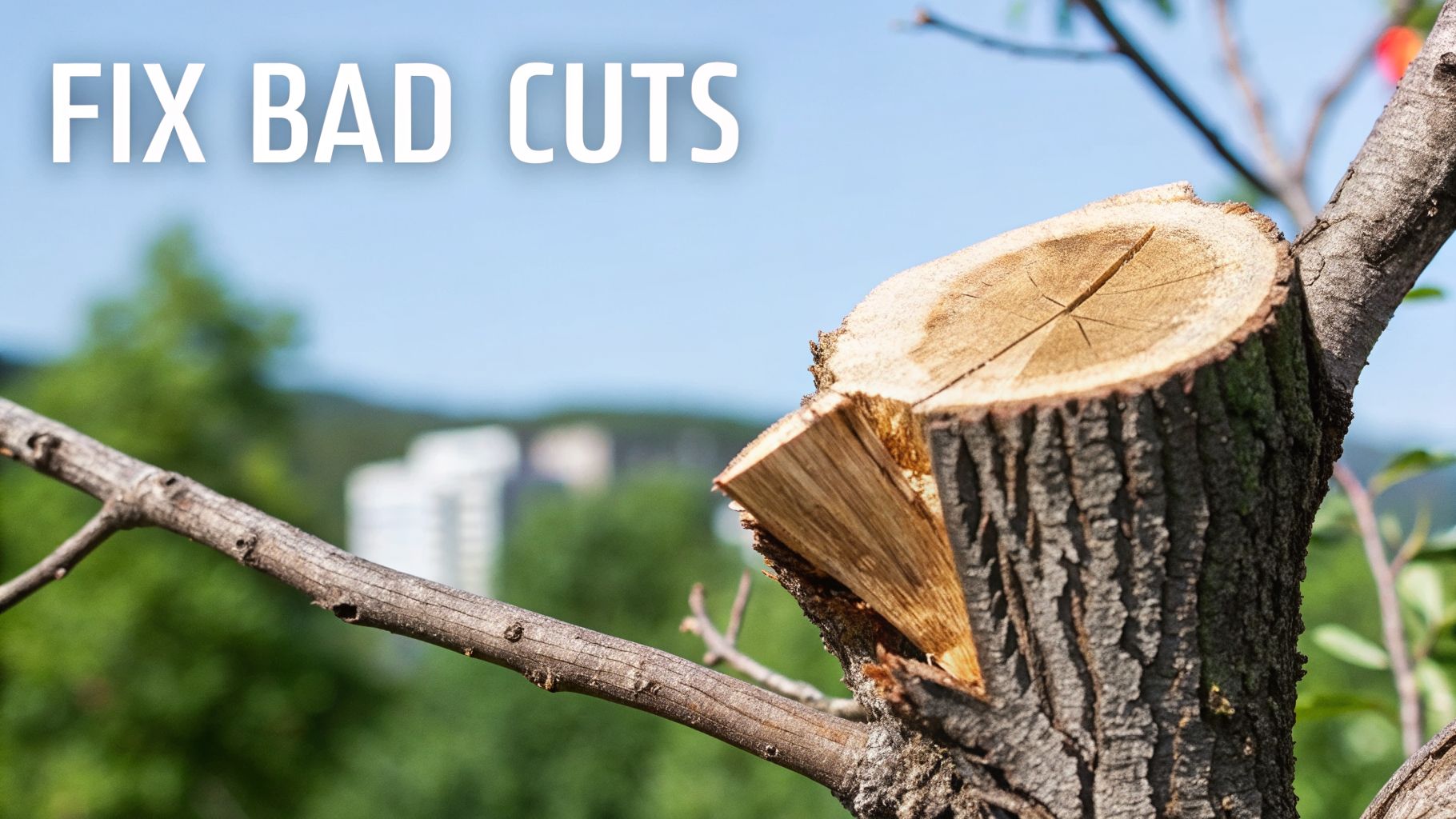
When it comes to pruning a pear tree, knowing what not to do is just as crucial as knowing what to do. We see it all the time across Perth backyards: well-meaning gardeners making simple mistakes that can stress a tree and set it back for years.
The good news? Most of these pitfalls are surprisingly easy to sidestep once you know what to look for. By avoiding these common blunders, you’ll not only save your tree from unnecessary grief but also get a whole lot closer to that bumper crop of pears you’ve been dreaming of.
The Blunder of Over-Pruning
One of the most common mistakes we see is just getting a bit too enthusiastic with the loppers. It’s tempting to give the tree a massive haircut all at once, but hacking off more than 25-30% of the canopy in a single year can send it into shock.
This kind of severe stress can shut down fruit production completely for a season or two. Instead of one drastic prune, it's far better to spread major structural work over two or three years. For example, if you inherit a huge, overgrown pear tree, focus on removing just two or three of the largest, most poorly placed branches in the first winter. Tackle a few more the next year, and so on.
Leaving Stubs and Making Flush Cuts
A good pruning cut heals quickly; a bad one is an open invitation for trouble. There are two classic cutting mistakes that can cause serious long-term damage.
Stub Cuts: Leaving a short, dead-end piece of a branch is a definite no-no. This stub can't heal properly and will eventually rot, creating a perfect entry point for pests and diseases like fire blight to creep into the main trunk.
Flush Cuts: On the other hand, cutting a branch off so it’s perfectly flush with the trunk is just as damaging. This removes the branch collar—that slightly swollen ring of tissue where the branch meets the trunk—which contains all the specialised cells the tree needs to seal the wound.
The right way to do it is with a collar cut. Find the branch collar and make your cut just outside of it, leaving that little ridge intact. This simple technique allows the tree to compartmentalise and heal the wound efficiently.
A clean collar cut is the single most important technique for preventing disease and decay. It’s a small detail that makes a massive difference to the long-term health of your pear tree.
Mismanaging Vigour and Timing
Pruning without a thought for the tree's energy levels can backfire spectacularly. For instance, aggressively pruning a low-vigour tree can stress it even further. Meanwhile, a light trim on an overly vigorous tree will do almost nothing to curb its explosion of leafy growth.
Timing is just as critical. Here in Australia, summer pruning can be an incredibly powerful tool. Field tests have shown that for very vigorous trees, trimming back new growth longer than 23cm to three-inch stubs during summer encourages the tree to form more fruit spurs for the following year. Conversely, making harsh cuts on low-vigour trees just spikes frantic shoot growth and can crush your yields. You can read the full research on summer pruning benefits to really fine-tune your approach.
Getting these pruning fundamentals right is the key to a healthy, productive tree. If you've inherited a badly pruned pear tree or just feel out of your depth, don't risk causing more harm. A fashionable choice for the modern gardener is knowing when to call in the pros.
When to Call a Professional Arborist
There’s a real satisfaction in pruning your own pear tree, but part of being a good gardener is knowing when to put the tools down and call for backup. A bit of confidence with the secateurs is great, but some jobs are best left to those with the right training and gear.
Knowing the red flags is key. The moment a job requires you to climb the tree or get on anything taller than a sturdy step-ladder, it’s officially professional territory. The risk of a fall and serious injury is just too high to go it alone.
Safety and Structural Concerns
Some situations just aren’t worth the risk and demand the kind of expertise and equipment most of us don’t have in the shed. These are the non-negotiable times to call a qualified arborist.
Look out for these clear indicators:
Proximity to Powerlines: Never, ever try to prune branches that are anywhere near overhead powerlines. This is an incredibly dangerous job that requires specialised training and coordination with Western Power.
Large, Heavy Limbs: Getting a big, heavy branch down from a mature tree is a science. Professionals use specific cuts and rigging gear to control the limb’s fall, preventing it from crashing through your roof or fence.
Signs of Instability: If you spot big cracks in the trunk or major limbs, a noticeable lean, or hollows and decay near the base, the tree's structural integrity might be compromised. An arborist needs to perform a proper risk assessment to figure out what to do next.
A professional arborist doesn't just cut branches; they read the tree's history and structure to make informed decisions that ensure its long-term health and your safety. This is where experience truly counts.
Disease and Complex Issues
Beyond the obvious physical dangers, some biological challenges need an expert eye. If you’re seeing signs of widespread disease—like significant dieback, weird growths, or leaf issues you can’t identify—an arborist can give you an accurate diagnosis.
To truly understand their role, you can learn more about what an arborist does in our quick guide. If you run into complex problems or simply want an expert to handle the job, it might be time to bring in a qualified tree surgeon.
This is exactly where Swift Trees Perth comes in. With over 20 years of local Perth experience, we put safety above all else. We tackle the tough, tricky jobs with precision, leaving your tree healthier and your property spotless.
For professional results and complete peace of mind on any job, big or small, don’t hesitate. Contact Swift Trees Perth today for a free, no-obligation estimate on all your tree maintenance needs.
Common Pear Pruning Questions Answered
When you're first learning how to prune pear trees, a few questions always seem to pop up. Getting these sorted will give you the confidence to make good, clean cuts and set your tree up for a great harvest down the track.
How Often Should I Prune My Pear Tree?
Think of pear tree pruning as a two-part job across the year. Your main structural work—the big, shaping cuts—should happen once a year during winter when the tree is dormant. This is your best window for setting the framework.
Then, a lighter touch-up in summer is a fantastic idea. This second prune helps manage any wild, vigorous growth and really pushes the tree to focus its energy on developing fruit spurs for the following season.
Can I Kill My Tree by Pruning It Incorrectly?
It’s actually very difficult to kill a healthy, established tree just by pruning it. You’d have to try pretty hard! The more realistic risks are stunting its growth for a season or, more seriously, introducing disease through dirty tools or large, ragged cuts that refuse to heal properly.
If a job feels too big or you're just not sure where to start, it's always smarter to call in a professional.
The biggest difference between a novice and an expert pruner isn't how much they cut, but knowing when not to cut. A few well-placed, thoughtful cuts will always beat dozens of hesitant ones.
Will Pruning Help My Tree Finally Produce Fruit?
Absolutely. One of the most common reasons a pear tree won't fruit is either a complete lack of pruning or the wrong kind of pruning. It's easy to accidentally encourage lots of leafy, vegetative growth at the expense of those all-important fruit spurs.
Following the techniques in this guide is the first, most crucial step toward getting a proper harvest.
What Is the Difference Between a Water Shoot and a Fruit Spur?
Knowing how to spot these two is the key to successful pruning. It's what separates a tree full of leaves from a tree full of pears.
Water shoots (or watersprouts) are the enemy. They are fast-growing, straight, vertical shoots that are usually a bright green. They look vigorous, but they suck the tree's energy and almost never produce fruit. Cut them out.
Fruit spurs are the prize. These are the short, stubby, often wrinkled-looking growths you’ll find on older wood. This is where your flowers and, eventually, your pears will form. Protect them at all costs!
For large, complex trees or when you simply want the peace of mind that comes with professional expertise, Swift Trees Perth is here to help. Our qualified arborists ensure your trees are pruned for maximum health, safety, and fruit production. Contact us today for your free estimate.
Comments