
When should you trim hedges: when should you trim hedges timing, types, and tips

Let’s get straight to it. In Perth, the absolute best times to give your hedges a good trim are in autumn (March-May) for a serious structural cut, and again in late spring (October-November) for a general tidy-up.
This timing is no accident. It’s perfectly aligned with our local climate, avoiding the brutal summer heat and the damp winter chill, which gives your hedges the best possible chance to bounce back and flourish.
Your Perth Hedge Trimming Quick Guide
Think of trimming less like a chore and more like a strategic haircut that encourages your hedge to grow thick, dense, and vibrant. Getting the timing right is crucial for its health, helping to head off diseases and prevent unnecessary stress.
This Perth-specific calendar is really the secret to achieving those sharp, clean-lined hedges that do wonders for your home’s curb appeal. For example, a perfectly manicured Lilly Pilly hedge can frame a modern entryway in Subiaco, creating an immediate sense of sophisticated style.
Across suburbs like Bassendean and Scarborough, our Mediterranean climate makes the ideal trimming window pretty clear. An arborist I know with 27 years in the game always says these periods, with their mild 15-25°C temperatures, are perfect. The hedges can recover quickly without the shock of a scorching 40°C summer day, which we all know is common here in WA.
The Annual Trimming Cycle
Once you get into the rhythm of this annual cycle, you’re on the path to a much healthier hedge. The main structural prune in autumn sets the foundation for its shape, while the lighter spring trim is all about managing that fresh burst of new growth.
Here’s a look at Perth’s ideal hedge maintenance cycle, breaking down the key actions for shaping, growth, and tidying up throughout the year.
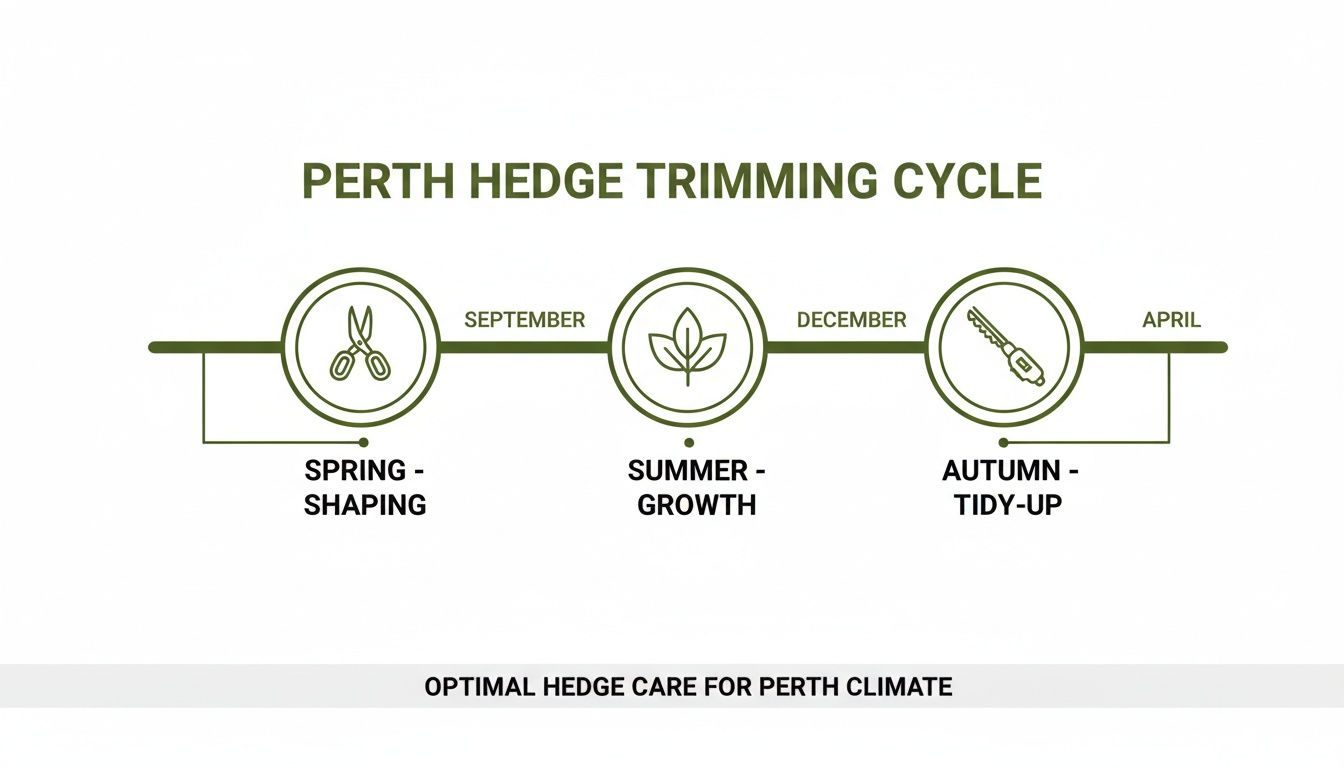
As the diagram shows, working with your hedge’s natural growth periods, not against them, delivers the best results. Proper timing really is everything, and you can learn more about why hedge trimming is so important in our other guide.
To help you plan, here’s a quick summary of the best and worst times to get the tools out in Perth.
Perth Hedge Trimming At a Glance
Season | Recommended Action | Why It Works in Perth's Climate |
|---|---|---|
Autumn (March-May) | Hard Prune/Shaping. This is the time for your main structural cut. | Mild temperatures allow the hedge to heal and recover without the stress of extreme heat or cold. |
Winter (June-August) | Minimal/No Trimming. Best to leave them alone. | Growth is slow, and damp conditions can encourage fungal diseases to take hold in fresh cuts. |
Spring (Sept-Nov) | Light Tidy-Up. A gentle trim to manage the new season's growth. | Catches the spring growth spurt before summer arrives, keeping things neat without causing stress. |
Summer (Dec-Feb) | Avoid if Possible. Only do very light touch-ups if absolutely necessary. | The intense heat and sun can scorch freshly cut leaves and stress the plant, leading to dieback. |
This simple schedule helps you stay ahead of the seasons and keep your hedge looking its best all year round.
A well-timed trim isn't just about making things look neat; it’s a vital health check-up for your hedge. It encourages a strong structure, helps prevent pests from moving in, and ensures your living fence remains a beautiful, functional asset to your property for years to come.
Getting this right is what creates that lush, manicured look that really defines a well-kept garden.
Why Seasonal Timing Is Your Hedge's Best Friend
Ever wondered why timing is so crucial for hedge trimming? Think of it less like a simple garden chore and more like a strategic partnership with your plant. Just as a house needs a solid foundation before the walls go up, your hedge needs a well-timed prune to build a strong framework for the growth that's to come. When you sync up your trimming schedule with the seasons, you’re working with your hedge's natural lifecycle, not against it.
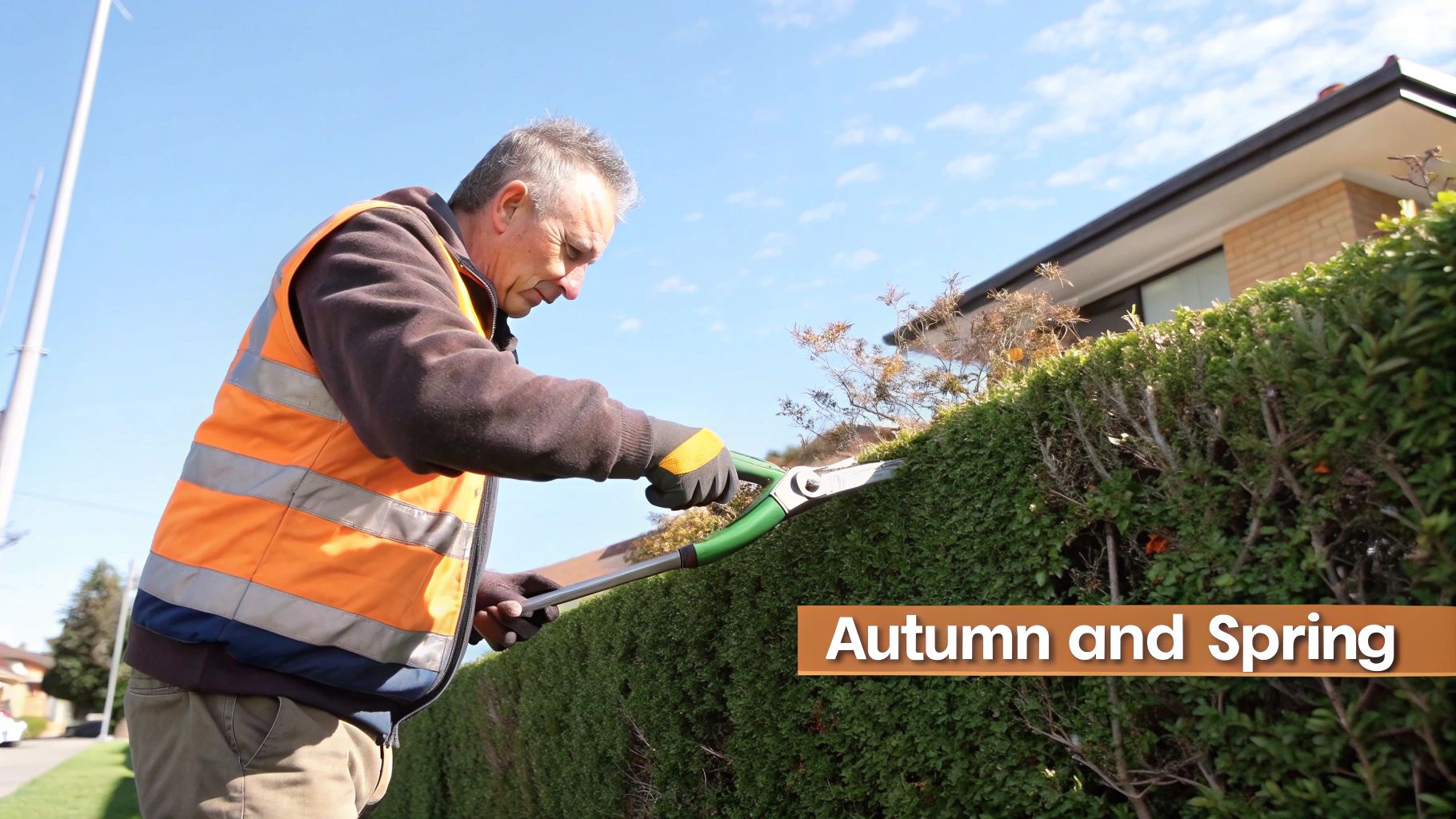
This isn’t just about keeping things looking sharp. It’s about building a resilient, vibrant hedge that stays dense and healthy for years.
Autumn: The Foundational Cut
Here in Perth, the autumn trim (March to May) is arguably the most important cut of the year. During this time, the plant’s frantic growth phase starts to slow down, allowing it to redirect energy into healing the fresh cuts. This process helps the hedge "harden off," essentially strengthening its branches before the cooler, dormant winter months set in.
Think of this as setting the stage. A good foundational prune in autumn creates a robust structure, ensuring your hedge can handle whatever winter throws at it and is primed for a vigorous burst of growth when spring arrives.
Spring: The Perfect Tidy-Up
Fast forward to late spring (October to November), and the focus shifts to maintenance and finesse. After its winter rest, your hedge will explode with a flush of new, soft growth. A light trim at this point is all about managing this energetic burst, keeping the overall shape tight and tidy without putting the plant under major stress.
It’s the final touch-up that maintains those crisp, clean lines and stops the hedge from looking shaggy during its peak growing season.
Trimming your hedge in peak summer is like asking someone to run a marathon in a heatwave. The extreme stress from the heat can scorch the new cuts, leading to brown, dead patches and significantly weakening the plant's overall health.
Why Avoiding Temperature Extremes Is Crucial
Timing your trims is also a defensive move. Hacking away at your hedge during Perth’s hot, dry summers puts it under immense strain. The intense sun can literally burn the vulnerable, newly exposed leaves, a condition known as leaf scorch.
On the flip side, trimming during our wet winters creates a different set of problems. The open wounds from cutting become perfect entry points for fungal diseases, which absolutely thrive in damp, cool conditions. These infections can spread quickly and cause significant dieback.
Getting into a regular rhythm is the key to avoiding these issues. It’s a lot like other aspects of home care; understanding how often to schedule tasks is vital. For example, you can review expert schedules for property maintenance to see how crucial timing is across the board.
By syncing your trimming with the seasons, you're not just shaping a plant; you're nurturing it. For a professional touch that guarantees perfect timing and technique, contact Swift Trees Perth for all your hedge maintenance needs.
Trimming Strategies for Different Hedge Types
Not all hedges are created equal, and knowing your plant’s personality is the key to a perfectly timed trim. You wouldn't use the same recipe for every dish, so why use the same trimming schedule for every hedge? The popular Lilly Pilly and Viburnum that frame countless Perth homes have very different needs from a delicate, flowering Camellia.
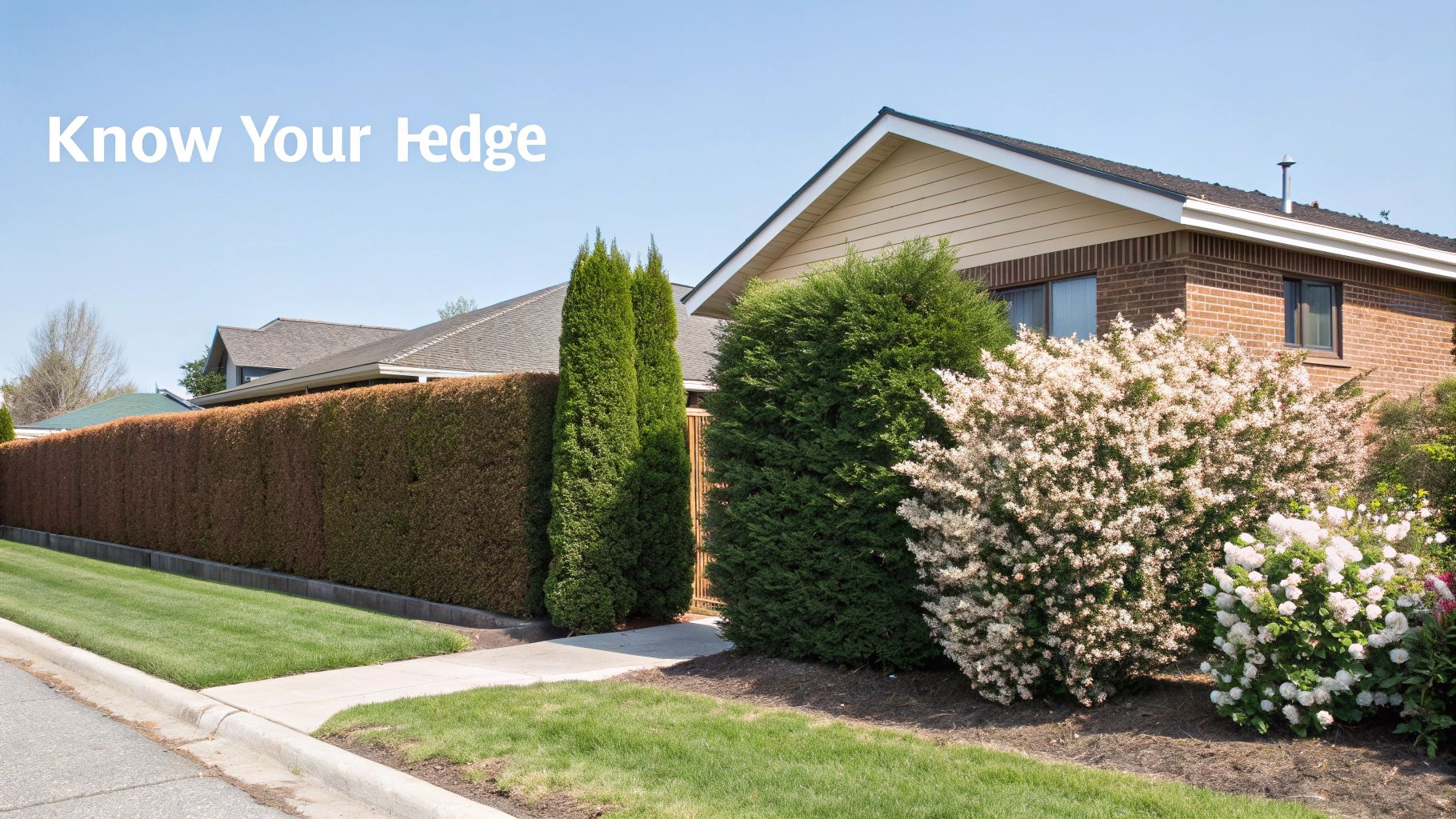
Getting this right is crucial if you want the best results. A one-size-fits-all approach can easily lead to a lack of flowers or a sparse, unhealthy plant.
Evergreen and Non-Flowering Hedges
For evergreen hedges—the workhorses of the garden that make up the vast majority of Perth’s living fences—the goal is simple: maintain a sharp, architectural look and promote dense, lush foliage for year-round privacy. A current trend is creating 'cloud hedging', where sections are pruned into soft, organic mounds, adding a touch of contemporary flair to a traditional garden.
Evergreen hedges make up over 80% of residential garden borders from Floreat to Woodvale, and they demand trimming twice annually to stay healthy and shapely. Here in WA, our rapid growth rates mean these plants can surge 50-100cm in a single wet season if left unchecked. What was a manicured border can quickly turn into a wild tangle that blocks light and harbours pests.
A good trim in autumn and late spring keeps them compact and tidy.
Flowering Hedges
Flowering hedges play by a completely different set of rules. For these beauties, there is one golden rule to follow: always prune after the bloom.
If you trim a flowering hedge like a Camellia or an Indian Hawthorn before it has flowered, you risk snipping off all the buds that would have produced that season's colourful display. It's a heartbreaking mistake to make. For a practical example, if your Escallonia hedge finishes its stunning pink display in late November, that's your cue to get the shears out in early December for a light shaping. The best approach is to wait until the last flower has faded, then give it a light shaping to maintain its form and encourage healthy growth for next year's show. Our detailed guide on how to prune hedges is a great resource for Perth gardens.
To make it even clearer, we've put together a quick guide for some common hedges you'll find around Perth.
How to Trim Common Perth Hedges
Hedge Type | Best Time to Trim | Frequency | Expert Tip |
|---|---|---|---|
Lilly Pilly (Syzygium) | Late spring & late autumn | 2-3 times a year | A fast grower. Can handle a third light trim in summer to keep its shape neat and tidy. |
Viburnum | Late autumn after growth slows | 1-2 times a year | A robust hedge. Trim to shape in autumn and give it a lighter touch-up in spring if needed. |
Camellia | Immediately after flowering | Once a year | Pruning too late risks removing next year's flower buds. Focus on shaping, not heavy cutting. |
Boxwood (Buxus) | Late spring or early summer | Once a year | A slow grower, so one precise trim is usually enough to maintain its formal shape. |
This table is a great starting point, but remember that every garden is a little different.
Growth Rate and Age Considerations
The speed at which your hedge grows also dictates how often you should be reaching for the shears.
Fast-Growing Varieties: Hedges like the Syzygium 'Resilience' (Lilly Pilly), often found in newer developments, might need that third light trim in summer just to keep them from looking unruly.
Slow-Growing Varieties: On the other hand, a mature, slow-growing Boxwood in a heritage garden may only need a single, precise trim each year to maintain its classic shape.
The core principle is observation. A fast-growing hedge in a new estate will demand more frequent attention than an established hedge that has been in place for decades. Your plant's age, species, and location all contribute to its unique needs.
Beyond just trimming, understanding the characteristics of various plants, such as the different shrubs commonly used for living fences, can really inform your long-term hedge care strategies.
If you're unsure about your specific hedge type or how to best manage its growth, professional advice can make all the difference. For expert tree and hedge maintenance tailored to your garden, contact Swift Trees Perth today.
How to Prune Young and Mature Hedges
How you trim a hedge changes completely as it grows up. Just like you wouldn't train a puppy the same way you handle an older dog, your pruning approach needs to adapt to your hedge's life stage. Getting this right is the secret to a dense, healthy, and stylish garden feature.
A young hedge needs what arborists call formative pruning. This isn't about getting it tall fast; it’s all about encouraging thick, bushy growth right from the base. Think of it like building a strong foundation for a house—if you get it right in the early years, the structure will stay solid for decades.
For mature hedges, the game changes entirely to maintenance pruning. Here, the goal is to keep the established shape, maintain its health, and stop it from getting wild and overgrown. This regular, lighter touch is what creates that sharp, architectural look everyone wants.
Pruning Young Hedges for Strong Growth
With a newly planted hedge, your first one to two years are all about building density down low. This can feel a bit wrong because it means cutting it back quite hard, but trust the process.
Year One: After planting, give the top and sides a good trim. This forces the plant to branch out sideways instead of just shooting straight up, which is how you avoid that common "leggy" look with a sparse bottom.
Year Two: Keep lightly trimming the sides and top during the growing season. You’re aiming for a slight A-shape—wider at the base than at the top—to make sure sunlight can still reach those crucial lower branches.
Managing Mature and Overgrown Hedges
Once your hedge has hit its target height and fullness, maintenance trimming becomes a twice-a-year job. A light trim in late spring and a more structural one in autumn will keep it looking sharp.
But sometimes, you inherit a hedge that's completely out of control. This is a job for renovative pruning, a much more drastic approach designed to bring a chaotic plant back from the brink. It's a high-risk task that's best done when the plant is dormant.
A severe cutback can be a massive shock to a plant's system. For these big hedge transformations, calling a professional arborist is the safest bet to avoid irreversible damage and ensure the plant survives and bounces back.
Looking at Western Australia's Bureau of Meteorology climate data, the prime time for a drastic hedge haircut in the Perth metro area is late winter (July-August) through to early spring (September). This is when 70% of common species like Lilly Pilly are dormant but are just about to push out new growth, which minimises shock and maximises recovery. Perth’s mild 12-18°C average temperatures allow for up to 90% faster recovery compared to the brutal stress of summer heat. You can learn more about the importance of timing severe pruning from other local experts.
Whether you're starting a new hedge or taming an old beast, understanding these different approaches is key. If you need expert help with formative or renovative pruning, contact Swift Trees Perth for your tree maintenance needs.
Signs Your Hedge Needs a Trim Right Now
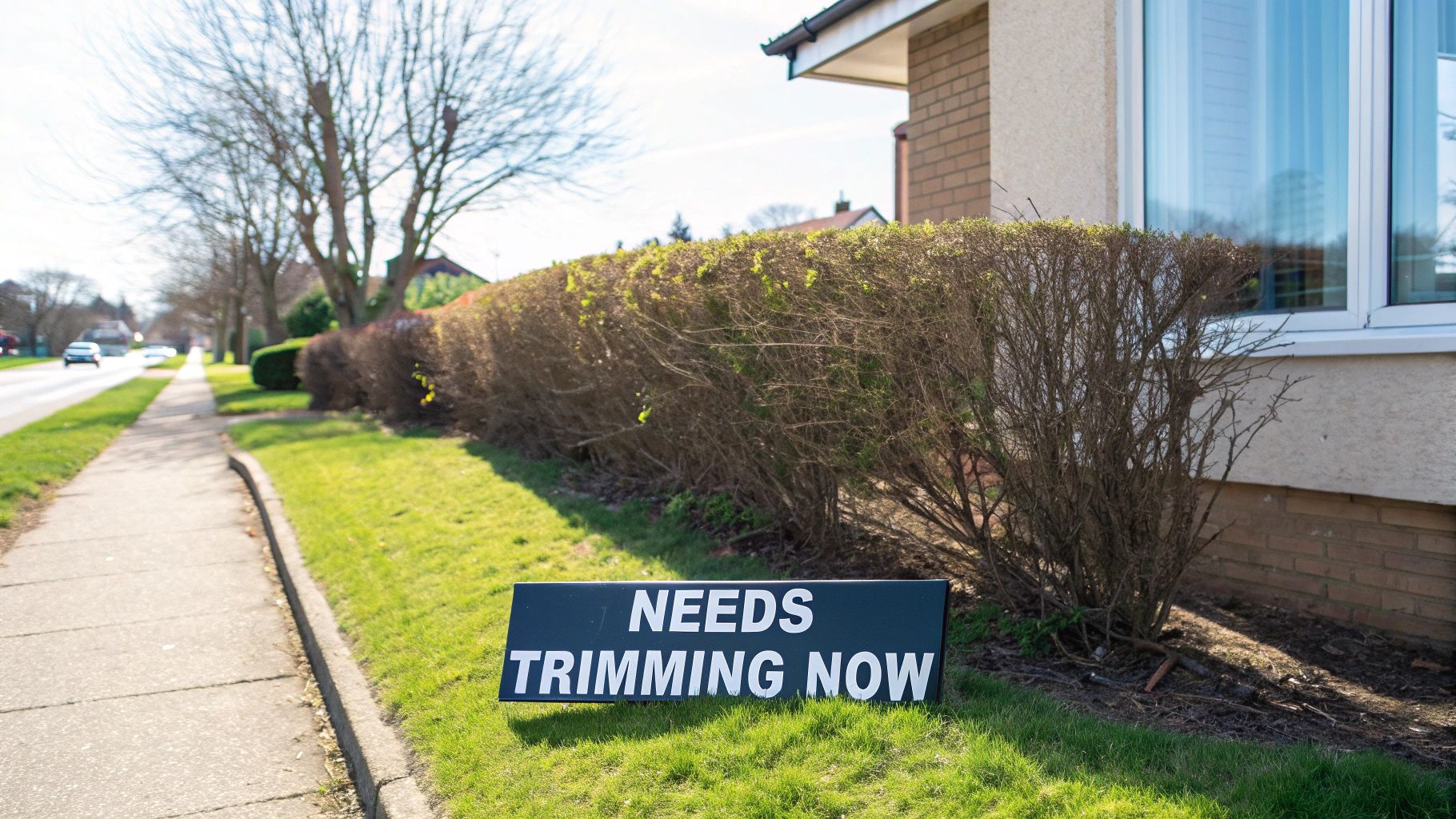
Sometimes, your hedge doesn't run on a strict calendar schedule. Forget the seasonal plan for a moment—your plants will often give you clear, unmissable signals that they need attention, and they need it now. Learning to read these signs is the key to keeping your hedge healthy, dense, and looking its best year-round.
Think of these cues as your hedge's way of telling you it's starting to struggle or, worse, becoming a neighbourhood nuisance.
Visual Health Warnings
The most obvious signs are right there in front of you, showing up in the hedge's health and overall appearance. If you spot any of these visual red flags, it’s time to grab the tools or the phone.
Dead or Yellowing Branches: Patches of brown, brittle branches or yellowing leaves aren't just ugly. They can be a sign of disease or an indicator that parts of the hedge aren't getting enough light. Trimming these sections out quickly can stop the problem from spreading.
A "Leggy" Look: Is your hedge getting thin and see-through at the bottom, with all the thick, lush growth concentrated at the top? That classic "leggy" appearance is a cry for help. The lower branches are being starved of sunlight and need a corrective trim to stimulate new, dense growth from the base up.
Uneven, Shaggy Shape: When your hedge loses that crisp, clean line and starts looking more like a wild bush, it’s well overdue for a tidy-up. A quick trim will restore its formal shape and keep it looking sharp.
A well-maintained hedge is more than just a row of plants; it's a key element of modern garden design. A sharp, dense hedge acts as a living architectural frame for your property, instantly boosting its curb appeal and perceived value. In today's design world, a layered hedge with varying heights can create a dynamic, sculptural effect that adds depth and interest to your landscape.
Practical and Safety Cues
It's not all about looks, though. There are some very practical—and sometimes urgent—reasons why your hedge might need a trim. These issues often crop up when the hedge starts interfering with safety and access around your property.
For example, is a hedge slowly creeping over a window, casting your living room into permanent twilight? Or maybe it's sprawling across the front path, forcing the postie and your visitors to duck and weave just to get to the door. This is common with fast-growing varieties like Leighton Green, which can easily obstruct walkways if not regularly maintained.
Most importantly, you must act if your hedge is getting dangerously close to overhead powerlines. This isn't just a maintenance issue; it's a serious safety hazard that demands immediate, professional attention. Always put safety first—if a trim involves working at heights or anywhere near electrical wires, it’s absolutely time to call in the experts.
Don't let your hedge turn from an asset into a problem. If you've noticed any of these signs, contact Swift Trees Perth for your tree maintenance needs. Our qualified team will get its health, shape, and safety back on track.
Get the Perfect Hedge with Professional Care
There’s a real art and science to getting a perfectly sculpted, healthy hedge. It takes the right timing, the right technique, and frankly, the right tools. While having a go yourself can be satisfying, there’s no substitute for the expertise of a qualified arborist to get that flawless, structured look that lifts your entire property.
At Swift Trees Perth, our team knows that trimming a hedge is about so much more than a quick tidy-up. We use precision equipment to make clean, healthy cuts that encourage dense, vigorous growth. The goal is to create a lush living wall, not just a sparse screen.
Beyond a DIY Trim
A professional trim delivers a level of precision that’s tough to get with standard gear from the shed. Think of it like the difference between a quick home haircut and a proper salon style; the final look is just sharper, more defined, and holds its shape for longer.
Architectural Shaping: We can create those clean, architectural lines that frame your home and garden, turning a simple hedge into a genuine design feature.
Health and Density: Using the correct pruning methods actually stimulates growth from the base up. This is key to preventing that common "leggy" look and making sure your hedge stays full and vibrant.
Safety First: We handle all the risks that come with trimming at height or near powerlines, using certified safety protocols to protect your property and our team.
We take all the guesswork and hard yakka out of the equation. Our service covers everything from the initial shaping and seasonal maintenance right through to a thorough final cleanup, leaving your garden immaculate. For homeowners wanting a superior finish, our experts can provide insights and services. You can also explore our guide to find top hedge trimming services near you today for more information.
Investing in professional care ensures your hedges are not just maintained, but masterfully sculpted. It’s an efficient way to boost curb appeal and protect the long-term health of one of your garden's most valuable assets.
If you want your hedges to be a stunning, healthy feature of your Perth property, don’t leave it to chance.
Ready for a hedge that turns heads? Contact Swift Trees Perth for your tree maintenance needs today for a free, no-obligation quote and let our experts create the perfect, long-lasting finish for your garden.
Common Questions About Hedge Trimming in Perth
Even with the best seasonal plan, you're bound to have a few specific questions when the shears come out. Perth's unique climate means our gardening rulebook can be a bit different from the rest of the country. Here are some quick answers to the queries we hear most often from local homeowners.
Getting these details right is often the difference between a lush, thriving hedge and one that's constantly struggling to look its best.
How Often Should I Trim My Hedge in Perth?
For most of the popular evergreen hedges you see around Perth, like Lilly Pilly or Viburnum, twice a year is the sweet spot. A good structural trim in autumn sets the shape, and a tidy-up in late spring keeps it looking sharp.
That said, if you've got a particularly vigorous grower and you're aiming for those crisp, architectural lines, a third very light trim in early summer will keep it neat without putting the plant under stress.
Can I Trim Hedges on a Hot Day?
It's a really bad idea. Trimming a hedge in the middle of a scorching Perth day is like sending it for a jog during a heatwave—it's just asking for trouble. The intense sun will scorch the fresh, exposed cuts, causing them to turn brown and die back.
If you absolutely must get the job done, tackle it first thing in the morning or wait until the late evening when the temperature has dropped. This gives the plant a chance to recover without the shock of extreme heat.
The most common mistake homeowners make is trimming their hedge into a "V" shape, wider at the top. This is a critical error as it shades the lower branches, causing them to become thin and "leggy." Always aim for a slight "A" shape, wider at the base, to ensure sunlight reaches every part of the plant for full, dense growth.
This one simple technique is a complete game-changer for the long-term health and look of your hedge.
For a professional result that guarantees the health and beauty of your living fence, it pays to trust the experts. The qualified team at Swift Trees Perth understands exactly what our local hedges need to thrive in Perth's conditions.
For picture-perfect hedges that enhance your property's value and appeal, don't hesitate. Contact Swift Trees Perth for your tree maintenance needs and get a free, no-obligation quote today. Let us bring our expertise to your garden.
Comments