
Flowering Trees Australia a Guide for Stunning Perth Gardens

Picture this: your garden, transformed from a simple yard into a vibrant sanctuary, bursting with colour and buzzing with life. Making that happen all starts with choosing the perfect flowering tree. This guide is your go-to resource for the best flowering trees Australia has to offer, with a special focus on what thrives in Perth's unique climate and sandy soils.
Choosing the Right Flowering Tree for Your Perth Garden
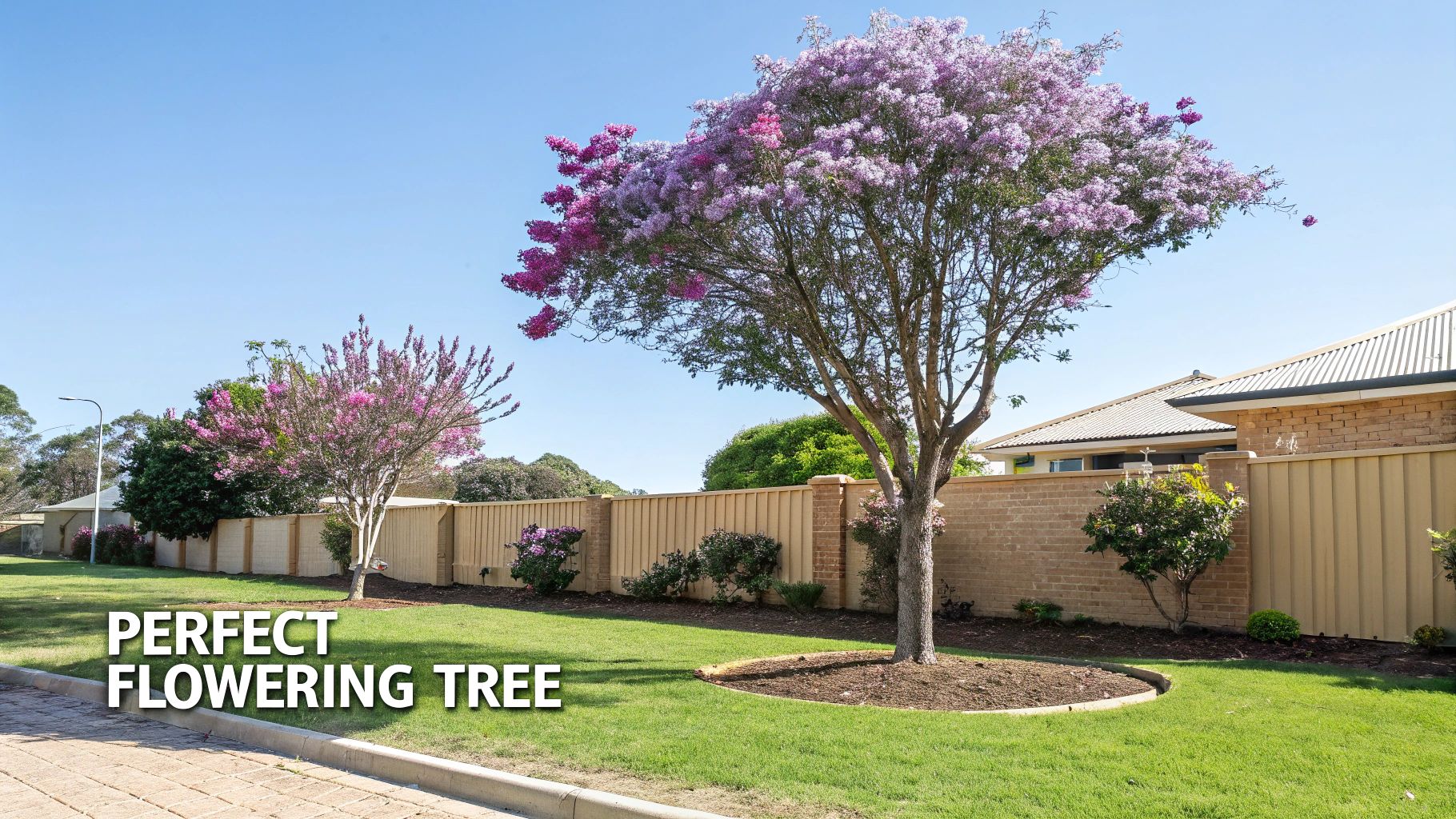
Picking a flowering tree is much more than a simple gardening decision; it's a long-term investment in your property's character. The right tree becomes a living centrepiece, offering up welcome shade, stunning beauty, and a connection to nature that changes and deepens with every season. Here in Perth, our Mediterranean climate—hot, dry summers and mild, wet winters—presents its own special set of challenges and opportunities.
A well-chosen tree can seriously boost your home's kerb appeal and even nudge up its market value. But beyond that, it’s a gift to the local ecosystem. Many flowering trees are vital food sources and habitats for native birds, bees, and other helpful insects. Think about varieties that draw in pollinators, creating a lively scene reminiscent of beautiful sunflowers with bees.
Key Considerations for Your Garden
Before you fall head-over-heels for a particular flower, it’s smart to get practical about your space. Thinking through these factors first will ensure your tree doesn't just survive, but truly thrives for years to come.
Garden Size and Scale: That charming little tree at the nursery can quickly become a giant in a small courtyard. Always check the tree's mature height and canopy spread to make sure it will fit your property without overwhelming it down the track. For example, a sprawling Jacaranda is perfect for a large front lawn in Subiaco but would be a disaster in a small townhouse courtyard in Joondalup.
Sunlight and Soil: Perth gardens can be anything from sun-drenched coastal blocks to shadier, more established suburban lots. Pay attention to how much direct sun your garden gets and get to know your soil type—most of us are dealing with sandy, alkaline soil that might need a bit of love.
Aesthetic and Purpose: What's the goal here? Are you after a dramatic statement piece, a shady spot for summer afternoons, or a natural privacy screen? Your answer will help you decide between something like a towering gum or a more compact crepe myrtle.
A thoughtfully selected flowering tree does more than just decorate a space; it creates an experience. It marks the changing seasons, from the first buds of spring to the final flush of autumn colour, becoming a cherished part of your home's story.
Navigating the incredible variety out there, from iconic native gums to elegant exotic blossoms, is all part of the fun. As you browse the 10 key types of trees in Australia for your 2025 garden, you’re sure to find some brilliant options perfect for any landscape.
Let this guide be your roadmap to creating that breathtaking garden you’ve been dreaming of. Of course, turning a vision into a healthy, thriving reality often needs an expert touch. For professional advice on tree selection, planting, and long-term care, contact Swift Trees Perth today.
Embracing Local Beauty with Native Flowering Trees
There's something special about bringing a piece of the Australian bush into your own backyard, and choosing native flowering trees is the perfect way to do it. These are tough, resilient species, already perfectly in tune with Perth's climate. That means less time watering and fussing over them compared to many exotic varieties. They aren't just plants; they're living history, a core part of our local ecosystem, and they carry a rugged, natural charm you just can't fake.
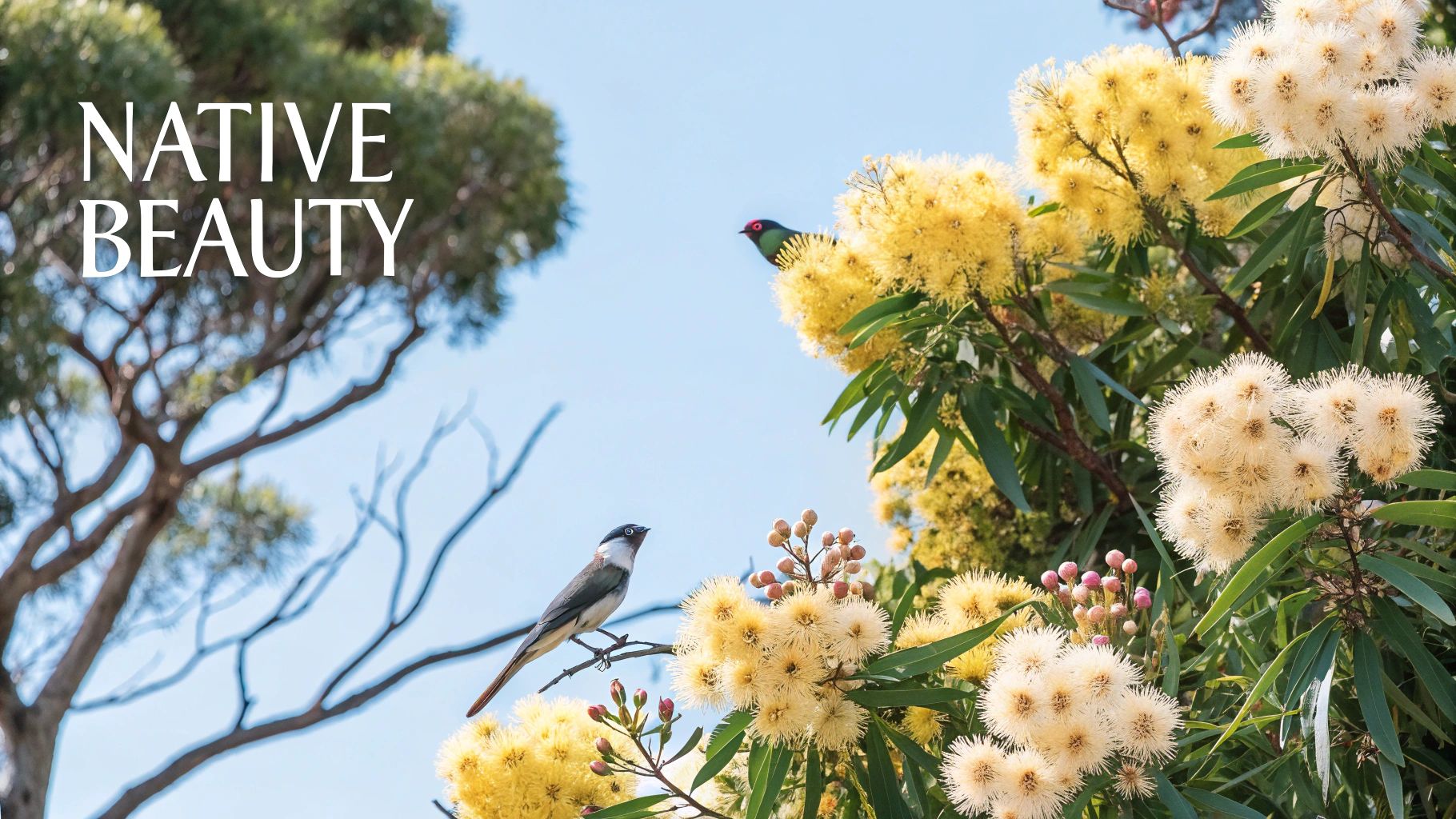
When you plant a native, you're doing more than just adding a bit of green. You're building a habitat. These trees are a crucial source of food and shelter for local birds, bees, and other wildlife, turning your garden into a buzzing, lively ecosystem. They are, without a doubt, the most authentic choice for a truly West Australian landscape.
The Icons: Acacia and Eucalyptus
When you think of Aussie natives, two titans immediately come to mind: Acacia (our beloved Wattle) and Eucalyptus (the classic Gum Tree). The Golden Wattle (Acacia pycnantha), our national floral emblem, puts on an incredible show from late winter into spring, exploding in a brilliant display of golden-yellow puffball flowers. Seeing that spectacle against a clear blue Perth sky is about as iconic as it gets.
Eucalyptus trees, or flowering gums, offer a beauty that’s just as captivating. Varieties like the Red Flowering Gum (Corymbia ficifolia) produce absolutely stunning clusters of red, pink, or orange blossoms that are an irresistible magnet for nectar-loving birds. Of course, these trees are celebrated for more than just their flowers—their distinctive bark and aromatic leaves are just as famous.
Natives as Modern Design Elements
Lately, in contemporary garden design, native flowering trees have taken on a new role as 'living sculptures'. Their unique shapes, textures, and colours are a perfect match for modern, minimalist, and water-wise landscapes. This trend has become a fashionable signature in Perth suburbs, from coastal homes in Scarborough to leafy estates in Applecross.
Picture a striking Silver Princess Gum (Eucalyptus caesia) with its weeping branches and large pink flowers serving as the dramatic focal point in a sleek garden. Or imagine a soft, feathery screen of Cootamundra Wattles (Acacia baileyana) providing privacy with a welcome burst of winter colour. For more ideas on weaving these beauties into your space, check out our guide on top Australian native plants for modern garden design in Perth.
Native trees bring an effortless elegance that feels authentic and connected to the land. They work with our environment, not against it, creating landscapes that are as beautiful as they are sustainable.
Our native forests are incredibly diverse. Acacias, better known as wattles, are the largest group with over 1,000 species, making up nearly 40% of all our native tree species. On top of that, Eucalyptus forests cover a staggering 77% of our national forest land—that’s around 101 million hectares. These numbers really highlight just how prevalent these trees are, and with their rapid growth, they definitely need expert management.
Managing Native Vigour with Professional Care
While being hardy is a huge plus, the vigorous growth of native trees can become a headache if left unchecked. Fast-growing limbs can start to tangle with powerlines, press up against buildings, or become a serious hazard during storms. This is where getting a professional in becomes so important.
Structural Pruning: A qualified arborist can guide a young tree’s growth from the start, ensuring it develops a strong, safe structure for life.
Canopy Management: Regular thinning and shaping stop the canopy from becoming too dense, which can make it heavy and dangerous.
Risk Assessment: An expert eye can spot weak branches or potential problems long before they turn into serious safety risks for your family and home.
Native flowering trees are a magnificent asset for any Perth property, but they demand respect and knowledgeable care. To make sure your natives stay safe and stunning, professional pruning is non-negotiable.
For an expert assessment and maintenance of your native flowering trees, get in touch with the experienced team at Swift Trees Perth. We provide precision pruning to keep your trees healthy, safe, and looking their absolute best.
Spectacular Textures with Banksias and Grevilleas
Once you move past the classic gums and wattles, you start to discover the truly spectacular side of West Australian natives, especially the Proteaceae family. These aren't just plants; they look like they’ve been lifted straight out of a botanical art gallery, celebrated for their dramatic, intricate flowers that absolutely thrive in our sandy soils.
For a garden that feels both visually stunning and deeply connected to its local environment, you simply can't go past Banksias and Grevilleas.
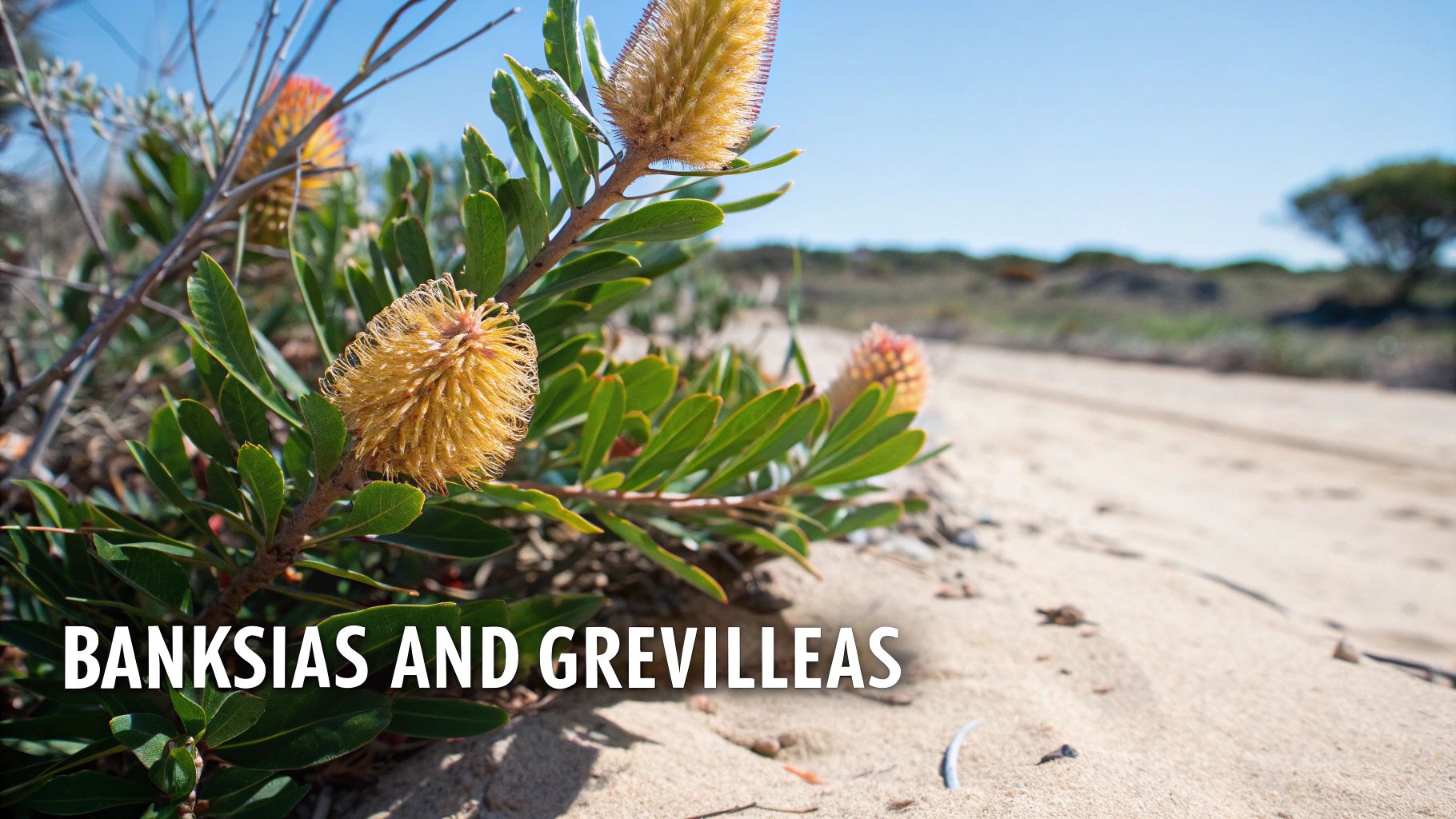
These hardy natives are the perfect fit for a modern, water-wise garden design. Their unique, architectural flower structures and tough, leathery leaves offer a textural contrast that very few other plants can compete with. This makes them a smart and fashionable choice for Perth gardens, from coastal suburbs like Mullaloo right through to established, leafy areas like Mount Lawley.
The Architectural Beauty of Banksias
Banksias are, without a doubt, one of the most recognisable flowering trees Australia has to offer. Their iconic flower spikes, which look like big, fuzzy candles or bottlebrushes, are a masterclass in natural design. What you see as one "flower" is actually a dense structure made of hundreds, sometimes thousands, of tiny individual flowers packed together.
You'll find some incredible varieties perfect for Perth:
Acorn Banksia (Banksia prionotes): Famous for its breathtaking orange and white flower spikes that hang downwards, putting on a real show in autumn and winter.
Bull Banksia (Banksia grandis): This one lives up to its name with massive, pale-yellow flower spikes that can reach up to 35 cm long. A true statement piece.
Firewood Banksia (Banksia menziesii): Known for its incredible two-toned flowers that start as a silvery pink before maturing into a fiery reddish-orange. It's a common sight in the sandy soils north of Perth.
These trees are more than just good-looking; they’re a cornerstone of the local ecosystem. The nectar-heavy flowers are a critical food source for native birds like honeyeaters and cockatoos, not to mention possums and native bees. After flowering, the spikes develop into those woody, cone-like fruits that are so distinctively Australian. To learn more, check out our articles on everything you need to know about Banksia trees.
The Delicate Intricacy of Grevilleas
Where Banksias are bold and robust, Grevilleas bring a more delicate, but just as complex, beauty to the garden. Their famous "spider flowers" are intricate clusters of small, curved blooms, perfectly shaped for the beaks of nectar-loving birds. With hundreds of species and countless cultivated varieties available, there really is a Grevillea for almost any garden situation.
The Proteaceae family, which includes both Banksias and Grevilleas, is truly iconic. In Western Australia, these trees dominate many suburban landscapes from Mullaloo to Wembley, where homeowners and strata managers value low-maintenance, high-impact native plants. There are over 173 Banksia species, nearly all unique to Australia, while the various Grevillea species number in the hundreds.
Choosing Banksias and Grevilleas is about creating more than just a garden; it's about curating a habitat. You are planting a self-sustaining ecosystem that provides food and shelter for local fauna while asking for very little in return.
Shaping for Style and Safety
While these natives are famously tough, "low-maintenance" should never mean "no-maintenance." Even the hardiest Grevillea or Banksia benefits from some expert shaping to enhance its natural form, encourage denser growth, and get rid of any dead or poorly positioned branches. Professional pruning ensures they remain a safe and beautiful feature rather than becoming overgrown or hazardous.
This is particularly important in suburban backyards where branches might start interfering with pathways, rooflines, or a neighbour's property. A skilled arborist can artfully shape these trees, turning them from a simple plant into a stunning structural element in your landscape.
For expert shaping and maintenance of your native flowering trees, trust the specialists. Contact Swift Trees Perth today to ensure your Banksias and Grevilleas are healthy, safe, and looking their absolute best all year round.
Exotic Flowering Trees That Thrive in Perth
While native trees have that rugged, authentic Aussie charm, sometimes a garden just cries out for a splash of worldly elegance. Bringing in a few well-chosen exotic species can add incredible seasonal drama, unique colours, and unforgettable fragrances that truly elevate a landscape. The great news is, many of the flowering trees Australia has fallen in love with are a perfect match for Perth’s climate, ready to bring that touch of international flair to your backyard.
These trees often become instant heroes in the garden, celebrated for their dramatic floral shows that signal the changing of the seasons. From the iconic purple haze of a Jacaranda to the sweet, holiday-scent of a Frangipani, these species create powerful memories and add serious value to properties from Victoria Park to Duncraig.
The Majestic Jacaranda
Honestly, is there any sight more breathtaking than a Jacaranda (Jacaranda mimosifolia) in full spring bloom? Its branches become heavy with masses of vibrant purple-blue flowers, a scene that has become a beloved fixture in Australian streetscapes. Though it hails from South America, for generations of Aussies, its flowering has marked the exciting countdown to summer and the end of the school year.
In Perth, its delicate, fern-like foliage provides beautiful dappled shade through our warm months before dropping to make way for that magnificent floral canopy. A Jacaranda is a showstopper as a standalone feature tree in a larger lawn, where its wide canopy and spectacular flower drop can be fully appreciated. But a word of caution: its root system is vigorous and it gets big (often 10-15 metres high and wide), so careful placement is key to avoid future headaches with foundations, pipes, and paving.
The Summer-Loving Crepe Myrtle
If you're after a burst of colour in the peak of summer, the Crepe Myrtle (Lagerstroemia indica) is an unbeatable choice. It’s famous for its huge, crinkly flower clusters in stunning shades of pink, purple, red, and white, putting on a dazzling display when many other plants are hiding from the heat. The show doesn't stop with the flowers, either. Its attractive, mottled bark provides year-round interest, and the leaves often turn brilliant shades of orange and red in autumn.
Crepe Myrtles are incredibly versatile and have become a very fashionable choice for modern Perth gardens.
For screening: Plant them in a row to create a gorgeous flowering privacy screen along a fence line. A perfect practical example is using the 'Natchez' variety along a driveway to create a stunning white floral entrance.
As a feature: A single, well-pruned specimen makes a perfect focal point in a smaller garden or courtyard.
Adaptability: They are surprisingly drought-tolerant once they're established and absolutely thrive in the full sun our Perth gardens have in spades.
"Exotic trees like the Jacaranda or Frangipani aren't just plants; they are storytellers. They evoke memories of travel, romance, and long summer days, adding a layer of personal history and worldly charm to your garden."
The Tropical Fragrance of Frangipani
Nothing captures the essence of a tropical holiday quite like the Frangipani (Plumeria). Its intoxicatingly fragrant flowers, blooming in shades of white, yellow, pink, and deep red, appear in masses from summer right through into autumn. This small, hardy tree is a fantastic fit for Perth’s coastal suburbs, as it handles sandy soils and a bit of salt spray with ease.
Even in winter when it’s bare, the Frangipani’s distinctive, sculptural branches make it a living work of art. It’s the perfect choice for planting near pools, patios, or outdoor entertaining areas where you can enjoy its delightful perfume on a warm evening. This is a common and fashionable sight in backyards from Cottesloe to Mindarie.
Expert Pruning for Exotic Beauty
While these exotic beauties are well-suited to our climate, they do need precise care to look their best and stay healthy. A young Jacaranda, for instance, needs careful structural pruning to stop it from developing weak, V-shaped branches that can fail later on. Crepe Myrtles need a specific type of annual pruning to encourage that spectacular flowering on their new growth.
Maintaining the health, shape, and stunning floral displays of these trees is a real skill. The qualified arborists at Swift Trees Perth specialise in the precision pruning these unique species require to thrive, year after year. For expert care that will truly enhance the beauty of your exotic flowering trees, contact us for a free quote.
Expert Planting and Long-Term Tree Care
A stunning tree doesn't just happen overnight. It’s the result of giving it a great start in life and following up with consistent, smart care. Putting in a bit of effort with the right planting technique and a solid maintenance plan is the secret to making sure your flowering tree becomes a magnificent, healthy feature for decades to come. This is especially true here in Perth, where our notoriously sandy soils and dry summers call for a more thoughtful approach.
The journey from a small nursery sapling to a mature, flowering icon begins the moment your shovel hits the ground. Getting these fundamentals right from day one is the best way to head off a whole host of future problems and set your tree up for a long, vigorous life.
Getting Planting Right in Perth Soil
Anyone who’s tried to garden in Perth knows our soil can be a challenge. It's sandy and often hydrophobic, meaning it actively repels water instead of soaking it up. Tackling this is the first and most critical step. A tree plopped straight into unimproved sand will really struggle to get the water and nutrients it needs to establish a strong root system.
To give your tree the absolute best chance, stick to these key steps:
Dig a Proper Hole: Your planting hole needs to be at least twice as wide as the root ball, but no deeper. This gives the roots room to spread out and anchor themselves.
Improve the Soil: This is non-negotiable in Perth. Mix a generous amount of quality compost and a good soil wetter into the sand you’ve dug out. This organic matter is crucial for holding moisture and providing essential nutrients.
Plant at the Right Depth: Place the tree in the hole so the top of its root ball is level with, or even slightly above, the surrounding ground. Planting too deep is a common mistake that can easily suffocate the roots.
Water In Thoroughly: After you’ve backfilled the hole, create a small basin or 'well' around the tree's base and give it a deep, slow watering. This helps settle the soil and gets rid of any air pockets around the roots.
For long-term tree health, good drainage is just as important as good watering, especially in areas that get heavy winter rain. Thinking about expert drainage solutions for yards can prevent major headaches like root rot down the track.
The image below highlights a few of Perth's favourite exotic trees, each with its own specific needs to truly flourish.
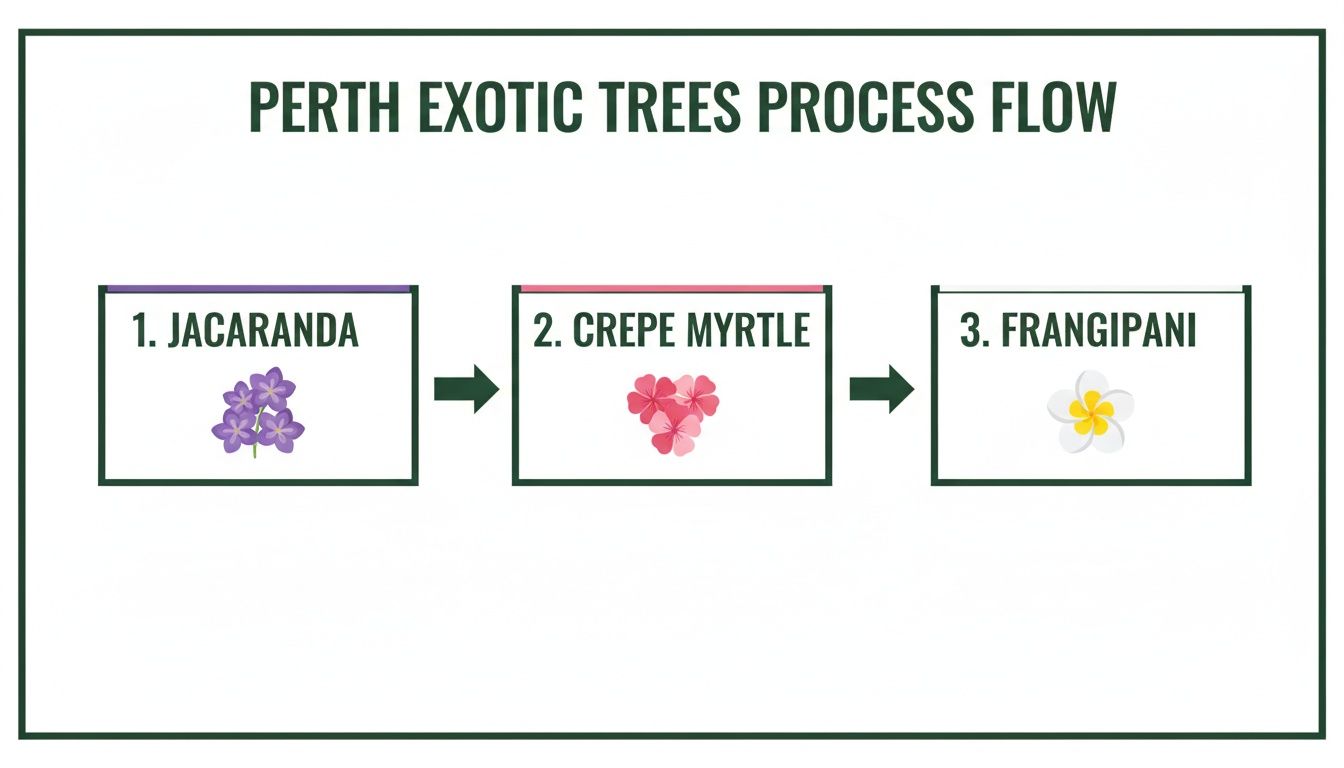
This just goes to show how the stunning beauty of a Jacaranda, Crepe Myrtle, or Frangipani is a direct result of care that's tailored to what that particular species needs.
The Art and Science of Pruning
Once your tree is in the ground and growing, pruning becomes the most important part of its long-term care. This is where professional expertise really makes a difference. Pruning isn't just about hacking off branches; it’s a strategic process that shapes the tree's health, safety, and look for its entire life.
One of the most valuable services you can get is formative pruning, which is done by a qualified arborist while the tree is still young. It involves making small, precise cuts to encourage a strong central trunk and well-spaced branches.
Formative pruning is like setting the foundation for a house. By establishing a robust and balanced structure early on, you prevent major structural weaknesses, split trunks, and hazardous limbs from ever developing in the mature tree.
Honestly, this proactive approach is the single best investment you can make in your tree's future. It helps you avoid the need for costly and stressful corrective pruning later on and ensures your tree grows into a safe, beautiful, and stable asset for your property.
Seasonal Care and Pest Management
Long-term care also means keeping an eye on things. Regular checks for pests and diseases are essential. Here in Perth, common culprits include borers, scale, and various fungal diseases. Catching these problems early often means they can be dealt with using simple, targeted treatments before they get out of hand.
Seasonal jobs are also key to maintaining the health of flowering trees Australia-wide. This includes giving them a feed with a slow-release native fertiliser in spring and, crucially, providing deep, infrequent watering during our hot, dry summers to encourage a deep and resilient root system.
A beautiful garden full of thriving flowering trees is completely achievable with the right know-how and support. From getting the planting right to expert long-term maintenance, professional guidance ensures your trees remain a source of joy for years to come.
For all your tree maintenance needs, from formative pruning on young trees to managing mature specimens, you can trust the experienced team at Swift Trees Perth. Contact us today for an obligation-free quote and let us help you care for your valuable green assets.
Your Flowering Tree Questions Answered
When you're choosing, planting, and looking after flowering trees, it's natural to have a few questions. We get asked a lot by Perth homeowners, so we’ve put together some clear, expert answers to the most common queries.
What Is the Best Time of Year to Prune My Flowering Tree in Perth?
The right time to prune really comes down to when your tree puts on its show. A good rule of thumb is to prune when it won’t mess with the next flowering cycle.
For spring-flowering trees: Get the pruners out right after they’ve finished blooming for the season. This gives the tree a whole growing season to set the buds for next year's spectacular display.
For summer-flowering trees: For trees like the popular Crepe Myrtle, you’ll want to prune in late winter or the very first days of spring, just before you see new growth. This prompts a fresh burst of growth that will carry all the summer flowers.
Of course, any dead, damaged, or dodgy-looking branches can—and should—be removed at any time of year. For advice tailored perfectly to your specific tree, the qualified arborists at Swift Trees Perth can map out a pruning schedule that gets you the healthiest tree and the most blooms.
How Can I Tell If My Flowering Tree Is Unhealthy?
Trees are actually great at telling us when something's wrong, as long as you know the language. Keep an eye out for these warning signs that your tree is stressed or sick:
Leaves that are discoloured or wilting during the growing season.
Dead branches, particularly up in the high parts of the canopy.
Fungal growth, like mushrooms or hard 'conks', on the trunk or major roots.
Signs of a serious pest problem, like borers leaving behind that sawdust-like material.
If you spot a sudden lean or notice large cracks appearing in the trunk, treat these as serious red flags. They often point to structural failure and can be a major safety risk, so they need an immediate professional look-over.
If any of these symptoms sound familiar, it's time for a professional diagnosis. The Swift Trees Perth team can get to the bottom of the issue and recommend the best way forward.
Are Native Flowering Trees Completely Maintenance-Free?
It's true that native flowering trees Australia are brilliantly adapted to our local conditions and usually need less water than exotic species. But it's a mistake to confuse 'low-maintenance' with 'no-maintenance.' To keep them safe, healthy, and looking their best, a bit of expert pruning now and then is absolutely vital.
Fast-growing natives, if just left to their own devices, can get overgrown, drop massive limbs, and quickly become a hazard. Professional pruning respects the tree’s natural shape while making sure it stays a safe and stunning part of your property for years to come.
How Close to My House Can I Plant a Flowering Tree?
This is one of the most critical questions to get right. The answer depends entirely on the tree's mature size—not just how tall it gets, but how wide its canopy will spread. A smaller tree like a Frangipani might be perfectly happy a few metres from your home. On the other hand, a big Eucalyptus or Jacaranda needs a huge amount of room for its canopy and powerful root system to grow without causing problems.
Always check the full-grown size of a tree before you put it in the ground. This simple step can save you a world of future headaches with your house, fences, or overhead powerlines. For expert advice on placement, contact Swift Trees Perth for a consultation to make sure your new tree has the perfect spot to thrive safely.
Your flowering trees are more than just plants; they are valuable living assets that enhance your property's beauty, provide essential shade, and increase its overall value. Protecting this investment through professional care is the smartest decision you can make for the health and safety of your garden. For everything from precision pruning and health assessments to safe removal and emergency services, trust the experienced and qualified team at Swift Trees Perth. Don't wait for a small issue to become a major problem.
Comments