
Leaf Beetle Australia: Guide to Identify and Control

You've probably seen it already, tiny beetles on the patio table, chewed eucalypt leaves underfoot, maybe a neighbour's elm looking patchy after a warm spell. In Perth, that's usually the moment people start searching leaf beetle Australia, because the damage looks sudden and the insect itself is often small enough to ignore until the leaves start thinning out.
The tricky part is that leaf beetle doesn't mean one pest. It's a huge group, and in Australia the scale is so broad that the same name can point to harmless native biodiversity, a nuisance on ornamentals, or a serious defoliator on a young tree. Once you know which host plant you're looking at, and which life stage is doing the feeding, the whole problem gets much easier to judge.
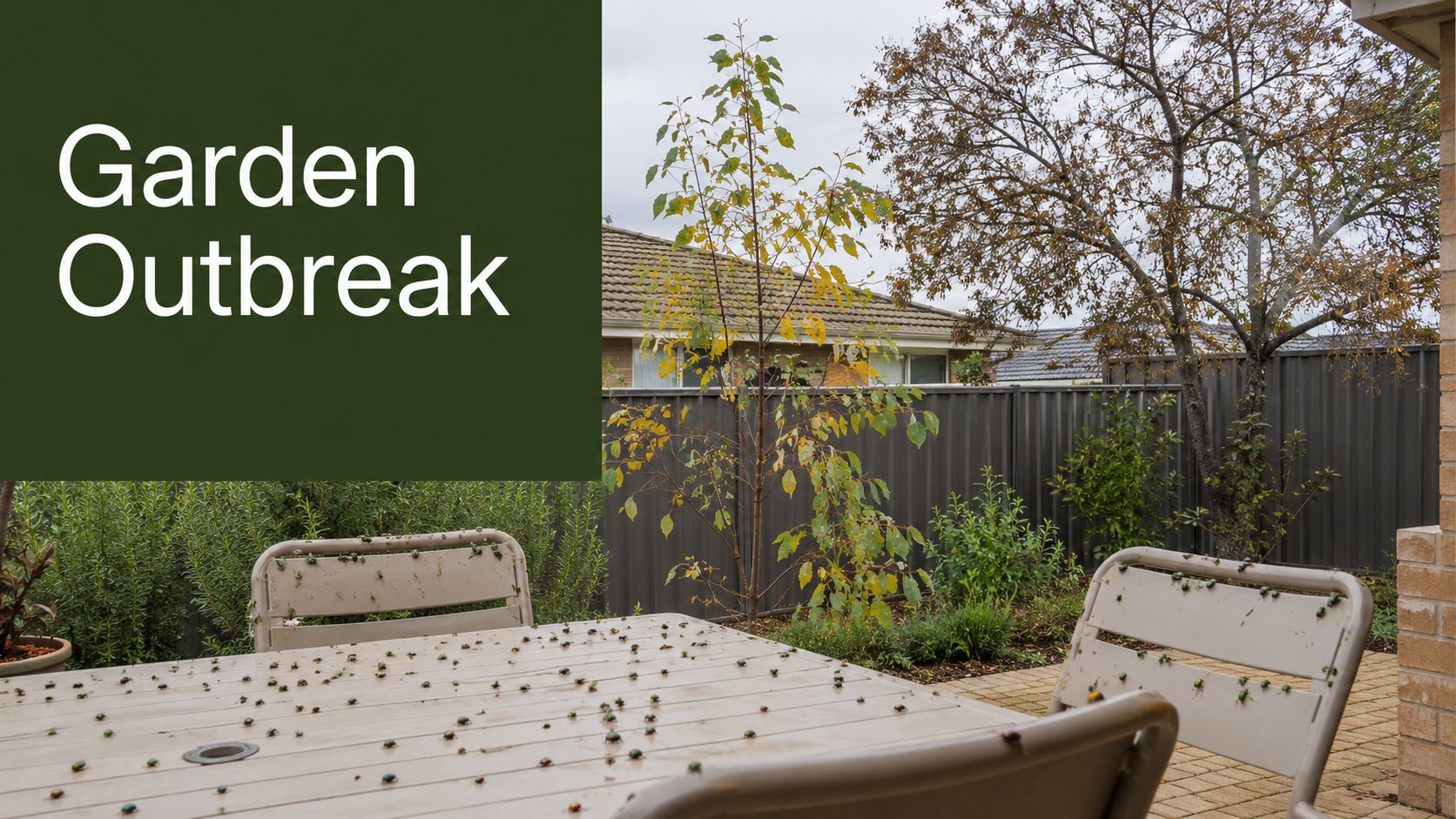
What a Leaf Beetle Outbreak Looks Like in a Perth Garden
A typical call starts with a simple complaint. Someone steps outside in spring, sees beetles dropping onto the paving, and notices the eucalypt out the back has gone from glossy to ragged in a matter of days. That's the moment where a real problem starts to separate itself from a one-off sighting.
In Perth gardens, outbreaks usually become obvious on young, actively growing trees first. The beetles are small, the feeding is fast, and the damage can show up as a messy canopy before the homeowner ever spots the insect itself. On established trees, the signs can be more subtle at first, but repeated feeding turns into a real maintenance issue when the same plant gets hit season after season.
What to check before you panic
Host tree first. Eucalypt, elm, acacia, rose, or something else. Beetles are host-linked, not random.
Damage pattern second. Lacework, notches, holes, or edge browning all point to different culprits.
Life stage third. Larvae usually feed harder than adults, and the pattern is often more serious than the beetle count suggests.
Tree age and stress fourth. A young or drought-stressed tree deserves more attention than a mature, well-established one.
Practical rule: if the leaves are still mostly intact and you're only seeing a few beetles, you're usually looking at monitoring territory, not emergency treatment.
Spring and early summer are the noisiest months because that's when the feeding is easiest to notice and the trees are pushing soft new growth. That's also when people confuse normal beetle activity with a true outbreak. The question isn't just whether beetles are present, it's whether the canopy is being stripped fast enough to slow the tree down.
For Perth homeowners comparing insect problems, a helpful reality check is to compare the insect's shape and the host plant before reaching for the sprayer. If you've ever needed a broader visual comparison for another common household lookalike, a guide like beetle that looks like bed bug can help with the general habit of careful ID before action. For local tree issues, the same principle applies even more strongly, because the wrong fix wastes time and can damage beneficial insects.
Defining Leaf Beetles in Australia
A leaf beetle on a gum tree is usually the point where Perth homeowners start asking the wrong question. The better question is which beetle is on which plant, and whether the feeding is cosmetic or enough to slow the tree down. In Australia, leaf beetle is a broad family of beetles, not one pest. Hort Innovation's nursery guide says there are over 30,000 species worldwide and over 2,000 species known in Australia across 10 sub-families. It also notes many Australian species feed on angiosperms, with a large number linked to Eucalyptus and Acacia. Hort Innovation's managing leaf beetles guide is the clearest reminder that this is a family, not a single enemy.
That matters because most species are part of normal biodiversity and never need treatment. In the field, I start with the host plant, then the feeding pattern, then the insect itself. On suburban blocks, the names that come up most often are the eucalyptus leaf beetle (Paropsis atomaria), the red-shouldered leaf beetle (Monolepta australis), and the elm leaf beetle (Xanthogaleruca luteola).
A few examples make the ID easier.
Eucalypts and other myrtles. Start with Paropsis or related native leaf beetles.
Roses, fruit trees, and some ornamentals after rain. Look harder at Monolepta australis.
Elms in older streets and gardens. The clear suspect is the elm leaf beetle.
That host-first approach saves time and prevents the usual spray-and-hope mistake. Broad treatment can miss the pest and still hit beneficial insects. Western Australia's beetle mix is too varied for one-size-fits-all advice, and a museum note says leaf beetles are widespread in Australia, including Tasmania, with over 250 species, at least 30 species in Western Australia, and new species still being found. The WA museum journal note makes the local spread clear.
Perth homeowners who want a local check can pair the beetle with the tree and then compare symptoms with Swift Trees Perth's Perth tree pests and diseases overview. For lookalike insects, careful identification matters just as much. A general guide such as beetle that looks like bed bug shows the same habit of checking shape before reaching for a treatment.
The Leaf Beetle Life Cycle and Why Timing Matters in Perth
A leaf beetle problem in Perth can look minor one week and ugly the next because the insects do most of their damage in a short feeding window. The life cycle moves through egg, larva, pupa, and adult, but the larval stage usually does the heaviest chewing. In the field, I see the same pattern each spring. A few larvae on tender new growth can strip more leaf area than a scattered group of adults ever will.
What matters next is the stage you are seeing. Timing matters more than product choice, because the life stage tells you which intervention will reduce damage instead of wasting effort. WA PestWeb's leaf beetle entry describes adults as small and larvae as even smaller, which explains why infestations often build before homeowners notice them. Once the canopy starts looking thin, the beetles have usually already had several feeding rounds.
Queensland biosecurity guidance notes that eggs are laid on eucalypt leaves and stems, larvae feed in groups, and there can be up to 4 generations per year. Business Queensland's leaf beetle guidance is useful for Perth because warm weather can let populations rise quickly. Miss one flush of larvae and the next round of soft growth can take the hit.
Rain can change the timing fast for some species. Business Queensland says adults of the red-shouldered leaf beetle often emerge after good rains following a dry spell, so fresh damage can seem to appear almost overnight after stormy weather. Perth homeowners often read that as a sudden arrival, but it is usually a short burst of feeding that only becomes obvious once the leaves start to show the pattern.
The practical rule is simple. Watch the young feeding stage, keep an eye on rain-triggered emergence, and act before the tree has to push another flush of tender growth under pressure.
Recognising Leaf Beetle Damage on Common Australian Trees
Reading the leaf gives you a faster answer than identifying the insect. Different leaf beetles leave different signatures, and Perth homeowners can usually sort the main culprits in a few minutes by matching the host plant with the shape and location of the damage.
The four patterns that matter
Larval skeletonising is the first pattern to learn. The larvae chew the soft tissue away and leave a lace-like leaf behind. On eucalypts, that often points to Paropsis atomaria or a close relative, especially when the tree is pushing fresh growth. Museum Victoria's profile says the larvae feed on new growth and can consume entire leaves, while adults prefer older leaves and create crescent-shaped holes along the edges. Museum Victoria's eucalyptus leaf beetle profile is a good visual match for that pattern.
Adult notching looks different. The leaf edge gets nicked rather than hollowed out, so the damage sits on the margin instead of the centre. That matters because people often blame every hole on the same insect, yet the life stage can change the look of the damage completely.
Shot holes and windowpanes usually point to a different feeding style on ornamentals and softer foliage. If the leaf has been skimmed but not fully eaten, the plant is showing that the beetles were feeding lightly, often in a short burst after emergence or rain.
Canopy-edge browning on elms is the classic elm warning sign. The Tasmanian Government's elm leaf beetle fact sheet notes the elm leaf beetle was first discovered in Victoria in 1989, then detected in Launceston in late 2002 and Hobart in 2008, with South Australian confirmation in Adelaide in 2011 and extreme damage in late 2016 in several Adelaide LGAs. Tasmanian Government's elm leaf beetle fact sheet shows how quickly an introduced beetle can become a city tree problem.
If you are checking an elm, a species-specific photo guide such as Swift Trees Perth's elm leaf beetle page helps separate seasonal leaf browning from genuine beetle pressure. That distinction matters, because elms can look tired for more than one reason.
A close inspection also helps when the picture is mixed. Some trees carry more than one stress at once, so the leaf edge, the chewing pattern, and the host species need to be read together before anyone decides on treatment.
Prevention and DIY Controls That Actually Work in Perth
The best DIY control is the one that fits the life stage you can see. If larvae are present and the tree is still manageable, start with the least invasive option and only move up if the pressure keeps building. A tidy, well-watered garden does more than people think, because stressed trees always wear feeding damage harder.
A practical ladder of control
Method | Best for | Effort | Impact on beneficial insects |
|---|---|---|---|
Hosing larvae off foliage | Small trees with active larvae | Low | Low |
Shaking branches over a sheet | Catching beetles on young trees | Low to medium | Low |
Sticky bands on young trunks | Reducing climbing adults | Medium | Low |
Mulching and deep watering | Stressed or recently planted trees | Medium | Very low |
Leaf litter removal | Cutting pupation sites | Medium | Very low |
Neem or targeted larval products | Early larval pressure | Medium | Lower than broad sprays |
That ladder works because it respects the beetle's habits. Leaf beetles often concentrate on the exact parts of the tree that are easiest to reach, so a hose, sheet, or targeted product can do a lot without blanketing the whole canopy. The point is to reduce feeding pressure, not to sterilise the garden.
For a broad ornamental comparison, a resource like Little Green Leaf's guide to identify and remove lily beetles is useful because it shows the same logic in another garden pest. You identify the host, watch the feeding stage, then choose the mildest control that fits the problem.
What doesn't work well is the big broadcast spray over the entire tree. Broad-spectrum pyrethroids can kill predators and leave the tree more exposed in the long run, which is exactly the wrong trade-off for a garden that should support some biodiversity. Australian guidance also warns that many beetles are beneficial or ecologically important, so the goal is to protect the tree without flattening everything living on it. Business Queensland's leaf beetle guidance makes that balance clear.
Target the larvae, support the tree, and avoid spraying just because you've seen movement.
If you want the short version, here it is. Water the tree properly, remove obvious leaf litter, dislodge accessible larvae, and only reach for low-toxicity treatments when the damage is active and clearly increasing.
Perth and WA Trees Most at Risk of Leaf Beetle Damage
The risk comes from tree resilience, not beetle abundance. Young and stressed trees take the hit first, especially in Perth gardens where spring growth is already under pressure from heat, wind, and drying soils.
Where the risk shows up first
Juvenile and potted eucalypts are the first trees I worry about in new estates. Museum Victoria notes that eucalyptus leaf beetle larvae feed on new growth, and that is exactly the tissue young trees are trying to push out in spring. When that flush is stripped, the tree often slows down instead of hardening off properly.
Acacia and wattle species sit in a different risk bucket. The regional synthesis on host-specific leaf beetles shows Myrtales and Fabales support many chrysomelid genera, while other groups are still under-studied. The WA host-plant review matters here because it shows how much of the casual pest advice misses native shrubs that are already carrying a separate load from heat and water stress.
Elms in older suburbs remain a familiar urban problem. If you are looking at streets with mature ornamental elms, the elm leaf beetle deserves close attention because introduced pests can spread from one district to the next once they are established. The official fact sheets show that pattern clearly, with the species now well settled in southern Australian cities. The elm leaf beetle fact sheet is the local benchmark.
Roses, fruit trees, and some ornamentals after rain can also take a hit from Monolepta australis. Business Queensland says adults emerge after good rains following a dry spell, and the full cycle can move fast in summer. The red-shouldered leaf beetle profile explains why a garden can shift from quiet to busy very quickly after weather changes.
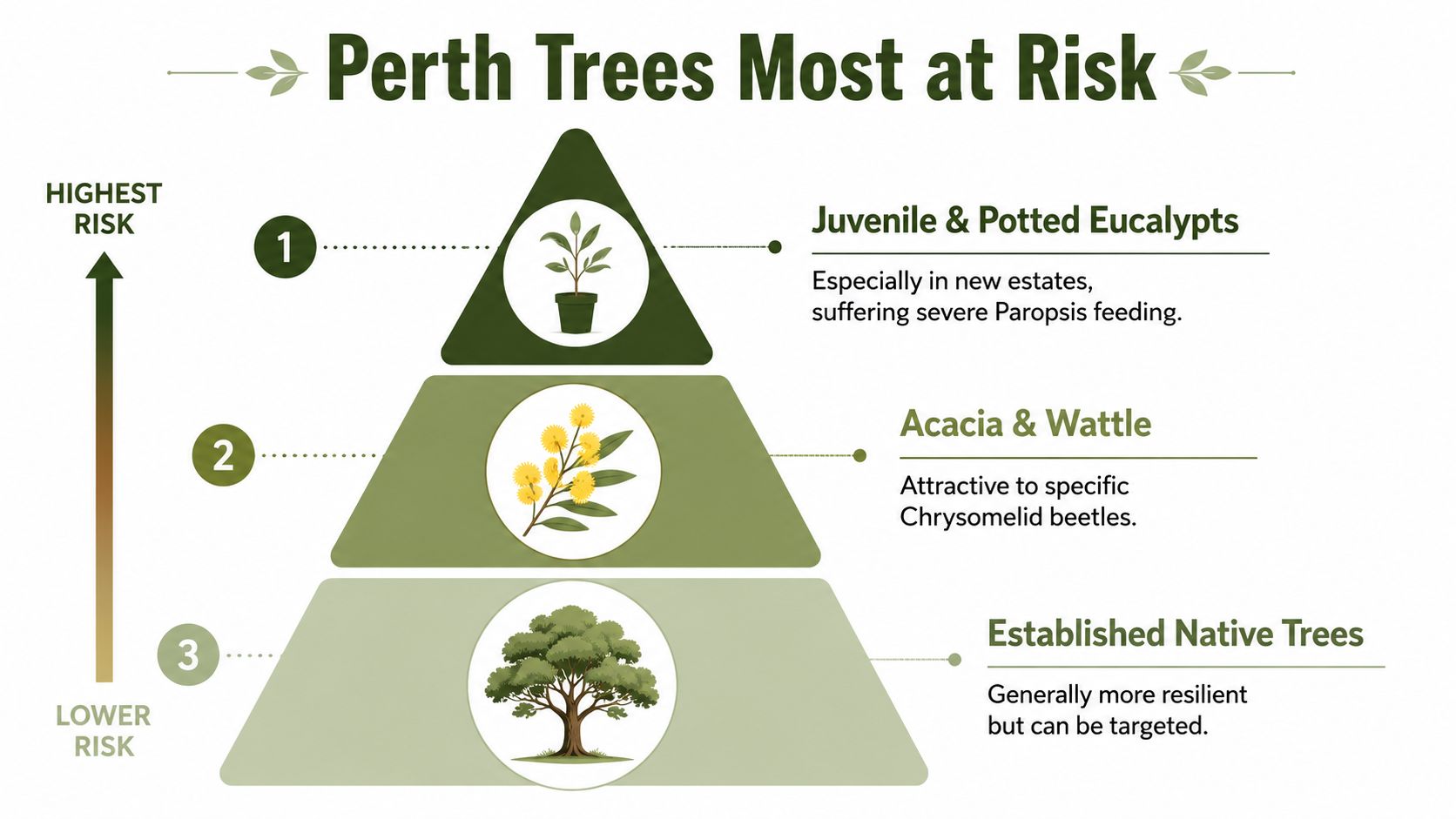
Mature trees usually recover from one season of feeding, but recently transplanted or drought-stressed trees can lose growth they cannot easily replace. The same beetle pressure can be a nuisance in one yard and a real setback in another, depending on root health, canopy size, and how much water the tree has had to work with. Protect the vulnerable trees first, and do not overreact to the ones that can ride out a single feeding cycle.
When Leaf Beetle Damage Needs a Professional Arborist
There comes a point where a home treatment stops making sense and starts costing more than it saves. If you're seeing more than 30 per cent canopy loss, damage that returns across two or more seasons, beetles on a young tree you want to keep, or visible dieback in branch tips, bring in a qualified arborist. Those are the cases where the tree itself is under pressure, not just the foliage.
A proper visit should confirm the beetle species, assess the tree's stress level, and decide whether the activity is routine biodiversity or a problem that needs action. That species check matters because some beetles are part of the local insect mix, while others are putting real pressure on a high-value tree. Good diagnosis keeps you from treating the wrong issue and helps you avoid unnecessary sprays or pruning.
For elm trees, the response may need to be targeted rather than generic. The Tasmanian fact sheet shows how serious elm leaf beetle can become once it is established, and the right response is usually shaped by the tree and the site rather than a one-size-fits-all approach. The elm leaf beetle fact sheet is a useful reminder that early action is easier than dealing with repeat damage later.
What a good arborist visit should include
Species confirmation. Match the beetle to the host plant using visible damage patterns before recommending treatment.
Canopy assessment. Not all leaf loss is equally serious, and a thin canopy can tell you more than a few chewed leaves.
Targeted treatment advice. Start with the least disruptive option that suits the tree, the pest, and the timing.
Pruning where needed. Larval hot-spots can sometimes be reduced by removing heavily affected growth.
Safety around height and powerlines. That is not a DIY job when branches are large or access is awkward.
If the tree is valuable, the cost of a proper inspection is usually far lower than replacing it later.
A practical sign for homeowners is whether the tree is bouncing back between feeding cycles. If it isn't, or if the same damage keeps returning, the problem has moved beyond simple garden maintenance. A clear overview like Swift Trees Perth's quick guide to what an arborist does shows why a professional assessment focuses on tree health as well as pest control.
Get a Free Leaf Beetle Assessment from Swift Trees Perth
If you're dealing with beetles right now, don't guess. Take three photos, one of the full canopy, one close-up of the leaf damage, and one beetle in a jar if you can safely collect it. Add the tree species if you know it, the approximate age, and whether the tree is newly planted, drought-stressed, or already losing leaves fast.
That information makes the assessment much more useful. A clear canopy shot shows how widespread the damage really is, while the close-up tells an arborist whether the feeding pattern fits a leaf beetle, something else entirely, or a mix of problems. If the tree is in Perth metro and you want a local opinion, Swift Trees Perth brings over 20 years of experience, fully insured tree care, and service across suburbs from Bassendean and Morley through to Scarborough and Wembley.
Not every inspection turns into a big job, and that's the point. Sometimes the answer is monitoring, watering, and a light cleanup rather than heavy intervention. If the beetles are turning a young or valuable tree into a seasonal headache, ring the team, send the photos, and stop guessing whether the insects in the garden are a problem.
If you want a proper Perth tree check before the next flush of damage, contact Swift Trees Perth for practical advice, free estimates, and a clear plan for beetle-affected trees. They can assess whether you're dealing with harmless seasonal feeding or a real risk to a young or stressed tree, then recommend the right next step for your property.
Comments