
A Homeowner's Guide to Elm Tree Beetle Treatment in Perth

When it comes to elm tree beetle treatment in Perth, timing is everything. Catching the problem early is the difference between a minor nuisance and a seriously stressed-out tree. The trick is to know what you’re looking for, from the first subtle signs in spring to the more dramatic damage that unfolds in summer.
How to Spot an Elm Beetle Problem Early
By learning to spot these early warning signs, you can get ahead of the problem. Catching it in the shot-hole phase gives you the best chance to put an effective elm tree beetle treatment plan in place and protect your tree for years to come.
Right, so you've spotted the tell-tale signs of an elm beetle problem. What now? Choosing the right treatment is your next move, and you’ve got a few solid options. The best path forward really depends on how bad the infestation is, the size of your elm, and whether you prefer to go the chemical-free route.
Often, the most successful strategy is a blended one—what we in the industry call an integrated approach. Let's walk through the most effective methods we use right here in Perth.
Non-Chemical Control Methods
If you're leaning towards an eco-friendly solution or just dealing with the early stages of an infestation, non-chemical methods can be surprisingly effective. The key is timing them perfectly to interrupt the beetle's life cycle.
One of the most common DIY tactics is trunk banding with sticky barriers. This method is all about targeting the larvae at a very specific moment. Come December, the fattened-up larvae start their march down the trunk, looking for a safe spot to pupate in the soil or bark crevices.
Case Study: For example, a homeowner in Subiaco with a single, magnificent elm in their front garden noticed the leaves looking tattered. By applying a sticky band in early December, they were amazed to see a thick black ring of trapped larvae within a week, preventing thousands of future beetles from emerging.
By wrapping a sticky band around the trunk, you create a simple but brutally effective trap, intercepting them before they can complete their journey. This one move can catch thousands of larvae, which means far fewer adult beetles emerging next spring to chew up your leaves.
Pro Tip: Timing is absolutely critical for this to work. Get those sticky bands on in early December, just as the larvae begin their descent. You'll want to check them every so often and replace them if they get clogged with debris or lose their stick.
Another angle is to encourage natural predators. While it’s not a complete fix on its own, fostering a garden environment that attracts beneficial insects like lacewings, ladybugs, and predatory wasps can help keep the beetle numbers down naturally.
Professional Chemical Controls
When the beetle numbers are out of control or your tree is just too massive for DIY methods, professional chemical treatments are often the only way to prevent serious, long-term damage. These aren't just generic sprays; they are targeted applications that only a qualified arborist should handle.
Across Perth suburbs like Bassendean, Mount Lawley, and Victoria Park, elm trees are a prized feature, but the elm leaf beetle is becoming a serious menace. This mirrors what’s happened elsewhere in Australia since it first showed up in 1989. For Perth locals, getting the pros involved is crucial. An arborist can apply trunk banding with specific insecticides like Carbaryl, doing so monthly from November to January and reapplying after rain. This exact method was shown to cut leaf damage by over 50% in English Elms during trials in the ACT. You can read more about the history and impact of the elm leaf beetle in Australian suburbs.
Foliar sprays are another professional option, where the tree's entire canopy is treated with an insecticide. It's a fast way to knock down both larvae and adult beetles, but it has its downsides. Spray drift is a real concern, potentially harming other plants and beneficial insects, and getting full coverage on a really large, dense tree is tricky.
Here's a quick rundown of the main chemical options:
Treatment Method | Best For | Pros | Cons |
|---|---|---|---|
Chemical Trunk Banding | Moderate infestations on medium-sized trees. | Targets larvae directly as they migrate. Minimal environmental impact. | Needs reapplication, especially after rain. Can be less effective on trees with really rough bark. |
Foliar Sprays | Severe, active infestations causing rapid damage. | Provides a quick knockdown of existing beetle populations. | Potential for spray drift. Coverage can be incomplete on very tall or dense trees. |
Systemic Trunk Injection | Proactive, long-term protection for high-value trees. | Protects the tree from the inside out for 2-3 years. No spray drift or environmental contamination. | Higher upfront cost. Must be done by a qualified arborist. |
Each method has its place. An experienced arborist will be able to assess your specific situation and recommend the smartest course of action.
The Power of Systemic Trunk Injections
If you're after the most effective, long-lasting solution, systemic trunk injections are the undisputed champion. This is the modern, set-and-forget approach that shields your tree for several seasons. In today's design-conscious world, preserving a mature tree is a key element of a property's aesthetic value. A stately elm provides shade, privacy, and a sense of establishment that no new planting can replicate. Seeing it decimated by pests is not just a horticultural issue; it's an aesthetic disaster. Systemic injections are the sophisticated homeowner's choice for protecting this living asset.
Here’s the process in a nutshell:
A qualified arborist drills a series of small, precise holes into the base of the trunk.
A specialised insecticide is injected straight into the tree’s vascular system (the xylem).
The tree does the rest of the work, pulling the treatment up and distributing it to every single leaf.
The result? When a beetle or larva takes a bite, it ingests the insecticide and dies. Because the treatment stays completely inside the tree, it’s one of the safest options for your yard. There's no risk to people, pets, or beneficial insects like bees that aren't eating the leaves.
This method has become the go-to for homeowners in environmentally sensitive spots or for anyone with young kids and pets playing in the garden. It delivers fantastic results and peace of mind, making it a wise investment in the health of a treasured elm.
Figuring out the best treatment can feel like a lot, but you don’t have to go it alone. Protecting a valuable tree takes the right knowledge and equipment. For a professional assessment that makes sense for you, contact Swift Trees Perth for all your tree maintenance needs.
Your Seasonal Treatment Calendar
When it comes to fighting elm tree beetles, timing isn't just important—it's everything. Treating your tree after the leaves have already been skeletonised in the middle of summer is like shutting the gate after the horse has bolted. A proactive, year-round strategy is the only way to get ahead of these destructive pests.
Think of it as a playbook for your elm, specifically tailored to Perth’s climate. By matching your actions to the beetle's life cycle, you hit them when they're most vulnerable. It turns a frustrating battle into a well-managed plan.
This timeline gives you a bird's-eye view of the most important treatment windows for Perth homeowners.
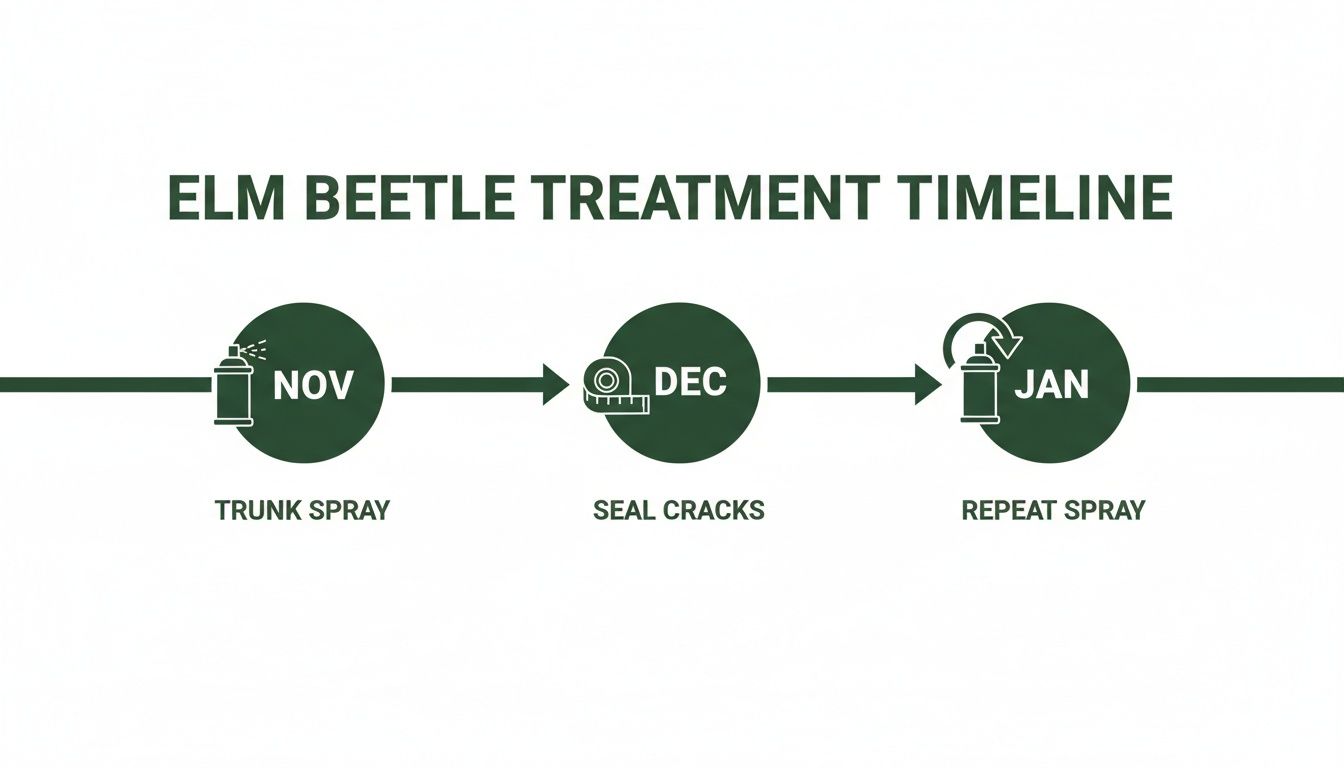
As you can see, professional treatments like trunk spraying are most effective around November and again in January. DIY methods like trunk banding really come into their own in December, catching the larvae on the move.
Spring (September – November): Watch and Prepare
As the weather warms up and your elm puts on its fresh green coat, the adult beetles are waking up from their winter hiding spots. This is your chance for early intervention.
Early September: Start doing weekly checks. Look closely at the new leaves for those classic "shot-hole" marks—small, scattered holes that are a dead giveaway the adults have started feeding.
Late October: This is when the females lay their tiny, yellow, lemon-shaped eggs on the underside of the leaves. They’re tricky to spot, but it’s a sign the next wave is on its way.
November: If you're going the professional route with treatments like foliar sprays or systemic injections, now is the time to get it booked. Applying treatment before the larvae hatch is your best bet for complete protection.
Key Takeaway: Don't underestimate what you see in spring. The amount of adult feeding damage you notice now is a direct preview of the larval devastation you'll be dealing with in summer.
Summer (December – January): The Critical Action Window
Welcome to the main event. The eggs have hatched, and the hungry larvae are out in full force. What you do in these two months will make or break your tree's health for the entire year.
Your main goal here is to target the larvae while they're feasting on the leaves, before they make their way down the trunk to pupate in the soil. For more tips on getting your whole garden ready, our spring tree maintenance guide for Perth has some great advice that ties in perfectly with your beetle control efforts.
Early December: This is the absolute best time for non-chemical trunk banding. The first generation of well-fed larvae will start migrating down the trunk, and a sticky band will stop them in their tracks.
Late December to January: A second generation of beetles often pops up, meaning another round of larvae. You'll need to keep your sticky bands fresh and watch the leaves for new signs of skeletonisation. If it's a bad year, a professional follow-up treatment might be necessary.
Autumn (February – April): Clean-Up and Assessment
As summer starts to cool down, so does the beetle activity. The last of the larvae will have pupated, and the newly emerged adults are looking for a cosy spot to spend the winter. Your job now is all about clean-up and recovery.
Rake and Dispose: Be thorough. Rake up every last fallen leaf and bit of debris from under your elm. This gets rid of countless hiding spots for overwintering beetles.
Health Check: Take a good look at the damage. A healthy, mature elm can handle one bad season, but repeated attacks will seriously weaken it. Make a note of how severe it was to help you plan for next year.
Plan Ahead: Based on this year's infestation, decide on your game plan for next season. If the damage was bad, now is the perfect time to book a consultation and get a professional strategy in place.
To help you visualise your year, here's a simple calendar breaking down the key tasks.
Seasonal Elm Beetle Management Calendar for Perth
This calendar compares common DIY tasks with professional services to help you decide on the best approach for protecting your elm trees throughout the year.
Season | Key Beetle Activity | Recommended DIY Actions | When to Call Swift Trees Perth |
|---|---|---|---|
Spring (Sep-Nov) | Adults emerge and feed on new leaves. Females lay eggs. | Begin weekly leaf inspections for "shot-hole" damage. Monitor for egg clusters on leaf undersides. | Book professional systemic treatments (trunk injection/soil drench) in November before larvae hatch for maximum impact. |
Summer (Dec-Jan) | Larvae hatch and skeletonise leaves. Larvae migrate down the trunk to pupate. A second generation often appears. | Apply sticky trunk bands in early December to trap migrating larvae. Reapply bands and monitor for new damage. | For severe infestations, schedule a follow-up foliar spray in January to control the second generation of larvae. |
Autumn (Feb-Apr) | Remaining larvae pupate. New adults seek overwintering sites. | Thoroughly rake and dispose of all fallen leaves and debris to remove beetle hiding spots. Assess tree health. | Schedule a consultation to assess the season's damage and create a tailored management plan for the following year. |
Winter (Jun-Aug) | Adults are dormant, hiding in bark crevices or leaf litter. | Seal any significant cracks or cavities in the bark where beetles could overwinter. Plan your spring budget and strategy. | This is a great time for a tree health assessment and structural pruning to improve vigour before the next season. |
By following a seasonal plan, you give your elm its best chance. If you’d prefer a professional assessment to get a tailored management plan locked in, get in touch with Swift Trees Perth.
Building a Resilient Elm Tree
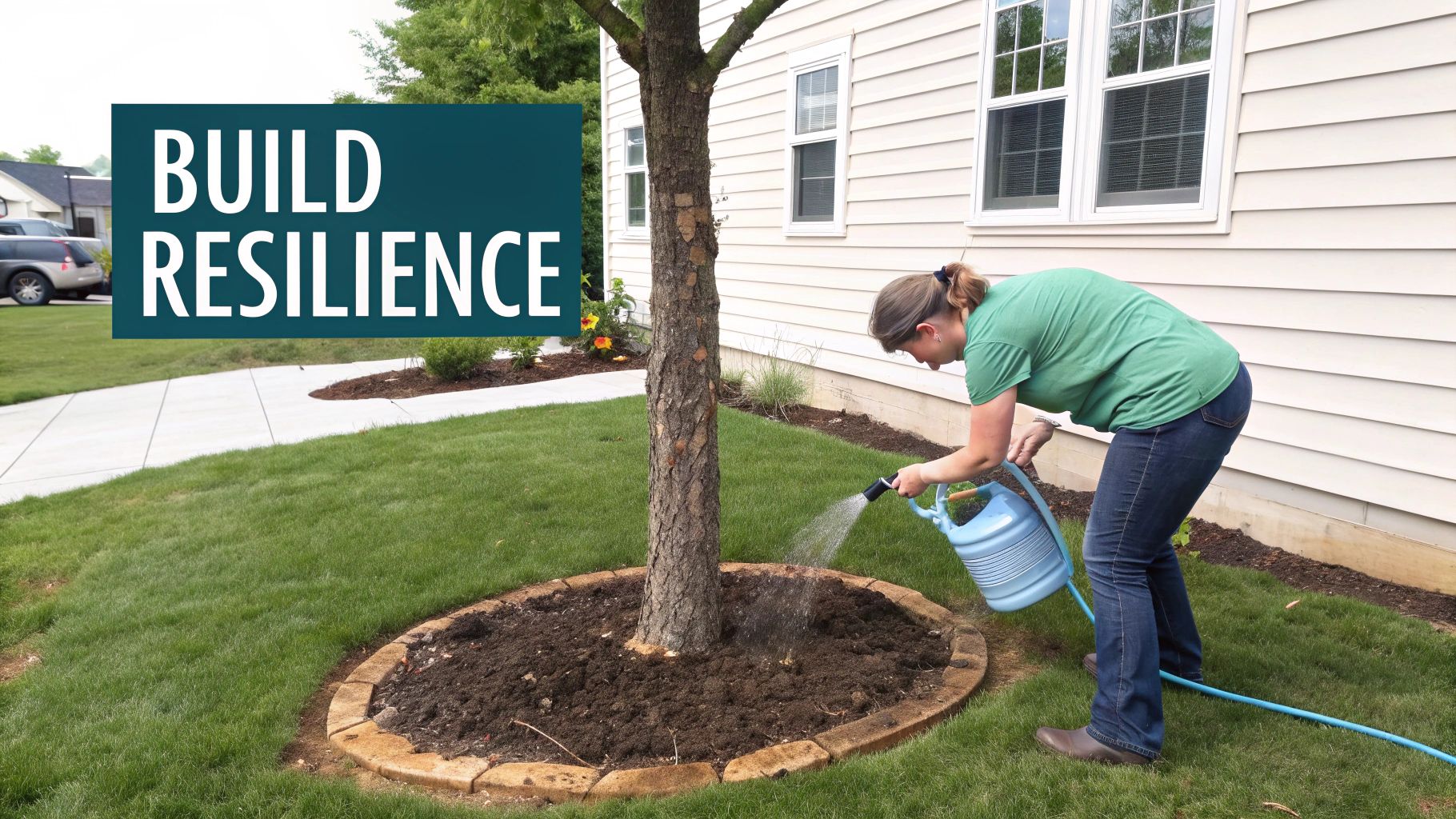
While treating an active infestation is a necessary first step, the real win is breaking the cycle of chemical treatments altogether. A strong, vibrant elm is far less appealing to pests and is much better equipped to handle an attack if one does happen. It’s all about building the tree's natural defences from the ground up, turning it into a fortress instead of an easy target. This long-term view is the cornerstone of sustainable garden design—a fashionable and responsible approach to modern landscaping.
This proactive mindset is especially crucial here in Perth. Our hot, dry summers put incredible stress on trees, and a stressed tree is a magnet for pests. By focusing on its core health, you dramatically reduce the need for intensive elm tree beetle treatment later on.
Mastering Moisture and Mulch
Proper watering is the absolute foundation of a healthy elm, but it’s amazing how often it’s done wrong. A quick sprinkle with the hose just isn't going to cut it. The secret is deep, infrequent watering that pushes the roots to grow strong and wide.
For a mature elm, this means giving it a long, slow soak at the tree’s drip line—that’s the area on the ground directly under the outermost leaves, not right up against the trunk. Imagine a family in Nedlands with a heritage elm. Instead of a quick daily spray, they use a soaker hose coiled around the drip line and run it for a few hours once a fortnight. This deep watering encourages a robust root system that can withstand Perth's dry spells.
Next up is mulching, which is basically your tree's best mate. A good layer of organic mulch like wood chips or composted bark does a few critical things:
Holds in moisture: It acts like a lid on the soil, slashing the amount of water lost to evaporation.
Regulates temperature: Mulch is a great insulator, keeping the soil and roots cooler on those scorching days.
Blocks out weeds: It stops weeds from stealing precious water and nutrients from your elm.
One of the biggest mistakes I see is the "mulch volcano" piled high against the trunk. This is a big no-no. It traps moisture right against the bark, which can cause it to rot. Always leave a small, mulch-free gap around the base of the tree so it can breathe.
The Role of Nutrition and Pruning
Just like us, trees need a balanced diet to be at their best. Perth's sandy soils are often lacking in key nutrients. Applying a slow-release, balanced fertiliser in spring can give your elm the fuel it needs to grow lush, healthy leaves that are less tempting to beetles.
But hold on—more is not always better. Over-fertilising can trigger a burst of weak, sappy growth that pests actually find more attractive. It’s all about giving the tree the right food at the right time.
Strategic pruning is the other piece of the puzzle. This isn’t just about making the tree look tidy; it’s a vital health check-up. A professional arborist can:
Remove any dead, weak, or crossing branches that create entry points for pests and disease.
Open up the canopy to improve air circulation and let more sunlight in, which discourages the damp conditions that many pests love.
Shape the tree's structure to encourage strong, stable growth for the long haul.
Taking this holistic approach puts you in the driver's seat as the true guardian of your elm. By building its health from the roots up, you’re creating a resilient tree that can largely fend for itself. For an expert assessment of your tree’s health and a tailored plan to boost its vitality, contact Swift Trees Perth for your tree maintenance needs.
Knowing When to Call an Arborist
While DIY methods like sticky banding can make a real difference in a small-scale battle, there comes a point where calling in a professional arborist isn't just a good idea—it's essential for the survival of your tree. Knowing when to make that call is key. This isn't about giving up; it's a strategic move to protect a valuable, living asset.
Some situations are a clear signal that it’s time to put down the garden gloves and pick up the phone. Trying to tackle a significant infestation on your own can lead to a lot of frustration and, even worse, irreversible damage to your beloved elm.
When the Job Is Out of Your Hands
The most obvious sign is when your elm is simply too big. If you can't safely reach the higher branches from the ground or a small stepladder, a DIY approach is out of the question. Trying to spray a massive canopy without the right equipment isn't just ineffective, it’s downright unsafe. Arborists have the specialised gear and training to get total coverage, hitting every spot where beetles might be hiding.
Another dead giveaway is the severity of the infestation. If you've missed the early signs and are now looking at widespread skeletonisation across more than half the tree, the beetle population is likely far too large for simple traps to handle. A severe infestation needs a more potent, professional-grade response to break the life cycle and give your tree a fighting chance to recover.
Tree Case Study: For instance, a historic avenue of elms in a Peppermint Grove park was saved from total defoliation because the local council engaged professionals for systemic injections at the first sign of a severe outbreak, preserving the area's iconic canopy.
Choosing a professional is an investment in your tree's future. It ensures the job is done safely, effectively, and with the long-term health of your elm as the top priority.
The Value of Professional Expertise
An experienced arborist brings a lot more to the table than just a bigger sprayer. Their diagnostic skills are something you just can't replicate. They can accurately assess the extent of the damage, spot secondary issues like fungal diseases that often prey on a stressed tree, and map out the most suitable treatment plan. For stubborn or recurring infestations, you really need a pro.
Professionals also have access to advanced treatments that aren't available over the counter, like systemic trunk injections. This is the gold standard for long-term protection. It delivers the treatment directly into the tree's vascular system, making it incredibly effective, safe for pets and kids playing nearby, and it protects the elm from the inside out for two years or more. You can learn more about the role of a certified tree expert by checking out our guide on understanding what an arborist does.
Creating a Multi-Year Management Plan
Left unchecked, elm leaf beetles can strip a mature elm in Perth's backyards or local parks in as little as one week. We’ve seen this happen time and again since the pest first arrived in Australia in 1989. For a commercial property manager in Floreat or a strata manager in Kingsley, this can mean bare, ugly branches by Christmas, tanking a property's aesthetic and value.
Professional arborists fight back with treatments tailored to Perth's unique climate. Systemic injections can provide years of solid protection with minimal environmental impact—a perfect solution for homes near sensitive coastal areas like Mullaloo.
An arborist doesn’t just show up to spray and leave. They build a strategy for the future, creating a comprehensive, multi-year management plan that often includes:
Targeted Treatments: Applying the right solution at exactly the right time of year for maximum impact.
Health Assessments: Regularly monitoring the tree's recovery and overall vitality.
Proactive Pruning: Removing weak or infested branches to improve the tree's structure and bolster its natural defences.
This long-term approach turns the yearly panic into a controlled, effective strategy. It ensures your elm remains a beautiful, healthy feature of your property for decades to come.
Common Elm Beetle Questions Answered
When you're dealing with a pest that can strip your prized elm tree bare, it's normal to have a few questions. Even with a solid plan, things come up. Here are some of the most common queries we hear from Perth homeowners, answered in plain English to help you move forward with confidence.
How Do I Know It Is Elm Beetles Or Something Else?
Elm leaf beetle damage has a very specific signature that sets it apart from other tree troubles. Your first clue often appears in spring when the adult beetles chew small, circular "shot-holes" right through the new leaves.
But the real giveaway happens in summer. Once the larvae hatch, these tiny grubs get to work feeding on the soft green tissue between the leaf veins, leaving the vein structure completely intact. This creates a distinctive 'skeletonised' or lace-like appearance, which is the classic calling card of a heavy infestation. While other issues might cause yellowing or spots, this unique damage pattern screams elm beetle.
Are Chemical Treatments Safe For My Family And Pets?
This is always the number one concern, and rightly so. The good news is that modern professional treatments are designed with safety as the top priority. While old-school foliar sprays exist, they're rarely the best method due to the risk of spray drift landing where it shouldn't.
Thankfully, there are much safer and more precise options available:
Chemical trunk banding involves applying insecticide in a targeted band around the trunk, which keeps the product contained and limits its exposure to the rest of your garden.
Systemic trunk injections are, by far, the safest professional choice. An arborist injects the treatment directly into the tree's vascular system. This means the product is held entirely within the tree itself.
This injection method completely eliminates the risk of surface contamination, making it the perfect choice for homes with kids, pets, or veggie gardens nearby. It delivers powerful, multi-year protection without compromising the safety of your yard.
If My Neighbour's Tree Has Beetles, Will Mine Get Them?
Unfortunately, the answer here is almost certainly yes. Adult elm leaf beetles are capable flyers and will have no trouble moving from one elm to another in search of fresh leaves for feeding and egg-laying. A single infested tree can quickly become a neighbourhood-wide problem.
This is why a coordinated community effort can be so effective. If you spot an infestation on a neighbour's tree, consider it a clear warning. It’s time to start preventative measures on your own elm straight away, rather than waiting for the damage to appear.
An infested tree next door is the best early warning system you can ask for. Proactive treatment on your own elm at that point can prevent a major outbreak before it even begins.
Can My Elm Tree Survive A Severe Beetle Attack?
A healthy, mature elm can usually handle a single year of heavy defoliation. It will tap into its energy reserves, push out a new set of leaves, and will likely pull through.
The real danger lies in repeated, year-after-year attacks. Each time the tree is stripped of its leaves, it burns through more of its vital energy stores, becoming progressively weaker. This sustained stress leaves it highly vulnerable to other threats like drought, secondary pests, and fungal diseases. An effective treatment program isn't just about making your tree look good for one season; it's a critical investment in its long-term health and survival.
Protecting your elm tree doesn't have to be a stressful annual battle. With the right knowledge and professional support, you can keep it healthy and beautiful for decades. Your garden is an extension of your home, and a magnificent elm is a centrepiece worth protecting. Don't let pests ruin your outdoor sanctuary.
For expert assessment and a tailored management plan to safeguard your trees, Contact Swift Trees Perth today for a free estimate and expert advice on all your tree maintenance needs. Our team is ready to help you maintain the beauty and health of your landscape.
Comments