
How Do You Prune a Palm Tree The Right Way in Perth

When you prune a palm tree in Perth, the goal is to carefully remove only the fronds that are dead, dying, or damaged, along with any unwanted fruit or flower stalks. It's a common mistake to cut into the healthy green fronds, but doing so can seriously weaken the tree and leave it vulnerable to disease. Always use sharp, sterilised tools to make clean cuts—this is one of the best things you can do for your palm's health.
Why Pruning Your Palm Tree Is About More Than Looks
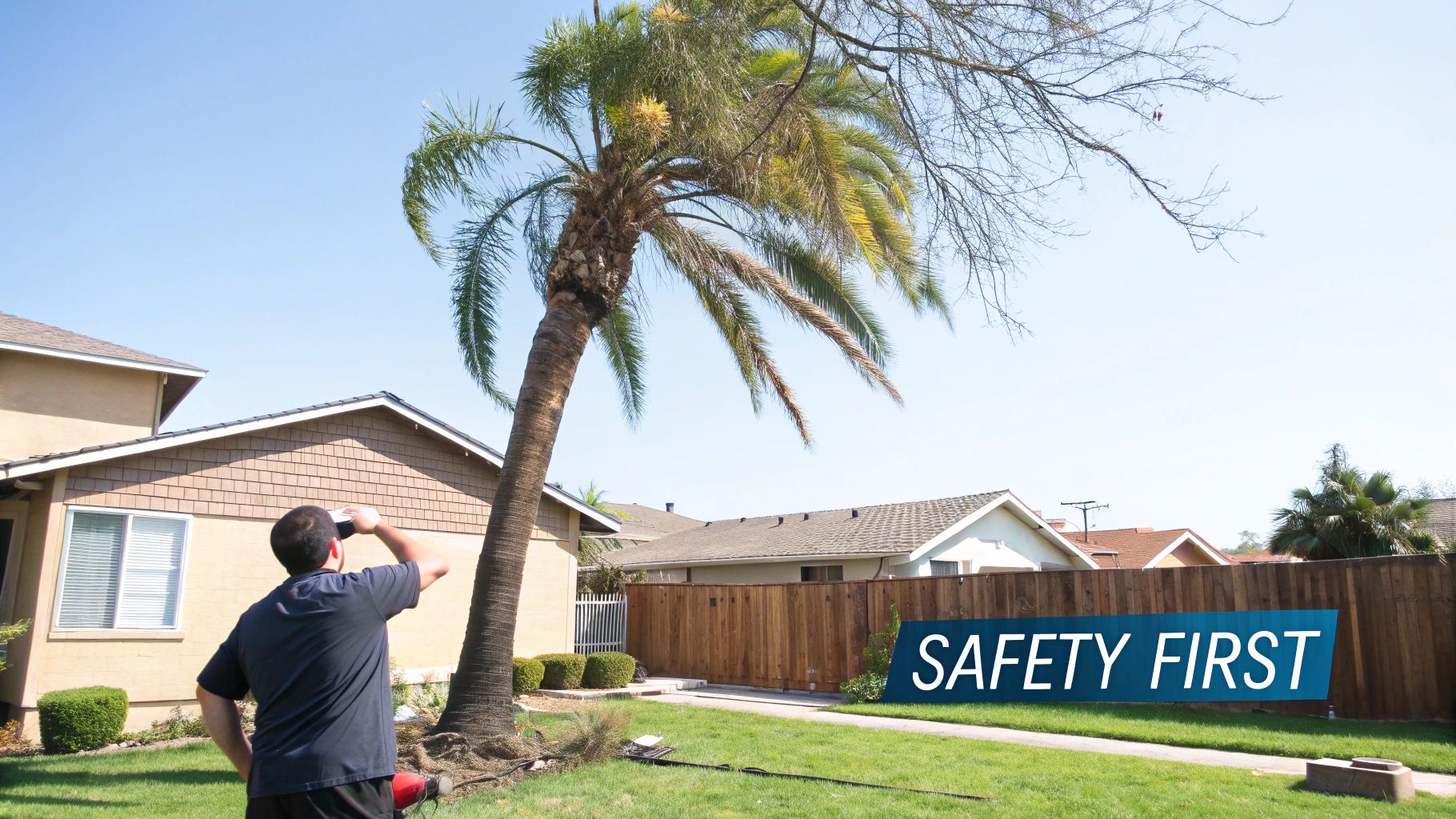
That overgrown palm in your Scarborough backyard isn't just an eyesore; it's a potential hazard waiting to happen. While a tidy appearance is a great benefit, proper pruning is fundamentally about maintaining your tree's health and ensuring the safety of your property and family. This guide moves beyond simple tidying to explain why the right technique is so important.
Health, Safety and Aesthetics
Getting your palm pruned correctly is a bit of a balancing act. It’s about more than just a quick tidy-up; it's a critical part of its long-term care.
When you remove dead or decaying fronds, you’re not just improving its looks. You're also getting rid of potential homes for pests like rats and insects that love to nest in the dense, dead material. For example, a client in Cottesloe found that their recurring rodent problem disappeared almost overnight after we cleaned out the dense thatch of dead fronds from their Canary Island Date Palms.
This process also opens up the canopy, allowing for much better air circulation. Better airflow means less chance of fungal growth and disease taking hold. Think of it as a health check-up that encourages strong, new growth. You might be interested in learning more about how trees heal themselves after being pruned.
Pruning isn't just about removing the old; it’s about making way for the new. A well-maintained palm is a healthy palm, better equipped to withstand the stresses of Perth’s climate.
Mitigating Risks During Perth's Windy Seasons
Living in Perth's coastal suburbs, from Woodvale down to Scarborough, means dealing with strong sea breezes is just part of life. Unpruned palms can quickly become dangerous in these conditions. Heavy, dead fronds—weighing up to 5kg each—can be torn off and fall without warning.
In fact, local arborist reports show that falling fronds from unpruned palms contribute to 15% of property damage claims in these areas. This risk is exactly why professional maintenance is so crucial, especially for the tall palms that often reach heights of 10-20 feet in our suburban gardens. You can discover more insights about palm tree pruning risks on GoTreeQuotes.com.au.
Understanding why you're pruning is the first step. It transforms the task from a simple chore into a vital investment in your tree’s vitality and your home's safety.
For professional advice and service tailored to Perth's unique conditions, contact Swift Trees Perth for all your tree maintenance needs.
Finding the Perfect Pruning Window in Perth's Climate
A lot of generic advice you find online just doesn't work for Perth's unique Mediterranean climate. Timing is everything, and if you prune your palm at the wrong moment, you can cause a lot of unnecessary stress right before our intense summer heat kicks in. The sweet spot for pruning is during late winter through to early spring.
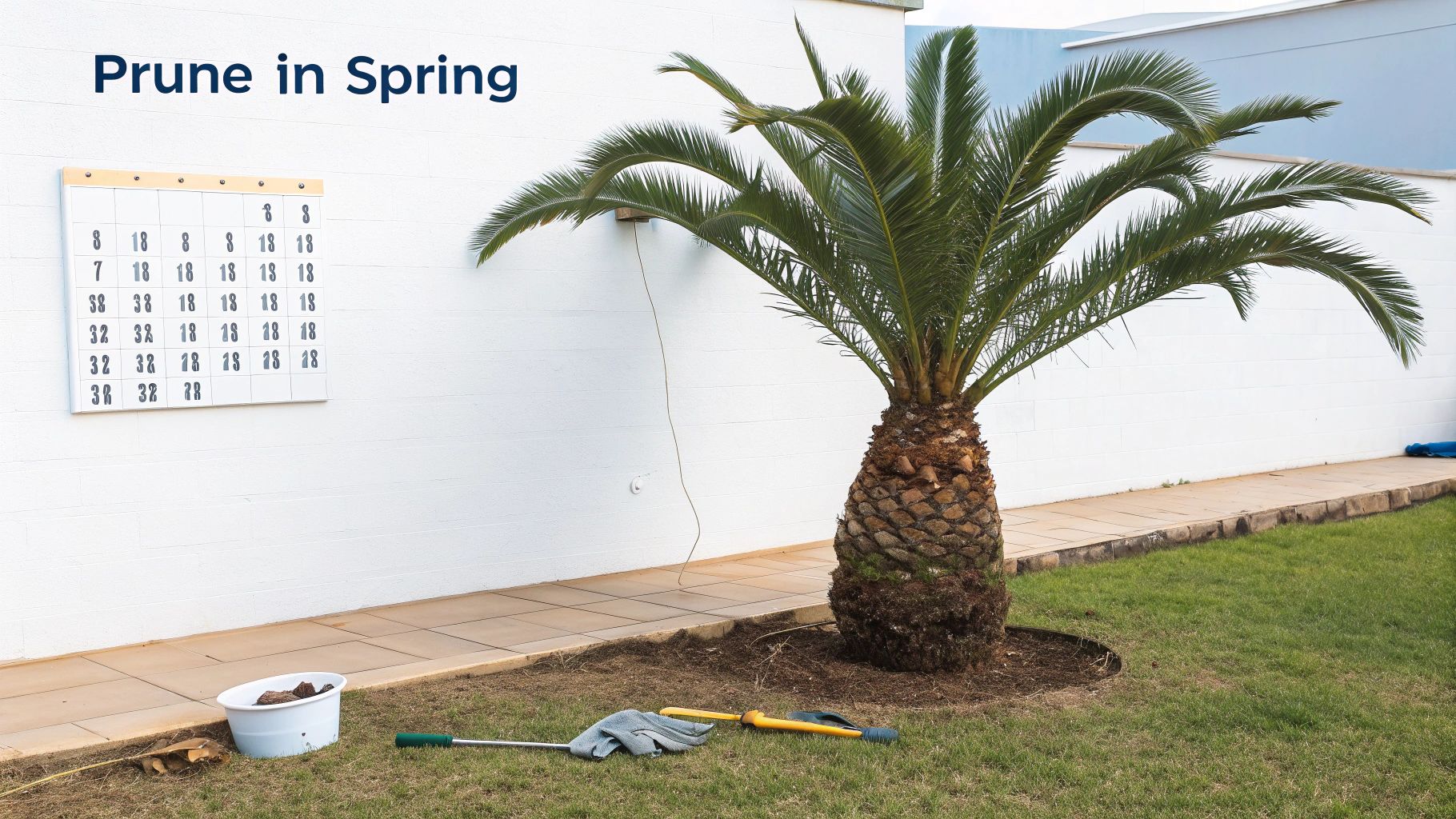
This window lines up perfectly with the start of the palm’s main growing season. By trimming it just before this growth surge, you’re giving the tree the best possible chance to heal its wounds quickly. This makes a huge difference in minimising its vulnerability to pests and diseases that love to take advantage of fresh cuts.
Why Perth's Seasons Matter
While palms might be actively growing in places like South East Queensland during early summer, here in Perth's coastal suburbs from Mullaloo to Duncraig, we see the best results from pruning between September and November.
During these months, the temperatures are a mild 20-25°C, and the last of the winter rains help the tree recover strongly. In fact, local data from WA arborist associations shows that palms pruned during this window have 35% stronger new frond growth compared to those cut off-season. This timing also cuts the risk of fungal diseases, which affect a surprising 22% of incorrectly timed prunes in the metro area. You can learn more about the best time for palm tree pruning from O'Brien's Tree Care.
Prune too early in winter, and you leave the tree exposed to cold snaps. Wait until the summer heat is in full swing, and you're forcing it to recover under extreme stress. Hitting that spring sweet spot is the key to a healthy, thriving palm.
Real-World Pruning Scenarios
Let's look at a couple of common scenarios I see in Perth suburbs.
Imagine a homeowner in Victoria Park who decides to prune their palm in late autumn to "tidy up" before winter. The fresh cuts struggle to heal in the cooler, damp weather, and a minor fungal infection takes hold, stunting the tree's growth the following spring.
Now, picture a resident in Duncraig who waits until mid-January. The pruning, combined with the dry heat, puts the palm under immense stress. It starts shedding otherwise healthy fronds just to conserve water and energy. This is particularly damaging to thirsty species like Cocos Palms, which can quickly go into shock.
The lesson is clear: Aligning your pruning with the natural growth cycle of your palm in Perth’s climate isn’t just a recommendation—it's a critical step for ensuring its long-term health and resilience.
By respecting this seasonal window, you set your palm up for a year of robust, beautiful growth. If you're ever unsure about the timing or the job feels too big, getting professional advice is always the best move. For expert tree maintenance tailored to Perth's climate, contact Swift Trees Perth to ensure your palms are pruned perfectly every time.
Equipping Yourself with the Right Pruning Tools
Using the wrong tool for the job is one of the fastest ways to damage a beautiful palm, or even worse, injure yourself. Thinking about how to prune a palm tree properly always starts with having the right equipment. This isn't just about grabbing any old saw; it’s about understanding why certain tools are non-negotiable for a clean, safe, and healthy cut.
The most critical tool in your arsenal will be a sharp, sterilised pruning saw. Trust me on this one. A dull blade will just tear and shred the fibrous fronds instead of cutting them cleanly, leaving a ragged wound that’s an open invitation for pests and disease.
Before you even think about making a cut—and especially between different trees—get into the habit of sterilising your tools. A quick wipe with isopropyl alcohol is all it takes to prevent the spread of nasty fungal or bacterial infections. It's a small professional step that makes a world of difference.
Selecting the Essentials
For smaller, more accessible palms, a good pair of loppers or even hand pruners might be all you need to handle thinner frond stems. Look for ergonomic designs if you can; they really do reduce hand strain when the job gets repetitive.
However, the moment those fronds are out of easy reach, a pole saw becomes an absolute necessity for your safety.
Pruning Saw: Perfect for the thick, woody bases of mature fronds. A curved blade is your best friend here, as it helps grip the round surface of the frond for a cleaner cut.
Pole Saw: This is your go-to for taller palms. It lets you maintain a safe distance from falling debris while reaching those high-up fronds without a ladder.
Loppers: Best suited for smaller palms or for snipping through flower and fruit stalks with minimal effort.
Safety Gear: This is easily the most important part of your kit. Always, always wear safety glasses, sturdy gloves to protect against sharp edges and spines, and proper closed-toe boots.
Beyond just picking the tool, it's vital to understand how to choose the best blade for every type of cut to ensure you're making clean, healthy cuts. For a more detailed look, check out our pro guide to using palm tree trimmers.
Investing in quality tools is an investment in your palm's health and your own safety. A sharp, clean cut heals faster and seriously reduces the risk of long-term damage to the trunk.
Choosing the Right Tool for the Palm Pruning Job
It can be tough to know which tool is right for your specific palm. This table breaks down the common choices to help you decide.
Tool | Best For | Safety Tip | Good for DIY? |
|---|---|---|---|
Hand Pruners | Very small palms, thin green fronds, flower stalks. | Wear gloves to avoid sharp leaf edges. | Yes, for small, accessible jobs. |
Loppers | Small to medium-sized fronds that are easy to reach. | Keep blades sharp to avoid slipping. Ensure a firm grip. | Yes, for palms under 3 metres. |
Pruning Saw | Thick, woody frond bases on larger, accessible palms. | Use a pull-stroke cutting motion to maintain control. | Yes, for work done from the ground. |
Pole Saw | Tall palms where you need reach from the ground. | Always be aware of your surroundings and falling debris. Never stand directly underneath the cut. | Yes, but requires practice and physical strength. |
Choosing the right equipment isn't about owning the most expensive gear; it’s about having the correct gear for the size and height of your palm. Trying to hack away at a thick frond with hand pruners will only lead to frustration and a messy, damaging cut. And trying to balance on an unsteady ladder with a handsaw? That’s just a recipe for disaster.
If your palm is towering over your house or you just don't feel confident handling the tools required, that's a clear sign to call in the professionals. For safe and expert tree maintenance across Perth, contact Swift Trees Perth for a hassle-free assessment.
Mastering the Perfect Pruning Cut
Got the right tools? Good. Now comes the real art of pruning a palm. Knowing how to prune a palm tree correctly isn’t about following a rigid set of steps; it’s about learning to read the tree and understand what it needs. A seasoned arborist doesn’t just hack away at fronds—they make precise, thoughtful cuts that encourage the palm to stay healthy and strong.
The main idea is to only remove what’s no longer helping the tree. Think of it as a clean-up job. We're targeting the three 'D's: dead, dying, or damaged fronds. If a frond is completely brown and crispy, it's dead and can definitely go.
But what about a yellowing frond? That's a different story. It might look a bit sad, but it's still hard at work, sending valuable nutrients like potassium back into the tree. Snipping it off too early is like taking away your palm's dinner, forcing it to dip into its precious energy reserves.
Adopting the 9-to-3 Rule
One of the best bits of advice I can give you is to follow the "9-to-3 o'clock" rule. Picture the palm's canopy as a clock face. You should never, ever remove healthy green fronds that are growing above the horizontal midline—that is, anything in the upper half from 9 o'clock across to 3 o'clock.
These upper fronds are the tree's engine room, handling all the photosynthesis. Cutting them off can literally starve the palm and leave its sensitive central bud exposed to harsh sun, wind, and pests. It's one of the most common DIY mistakes I see, and it can stress, weaken, and eventually kill a perfectly good tree.
The golden rule of palm pruning is simple: when in doubt, leave it on. It’s always better to under-prune than to over-prune. A few extra lower fronds won't harm the tree, but taking too many healthy ones certainly will.
The Art of the Cut and What to Remove
Once you’ve picked out a dead frond for removal, your cutting technique is crucial. You want to make a clean cut close to the trunk, but without actually slicing into it. Scarring the trunk creates a wound, and that's an open invitation for diseases and insects to move in.
Using your pruning saw or loppers, cut the frond about 5-10 centimetres away from the trunk. That little stub that's left behind is often called a "boot." On many palm species, this boot will naturally dry up and fall off on its own over time, protecting the trunk as it does.
So, besides the dead fronds, what else should be on your list?
Flower Stalks: You can remove these at any time without hurting the tree. Taking them off simply stops fruit from developing. This is a must-do for Cocos Palms to prevent the infamous "rat hotels" from forming.
Fruit Stalks: It's usually a good idea to remove these, mainly for tidiness. Dropped palm fruit can stain your patio, attract pests like rats, and create a slippery, squishy mess.
Loose Boots: On some palms, the old bases of the fronds (the boots) stay stuck to the trunk. If they're loose and peeling away, you can gently pull them off. Just never force or tear them away, as you risk damaging the trunk.
This image gives you a great visual on the essential tools you'll need to get the job done right.
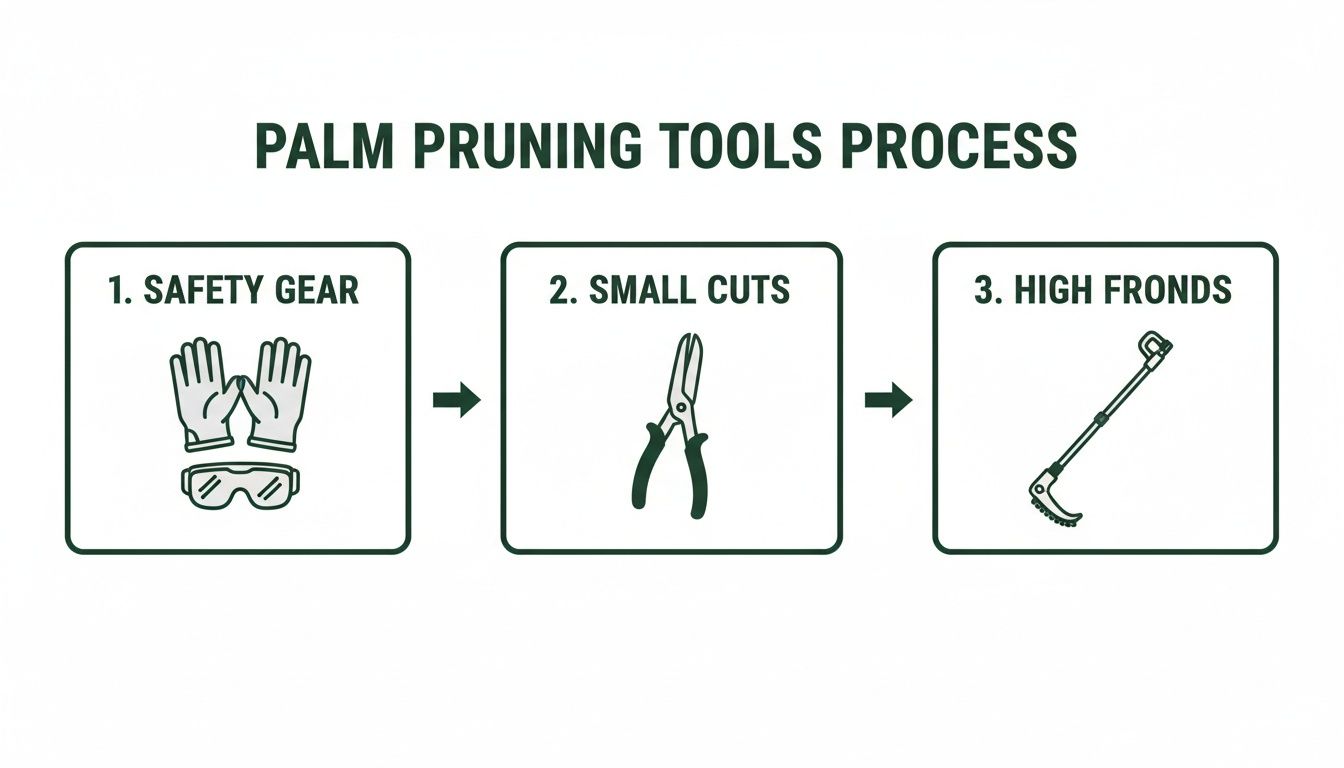
Starting with the basic safety gear and moving up to specialised tools like a pole saw just shows that a safe, clean job means matching your equipment to the tree's height and the task's difficulty.
Getting that perfect cut is all about patience and precision. By only removing what’s necessary and always protecting the trunk, you'll ensure your palm remains a beautiful, healthy part of your Perth garden for years. Of course, if the job feels too big or your palm is too tall to tackle safely, remember that expert help is just a phone call away.
For professional tree maintenance that puts the health of your palms first, contact Swift Trees Perth today for a no-obligation quote.
What Not to Do: Common Palm Pruning Mistakes to Avoid
Knowing how to prune a palm tree is as much about what you don't do as what you do. Across Perth, from the leafy streets of Mount Lawley to the established gardens of Floreat, we often see well-intentioned homeowners make a few critical errors. These mistakes can turn a simple maintenance task into a long-term problem for your palm's health.
The most damaging mistake, without a doubt, is over-pruning. Driven by a desire for a perfectly tidy look, many people get carried away and start cutting into healthy, green fronds. This starves the tree of its ability to photosynthesise, putting it under stress that stunts growth and leaves it vulnerable to disease.
The Dangers of Hurricane Cuts and Trunk Skinning
You’ve probably seen palms pruned so aggressively that only a few fronds stick straight up from the top. This is often called a "hurricane cut" or "rooster-tailing." This practice severely weakens the tree by stripping away its primary energy source and exposes the sensitive central bud to the harsh Perth sun and damaging winds.
Another trend that's more about aesthetics than health is "skinning" the trunk—aggressively cutting or tearing off the old frond bases (the "boots") to create a smooth surface.
While it might look neat at first, this often creates deep, permanent wounds in the trunk. Unlike the bark on other trees, these scars don't heal, leaving open invitations for pests and fungal infections that can eventually rot the trunk from the inside out.
A classic scenario we see in suburbs like Floreat is a homeowner "skinning" their tall Washingtonia palm for that clean, smooth look. A year later, the trunk is covered in deep, discoloured scars, and the tree's health has visibly declined. The right way to do it is to only remove boots that are already loose and come away with a gentle tug.
Other Common Pitfalls to Sidestep
Beyond these major blunders, a few other common missteps can compromise your palm's wellbeing. The good news is, they’re simple to avoid once you know what to look for.
Using Dull or Dirty Tools: A blunt saw doesn't cut; it rips and tears the fibrous fronds. This creates ragged wounds that are slow to heal and prone to infection. Always start with a sharp, sterilised blade for every single cut.
Cutting Too Close to the Trunk: Slicing into the trunk while removing a frond creates an unnecessary injury. It’s far better to leave a small stub of about 5-10 cm, which protects the trunk as it naturally dries and recedes over time.
Forgetting About Safety: Skipping basic safety gear is just asking for trouble. Falling fronds can be surprisingly heavy, and many palms hide sharp spines. Always wear gloves, safety glasses, and sturdy footwear.
Correcting these habits is easy and turns potential pitfalls into learning opportunities. By focusing on removing only what's dead or dying and respecting the tree's natural structure, you'll ensure its health for years to come.
If you’re worried about making these mistakes or your palm needs expert attention, don’t risk it. The team at Swift Trees Perth has the experience to prune your palms safely and correctly. Contact us for your tree maintenance needs and enjoy the peace of mind that comes with professional care.
When a DIY Job Becomes a Professional's Task
Knowing your limits is a key part of pruning a palm tree safely and successfully. While tackling a small palm in your backyard can be a rewarding weekend project, there are clear signs it’s time to put down the tools and call in a qualified arborist.
Recognising these moments isn't just about avoiding a tricky job—it’s about protecting your safety and the long-term health of your tree.
When a pruning job gets complex or risky, it’s crucial to understand why it’s become a professional’s task, which includes understanding licensing rules for contractors and knowing how to hire the right people.
If your palm is taller than a single-storey house, anywhere near powerlines, or showing signs of disease, the risks of a DIY approach multiply fast.
The Risks of DIY on Large Trees
Trying to prune a tall palm without proper training and equipment is incredibly dangerous. We're talking about serious risks like falls from heights, injuries from heavy falling fronds, and even electrocution from nearby powerlines.
Beyond personal safety, an improper cut on a mature palm can cause irreversible damage. Bad cuts create large wounds that invite pests and disease, ultimately weakening or even killing a tree that has taken decades to grow. We cover this in more detail in our article on common DIY tree care mistakes.
The safety statistics really drive the point home. A guide from Safe Work Australia reports that falls and being struck by falling objects cause 25% of all injuries in the tree care industry. Palms, with their fibrous fronds that can weigh 3-7 kg each, only amplify those risks.
Here in Perth, local council data from suburbs like Bassendean and Morley shows that 12% of tree-related emergency calls involve unpruned palms dangerously close to powerlines.
Why Choose a Professional Arborist
Hiring a qualified and insured team like Swift Trees Perth simply removes the guesswork and the danger. Professionals bring more than just a taller ladder; they have the right expertise, specialised gear, and a solid commitment to safety.
A professional service guarantees:
Safety Compliance: Teams work to strict safety standards, protecting you, your property, and themselves.
Expert Technique: Arborists know precisely which fronds to remove and how to cut them cleanly without damaging the trunk. This is vital for the palm's health.
Proper Equipment: They show up with everything needed to handle any height or tricky situation safely and efficiently.
Waste Disposal: All the green waste is removed, leaving your property clean and tidy. No mess left behind.
Calling in a professional offers complete peace of mind. It transforms a potentially hazardous weekend job into a safe, efficient process that guarantees the best outcome for your palm and your property.
When you weigh the risk of serious injury against the potential damage to a valuable tree, the choice becomes clear. For a professional assessment in suburbs from Kingsley to Wembley, an expert arborist can provide guidance and a no-obligation quote.
Your palms are a valuable asset to your property, enhancing its beauty and value. Keeping them in top condition is a smart investment. For tree maintenance that prioritises safety, tree health, and your peace of mind, it’s time to call in the experts. Don't risk injury or damage to your beautiful palms; contact the experienced and insured team at Swift Trees Perth for your free quote today and let us handle the hard work for you.
Comments