
A Perth Homeowner’s Guide to Root and Tree Killer

When it comes to dealing with invasive tree roots that are threatening your property, a potent root and tree killer is often the most direct and effective approach. These specialised chemical products are formulated to eliminate a tree right down to its root tips, stopping regrowth in its tracks and preventing any further damage. For Perth homeowners, knowing how and when to use these killers is key to protecting your home’s foundation, plumbing, and garden from these silent, underground invaders.
The Hidden Damage Lurking in Your Perth Garden
Beneath the calm surface of your garden, a surprisingly destructive force could be at work. Invasive tree roots are a headache for homeowners across many Western Australian suburbs, slowly but surely compromising a property's integrity and leading to some seriously expensive repairs. While we love our trees, certain species have aggressive root systems that relentlessly search for moisture and space, often finding both in the worst possible places.
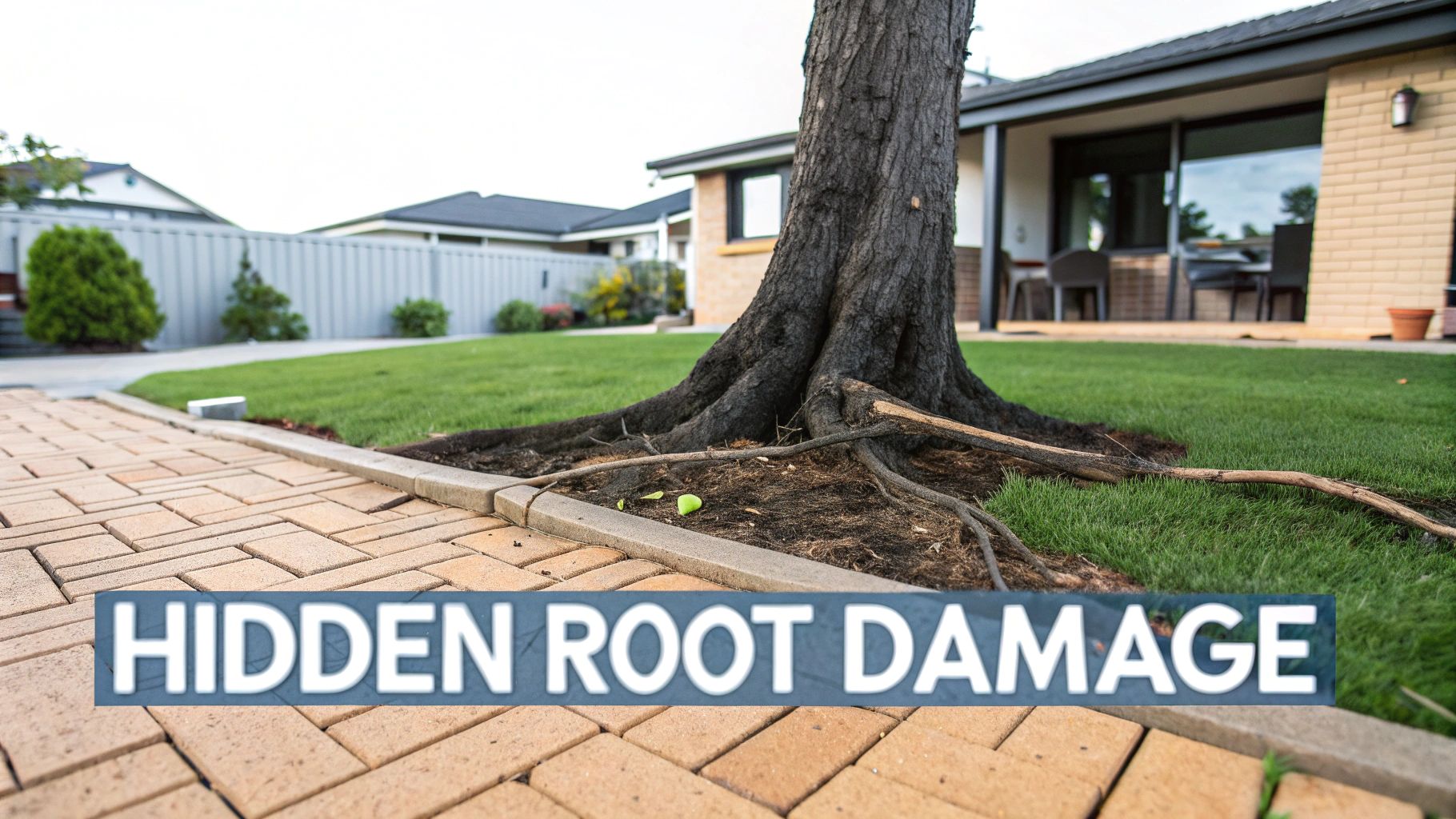
This underground invasion often shows up in ways you can’t miss. Imagine coming home to your property in Morley or Floreat to find your pristine driveway has developed ugly, unsettling cracks. Or maybe the paving you laid last summer is now an uneven tripping hazard. These are classic tell-tale signs of root intrusion. For example, a homeowner in Subiaco recently discovered their beautiful, but notoriously invasive, Liquidambar tree was the culprit behind their constantly blocked sewer pipes—a classic case of roots seeking out a consistent water source.
Unseen Problems and Visible Consequences
The damage usually starts small, but it can escalate frighteningly quickly. The quiet power of a growing root system is immense; it can exert enough pressure to cause major structural problems. When roots get aggressive, they can lead to significant cracks in floor slabs around your home—a serious issue that needs immediate attention.
Here are some of the most common dramas Perth homeowners run into:
Plumbing Nightmares: Roots are naturally drawn to the condensation on sewer and water pipes. They’ll find their way into the tiniest cracks, eventually blocking or even crushing the pipes completely. The result? Persistent blockages and a hefty plumbing bill.
Foundation Damage: When roots grow under your house, they can cause the soil to shift. This movement can lead to foundational cracks, putting the structural stability of your entire home at risk.
Landscape Destruction: It’s not just about the house. These roots can lift and crack footpaths, driveways, and retaining walls, turning your carefully planned landscape into a lumpy, hazardous mess.
Think of this guide as your practical playbook. It’s packed with real-world advice to help you tackle these root issues head-on. Managing problem trees is all about finding the right balance between preserving Perth's beautiful landscape and protecting your most valuable asset.
Ultimately, being proactive is your best defence. By spotting the early warning signs and understanding your options—including the effective use of a root and tree killer—you can save yourself thousands of dollars in future repairs.
For complex situations or large, established trees, getting a professional assessment is always the safest bet. The team at Swift Trees Perth has the expertise to diagnose the problem and manage any tree maintenance needs, ensuring your property stays safe and beautiful.
How to Spot an Invasive Root Problem on Your Property
Before you can tackle a rogue root system, you have to put on your detective hat. Catching the early warning signs is the best way to protect your property from what could easily become thousands of dollars in damage. For anyone living in Perth suburbs like Morley or Wembley, knowing what to look for can make a huge difference.
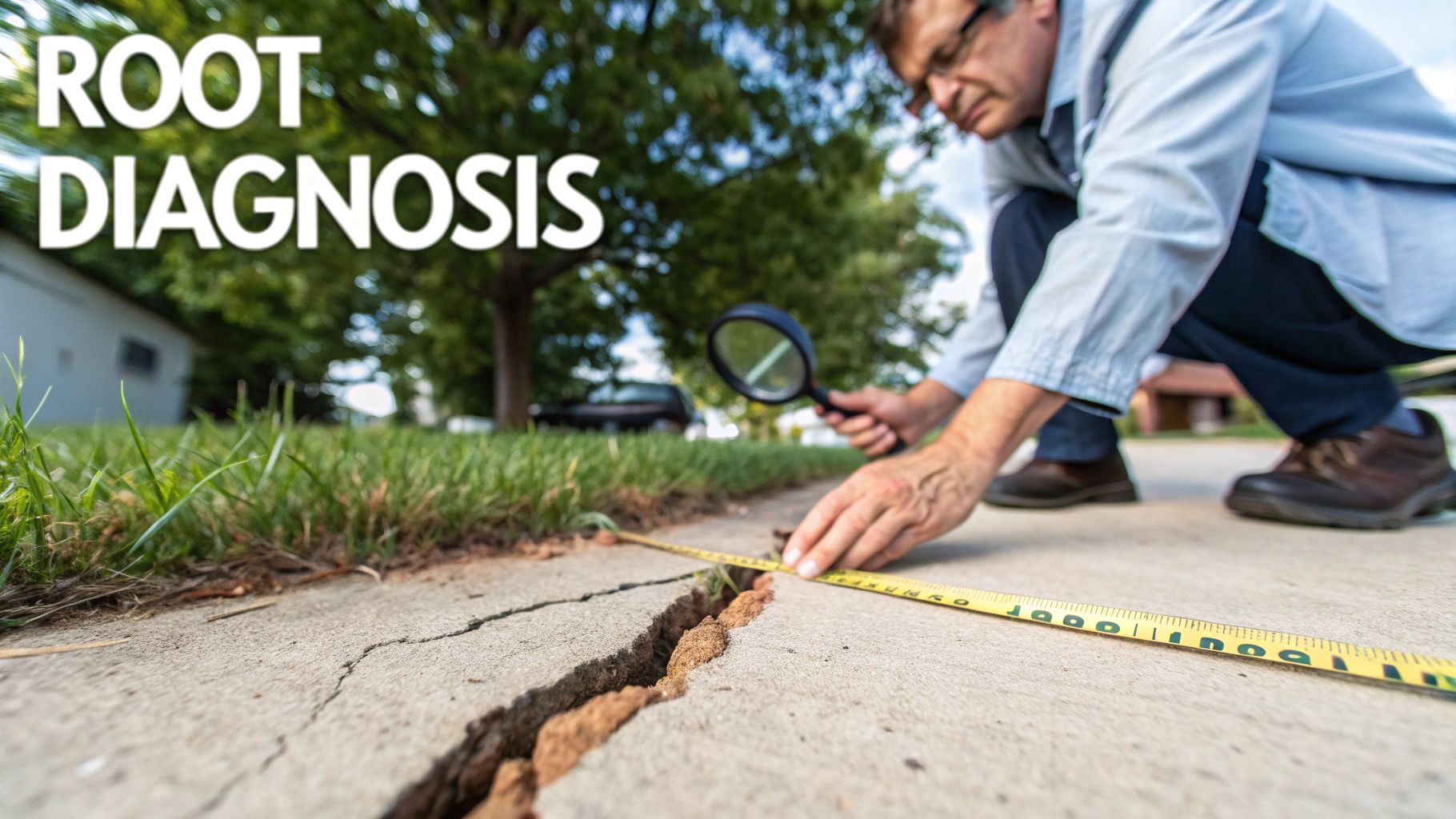
Often, the symptoms of a root invasion start small but become impossible to ignore over time. Picture this: a Duncraig homeowner notices the roots of their beautiful liquid amber tree are slowly lifting the brick paving they laid just last summer. It's a classic sign. The roots are just doing what they do—seeking water and space—and your carefully laid patio is standing in their way.
Common Signs of Root Trouble
Keep a sharp eye out for these tell-tale clues. They’re your property's way of shouting that there's a battle happening right under your feet.
Cracks in Concrete and Paving: Start by checking your driveway, footpaths, and any paved areas for hairline fractures. They often seem minor at first but will inevitably widen as the roots below grow and exert more pressure.
Slow-Draining Pipes: Are your sinks or toilets constantly backing up, no matter what you try? Tree roots are notorious for worming their way into sewer pipes, causing blockages that plumbers can’t always fix.
An Uneven Lawn: Notice any mysterious lumps or raised patches in your yard? This is a strong indicator that large surface roots are pushing up the soil from underneath.
Figuring out which tree is the culprit can be tricky, especially in a garden with lots of trees and shrubs. A good rule of thumb is to look at the trees closest to the visible damage. But remember, a tree’s root system can spread out one to three times the width of its canopy, so the problem tree might not be the most obvious one.
Before you even think about taking action, you absolutely must check your local council regulations. Many native species here in Western Australia are protected. Applying a potent root and tree killer or removing them without permission can lead to some seriously hefty fines.
If your diagnosis points to a deep-seated problem that needs total eradication, it helps to understand the process and what's involved in a full tree removal from root. This will give you a clear idea of what to expect next.
When you're just not sure which tree is causing the headache or you’re worried about making things worse, calling in a professional is always the smartest move.
The team here at Swift Trees Perth can give you a proper assessment and map out the safest, most effective way forward.
Kinder, Greener Ways to Manage Unruly Roots
Not every rogue root needs the chemical equivalent of a sledgehammer. Sometimes, a more hands-on, less aggressive approach is all you need to get things back under control and keep your property safe. These DIY and eco-friendlier methods are ideal for tackling smaller problems or getting ahead of future ones, offering practical solutions that are much kinder to your garden's ecosystem.
One of the smartest long-term moves you can make, especially when putting in new trees, is to install a physical root barrier. Think of it as proactive defence for your landscape. These tough panels, usually made from recycled plastic, are dug into the ground vertically. Their job is to guide new root growth downwards, steering them clear of sensitive zones like paving, pipes, and your home’s foundations. It’s a clever strategy that stops problems before they even have a chance to start.
The Trench and Prune Method
Got an existing tree that’s already starting to get a bit adventurous? The 'trench and prune' technique is like performing targeted surgery. It involves carefully digging a narrow trench right along the area you need to protect, which exposes the specific roots causing the headache. Once they’re out in the open, you can selectively prune them.
For this, you’ll want a sharp spade, a proper root saw, or at least a sturdy pair of loppers. The key is to make clean cuts. This helps the tree heal properly and prevents tearing, which is basically an open invitation for diseases to move in. But you have to be careful not to get carried away.
A crucial word of warning: Never, ever remove more than 25% of a tree’s total root system in a single year. Hacking away more than that can put the tree under serious stress, compromising its stability and overall health. If you uncover massive structural roots close to the trunk, put the tools down. That's not a DIY job.
Simpler Fixes for Minor Nuisances
For smaller, isolated root issues that are a good distance from the main tree, some people reach for simple household remedies. These can have their place, but they come with some serious limitations and potential for collateral damage.
Boiling Water: Pouring boiling water directly onto small, exposed roots will definitely scald and kill them. This is only really effective for very shallow, non-structural roots. You have to be incredibly careful not to splash it onto your lawn or other plants you actually want to keep.
Rock Salt or Epsom Salts: A concentrated dose of salt can dehydrate and kill off small roots. The massive downside here is that you’re effectively poisoning the soil in that spot. It will likely kill off nearby grass, shrubs, and all the beneficial microorganisms that keep your soil healthy. If you use this method, it has to be extremely targeted and minimal.
These "gentler" options are best seen as temporary fixes for minor annoyances, not as a reliable root and tree killer for a stubborn, established system. They just don't have the power to deal with a serious root problem and can easily cause more harm than good if you’re not cautious.
When your DIY efforts aren't cutting it, or if you're looking at a more serious root invasion, that’s your cue to get a professional opinion. For expert advice on managing your trees and protecting your Perth property, the experienced team at Swift Trees Perth is here to help. Contact us today for all your tree maintenance needs.
Your Guide to Using Chemical Root and Tree Killers
Sometimes, physical barriers and a bit of pruning just won't cut it against an aggressive root system. When you're facing persistent root problems, a chemical root and tree killer can be the definitive solution you need to protect your Perth property from further damage. This isn't about indiscriminately spraying chemicals around your yard; it's a targeted, careful approach to solve a very specific problem.
The whole idea is to use a systemic herbicide, like those with a glyphosate base common here in Australia. These products are clever—they get absorbed by the plant and travel through its entire system, killing everything from the leaves right down to the last root tip. This ensures the tree is gone for good, stopping any regrowth from the stump or surviving roots.
The Cut and Paint Method for Stumps
One of the most effective and targeted ways to kill a tree stump is what we call the 'cut and paint' method. It’s a precise technique that gets the herbicide exactly where it needs to go, minimising any impact on the surrounding environment.
Think of a property manager in Victoria Park who’s fed up with a stubborn ficus stump that keeps sprouting new shoots. Instead of a recurring headache, this method offers a permanent fix.
Here’s how it’s done:
Make a Fresh Cut: First, you need a fresh surface. Cut the stump as close to the ground as you can with a chainsaw or a sharp handsaw. An old, dried-out stump just won't absorb the herbicide properly.
Apply the Herbicide Immediately: This is the crucial part. Within minutes of cutting, you need to 'paint' the outer ring of the stump with a concentrated glyphosate product. This ring, just inside the bark, is the cambium layer—the living tissue.
Timing is Everything: If you wait too long, the tree’s natural defences will start to seal the wound, and the chemical won't get in.
Be Thorough: Make sure you cover the entire circumference. This living layer will act like a highway, carrying the poison down into the root system.
Before you jump straight to chemicals, it's always good to consider the basics. Manual intervention is your first line of defence.
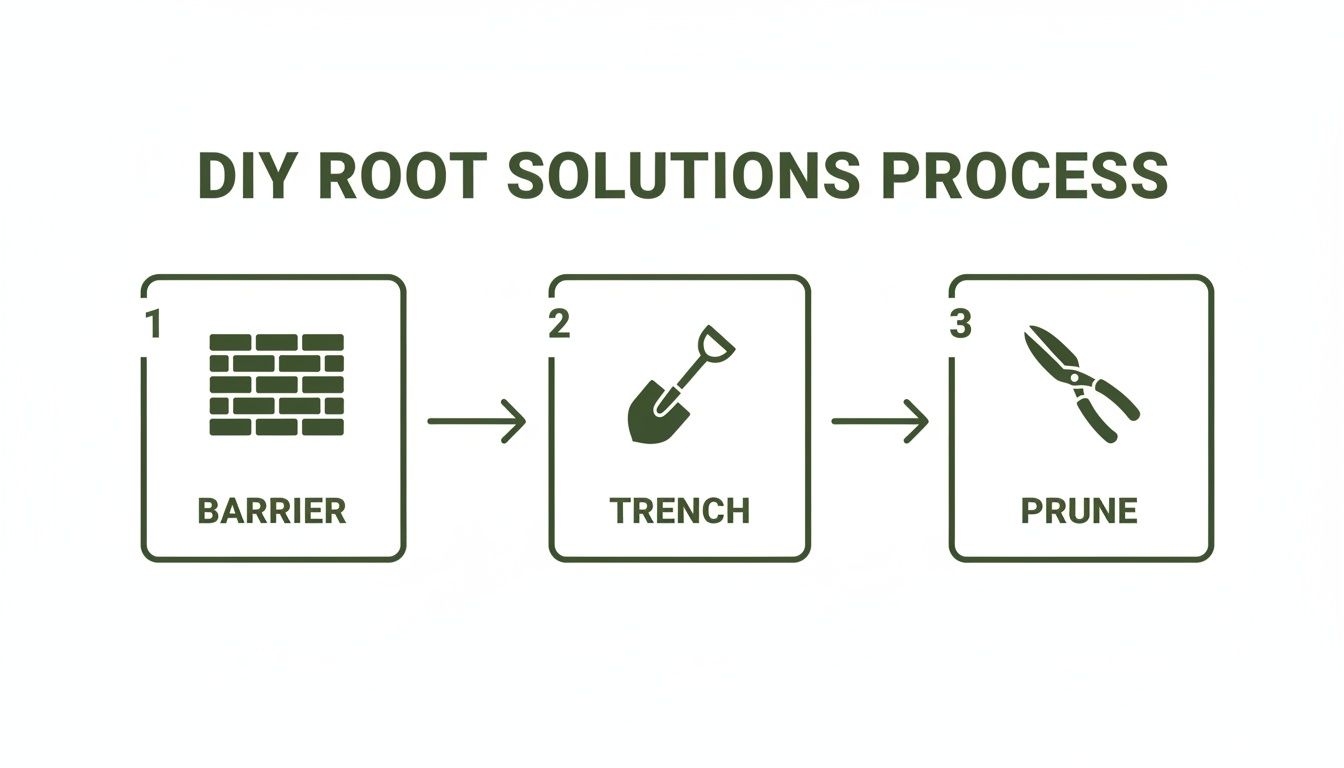
As you can see, simple steps like installing a root barrier or digging a trench can often stop invasive roots before you need to escalate.
Tackling Roots in Drains and Pipes
Roots invading your plumbing are a whole different ball game. Pouring standard weedkiller down the drain is a big no-no—it’s not effective and can wreak havoc on wastewater treatment systems.
For this job, you need a specialised foaming root killer. These products, often containing ingredients like copper sulphate crystals, are designed to expand and fill the entire pipe. This coats the roots completely, killing them on contact without you having to flush a huge volume of liquid through the system.
Safety First, Always: When you're handling any chemical root killer, safety is non-negotiable. Always wear the right Personal Protective Equipment (PPE). That means chemical-resistant gloves, long sleeves and trousers, and proper eye protection.
Comparing Common Chemical Root Killers
Choosing the right chemical can feel daunting. Different products are formulated for different situations, from killing a stubborn stump to clearing out pipes. This table breaks down some of the most common options available to Perth homeowners, helping you pick the right tool for the job.
Chemical Type | Best For | Application Method | Effectiveness | Safety Note |
|---|---|---|---|---|
Glyphosate | Stumps, woody weeds, invasive grasses | Cut-and-paint, foliage spray | Highly effective, systemic (kills entire plant) | Non-selective, can harm any plant it touches. Avoid spray drift. |
Triclopyr | Tough woody plants, vines, suckers | Cut-and-paint, basal bark spray | Very effective on broadleaf and woody species | Can persist in soil. Keep away from desirable trees and shrubs. |
Copper Sulphate | Tree roots inside sewer/drain pipes | Flushing crystals or foaming agents down the toilet | Kills roots on contact within pipes | Can be corrosive to metal pipes and harmful to aquatic life. |
Dichlobenil | Pre-emergent control around structures | Granular application to soil | Prevents new root growth in treated areas | Not for use over existing root systems of desirable plants. |
Each chemical has its place, but the key takeaway is to match the product to your specific problem and always, always read the label instructions before you start.
Protecting Your Garden and Environment
Your mission is to kill one specific tree, not your prize-winning rose bush next to it. To avoid collateral damage, never apply herbicides on a windy day when the spray can drift. It’s a good idea to shield nearby plants with a bit of cardboard or a plastic sheet during application.
Preventing runoff is also critical. Don’t apply herbicides if rain is in the forecast, and remember that more is not better. Over-application can contaminate the soil and find its way into local waterways.
Chemical solutions are powerful tools, but they demand respect and careful handling. If you're dealing with a large tree, roots threatening your home's foundation, or you just don't feel confident using these products safely, it’s time to call in the professionals. For situations like these, exploring options for professional tree removal services is the smartest move.
The expert team at Swift Trees Perth can assess your situation and deliver a safe, effective solution. Contact us today for an obligation-free quote.
When to Call a Professional Arborist in Perth
While DIY methods can give you a sense of control, some situations are just too risky for a homeowner to tackle alone. Using a powerful root and tree killer or attempting a large removal without the right expertise can quickly turn a garden project into a dangerous and expensive mess. Knowing the red flags that signal it’s time to call in the professionals is vital for protecting your property, your safety, and the local environment.
Sometimes, the sheer scale of the problem makes the decision for you. That massive gum tree in Mount Lawley with branches hanging over power lines? Definitely not a weekend DIY job. The same goes for an extensive root system that has already started lifting the concrete slab of your home—that demands an expert assessment, not just a bottle of chemicals. Scenarios like these require specialised equipment, strategic planning, and a deep understanding of tree biology and physics.
Red Flags That Demand Professional Help
Certain signs mean a tree has gone from a garden feature to a genuine liability. Trying to deal with these yourself can lead to serious consequences, from property damage to personal injury.
Proximity to Structures: If the problem tree is close to your house, your neighbour’s property, or utilities like power lines, the risk of something going wrong is extremely high.
Signs of Significant Decay: A professional arborist can spot signs of internal rot or disease that aren't obvious to an untrained eye. Hollow sounds when you tap the trunk, large cracks, or fungus growing at the base are all major warning signs.
Large, Established Trees: Removing a mature tree is a complex, hazardous operation that should only be done by an experienced and insured team.
Extensive Foundational Damage: When you can see roots cracking your home's foundation, you need an expert who can assess the structural risk and recommend the safest path forward.
Handling powerful chemicals also comes with a big responsibility. Improper use can lead to serious environmental harm, which is a critical concern given Western Australia’s unique and delicate ecosystem. A professional knows how to apply treatments effectively while protecting the surrounding soil and waterways.
Perth's urban canopy is a precious asset, but it requires mindful management. While the focus is often on preserving trees, the reality is that sometimes removal is the only safe option. Interestingly, a modern approach in urban forestry involves not just removing problem trees but actively planning for a more resilient and less invasive future canopy. This fashionable insight means arborists are now often consulting on which 'smart' tree species to plant—ones that offer shade and beauty without the destructive root systems, ensuring Perth's suburbs remain both green and structurally sound for decades to come.
The Safest and Most Cost-Effective Choice
In the long run, calling a professional arborist is often the most economical decision you can make. The cost of repairing a damaged roof, fence, or foundation far outweighs the expense of hiring an expert to handle the job correctly from the start.
An insured, experienced team like Swift Trees Perth brings invaluable expertise to the table. They can perform complex removals, provide precise stump grinding, and offer a proper assessment of your tree's health and the risks it poses. Their knowledge ensures the problem is solved completely and safely, leaving your property clean and tidy.
For any tree maintenance needs in areas from Scarborough to Kingsley, getting in touch with a professional is your best next step. Don't wait for a small problem to become a major disaster. For a full breakdown of what a professional team can handle, you might be interested in our guide on comprehensive tree services in Perth.
If you’re facing a tree problem that feels too big, too complex, or just plain risky, trust your instincts. Contact Swift Trees Perth today for an obligation-free quote and let our experienced arborists provide a safe and effective solution for your property.
Common Questions About Root and Tree Killers
When it comes to managing roots and unwanted trees, Perth homeowners often have plenty of questions. Getting clear, expert answers is the first step to tackling the problem safely and effectively, without creating bigger issues down the track.
Let's run through a few of the most common queries we get.
How Long Does It Take for a Root Killer to Work?
This is where a bit of patience comes in. When you use a chemical root and tree killer, the results aren't instant. How long it takes really depends on the product you've chosen, the tree's size and species, and even the season you apply it in.
For example, a glyphosate-based product applied directly to a freshly cut stump might start showing the first signs of decay within a few weeks. But for the herbicide to circulate through the entire root system and guarantee a complete kill, you could be looking at several months. It's a slow burn, not an overnight solution.
Can I Poison My Neighbour's Tree Roots?
Tread very carefully here—this is a legal and neighbourly minefield. While you generally have the right to trim or prune any roots that creep onto your property, introducing poison is another matter entirely. If that chemical travels back to the main tree and causes damage or kills it, you could find yourself liable.
The best approach is always communication. Start by having a friendly chat with your neighbour to see if you can find a solution together. For more complex disputes, a professional arborist can provide an impartial assessment and help mediate.
Is It Safe to Use Root Killer in Sewer Pipes?
Yes, but only if you use a product specifically made for that job. Specialised foaming root killers are designed to expand and fill the entire pipe, killing roots on contact without damaging your plumbing—when used correctly, of course.
Keep in mind, though, that if you're dealing with recurring blockages, this is just a band-aid for a much larger problem. To get more detailed answers on this and other common issues, have a look at our comprehensive guide on common tree service FAQs.
When you're up against a stubborn tree or an invasive root system that feels like it's winning, calling in the professionals is your safest bet. The team at Swift Trees Perth has the experience, the right gear, and the know-how to handle any tree maintenance challenge you're facing. Don't let root problems undermine the value and safety of your property. Contact us today for a free, no-obligation quote and let us help protect your home with expert tree maintenance services.
Comments