
Getting Rid of Tree Roots Without Damaging Your Property

When you need to get rid of tree roots, the most direct approaches are often manual digging, root pruning, or stump grinding. These methods physically tackle the problem areas, often without having to sacrifice the entire tree. The goal is to remove the roots causing damage while preserving the tree's overall health whenever possible.
Getting Rid of Problem Tree Roots in Your Perth Garden
The gorgeous, shady trees that line Perth’s suburbs, from Scarborough to Mount Lawley, can hide a destructive secret just below the surface. Invasive tree roots have a knack for cracking driveways, blocking essential pipes, and completely wrecking a well-kept lawn, causing major headaches for homeowners. These unseen forces are relentless in their search for water and nutrients.
Left unchecked, this can lead to some serious issues that go well beyond simple aesthetics:
Structural Damage: Foundations, retaining walls, and patios can all be compromised.
Plumbing Emergencies: Roots are notorious for invading and blocking sewer lines, leading to messy and expensive repairs.
Safety Hazards: Lifted pavers and uneven concrete paths create nasty trip risks for your family and visitors.
Neighbourhood Disputes: When roots cross property lines and cause damage next door, it can quickly strain relationships.
With over 20 years of experience as Perth tree surgeons, we've seen firsthand the chaos these roots can cause. We know the unique challenges that come with our local soil conditions and the popular tree species planted across the region.
To help you get a handle on what you might be facing, we've put together a quick guide to common root problems we see around Perth.
Quick Guide to Common Tree Root Problems
Common Problem | Signs to Look For | Recommended First Action |
|---|---|---|
Cracked Driveway or Pavers | Visible cracks, lifting or uneven surfaces near a tree. | Carefully excavate a small area to confirm root presence. Avoid using heavy machinery that could worsen the damage. |
Blocked Sewer or Stormwater Drains | Slow-draining sinks or toilets, gurgling sounds from pipes, wet patches appearing on the lawn. | Call a licensed plumber for a CCTV drain inspection. This will confirm if roots are the cause before you take any action on the tree. |
Surface Roots Ruining the Lawn | Large roots visible above the ground, making mowing difficult and creating trip hazards. | Cover roots with a 5-7 cm layer of quality mulch or topsoil. For major issues, consider root pruning or professional removal. |
Foundation or Wall Damage | Cracks appearing in brickwork, retaining walls, or the slab of your home. | Seek immediate advice from a structural engineer and a certified arborist. This is not a DIY situation. |
This table should give you a starting point. Remember, identifying the problem correctly is the first step toward finding the right solution.
One thing we've learned over the years is that being reactive is always more expensive than being proactive. A tiny crack in your driveway today can turn into a massive structural repair bill tomorrow if you don't address the root cause.
This guide is filled with practical advice drawn directly from our extensive experience in the field. We’ll walk you through how to diagnose the severity of your root problem, explore some DIY solutions you can safely try, and make it clear when it’s time to call in the professionals. Think of this as your expert roadmap to taking back your property from invasive roots and preventing future damage before it even starts.
Let's get to the root of the problem.
If you’re staring down a stubborn root issue and need some expert advice, don’t hesitate to contact Swift Trees Perth for all your tree maintenance needs.
Before you can even think about grabbing a shovel, you need to put on your detective hat. Getting a proper handle on your tree root problem is the most important thing you can do first. It tells you whether you're looking at a simple weekend job or something that needs an expert eye. If you skip this part, you risk wasting your time or, even worse, causing some serious unintended damage.
The best place to start is with what you can see. Take a slow walk around your property, especially around the tree causing the trouble.
Spotting the Obvious Signs
Keep an eye out for the classic giveaways that roots are running amok. Hairline cracks creeping across your concrete paths, driveway, or retaining walls are a dead giveaway. You might also spot pavers or bricks being pushed up, creating trip hazards all over the place. That’s the immense pressure of growing roots literally tearing your landscape apart.
Another common headache is surface roots snaking across the lawn, making a simple job like mowing an absolute nightmare. Not only do they look messy, but they’re a huge trip hazard for family and visitors.
One of the biggest mistakes we see homeowners make is ignoring the small stuff. A tiny crack in the driveway might seem like nothing, but it lets water in. In Perth's wet winters, that water can freeze and expand, making the damage a whole lot worse, a whole lot faster.
Looking for Hidden Damage
While the surface problems are easy to spot, the real nasty stuff often happens where you can't see it. Invasive roots are naturally drawn to the moisture and goodness inside sewer and stormwater pipes. If your drains are running slow, the toilet isn't flushing right, or you hear weird gurgling sounds, there's a good chance tree roots are to blame.
One of the surest signs of a busted underground pipe is a patch of lawn that's always damp or suspiciously green, even when it hasn't rained. This usually means a root has broken through, causing a slow leak that's over-fertilising the grass right above it. In Perth's sandy soils, especially in coastal suburbs like Mullaloo, roots from trees like Figs will travel a surprisingly long way to find a steady water source like that.
We see this all the time with big, old Gum trees in established areas like Floreat. Their root systems are incredibly powerful. What starts as a slow drain can quickly turn into a full-blown blockage and a very expensive plumbing emergency.
Playing it Safe with Dial Before You Dig
Okay, this is the one step you absolutely cannot skip. Before you even think about digging, you must contact Dial Before You Dig. This is a free national service that is non-negotiable for any digging project. They provide you with plans showing exactly where underground utilities like gas pipes, water mains, and internet cables are buried on your property.
Hitting one of those lines is not just dangerous—it can lead to massive repair bills and hefty fines. The process is dead simple:
You can head over to the Dial Before You Dig WA website.
Lodge an enquiry online, outlining where you plan to dig.
You'll get plans from the different utility companies, usually within a couple of days.
With those plans in hand, you can mark out where everything is. This simple check is a crucial part of your assessment and helps you plan your attack safely, avoiding a potential disaster. Once you know what's happening above and below ground, you'll be in a much better position to decide if this is a job you can handle yourself or if it's time to call in the pros.
For a comprehensive and safe assessment of your tree root issues, it's always best to have an expert opinion. Contact Swift Trees Perth today, and let our experienced team help you with all your tree maintenance needs.
Your Guide to DIY Tree Root Removal Methods
So, you've sized up the situation and you’re ready to get your hands dirty. Tackling tree roots yourself can be incredibly satisfying, but it's vital to go in with a clear plan and a healthy dose of respect for both the tree and your property. We'll walk through the most common DIY methods for getting rid of tree roots, looking at what works, what to watch out for, and when it’s time to put the shovel down.
This simple workflow shows the basic steps for a safe DIY root assessment before you even think about starting any removal work.
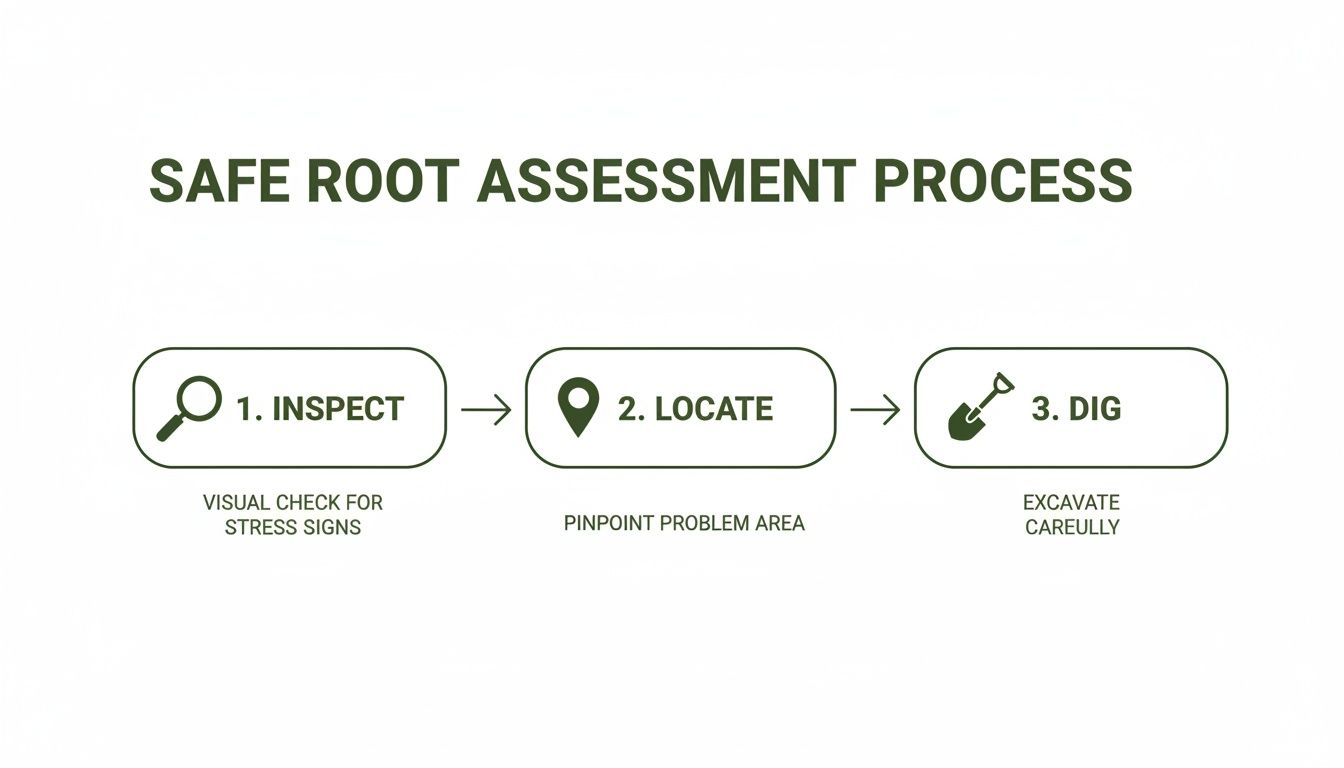
Following this inspect-locate-dig process stops you from just guessing, which is how you avoid damaging underground utilities or the tree itself.
The Honest Work of Manual Excavation
For those annoying surface roots that make your lawn lumpy and trip everyone up, manual excavation is usually the most direct fix. This is all about good old-fashioned physical labour—digging around the problem root to expose it before you cut it clean out. It's a great method for smaller, isolated roots that haven't gone too deep or snaked their way too close to important structures.
To do this properly, you’ll need a few key tools:
A sharp spade or mattock: For carefully digging around the root without wrecking everything else.
A root saw or reciprocating saw: Absolutely essential for making clean cuts through tough, woody roots.
Loppers or an axe: Handy for smaller roots or just finishing off the job.
The idea is to dig a trench along the length of the root you're targeting, giving yourself enough space to work. Once it's exposed, sever it in two places—one closer to the trunk and another further out—and then pry that section out. For smaller jobs, the principles are similar to other garden tasks; there's a comprehensive DIY guide on removing shrub stumps that shares some similar techniques.
Strategic Root Pruning for Targeted Control
Root pruning is a much more precise technique than just yanking roots out. Instead of removing a whole section, you're strategically cutting specific roots causing a problem—like the ones making a beeline for your home's foundation or a sewer pipe. This can be an excellent middle-ground solution, but it comes with a serious warning.
You should never remove more than 25% of a tree's total root system.
Going beyond that limit can seriously destabilise the tree, turning it into a major falling hazard in the next Perth storm. It can also cut off the tree's supply of water and nutrients, leading to its decline and eventual death. Think of it this way: the roots are the tree's anchor and its lifeline. Cutting too many is like kicking out the support beams from under a house.
For instance, imagine a mature Jacaranda in your Mount Lawley garden has roots lifting the edge of your patio. Instead of trying to remove every root you can find, strategic pruning means identifying only the one or two roots causing the most uplift and cutting them cleanly. This targeted approach fixes your immediate problem while minimising stress on the tree.
A common scenario we see is a neighbour's tree sending roots under the fence. In this case, root pruning along the property line is often the best course of action. It stops the problem without harming your neighbour's tree, as long as it’s done correctly and doesn't sever a major anchor root.
A Word of Caution on Chemical Treatments
You might come across chemical solutions like copper sulphate or rock salt being pushed as an easy way to get rid of tree roots. The idea is to pour them into pipes or onto the ground to kill roots on contact. While it sounds temptingly simple, we strongly advise against it for a few critical reasons.
First off, these chemicals don't discriminate. They will kill the problem roots, but they'll also kill your lawn, garden plants, and all the good organisms in the soil. In Perth's sandy soils, that contamination can spread surprisingly fast and end up harming the local ecosystem.
Second, it’s often a temporary fix at best. The chemicals might kill the fine feeder roots currently in your pipes, but they do very little to stop the larger roots from simply regrowing and causing the exact same problem a year or two later. You just end up in a cycle of treating the symptom without ever sorting out the cause. Physical removal or getting a professional in is almost always a more permanent and environmentally sound solution.
Deciding on the right DIY method really comes down to the scale of your problem. For a few minor surface roots, manual digging is perfect. For a single, targeted root causing damage, careful pruning is the answer. But if you're dealing with a complex root system, widespread damage, or anything near your home's foundation or utilities, these DIY methods quickly become risky and just aren't up to the job.
Knowing these limits is key to protecting your property and your trees. If you're facing a root problem that feels too big to handle, or you're just not sure which method is safe, calling in a professional is always the right move.
When Professional Tree Root Removal Is Essential
While the DIY approach can work for small surface roots, some problems are just too complex, dangerous, or high-stakes for a weekend project.
Knowing when to step back and call in a qualified arborist isn’t admitting defeat. It’s making a smart, calculated decision to protect your most valuable asset—your home. Getting rid of tree roots becomes a professional job the moment the risks outweigh the rewards of doing it yourself.
There are clear red flags that signal a problem has moved beyond a simple fix. These are the moments when expert help isn't just a good idea, but absolutely essential for a safe and effective result.
Recognising High-Stakes Scenarios
The most obvious sign it's time to call for help is proximity. When you see invasive roots visibly threatening your home’s foundation, retaining walls, or swimming pool, the potential for catastrophic damage is huge. The quiet, relentless power of a growing root can crack solid concrete, creating structural issues that can cost tens of thousands of dollars to repair.
Another critical situation involves underground utilities. Dial Before You Dig is a fantastic service that tells you where pipes and cables are, but it won’t tell you how tangled the roots are around them. Trying to excavate near gas, water, or power lines is incredibly dangerous work that should only be handled by insured professionals who truly understand the risks.
Here are the scenarios that demand an expert:
Foundation Damage: Any cracks in your home's slab or brickwork that line up with a nearby tree’s root zone.
Major Plumbing Blockages: Recurrent sewer or stormwater blockages that a plumber's snake can't fix, indicating a serious root mass has breached your pipes.
Utility Proximity: Roots that are growing directly over or tangled with marked utility lines.
Large, Established Trees: The root systems of mature trees like Moreton Bay Figs or big Eucalypts are massive and absolutely critical to the tree's stability. Hacking away at the wrong root can make the entire tree unsafe.
A common mistake we see in dense Perth suburbs like Wembley is a homeowner trying to chop away at a large root near their foundation, only to find it's a primary anchor root. Removing it not only fails to solve the problem but can also destabilise a 10-tonne tree, putting the entire property at risk during the next big storm.
For complex or deeply entrenched root problems, it's often essential to consult with qualified arborist services to ensure safe and effective removal. They have the experience to assess the situation properly and execute a plan that solves the root issue without creating a bigger hazard.
Introducing Professional Techniques Like Stump Grinding
When professionals tackle a serious root problem, they bring specialised equipment and techniques that are far beyond the scope of any DIY rental. One of the most effective methods in an arborist's toolkit is stump grinding. This isn't just about getting rid of the visible stump; it's a powerful strategy for taking out the entire root system's command centre.
After a tree is removed, the stump and its connected root system can stay active for years, sending up annoying shoots and continuing to expand underground.
Stump grinding solves this by using a high-speed machine with carbide-tipped teeth to pulverise the stump and the main root ball into small, mulch-like chips. The grinder can chew down 20-30 cm below ground level, destroying the core of the root system and preventing any chance of regrowth.
In the heart of Perth's metropolitan suburbs like Bassendean and Victoria Park, stubborn stumps are a common headache. According to local arborist insights, stump grinding has become the go-to solution, with over 80% of tree service calls in Perth involving stump removal to prevent root resurgence. If not ground down properly, roots can continue to sprout for 3-5 years.
Choosing between grinding and a full stump excavation really depends on what you plan to do with the area afterwards. Our guide on stump grinding vs removal in Perth offers a detailed comparison to help you decide.
Ultimately, hiring a professional for a high-stakes job is about buying peace of mind. It's the assurance that the job will be done safely, efficiently, and correctly the first time. When you're facing a root problem that could impact your home's structure or essential services, the expertise of a certified tree surgeon is a wise and necessary investment.
If you’re dealing with a complex root issue and need a professional assessment, contact Swift Trees Perth today. Our experienced team is equipped to handle all your tree maintenance needs safely and efficiently.
Understanding the Hidden Dangers of Invasive Roots
It’s easy to think of tree roots as a minor nuisance, maybe responsible for a few cracked pavers here and there. But the reality is far more serious. Unchecked roots can cause incredibly expensive damage that many Perth homeowners and property managers don't see coming until it's too late. Deep underground, a tree's relentless hunt for water can send its roots on a collision course with the most vulnerable parts of your property.
What starts as a tiny, invisible problem can quickly spiral into a full-blown crisis. Understanding these hidden dangers is the first step toward realising why managing your tree roots isn't just a good idea—it's a financial necessity.
The Plumbing Nightmare Below Your Lawn
One of the most common and costly battles we see across Perth is tree roots versus sewer pipes. The constant supply of water, warmth, and nutrients flowing through your plumbing is an irresistible beacon for thirsty roots. They can sneak into the smallest cracks or joint gaps in older pipes, and once they’re in, they expand with surprising speed.
Before long, they form a dense, fibrous mat that catches everything flushed down the drain. The first clues are usually subtle—a sink that drains a bit slowly or a gurgling toilet—but these are warning signs of a complete blockage and a potential sewage backup right into your home.
This is a massive headache for Perth homeowners. It mirrors national trends where root intrusions are responsible for nearly 60% of all sewer failures. To give you an idea of the scale, SA Water's 2020 data showed over 30,000 cases in Adelaide alone, costing a staggering $5 million a year. It's a figure we can safely assume is similar in WA's metro areas, given our similar clay-sandy soil mixes. You can read more about these sewer pipe challenges on unisa.edu.au.
Structural Damage That Cracks More Than Concrete
The sheer hydraulic pressure from a growing tree root can lift and shatter solid concrete like it’s nothing. This is where getting rid of tree roots becomes less about convenience and more about protecting the fundamental value and safety of your property.
The damage can show up in a few different, equally alarming ways:
Foundations: Roots that creep under your home's foundation can cause it to heave and crack. The result? Uneven floors, doors that suddenly stick, and in the worst-case scenario, a compromise to the entire structure.
Driveways and Paths: That classic trip hazard—the lifted concrete slab in the middle of a driveway—is a direct result of root pressure from beneath. It looks terrible and creates a very real safety liability on your property.
Retaining Walls: Roots can push relentlessly against retaining walls, causing them to bow, crack, and eventually fail. These aren't simple weekend repairs; they're often complex and expensive projects.
This slow, powerful pressure chips away at your property's value and can lead to expensive engineering reports and repairs that dwarf the cost of proactive root management. For more in-depth information, you might be interested in our other articles on managing common tree root problems.
A little bit of wisdom we often share with clients is to think of their trees like any other major asset. You service your car to prevent a breakdown. In the same way, regular check-ups from an arborist can stop a small root problem from turning into a five-figure structural repair bill.
When you start to see these tell-tale signs, it becomes clear that waiting for a disaster is the most expensive strategy you can choose. Being proactive—whether it's through careful root pruning, installing a root barrier, or professional removal—is a smart investment in protecting your home.
If you’re seeing the warning signs of invasive roots around your home or business, don’t wait for the problem to get worse. Contact Swift Trees Perth today for a professional assessment and expert advice on all your tree maintenance needs.
Long-Term Strategies to Prevent Root Problems
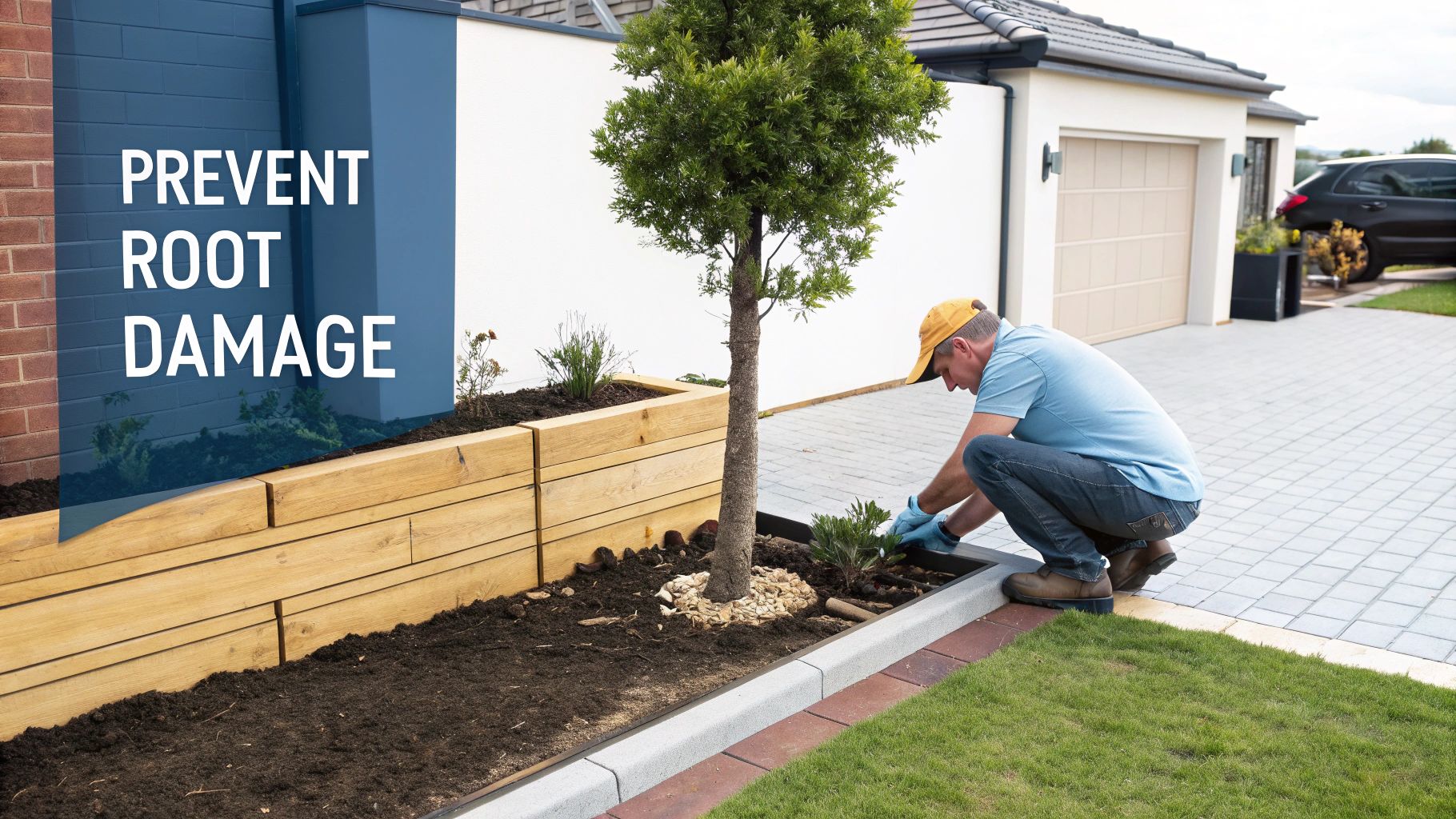
You’ve done the hard work of getting rid of those problem tree roots—great job. But that’s only half the battle. To truly protect your property, you need to think ahead.
A proactive strategy is the key to a hassle-free garden. It’ll save you from having to repeat the whole messy removal process in just a few years. This is about working smarter, not harder, to guide future root growth away from vulnerable areas and keep your landscape healthy without the constant worry of underground damage.
Install Physical Root Barriers
One of the most effective long-term solutions we recommend is installing a physical root barrier. Think of it as an underground wall, usually made from high-density plastic, that you strategically place to redirect root growth.
A root barrier doesn't harm the tree. It simply forces the roots to grow downwards or in a different direction, steering them clear of your precious infrastructure. They are often installed alongside new driveways or next to sewer lines as a permanent safeguard—it's a common practice in modern landscaping, especially on smaller Perth blocks where trees are planted close to homes.
Just look at Perth’s leafy suburbs like Greenwood, Mullaloo, and Floreat, where tree roots are notorious for buckling footpaths. Local councils have reported over 15,000 repair incidents across WA metro areas in a single year, costing ratepayers more than $8 million annually.
Smart Landscaping and Planting Choices
Your choice of tree can make all the difference. While big, fast-growing trees have their appeal, they often come with aggressive root systems that are totally unsuited for tight urban spaces. A smarter choice is to pick beautiful, non-invasive species that thrive in Perth’s climate without posing a threat.
Here are a few solid options:
Ornamental Pears: Varieties like Pyrus calleryana 'Chanticleer' look stunning with their blossoms and seasonal colour, but their root systems are well-behaved.
Crepe Myrtles: Lagerstroemia indica are fantastic small-to-medium trees. They’re tough, drought-tolerant, and have non-aggressive roots.
Japanese Maples: Perfect for smaller gardens, these trees offer breathtaking foliage with a contained, fibrous root system.
A simple shift in your watering habits can also have a profound impact on how roots behave. Instead of frequent, shallow watering, try deep watering less often. This encourages roots to grow downwards in search of moisture, rather than spreading out near the surface where they cause the most problems.
These long-term strategies are crucial for maintaining the value and safety of your property. For more expert advice, check out our guide on the top tree maintenance tips for Australians.
For a personalised long-term tree management plan tailored to your property’s specific needs, contact Swift Trees Perth to discuss how we can protect your home for years to come.
Your Top Questions About Tree Root Removal Answered
When it comes to tackling tree roots in Perth, most homeowners have the same handful of worries. Let's clear up some of the most common questions we get asked all the time.
Will Killing Tree Roots Kill the Tree?
More often than not, yes. A tree’s root system is its lifeline, pulling in the water and nutrients it needs to survive. If you remove a large chunk of those roots, whether by digging them up or using chemicals, you’re essentially starving the tree.
Worse still, you’re also compromising its stability. A tree with a weakened root system can easily become a falling hazard in the next big storm. The goal should always be strategic root pruning, not wiping out the entire system, if you want the tree to survive.
As a rule of thumb, never remove more than 25% of a tree’s root zone. Anything more than that seriously jeopardises its health and stability.
Can Tree Roots Grow Back After Being Cut?
They absolutely can, and they often do with surprising vigour. Simply cutting a root doesn’t kill the system; in fact, the tree often responds by sending out a flurry of new shoots from the cut or nearby.
This is why just chopping surface roots is often a temporary fix. For example, simply sawing through a surface root from a Eucalyptus might solve your mowing problem for a season, but you'll likely see two or three smaller roots sprout from the cut end within a year, creating a bigger issue down the track. Methods like stump grinding are far more permanent because they obliterate the core of the root system, making it much harder for regrowth to occur.
Dealing with invasive roots can be a complex job with serious consequences if done incorrectly. For professional advice and safe, effective tree root removal across Perth, trust the experienced team at Swift Trees Perth. Don't let root problems undermine your property's value and safety.
Contact us today for a free, no-obligation quote! and let us handle all your tree maintenance needs.
Helpful information for anyone comparing garage door repair options and costs. I especially like the reminder that the cheapest repair is not always the most suitable if poor-quality parts or temporary fixes are involved. A proper repair should address the underlying issue and restore safe operation. Asking for a clear explanation of the problem, required parts, labour, and expected cost can make the repair process much easier.