
A Modern Guide to Australian Tree Identification

Learning to identify Australian trees starts with a bit of detective work, looking closely at features like leaves, bark, flowers, and fruit. It’s a fantastic skill that really connects you to our unique local environment, helping you appreciate the incredible diversity that defines Perth’s landscapes, from suburban backyards to rugged bushland trails. It's a mindful hobby that's very on-trend, turning a simple walk into an immersive nature-based experience.
Why Getting to Know Your Local Trees Matters
Ever found yourself on a walk through Kings Park or even just down your own street, wondering about the towering trees you pass every day? Learning Australian tree identification turns a simple stroll into a fascinating journey of discovery. It’s more than just a hobby; it’s a practical skill that deepens your appreciation for the local ecosystem and makes you a more confident, style-savvy property owner.
This guide will break down the process, giving you the know-how to confidently identify common native and introduced species right here in Perth. We'll explore the simple clues trees give us and how you can learn to read them.
Building Your Identification Skills
Think of yourself as a nature detective. You’re gathering clues from different parts of a tree to piece together its identity. The four main clues you'll learn to look for are:
Leaves: Their shape, size, and how they’re arranged on a stem.
Bark: Its texture and colour—is it smooth, rough, or peeling off in ribbons?
Flowers: The colour, shape, and time of year they appear.
Fruit and Nuts: The unique seed pods or "gumnuts" a tree produces.
Australia is home to an incredible variety of native plants—a staggering 24,000 species, making our corner of the world one of the most biodiverse for woody plants. Unsurprisingly, eucalyptus trees are the star of the show, covering 77% of Australia’s national forest land. If you want to dive deeper, you can explore some fascinating Australian tree statistics.
By learning to spot these key features, you stop seeing just a "tree" and start recognising a majestic Jarrah, a resilient Tuart, or a vibrant Flowering Gum. This knowledge isn't just for nature lovers; it's essential for responsible property management.
Knowing a tree's species helps you understand its needs, potential risks, and its role in your garden. For example, identifying a fast-growing gum tree near your home alerts you to future pruning needs, while recognising a fruiting tree helps you manage pests. Whether you're thinking about pruning to removal, correct identification is always the first step.
The Four Keys to Identifying Any Tree
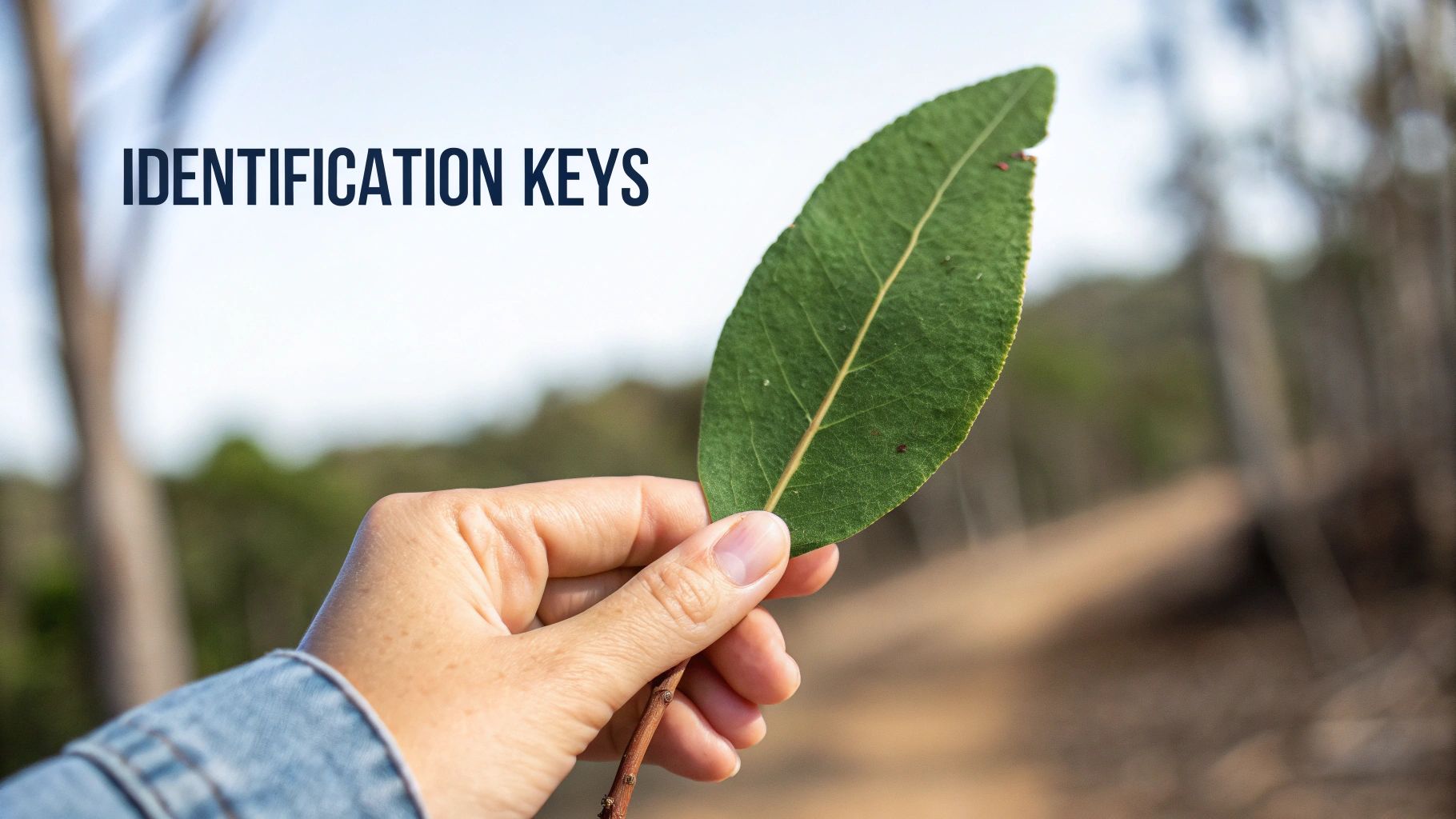
Trying to identify a tree can feel like solving a puzzle. Each one has its own set of clues, and once you know what to look for, you can start piecing together its identity. It’s all about focusing on four key identifiers that, when you put them together, tell the whole story.
These four keys are the leaves, bark, flowers, and fruit. By working through them one by one, you can go from a vague guess to a confident ID. Let's break down what you need to be looking for.
The First Key: Leaves
Leaves are usually the easiest clue to get your hands on, making them a fantastic starting point. But don't just glance at a leaf; really get to know it. The first thing to check is how they’re arranged on the stem.

Opposite: You'll find leaves growing in pairs, directly across from each other on the stem. A practical example is the Olive Tree (Olea europaea).
Alternate: The leaves are staggered, popping out one at a time along the stem, which is common for most Eucalypts.
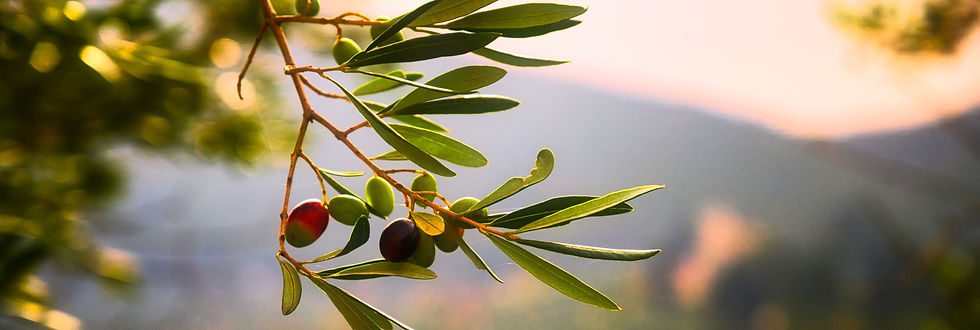
Next up is the leaf's shape and complexity. A simple leaf is just a single, whole blade, like you’d find on most eucalypts. In contrast, a compound leaf is made of lots of smaller leaflets all joined together—a classic feature of the beautiful Jacaranda.

Think of leaf identification as the opening chapter of a tree's story. It gives you the initial context and helps narrow down the suspects before you even touch the trunk or wait for it to flower.
The Second Key: Bark
If the leaves are the opening chapter, the bark is the tree's unique fingerprint. No two species have the exact same texture and pattern, which makes it a brilliant identifier all year round. As you wander around Perth, you'll quickly start noticing the incredible variety.
Is the bark smooth and pale, maybe with squiggly insect trails like a Scribbly Gum? Or is it dark and deeply grooved, the classic sign of an Ironbark? Some trees, like the Lemon-scented Gum, have bark that peels off in ribbons, revealing a stunningly smooth, almost sculptural surface underneath that adds a modern, architectural feel to a garden.
The Third Key: Flowers
Flowers are the showstoppers. They can be the most obvious clue you’ll get, but they’re only around for a short time, so you have to be paying attention during the right season. That explosion of colour during flowering season is an unmissable signal.
From the vibrant, bottlebrush flowers of a Callistemon to the delicate, creamy blossoms of a Tuart, flowers give you a direct and often unmistakable sign. Take note of their colour, shape, and even their smell. The fluffy, pom-pom flowers of a Wattle are instantly recognisable, setting them apart from other native species. Knowing a tree's flowering season is also fashionable; you can plan garden parties or outdoor events to coincide with the beautiful blooms.
The Fourth Key: Fruit and Gumnuts
Once the flowers have faded, the fruit, nuts, or seed pods make their appearance. For countless Australian natives, especially eucalypts, this means looking for the iconic "gumnut." The size, shape, and texture of these woody capsules are incredibly diverse and are often what botanists use to tell very similar-looking species apart.
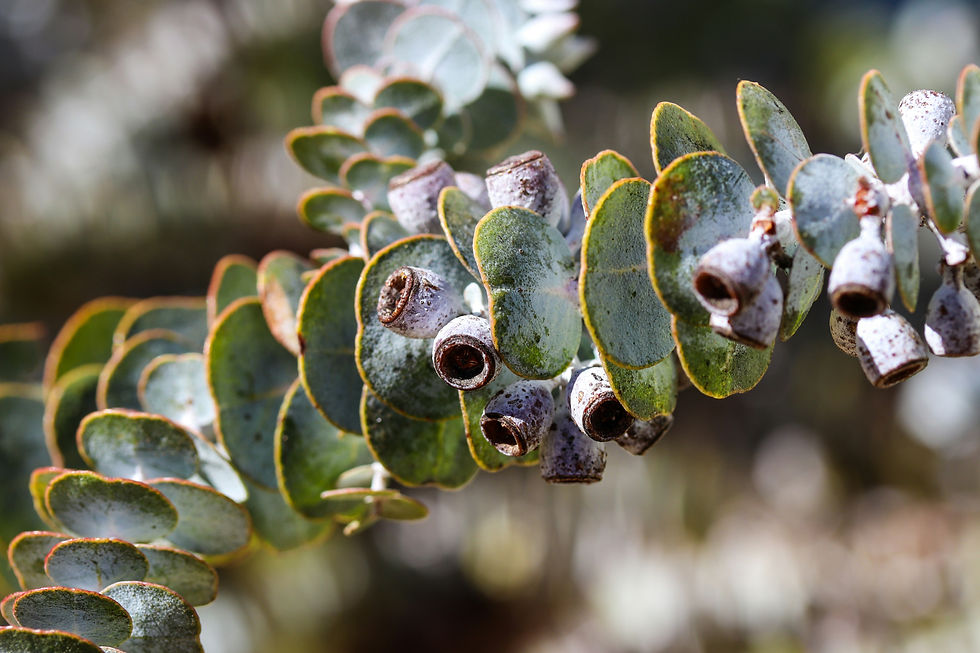
For example, the large, urn-shaped gumnuts of the Marri (or Red Gum) are one of the surest ways to distinguish it from a Jarrah, which has much smaller, rounder fruit. Finding these final clues helps you solve the identification puzzle.
To help you remember what to look for, here's a quick summary of the main characteristics.
Quick Guide to Tree Identification Clues
Feature | What to Look For | Example Clue (Perth Context) |
|---|---|---|
Leaves | Arrangement (opposite/alternate), complexity (simple/compound), shape, and size. | The long, sickle-shaped leaves of a Jarrah tree arranged alternately on the stem. |
Bark | Texture (smooth, rough, flaky, fibrous), colour, and patterns (furrows, ribbons). | The peeling, salmon-coloured bark of a mature Lemon-scented Gum. |
Flowers | Colour, shape (bottlebrush, pom-pom, bell), size, and time of year. | The bright yellow, ball-shaped flowers of a Golden Wattle in late winter. |
Fruit | Gumnuts, pods, berries, or nuts. Note the size, shape, and texture. | The large, distinctive "honky nuts" (gumnuts) of the Marri tree. |
By using these four keys, you have a solid framework for identifying trees anywhere you go.
If you've identified a tree on your property and are worried about its health or structural safety, getting a professional assessment is the right next step. Contact Swift Trees Perth for expert advice on all your tree maintenance needs, from pruning to removal.
Now that you have the basic skills down, the Perth landscape starts to look a little different. It transforms into a living library, where every tree has its own story. A simple walk through your neighbourhood or a local park becomes a chance to put what you've learned into practice.
Let’s start putting some names to faces by exploring the iconic native species and popular exotic trees you’re most likely to bump into around the city. This is a practical rundown, focusing on the key markers for each tree to help you confidently tell one from another. We'll kick things off with the titans of the Western Australian bushland before looking at some familiar characters in our suburban streetscapes.
Western Australia's Native Icons
Perth is hugged by a unique and incredibly resilient bushland, home to some truly magnificent native trees. Three of the most prominent you'll see are the Jarrah, the Tuart, and the ever-colourful Flowering Gum.
The Jarrah (Eucalyptus marginata) is a true WA giant, famous for its rich, reddish timber. Its most reliable feature is its bark—it's rough, fibrous, and stringy with deep vertical grooves you can run your hand along. Jarrah leaves are dark green, have a slight curve, and feel thick and leathery to the touch. Once it’s finished flowering, look for the small, almost spherical gumnuts, which are another key clue.
In stark contrast is the Tuart (Eucalyptus gomphocephala), a majestic tree often found along the coastal plains. Its bark is the complete opposite of the Jarrah's. It's a pale greyish-white and has a rough texture, but it's not stringy at all. Tuart leaves are usually a lighter shade of green and are noticeably broader than a Jarrah's. In summer, it puts on a show with clusters of beautiful creamy-white flowers.
For a real splash of colour, you can't go past the Flowering Gum (Corymbia ficifolia). While it's technically not a Eucalyptus, it's a very close cousin, famous for its absolutely stunning floral displays. Come summer, these trees just erupt in brilliant shades of red, pink, or orange. Its bark is rough and tessellated (broken up into small squares), and its large, urn-shaped gumnuts are another dead giveaway. These are a hugely fashionable choice for modern gardens, adding a bold statement piece.
Western Australia's plant life is incredibly diverse. Detailed records from Florabase highlight just how rich our state’s botany is, with thousands of native woody plant species. A key feature is endemism—with over 90% of WA's flora being unique to this region, making local ID skills especially rewarding.
Popular Introduced Trees in Perth
Alongside our incredible natives, Perth's suburbs and parks are decorated with beautiful and functional trees from all over the world. These species were often picked for their fantastic shade, spectacular flowers, or their ability to tough it out in an urban setting.
The Jacaranda (Jacaranda mimosifolia) is impossible to miss in late spring. It covers itself in a breathtaking canopy of vibrant purple, trumpet-shaped flowers that carpet the streets below. When it's not flowering, you can spot it by its delicate, almost fern-like compound leaves. The seed pods are also very distinctive—they are flat, woody, and circular.
Another common sight is the London Plane Tree (Platanus x acerifolia), a favourite for lining streets and parks because it’s so hardy and provides heaps of shade. Its most recognisable feature is its mottled bark, which flakes off in patches to reveal shades of cream, grey, and olive green, giving it a cool camouflage look. The leaves are large and maple-like with distinct lobes, creating a dense canopy in summer before turning a beautiful gold in autumn.
Understanding both our native and exotic species really enriches your experience of Perth's green spaces. If you've identified a tree on your property that seems unhealthy, overgrown, or is starting to look a bit hazardous, getting a professional opinion is the next logical step. Contact Swift Trees Perth for expert advice on all your tree maintenance needs, from a simple prune to a full removal.
Decoding Seasonal Clues and Common Lookalikes
A tree doesn't just sit there; its identity unfolds throughout the year, offering a fresh set of clues with every season. If you really want to get good at identifying Australian trees, you have to learn to read these changes. What looks like a challenge is actually a year-round opportunity to play detective. Every season puts a different feature in the spotlight, from the explosion of colour in spring to the stark, skeletal beauty of branches in winter.
This seasonal rhythm gives you a brilliant framework for identification. For many trees, the moment they flower is when they truly introduce themselves, making spring an exciting time for any budding enthusiast.
This handy little chart gives you a simple decision-making guide for a few common Perth trees, based on their most obvious features.
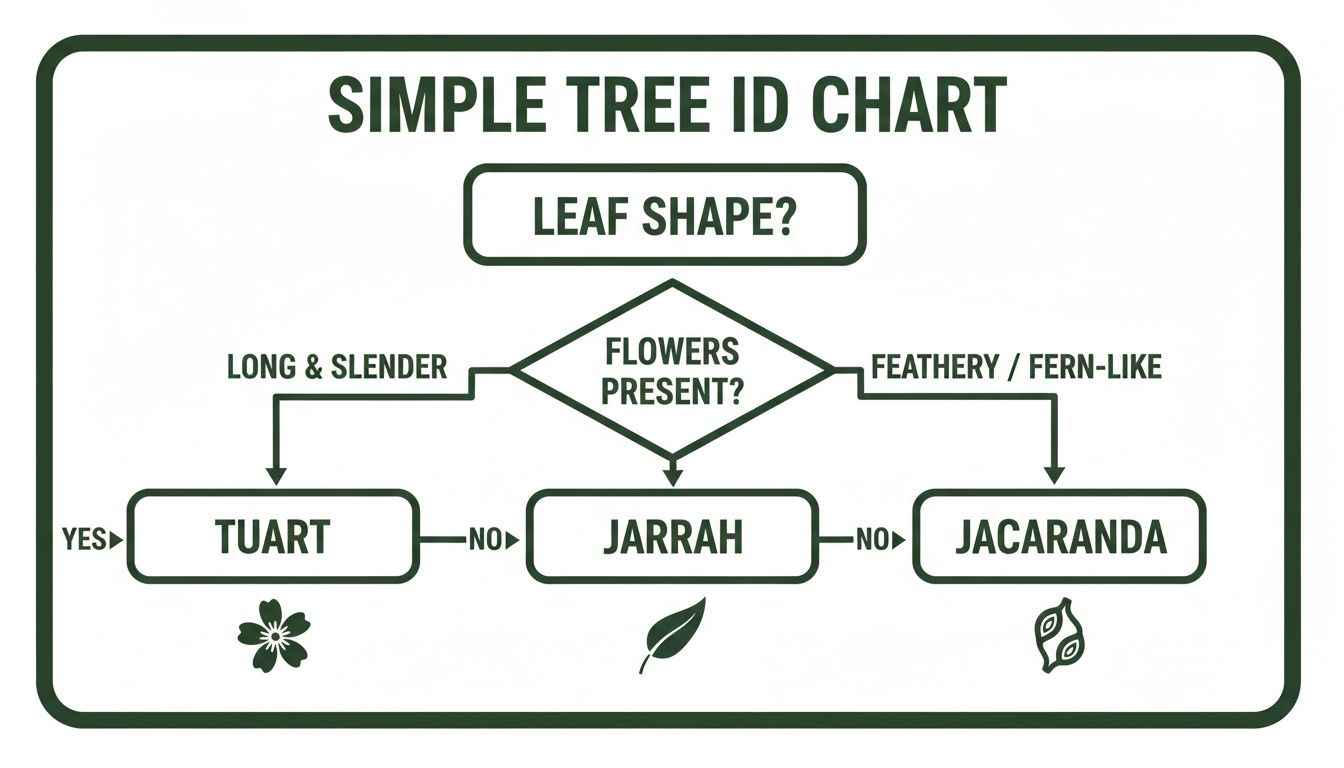
As you can see, just focusing on one or two distinct clues—like the Jacaranda's unique seed pods or the Tuart's flowers—can narrow down the possibilities in no time.
Using the Seasons to Your Advantage
Think of the calendar as your own personal ID guide. Each season brings different clues to the forefront, helping you confirm what a tree is or spot something you've never noticed before.
Spring: This is prime time for flowers. You can't miss the vibrant purple haze of a Jacaranda in full bloom, or the creamy-white blossoms that tell you you're looking at a Tuart.
Summer & Autumn: Once the flowers fade, it's all about the fruit and seed pods. This is the best time to spot the big, urn-shaped "honky nuts" of a Marri tree or find the woody, circular pods of a Jacaranda.
Winter: With deciduous trees bare, winter reveals their true structure. It's the perfect time to study bark texture and branching patterns—details that are often overlooked but are incredibly reliable clues. A practical example is distinguishing a London Plane Tree by its unique patchy bark when its leaves have fallen.
Distinguishing Common Lookalikes
One of the first hurdles for any beginner is telling apart trees that look almost identical. In Perth, the classic mix-up is between Jarrah and Marri. They're both large eucalypts with rough bark, and from a distance, they can be tough to separate.
But the secret is always in the details. While their bark and leaves might look similar, their fruit tells a completely different story.
Marri (Corymbia calophylla) produces massive, unmistakable gumnuts often called "honkey nuts." They're big and distinctly urn-shaped. In stark contrast, Jarrah (Eucalyptus marginata) has much smaller, more delicate gumnuts that are almost perfectly round.
This one feature is often the most foolproof way to tell them apart. By training your eye to spot these subtle but crucial differences, you'll avoid common mistakes and start building real confidence in your ID skills. Sharpening these observational skills is what turns you from a guesser into a genuine expert.
If you’ve identified a tree on your property that needs some attention—maybe it's overgrown, looks sick, or it's one of these tricky lookalikes—getting an expert opinion is the next step. For all your tree care needs, from precise pruning to safe removal, contact Swift Trees Perth for a professional consultation.
Knowing When to Call a Professional Arborist
While identifying the trees around your Perth home is a fantastic skill, knowing a tree’s name is just the first step in responsible ownership. The real test is recognising when a tree needs more than just a bit of admiration—it needs professional care. Trying to tackle big tree jobs yourself isn't just risky; it can be incredibly dangerous and often does more harm than good to the tree's long-term health.
A professional arborist is much more than just someone with a chainsaw. Think of them as tree doctors. They can diagnose problems that are completely invisible to the untrained eye, understanding the unique biology of each species. This expertise allows them to recommend the right course of action to keep your tree a safe, beautiful asset, not a ticking liability.
Warning Signs You Should Not Ignore
Just like people, trees show symptoms when they're sick or under stress. Catching these signs early can be the difference between a simple prune and a full-blown, expensive removal. It's time to pick up the phone and call an expert if you notice:
Significant Leaning: A sudden tilt, especially after a storm, is a major red flag for root failure.
Dead or Hanging Branches: Those large, dead limbs are often called "widow-makers" for a good reason. They can fall without any warning, posing a serious risk to anything—or anyone—below.
Fungal Growth: Spotting mushrooms or fungal brackets on the trunk or at the base of your tree is often a clear sign of internal rot and decay.
Cracks or Cavities: Deep splits in the trunk or large hollows are serious compromises to a tree's structural integrity.
A common mistake is assuming a tree that looks fine on the outside must be healthy. An arborist can spot subtle signs of disease or structural weakness that could lead to catastrophic failure down the line.
Professional Pruning vs. DIY Trimming
There’s a real science to proper pruning. An arborist knows exactly where to make cuts to encourage healthy growth, improve the tree's structure, and get rid of hazardous limbs without causing harm. Incorrect pruning, on the other hand, creates large wounds that become an open invitation for pests and disease, ultimately weakening the tree and sending it into decline.
Professional arborists use precise techniques that respect the tree’s natural form and ensure its longevity. To really see the difference this expertise makes, you can learn more about the professional tree services available in Perth.
Sometimes, despite our best efforts, removal is the only safe choice. If a tree is diseased, dying, or posing an unavoidable risk to your home or nearby powerlines, a qualified arborist has the right gear and know-how to bring it down safely. Afterwards, professional stump grinding leaves the area clean, tidy, and ready for whatever you have planned next.
Don't wait for a close call. If you've identified a tree on your property and have even the slightest concern about its health or stability, contact Swift Trees Perth for a professional assessment. Our expert team will give you the honest advice and skilled care your trees deserve.
Your Partner in Expert Tree Care
Right, you’ve now got the foundational knowledge to start identifying the magnificent trees around Perth. But knowing what a tree is and knowing how to care for it are two different things. Proper, expert care is what allows them to truly thrive for generations. It’s not just about making them look good; it’s a crucial investment in the long-term health of your trees and the safety of your property.
If you’ve identified a tree that needs a good prune, is showing signs of distress, or might need to be removed safely, it’s time to call in a professional. Trying to tackle complex tree work yourself can be dangerous, not to mention you could end up doing more harm than good to the tree.
For professional, reliable, and knowledgeable tree maintenance in Perth—from precision pruning to stump grinding and removals—you need a team with proven, hands-on expertise. Our arborists live and breathe this stuff, ensuring the health, safety, and beauty of your trees is always the top priority.
Let our expert team help you manage your property with the care and attention it deserves. You can learn more about us and our commitment to excellence at Swift Trees Perth.
Frequently Asked Questions
Getting into Australian tree identification often brings up a few common questions, especially when you're just starting out. Here are some straightforward, practical answers to get you on the right track.
What Is the Easiest Way to Start Identifying Trees?
For anyone new to this, the simplest way in is to focus on one key feature at a time. Start with the leaves—are they broad, needle-like, or scaly? Look at how they’re arranged on the stem. It's all about building your knowledge layer by layer.
Once you feel comfortable with leaves, you can add another piece to the puzzle, like the texture of the bark. Using a reliable app or a local field guide is a massive help, too. Start with the most common trees in your local park, like a Eucalyptus or a Melaleuca, to build your confidence without getting overwhelmed.
Are There Dangerous Trees in the Perth Area?
While most of our local trees are perfectly safe, some can definitely pose a risk. The biggest danger usually comes from structural problems. Large, old trees, particularly some Eucalypts, are notorious for dropping massive limbs ("widow-makers"), which is a serious hazard during storms.
If you've spotted a large tree on your property with dead branches, a noticeable lean, or decay near the base, it's absolutely crucial to get it checked out. A professional arborist can properly assess the risk and tell you what needs to be done.
How Can I Tell If My Large Gum Tree Is Healthy?
A healthy gum tree (Eucalyptus) should have a nice, full canopy of leaves, though a little bit of seasonal thinning is perfectly normal. You want to see signs of fresh new growth at the tips of the branches. The bark should also look consistent for its species, without any large, weeping wounds or a suspicious amount of fungal growth at the base.
Key warning signs of poor health include a large number of dead branches, significant leaf discolouration outside of normal seasons, or the appearance of fungal brackets on the trunk.
For more detailed answers to your tree-related questions, have a look at our comprehensive tree care FAQs designed for Perth homeowners.
Proper australian tree identification is the first step, but professional care is what keeps your trees healthy and safe. Whether you've identified a tree that needs pruning, are concerned about its health, or require safe and efficient removal, don't leave it to chance.
For reliable and expert tree maintenance in Perth, contact the friendly team at Swift Trees Perth today for a free consultation at https://www.swifttreesperth.com.
We're here to help you with all your tree maintenance needs.
Comments