
A Homeowner's Guide to Trees in Winter

When winter rolls around in Perth, you might notice your garden takes a breather. Your trees are doing the same thing. They enter a crucial resting phase called dormancy, which is a lot like a bear hibernating to save up energy for spring. Understanding this natural slowdown is the key to giving your trees the best care during the cooler, wetter months.
The Secret Life of Trees in a Perth Winter
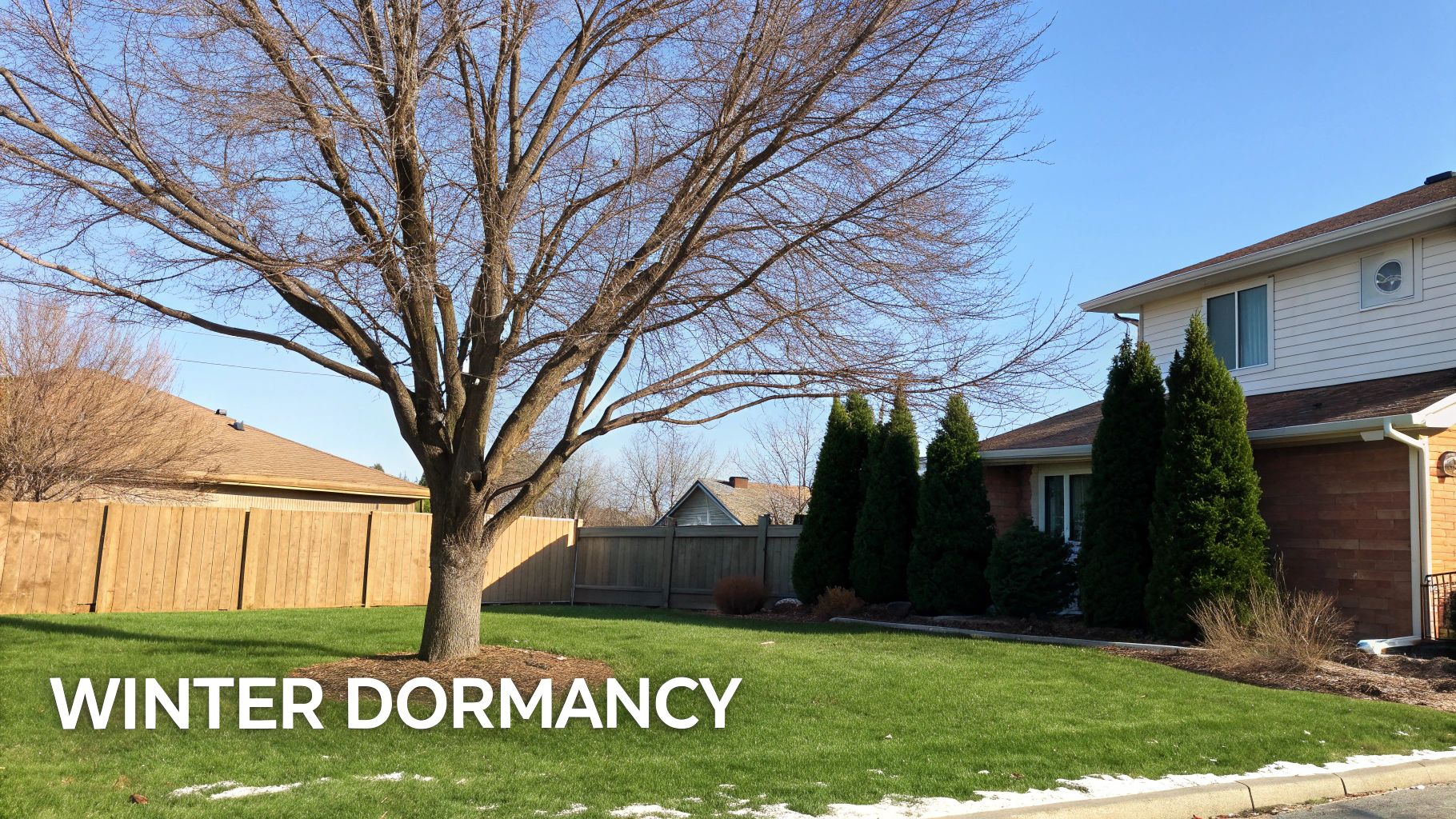
Sure, a Perth winter is pretty mild, but our local trees still pick up on the subtle shifts in temperature and daylight. Their activity doesn’t just stop; it cleverly shifts from growing outwards to preserving energy inwards. This whole process looks a bit different depending on what kind of tree you have in your backyard.
Take deciduous trees, for instance—like the popular ornamental pear or the stunning jacaranda. They put on a brilliant show in autumn before dropping all their leaves. This isn’t a sign of sickness; it’s actually a smart survival move. By going bare, they drastically cut down on water loss and conserve the energy they’d otherwise spend keeping their leaves alive. For example, a crepe myrtle on a suburban block in Subiaco isn't dying when it sheds its leaves; it's smartly conserving resources, preparing for a vibrant bloom next summer.
On the flip side, you have the evergreens, like our classic eucalyptus and pine trees, which keep their foliage all year. They don't shut down completely but slow their metabolism right down. They’ll still photosynthesise on sunny days, but only just enough to tick over until spring arrives.
Deciduous vs Evergreen Winter Strategies
To really get what’s happening in your garden, it helps to see the two different game plans your trees are running.
Deciduous Trees (The Minimalists): These guys go all in on energy saving by shedding their leaves. This bare-bones structure is fantastic for pruning, as an arborist gets a clear, unobstructed view of the entire branch framework, allowing for precise, healthy cuts.
Evergreen Trees (The Conservers): These trees just slow everything down internally. They hang onto their leaves but pump their resources into strengthening roots and storing up nutrients for that big growth spurt in spring.
Knowing which type of tree you’re dealing with is half the battle when it comes to proper maintenance. If you’re not sure what’s what, our modern guide to Australian tree identification has some handy tips.
By recognising the signs of dormancy, you can better support your trees during their most vulnerable period. A bare tree isn't dead; it's simply resting and preparing for a vibrant return in spring.
Whether you're in Duncraig or Mount Lawley, understanding this natural cycle helps you tell the difference between a tree that’s genuinely struggling and one that’s just taking a well-earned seasonal rest.
Hidden Winter Dangers for Your Trees
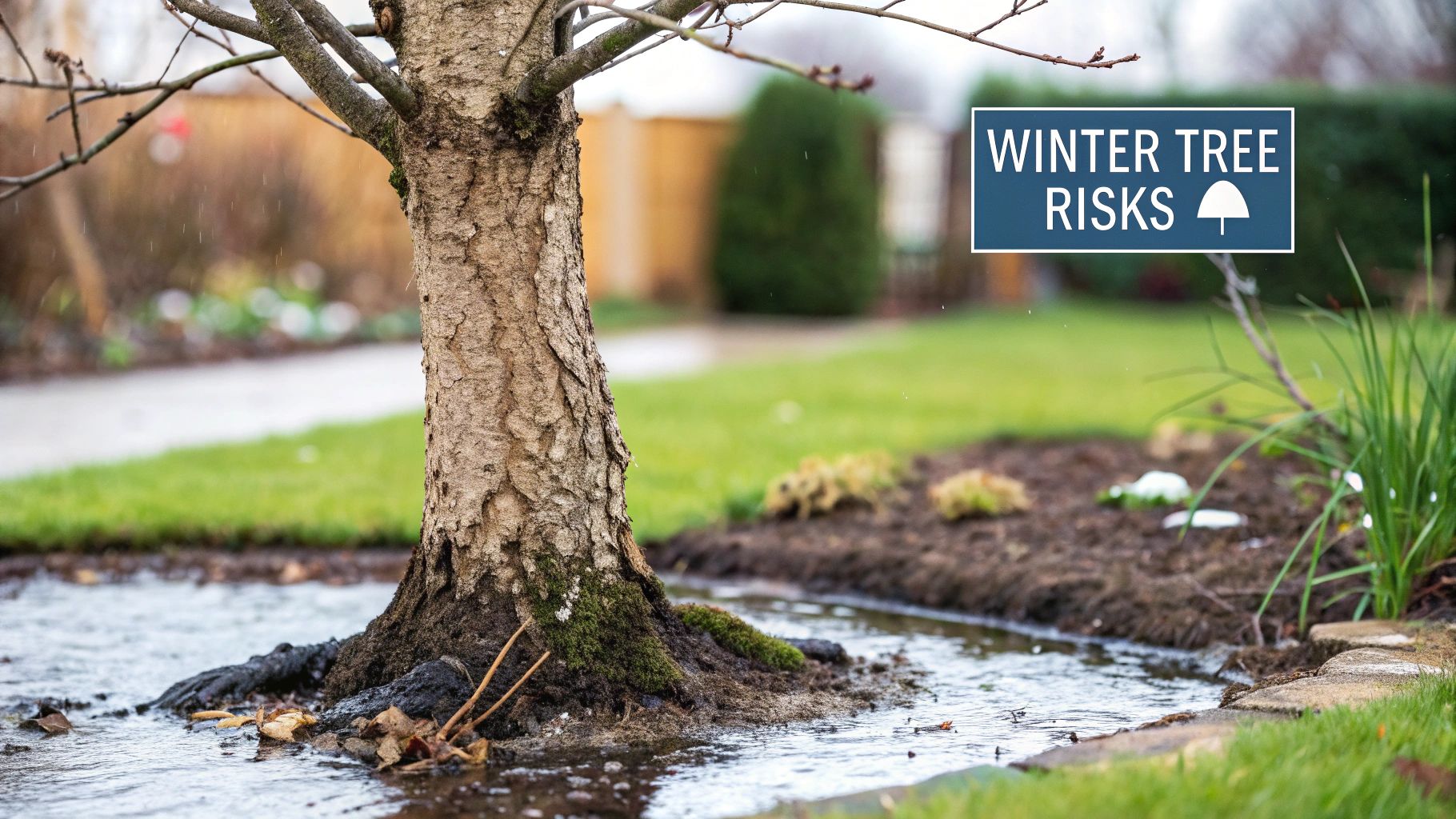
While dormancy feels like a peaceful rest, winter isn't just a quiet time for your trees in winter—it's a season packed with hidden stresses. Perth’s cooler, wetter months bring a unique set of challenges that can quietly compromise the health of even the most established trees on your property.
One of the biggest yet most invisible threats is root rot. When winter rains saturate the ground, especially in Perth’s sandy or clay-based soils, it can become waterlogged. This essentially suffocates the root system, cutting off vital oxygen and creating the perfect breeding ground for destructive pathogens. A practical example of this is seeing a mature banksia suddenly yellowing and declining; the problem often isn't the tree itself but waterlogged soil starving its roots.
The constant dampness also rolls out the welcome mat for all sorts of fungal diseases. You might spot unusual spots on leaves or discoloured patches on the bark. These are often the first whispers of a fungal infection that can weaken a tree's structure over time, leaving it vulnerable to other problems.
The Impact of Winter Weather Extremes
Beyond moisture, Perth’s winter weather can be surprisingly harsh. Those strong seasonal winds act like a stress test, pushing and pulling at branches and trunks. A tree that looked perfectly fine in summer might suddenly reveal a hidden structural weakness under the strain of a winter gale.
This is especially true for trees with undetected cracks, co-dominant stems (where two main trunks grow together), or large, heavy limbs that could fail without warning. These issues are often much easier for a professional to spot when a tree’s canopy is thin or completely bare.
Shifting weather is disrupting this delicate process. Research shows that many Australian fruit and nut varieties depend on accumulating a specific number of chill hours to break dormancy properly. As our winters get milder, many species may struggle to hit their target, which could directly impact your backyard harvest. You can learn about the latest research on winter chill and see how climate change is affecting local fruit production.
These hidden dangers really highlight why being proactive is so important. Catching the signs of winter stress early can stop a minor issue from snowballing into a major problem that threatens your property and your tree’s survival.
Why Winter Is the Best Time for Tree Maintenance
Most Perth homeowners see winter as a quiet time in the garden, a period of rest before the spring rush. But for arborists like us, it’s arguably the most important season of the year. It might seem odd to focus on trees in winter, but this is when we can do our most effective and beneficial work. The cooler months open up a unique window of opportunity to shape, strengthen, and secure your trees for the year ahead.
Think of it this way: when a deciduous tree drops its leaves, it's like an architect revealing a building's entire framework. Suddenly, you can see everything—every branch, every fork, every subtle flaw. This clarity is an arborist's best friend. It allows for what we call surgical pruning, letting us make incredibly precise cuts that just aren't possible when the tree is covered in dense foliage.
This clear view means we can spot and fix problems that are hidden in summer. Issues like crossing branches that rub and create wounds, weak V-shaped unions prone to splitting, or imbalanced growth patterns become glaringly obvious. Correcting these problems in winter sets the tree up for strong, healthy growth when spring finally arrives.
A Clear View for Enhanced Safety
One of our biggest jobs in winter is spotting and removing hazardous deadwood. Dead branches aren't just an eyesore; they are a serious safety risk, ready to snap and fall without warning during a winter storm.
With the canopy bare, these dead or dying limbs stand out against the healthy structure of the tree. It makes removing them far more efficient and thorough, dramatically reducing the risk of property damage or injury before the worst of the winter storms hit. It's a simple, proactive step that delivers real peace of mind. To get a better sense of the ideal timing for this work, check out our detailed seasonal guide to pruning trees in Australia.
A little-known benefit that our clients love is how professional winter pruning can transform the natural light in their homes. By carefully thinning the canopy, we can let more of that low winter sun stream through your windows.
This simple change can make your living spaces feel brighter and warmer, a welcome boost during the cooler months. In fact, this extra solar gain can even help cut down your reliance on artificial heating, leading to lower energy bills—a tangible benefit that comes directly from smart tree care.
Practical Benefits of Winter Tree Work
The advantages of winter maintenance go well beyond just a clear line of sight. Here are a few more reasons why it's the perfect season for essential arborist services.
Less Stress on the Tree: Pruning a tree when it's dormant is far less stressful. Since it isn't actively growing, it can channel its energy reserves into healing the pruning cuts quickly and effectively.
Reduced Pest and Disease Risk: Many of the pests and pathogens that infect trees are inactive in the cold. Making fresh cuts in winter gives them a chance to seal over before these threats become active again in spring.
Improved Structural Integrity: Strategic winter pruning builds a stronger, more resilient tree. This helps it stand up to the high winds and heavy rains that are all too common during a Perth winter.
By making the most of this dormant period, you're not just tidying up your garden—you're making a smart, long-term investment in the health, safety, and beauty of your trees.
To help you plan, we've put together a quick guide to common winter tree maintenance tasks.
Winter Tree Maintenance Task Guide
This table summarises key services we perform in winter, outlining their primary benefits and the types of trees that gain the most from them.
Maintenance Task | Primary Benefit in Winter | Best For |
|---|---|---|
Structural Pruning | Improves the tree's framework by removing weak or poorly attached branches, enhancing long-term stability. | Deciduous trees where the branch structure is visible; young trees to establish good form. |
Deadwood Removal | Increases safety by eliminating branches that could fall during storms. It’s easier to spot deadwood on bare trees. | All trees, but especially large, mature trees located near homes, driveways, or public spaces. |
Canopy Thinning | Allows more sunlight to reach your home and garden, and improves air circulation through the canopy to reduce disease. | Dense deciduous and evergreen trees that cast heavy shade or block winter light. |
Hazard Assessment | Provides a clear view of the entire tree structure to identify potential hazards like cracks, decay, or weak unions. | Large, old, or storm-damaged trees where structural integrity is a concern. |
This is just a snapshot, of course. Every tree is different, but a professional assessment can pinpoint exactly what's needed.
How to Spot a Hazardous Tree on Your Property
Winter is an honest season. It strips away the leafy camouflage of summer, giving you a clear, unfiltered look at your trees' true structural health. This is the perfect time for you to become your property's first line of defence against potential risks. Knowing just a few key warning signs can help you spot a hazardous tree long before a winter storm turns a hidden problem into a costly emergency.
You don’t need to be a qualified arborist to spot the most common red flags. Honestly, a simple walk around your garden can reveal a lot. Start by looking at the tree as a whole. Is it suddenly leaning in a new direction, especially after a spell of heavy rain? A significant, new lean can point to an unstable or failing root system—a serious concern for any homeowner.
Next, get a bit closer and inspect the trunk and major branches. The really obvious signs of trouble are things like deep cracks, cavities, or large sections of missing bark. Think of these as open wounds; they're entry points for decay and disease that can hollow out a tree from the inside, making it deceptively weak.
Your Practical Hazard Checklist
Think of this as a quick health check for your trees. While one sign on its own might not mean immediate danger, a combination of these symptoms definitely warrants a professional opinion.
Large Dead Branches: Look for limbs that have no leaves (even in summer) or have dry, brittle twigs. We call these 'widow-makers' for a good reason—they can snap and fall without any warning, posing a huge risk to your roof, car, or driveway.
Fungal Growth: Mushrooms or other fungal bodies growing on the trunk or near the base are a major indicator of internal decay. Fungi feed on dead wood, so seeing them on a living tree often means its structural integrity is already compromised.
Root Zone Issues: Check the ground around the base of the tree. Are there signs of heaving soil or exposed roots where there weren't any before? This can suggest the tree is losing its grip in the ground, making it unstable.
This flowchart can help simplify your decision-making process for trees in winter.
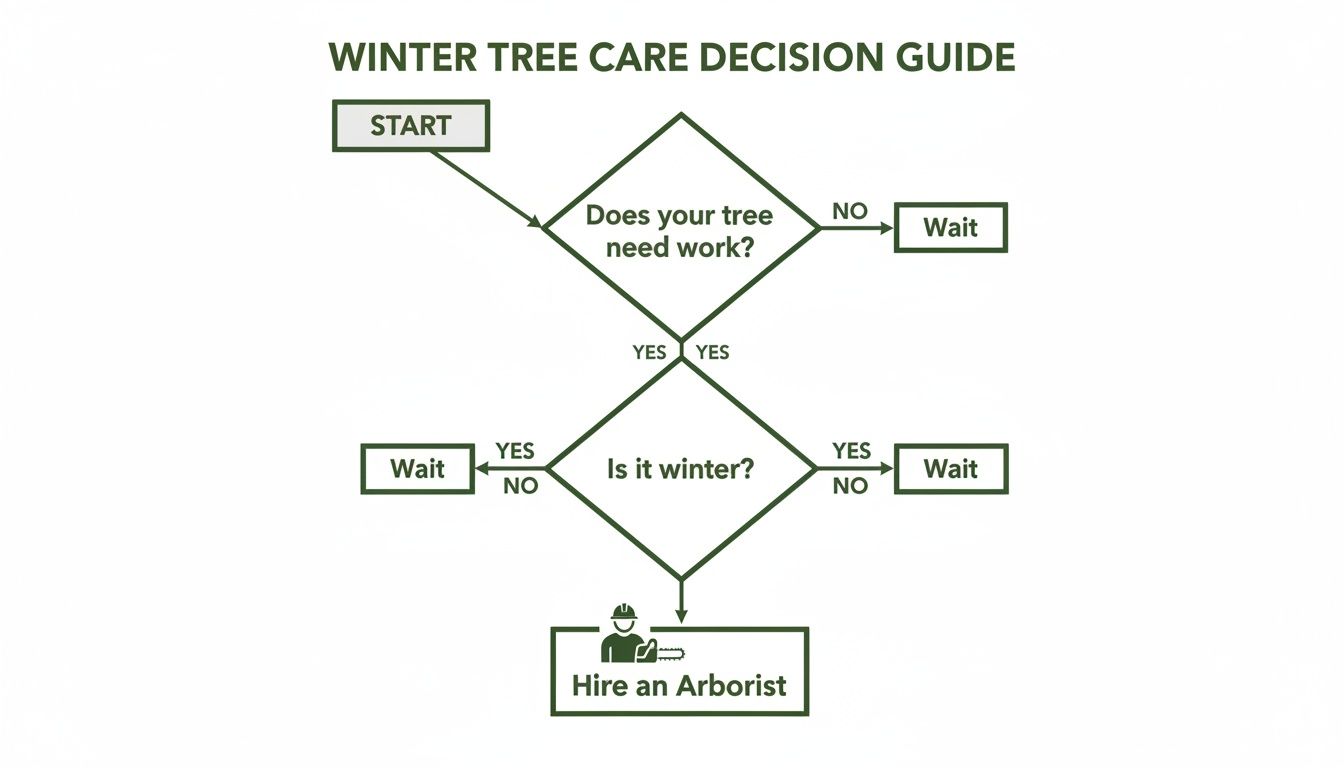
As the visual guide shows, recognising a potential issue during this prime maintenance season is the ideal time to call in an expert.
Imagine a large Marri tree in Wembley leaning precariously over a fence after a week of storms—that's a clear signal to act immediately. Learning how to tell if your tree needs lopping can give you even more detailed insights into specific warning signs to watch out for.
Spotting these hazards isn’t about creating alarm; it’s about taking proactive, informed action. Your observations are the critical first step in ensuring the long-term safety of your property and family.
If you’ve noticed any of these signs or simply have a gut feeling that something isn’t right with one of your trees, trust your instinct. It’s always better to be safe than sorry.
Expert Winter Arborist Services for Perth Homes
So, you’ve spotted a potential hazard or decided it’s time for some proactive care. What’s the next step? That’s where the professionals come in. At Swift Trees Perth, we offer a full suite of services designed specifically for trees in winter, handling every job with precision, safety, and a genuine understanding of tree biology. Our work is much more than just a quick trim—it’s about making smart, expert decisions that ensure the long-term health and safety of your valuable trees.
Many people use "trimming" and "pruning" interchangeably, but to a qualified arborist, they’re worlds apart. Trimming is often cosmetic, like tidying up a hedge. Professional pruning, on the other hand, is a science. It requires a deep knowledge of how each and every cut will affect a tree’s growth, its structure, and its ability to heal itself.
During winter, our arborists take full advantage of the clear view of a tree’s bare branches. This allows us to make targeted cuts that enhance its natural form, remove dangerous deadwood, and set it up for strong, healthy growth in the spring. Here's a fashionable insight: think of this as "architectural pruning." We're not just cutting branches; we're sculpting the tree's silhouette to enhance your home's curb appeal and maximise winter light, treating your trees as a key design element of your property.
Comprehensive Solutions from Qualified Experts
Our services are built on a solid foundation of safety and quality, backed by over 20 years of hands-on experience. We get the unique challenges of working in Perth's suburbs, from navigating tight access around homes to tackling complex jobs near powerlines.
Our winter services include:
Professional Pruning: We use our expert knowledge of tree biology to improve structure, get rid of hazards, and boost vitality. The result? Healthier trees for years to come.
Safe Tree Removal: When a tree is hazardous, diseased, or simply in the wrong spot, our team performs removals with meticulous planning and execution to keep your property safe.
Stump Grinding: Don't let an ugly stump ruin your lawn. We can grind it down below ground level, removing a trip hazard and letting you reclaim the space for grass or a new garden bed.
Land Clearing: Preparing a block for a new project? Winter is a great time for land clearing, and we have the gear to handle jobs of any size, quickly and efficiently.
Peace of mind is non-negotiable when you have tradespeople on your property. That’s why Swift Trees Perth is fully insured, and our team sticks to the highest industry safety standards.
We pride ourselves on leaving every site clean and tidy, treating your home with the same respect we’d show our own. This commitment to quality and safety is why Perth homeowners trust us with their most valuable green assets.
Your Backyard is Part of a Bigger Story: Perth’s Urban Forest
Your property isn’t just an island; it’s a vital piece of a much larger ecosystem known as Perth’s urban forest. Every single tree in your garden contributes to this sprawling green canopy that cools our suburbs, cleans our air, and gives local wildlife a home. So, when you look after your own trees in winter, you’re doing more than just property maintenance—you’re taking on a shared responsibility to protect the health and beauty of our whole community.
This responsibility has never been more important. Across Australia, our trees are facing unprecedented stress from a changing climate. It’s not just a hunch; a huge study analysing over 80 years of forest data confirmed that our trees are dying at an alarming rate. This isn't some isolated problem happening miles away; it's a massive challenge affecting our unique ecosystems right here, hammering home the need for proactive, professional care. You can read more about these crucial findings to get the full picture.
How Professional Tree Care Makes a Difference
This is where a qualified arborist steps in. Our work goes way beyond simple lopping and pruning; we’re a critical part of the solution, acting as conservation partners for homeowners. When you bring in an expert, you’re investing directly in the resilience of Perth’s urban forest. We provide the specialised intervention needed to help your trees stand strong against modern pressures.
One of our most important jobs is managing disease. A sick or infested tree can quickly spread pathogens to its neighbours, creating a domino effect that weakens the entire local canopy. By strategically removing diseased trees or infected limbs, we act like tree surgeons, containing the problem before it spirals out of control in your neighbourhood. It’s a preventative measure that is absolutely essential for keeping our shared green spaces healthy.
Think of a professional arborist as a personal trainer for your trees and a guardian for the local environment. Our work isn't just a service; it's a partnership with you to protect a valuable living asset that benefits everyone.
Strategic winter pruning is another powerful tool in our arsenal. When we carefully thin out a tree’s canopy and remove weak or dead growth, we’re not just making it look better. We’re actually boosting its vitality. This allows the tree to pour its energy into strong, healthy growth, making it far more resilient against pests, diseases, and Perth’s often harsh weather. It's simple: stronger individual trees create a stronger urban forest.
Investing in a Greener Perth for Tomorrow
Taking care of the trees on your property is one of the most powerful things you can do to contribute to a healthier, greener Perth for generations to come. Your well-maintained trees provide shade that cools your home, can improve property values, and create a more beautiful, welcoming environment for the whole street. By taking these proactive steps, you become a custodian of our shared natural heritage.
Whether it’s spotting a potential hazard, managing a disease, or just making sure your trees are in peak condition for the coming season, every action you take matters. When homeowners and professional arborists team up, we can build a more resilient urban forest—one that’s capable of not just surviving, but thriving for years to come.
Frequently Asked Questions About Winter Tree Care
Even with a good winter game plan, it's natural to have a few questions. We get asked a lot about winter tree care, so here are some answers to the most common queries we hear from Perth homeowners.
Can I Prune My Trees Myself in Winter?
While snipping a few dead twigs off a small shrub is usually harmless, tackling any kind of structural pruning is a job best left to the professionals. It’s surprisingly easy to make a bad cut, which can seriously wound a tree, invite disease, or create weak points that won't show up until a storm hits years later.
If the job involves a ladder, big branches, or anything to do with reshaping the tree's canopy, it’s always safer and smarter to call a qualified arborist. We’ve spent years learning tree biology and know exactly where to make precise cuts that encourage strong, healthy growth for the seasons ahead.
Is It Cheaper to Get Tree Work Done in Winter?
Winter is often considered the "off-season" for tree services, and that can definitely work in your favour. Because it’s a quieter time for us, you’ll likely find more flexible scheduling and sometimes even more competitive pricing.
There’s another big advantage: with all the leaves gone from deciduous trees, the entire branch structure is laid bare. This clear view allows us to work much more efficiently, assessing the tree and making cuts without obstruction. That efficiency can mean lower costs for you, making winter a financially savvy time to get your trees sorted.
For those who like to stay organised, it's a great idea to build your tree care schedule into a broader seasonal home maintenance checklist.
How Do I Protect Young Trees from Winter Weather?
Young trees are a bit like toddlers—they need a little extra protection from the elements. The single best thing you can do is spread a healthy layer of organic mulch around the base of the tree. Just make sure to leave a small gap so the mulch isn't touching the trunk itself. This simple step insulates the roots from cold snaps and helps the soil hold onto moisture.
Also, give any support stakes a quick check. They should be firm enough to offer support but not so tight that they're strangling the trunk. A bit of natural sway is important for the tree to build up its own strength. Perth's winter rains are usually plenty, so be careful not to overwater.
Your trees are a huge asset to your property, and looking after them is one of the best investments you can make. Don't wait for winter worries to grow into major problems.
For expert advice and professional tree maintenance, contact Swift Trees Perth today. Our experienced team is ready to provide a free, no-obligation quote and ensure your trees are safe, healthy, and beautifully prepared for the seasons ahead.
Comments