
Elm Leaf Beetle Treatment Your Complete Perth Guide

Tackling any effective pest management, especially for something as persistent as the elm leaf beetle, is all about timing and using a smart mix of cultural, mechanical, and chemical controls. For Perth homeowners, this really means getting on the front foot in spring to hit them hard during their breeding and feeding frenzy. From our experience, professional systemic injections are one of the most reliable, long-term solutions when you're facing a serious infestation.

Confronting Perth's Elm Leaf Beetle Problem
That all-too-familiar sight of skeletonised elm leaves, where only a delicate, lace-like network of veins is left behind, is becoming a common scene across Perth suburbs. This isn't just a cosmetic issue—it's a clear sign of an attack by the invasive elm leaf beetle (Xanthogaleruca luteola).
While the first season's damage might just look a bit shabby, repeated annual attacks seriously weaken your tree. It's a massive energy drain, leaving it vulnerable to other stresses like disease or Perth's harsh, dry summers.
This tiny pest is a major threat to the health and future of one of our most beloved shade trees. The damage builds up year on year, which can lead to major branch dieback and, in the worst cases, the death of the tree. Understanding just how serious this is is the first step to getting it under control.
The Beetle's Journey To Perth
The elm leaf beetle isn’t from around here. Its arrival in Australia decades ago kicked off a major challenge for anyone managing urban trees. The pest was first spotted in Victoria way back in 1989 and didn't take long to spread to other states, starting a long-running battle to protect our beautiful elms.
This timeline gives you a snapshot of its initial detection and march across the country, showing just how stubborn this invasive pest is.
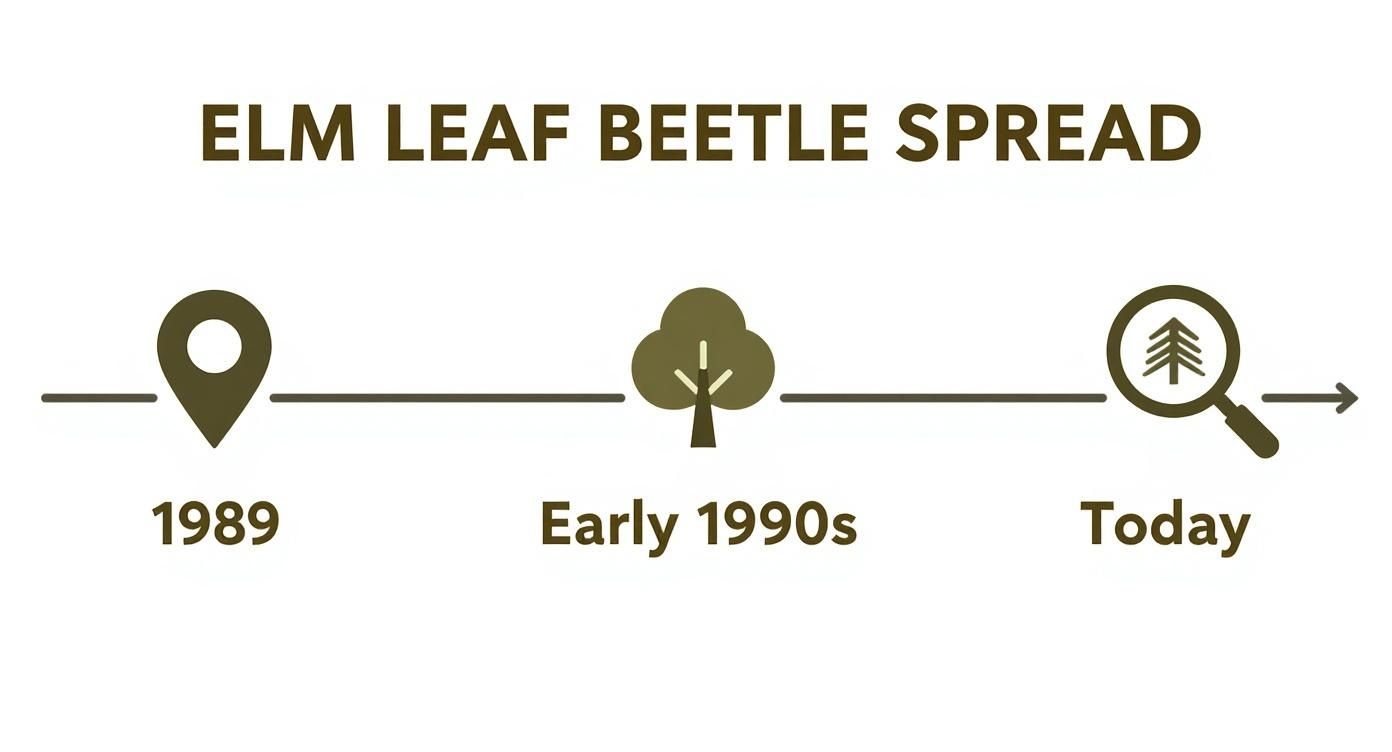
As the graphic shows, this pest is well and truly established, which is why a proactive treatment plan is now a non-negotiable for Perth's elm population. The beetle is just one of many threats our local trees face; you can get the bigger picture by reading our guide on other common tree pests and diseases in Perth.
An unmanaged infestation doesn't just damage leaves for one season. It allows the beetle population to multiply, guaranteeing a more severe attack the following year. Interrupting this cycle is the key to protecting your tree's future.
Your First Steps To Diagnosis
To help you figure out what you're dealing with and what to do next, we've put together a quick-reference table. It’s a simple way to match the signs you're seeing on your elm with the pest's life stage and the best immediate response.
Quick Guide to Elm Leaf Beetle Damage and Solutions
This table breaks down the common symptoms of an elm leaf beetle problem, linking them to the specific life stage causing the damage and suggesting a practical first step for Perth homeowners.
Symptom (What You See) | Beetle Life Stage Responsible | Recommended First Action |
|---|---|---|
Small, circular "shot-holes" in leaves | Adult Beetles | Monitor the tree for increasing damage and prepare for larval stage treatments. |
Skeletonized or "lacy" leaf appearance | Larvae (Grubs) | Apply cultural or chemical controls targeted at the actively feeding larvae. |
Yellowish grubs crawling down the trunk | Mature Larvae | Install tree bands (sticky or hessian) to intercept them before they pupate. |
Spotting the problem early makes a huge difference. If you're already seeing widespread damage or feel like the infestation is getting out of hand, don't wait for the tree to get worse. Getting a professional involved can deliver targeted, effective elm leaf beetle treatment that breaks the cycle for good.
Identifying the Enemy: A Perth Homeowner's Guide
Winning the battle against the elm leaf beetle starts with a simple but crucial step: knowing your enemy. Understanding their life cycle, especially how it plays out in Perth's unique climate, gives you a massive advantage. It means you can time your elm leaf beetle treatment efforts for maximum impact.
This isn't just about spotting a random bug; it's about recognising each stage and knowing exactly what it means for your elm tree. From the moment the first adult beetle emerges in spring, it’s a race against time.
The Annual Cycle of Destruction
The elm leaf beetle’s life is a predictable, destructive loop that repeats itself every year. As temperatures rise in spring, usually around late September or early October here in Perth, the adult beetles awaken from their winter hiding spots.
Their first priority is to feed. They emerge hungry and immediately start chewing on the fresh, tender elm leaves, creating distinctive "shot-hole" damage—small, circular holes that look like someone has peppered the leaf with a tiny shotgun. This is your first major clue that the cycle has begun.
Soon after this first feed, the beetles mate, and the females get to work laying their eggs.
Spotting the Telltale Signs
Identifying each stage of the beetle's life is easier than you think once you know what to look for. Each phase leaves behind a different type of evidence on your tree.
The Eggs: Female beetles lay their eggs in neat clusters on the underside of elm leaves. Look for tiny, lemon-yellow, spindle-shaped eggs arranged in double rows. Finding these in late spring is a clear warning that the most destructive stage is just around the corner.
The Larvae: This is where the real trouble begins. The eggs hatch into small, black, caterpillar-like larvae. They quickly grow, turning a dull yellowish-green with two prominent black stripes down their back. And they are voracious eaters.
The Pupae: After feeding for several weeks, the fattened-up larvae crawl down the tree's trunk to pupate. You'll find them as bright yellow, motionless grubs clustered at the base of the trunk, tucked into bark crevices, or in the soil nearby.
This image clearly shows the destructive larval stage, which is responsible for skeletonising elm leaves, alongside the bright yellow pupae you'll often find at the base of the tree.
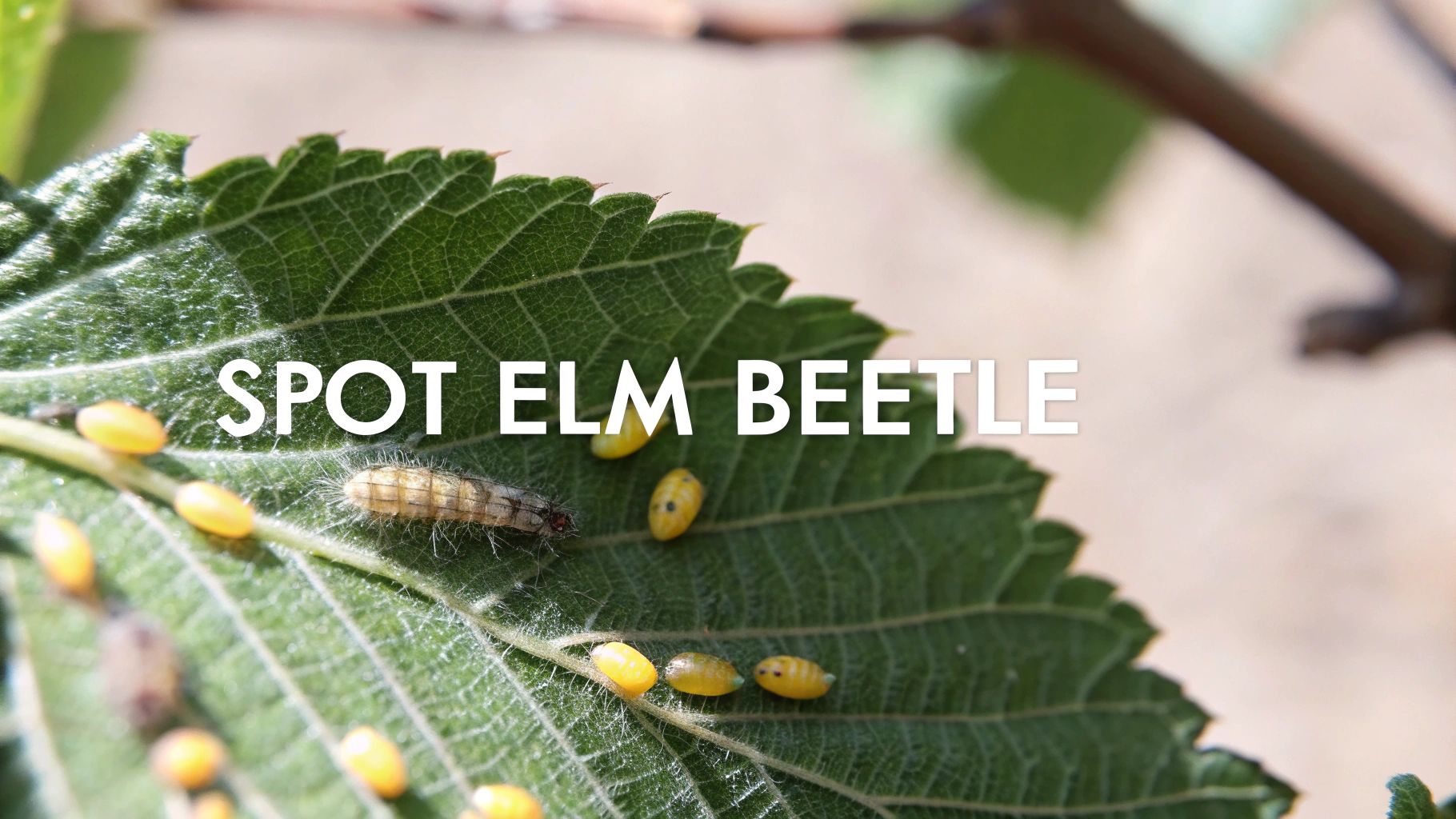
Seeing two life stages at once highlights just how quickly the population can explode, reinforcing the need to act fast.
Understanding the Damage
It’s the larvae that do the most harm. Unlike the adults who chew holes right through the leaf, the larvae graze on the soft green tissue on the underside. They leave the upper surface and the veins completely untouched.
This feeding pattern creates the classic "skeletonisation" or "lacy" appearance that is the calling card of a severe elm leaf beetle infestation. A heavily damaged leaf will turn brown, curl up, and drop from the tree prematurely. Here in Perth, it's not uncommon for the beetles to complete two, sometimes even three, generations in a single season.
An important takeaway for Perth homeowners is that the damage is cumulative. Each successive generation of beetles in a season intensifies the stress on your elm, depleting its energy reserves and making it more susceptible to other problems.
This repeated defoliation is what severely weakens the tree over time. It can’t photosynthesise properly, which impacts its growth and overall health.
Come late summer and autumn, the final generation of adult beetles starts looking for a place to spend the winter. They are notorious for seeking shelter in woodpiles, under loose bark, in sheds, and even inside houses, becoming a real nuisance. They'll stay dormant until the warmth of the following spring triggers the cycle all over again.
By understanding these distinct phases, you can interrupt their life cycle at its most vulnerable points. Whether it's targeting the larvae as they feed or trapping them as they crawl down the trunk, knowledge is your most powerful weapon. If you've identified a significant infestation on your property, a swift response is critical.
Don't hesitate to contact Swift Trees Perth for a professional assessment and effective tree maintenance solutions.
Your First Line of Defence: Cultural and Mechanical Controls
Before you even think about reaching for chemical sprays or injections, the most effective elm leaf beetle treatment plan starts with simple, hands-on strategies.
These cultural and mechanical controls are your first line of defence—a proactive, sustainable foundation for any good pest management plan. They’re eco-friendly, often low-cost, and can make a huge difference in knocking back beetle populations over the long haul.
Think of it this way: a healthy, well-cared-for tree is like a person with a strong immune system. It’s far more resilient to attack. Simple, consistent tree care is a powerful weapon that’s too often overlooked.
The Power of Tree Banding
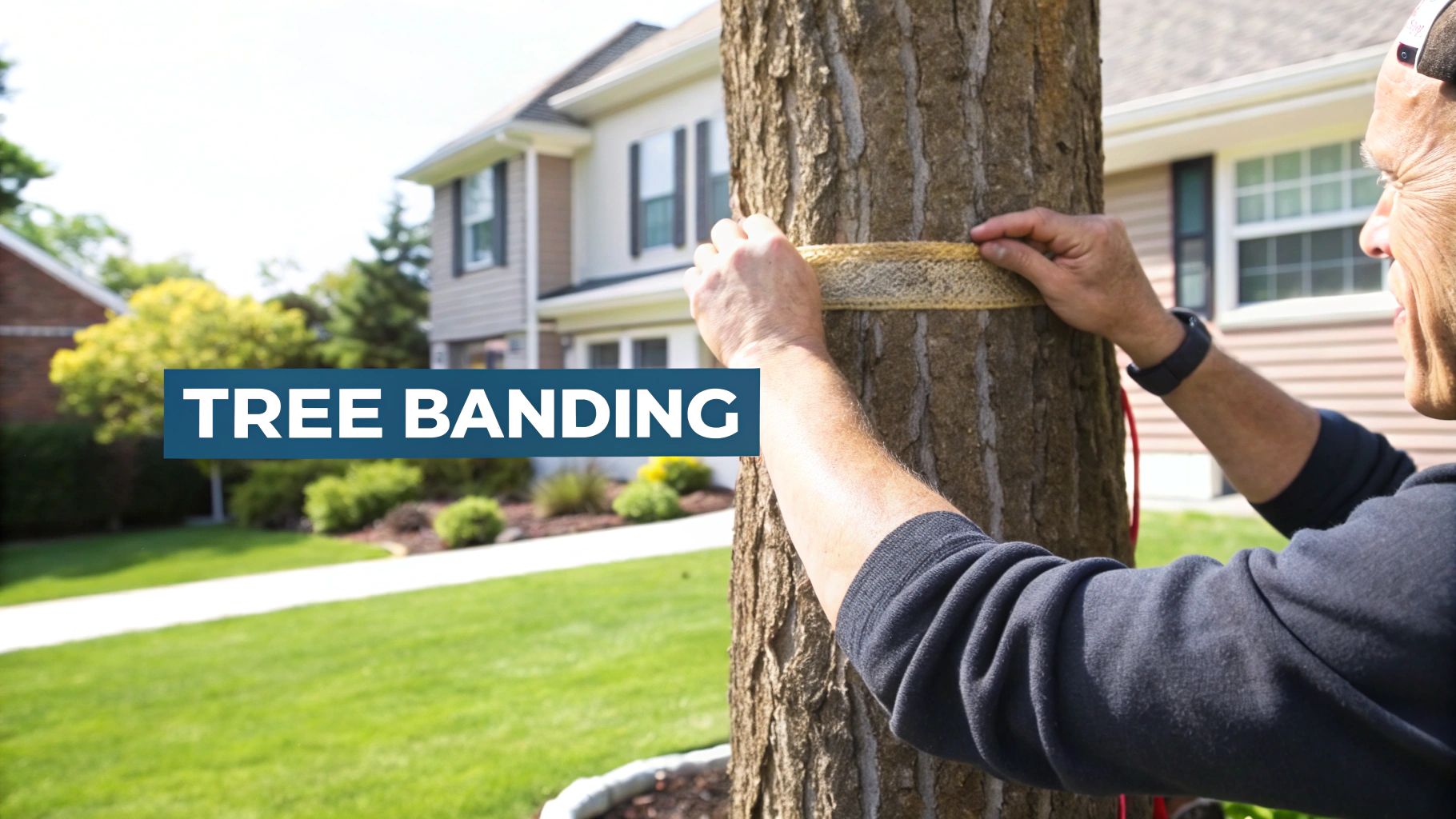
One of the most direct—and satisfying—mechanical controls is tree banding. This technique physically intercepts the mature larvae as they make their predictable journey down the trunk to pupate at the base of the tree. By trapping them before they can complete their life cycle, you directly slash the number of adult beetles that will emerge for the next generation.
There are a couple of popular methods for banding:
Hessian Bands: Simply wrap a strip of hessian or similar coarse fabric (about 20-30 cm wide) around the trunk. The larvae crawl underneath, thinking it’s a safe place to pupate. The catch? You have to check under the band every week or two, scraping off the yellow pupae and destroying them.
Sticky Bands: These are commercial products or horticultural glues applied to a protective wrap around the trunk. The larvae get stuck fast as they crawl over it. This method is lower maintenance but needs replacing once it gets covered with debris and pests.
Timing is everything. Bands should be installed in early summer, just as you notice the larvae have finished their feeding frenzy up in the canopy and begin their descent. For a homeowner in a Perth suburb like Nedlands, just diligently maintaining hessian bands and improving their tree's watering schedule can dramatically reduce an infestation over two seasons—often without ever resorting to chemicals.
By interrupting the beetle's life cycle at the pupal stage, you're not just dealing with the current problem. You are actively preventing the next wave of leaf-chewing adults. This is a simple, yet powerful, act of disruption.
Simple Tactics With a Big Impact
Beyond banding, other straightforward actions can help manage beetle numbers and support your tree's health. These methods are easy for anyone to implement and can be surprisingly effective, especially when you combine them.
A high-pressure water spray, for instance, can work wonders. Using a strong jet from your garden hose, you can physically blast eggs, larvae, and even adult beetles right off the leaves of smaller, more accessible elms. It won’t eliminate the problem entirely, but it can significantly knock back pest numbers on a specific branch, buying your tree some valuable time.
And don't underestimate the power of a good clean-up. The pupae love to cluster in bark crevices and the leaf litter at the base of the trunk. Regularly sweeping up and disposing of this debris during summer removes a huge number of future beetles from the equation.
Building Resilience from the Ground Up
The absolute best defence against any pest is a robust, healthy tree. Stressed trees are far more susceptible to severe damage from elm leaf beetles, which is why fundamental tree care is a critical part of your treatment strategy.
Here’s how you can bolster your tree’s natural defences:
Proper Watering: Deep, infrequent watering is crucial, especially during Perth’s hot, dry spells. This encourages a deep, strong root system, making the tree far more resilient.
Mulching: Applying a layer of organic mulch around the base of the tree (without it touching the trunk) helps retain soil moisture, regulate temperature, and improve soil health.
Soil Health: Healthy soil is the bedrock of a healthy tree. Avoid compacting the soil around the root zone and consider having it tested if the tree seems chronically stressed. You can find more advice on this in our guide to top tree maintenance tips for Australians.
Australian research from the Keith Turnbull Research Institute has shown just how effective these non-chemical methods can be. Their studies demonstrated that a consistent tree banding program could reduce leaf damage by over 50% on English elms. While these methods might not deliver a knockout punch in the first year, they steadily chip away at beetle populations and reduce damage in the following seasons. To see the data for yourself, you can read more about the research on non-chemical controls.
Of course, while these cultural and mechanical controls should always be your first step, a severe, established infestation might need a more robust approach. If you’ve tried these methods and the beetles keep coming back stronger, it might be time to call in the experts.
When It’s Time for Chemical Treatments
Let's be honest. Sometimes, the cultural and mechanical tricks just don't cut it. If you're facing a relentless elm leaf beetle attack year after year, it's time to consider a more direct approach. This isn't about indiscriminately spraying chemicals; it's about making a responsible, targeted intervention to save your tree.
For Perth homeowners with a serious beetle problem, this often means looking beyond the off-the-shelf hardware store sprays. We need to think about systemic insecticides—treatments that work from the inside out, turning the tree's own vascular system into a highly effective defence mechanism.
The Strategic Edge of Systemic Insecticides
Unlike a surface spray that just sits on the leaf, a systemic insecticide is absorbed by the tree and distributed right up into the foliage. When a beetle or larva chews on a leaf, it ingests the active ingredient and is quickly knocked out. It's incredibly precise, only affecting the pests that are actively damaging your elm.
There are two main ways to get the treatment into the tree:
Soil Injection: This involves injecting a liquid insecticide into the soil around the root zone. The tree’s roots then absorb the product and slowly move it up the trunk into the canopy.
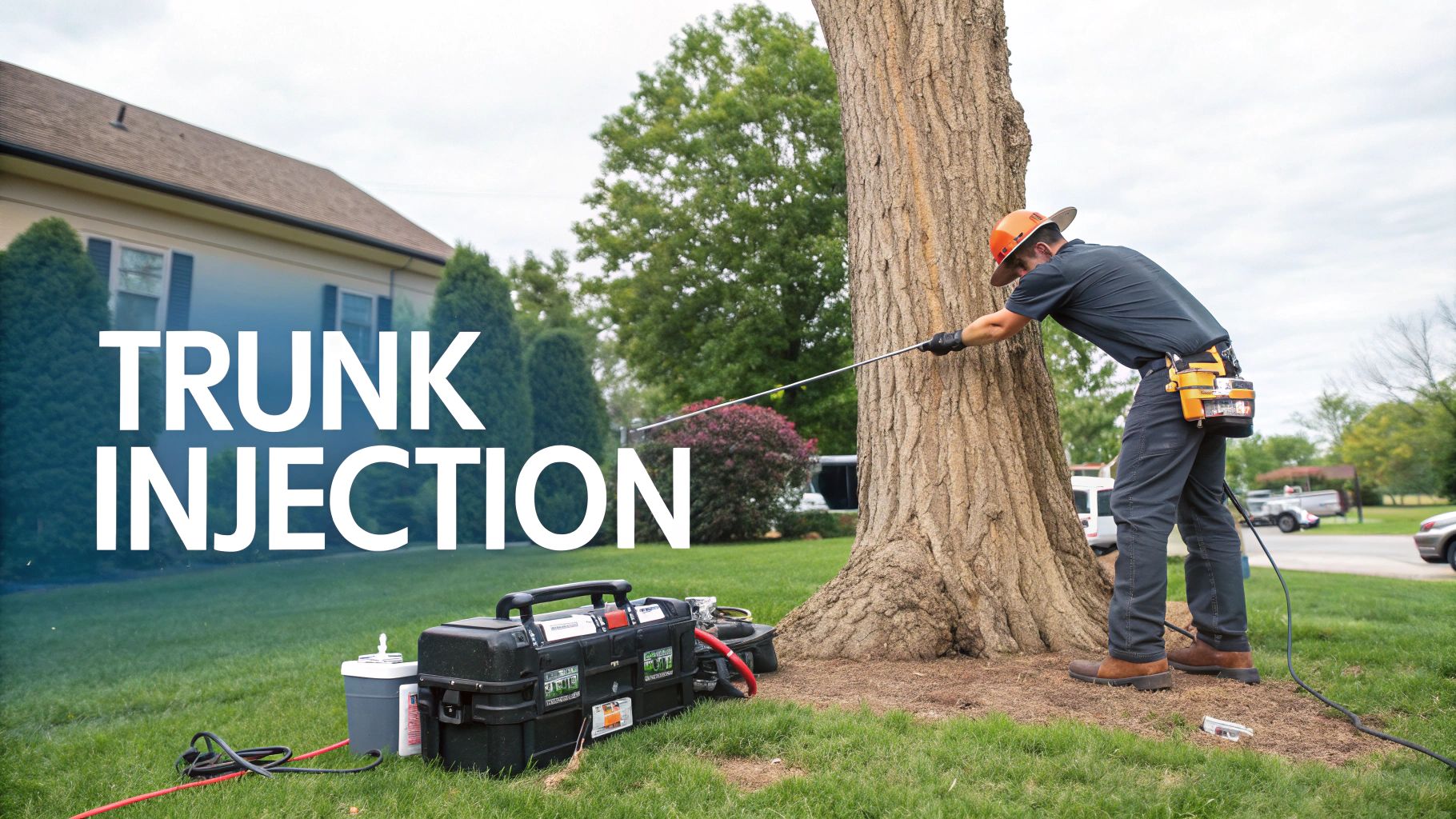
Trunk Injection: A small, concentrated dose of insecticide is injected straight into the tree's vascular tissue (the xylem) through tiny, drilled ports. This is the most direct and efficient delivery method.
Imagine a beautiful, mature elm shading a home in a suburb like Mount Lawley. For a tree like that, a trunk injection is the gold standard. It puts the treatment exactly where it needs to be, with zero risk of runoff into your garden beds or Perth’s local waterways.
Why Arborists Prefer Trunk Injections
Across Perth, professional arborists almost always recommend trunk injections, and for good reason. It’s widely considered the most environmentally responsible chemical elm leaf beetle treatment out there.
Because the insecticide is sealed inside the tree, there’s virtually no risk of "off-target" exposure. This means beneficial insects like bees, ladybugs, and other pollinators visiting nearby flowers are kept safe.
While soil injections can work, they carry a greater risk to the surrounding soil life. The chemical could potentially affect non-target organisms in the soil or even be taken up by the roots of neighbouring plants. Trunk injections neatly sidestep all these concerns.
The real beauty of a trunk injection is its precision. It’s like performing keyhole surgery on the tree—a targeted, low-impact procedure that delivers powerful, long-lasting results exactly where they are needed most.
It’s also the fastest-acting systemic option. The insecticide can travel from the trunk to the highest leaves in as little as a week, depending on the tree's health and how actively it's drawing up water. That speed is vital for stopping a severe infestation before it causes irreversible damage.
Timing is Everything for Chemical Treatments
With any systemic treatment, timing is absolutely crucial. You want the insecticide fully distributed throughout the canopy before the larvae start their most destructive feeding frenzy.
For our Perth climate, the ideal treatment window is in spring, usually from late September to early November. Applying it then ensures the tree's vascular system is pumping hard, efficiently carrying the insecticide up to the leaves.
Waiting until summer, when the leaves are already skeletonised, is simply too late. The damage is done, and the tree's reduced canopy slows down the chemical uptake, making the whole treatment less effective.
Australian pest management guidelines are very clear on this. Trunk injection using the active ingredient Imidacloprid is recognised as the best and most environmentally sound option for elms with a trunk diameter over 200 millimetres. These professional-grade treatments can last for two to three years. A single three-year treatment for one tree typically costs between $160 and $360 AUD. You can read more about these established elm leaf beetle treatment guidelines.
A Quick Word on Foliar Sprays
You might see foliar sprays—insecticides sprayed directly onto the leaves—marketed as a quick fix. Please be aware that these sprays are non-selective, meaning they’ll harm or kill any insect they touch, including the good guys like bees and predatory bugs.
Spray drift is another massive problem, with the potential to contaminate neighbouring properties, veggie patches, or water sources. For these reasons, systemic injections are by far the superior and professionally recommended choice.
If your elm tree is struggling year after year, a professional chemical treatment can finally break that cycle of infestation. It gives your tree a real chance to recover its health and beautiful canopy.
For expert advice, contact the experienced team at Swift Trees Perth for all your tree maintenance needs.
Why a Professional Arborist is a Smart Investment
Sometimes, the best DIY strategy is knowing when to pick up the phone. While cultural controls and tree banding are vital first steps, a persistent, large-scale elm leaf beetle infestation often requires an expert touch and equipment that goes beyond the average Perth homeowner's shed. This is where a professional arborist becomes not just a service, but a smart investment in the long-term health of your trees.
Engaging a professional is about more than just grabbing a stronger chemical off the shelf. It’s about leveraging deep horticultural knowledge for a precise, effective, and safe elm leaf beetle treatment. A certified arborist brings a trained eye to the problem, ensuring an accurate diagnosis and a treatment plan tailored to your tree's specific condition, age, and environment.
The Professional Advantage in Diagnosis and Treatment
An arborist doesn’t just see pests; they see the entire ecosystem of your tree. They can easily distinguish elm leaf beetle damage from other potential issues like fungal diseases or nutrient deficiencies, making sure the treatment targets the actual problem. This precise diagnosis saves you from wasting time and money on the wrong solutions.
On top of that, professionals have access to treatments and application methods that are simply not available to the public. Systemic trunk injections, the gold standard for severe infestations, require specialised equipment and licensed technicians to administer them safely and correctly.
Imagine a magnificent, historic elm in a Dalkeith garden. For a tree of that size and value, a DIY foliar spray is not only impractical but can be environmentally irresponsible. A professional’s targeted trunk injection, however, delivers the treatment directly into the tree's vascular system. This protects it from the inside out for up to three years with minimal impact on the surrounding garden and its beneficial insects.
Hiring a professional arborist isn't an admission of defeat—it's a strategic move to protect a significant asset. Your mature trees add immense value to your property, and expert care is the best insurance policy for their health and longevity.
Specialised Equipment and Safety Protocols
Let's be honest, treating large, established trees comes with risks. A professional arborist arrives with the right safety gear and machinery to handle the job correctly, whether it involves accessing a high canopy or using high-pressure injection tools. They are trained to work around tricky obstacles like structures and powerlines, which can make tree care a hazardous job for the untrained.
Their specialised equipment also ensures the elm leaf beetle treatment is applied effectively. For trunk injections, this means drilling precise ports and applying exactly the right pressure to ensure the product is absorbed and distributed evenly throughout the canopy. It's a level of precision you just can't replicate with DIY methods. It's also worth understanding their specific role, which we detail in our article explaining the differences between arborists and tree surgeons.
A Long-Term Partnership for Tree Health
Ultimately, hiring a professional arborist is about more than just getting rid of pests for one season. It’s about creating a long-term health plan for your trees. They can provide advice on everything from pruning and soil health to watering schedules that will build your tree's natural resilience against future attacks. This holistic approach ensures your elm not only survives the current beetle infestation but truly thrives for years to come.
Your trees are a living legacy. Protecting them from a relentless pest like the elm leaf beetle requires a powerful, targeted strategy. For expert care, peace of mind, and the best possible outcome for your treasured elms, it’s time to call in the professionals.
For a comprehensive assessment and a tailored management plan to protect your trees, contact Swift Trees Perth today. Our experienced team is ready to provide the professional tree maintenance your Perth property deserves.
Common Questions About Elm Leaf Beetle
Even with the best plan, you're bound to have a few questions. Let's run through some of the most common things Perth homeowners ask when they're staring down an elm leaf beetle problem. Getting these answers sorted helps you move forward with a bit more confidence.
How Much Does Professional Elm Leaf Beetle Treatment Cost in Perth?
This is usually the first question on everyone's mind, and the cost really hinges on a couple of things. The size of your elm is the biggest factor—a huge, mature tree needs more product and takes longer to treat than a young one. The method matters too, though a systemic trunk injection is what most professionals will recommend.
As a ballpark figure, professional elm leaf beetle treatment in the Perth area typically costs somewhere between $160 and $360 per tree. That treatment should last for two to three years, making it a pretty reasonable yearly investment to protect what is often a very valuable feature of your garden. Of course, always get a firm quote from a qualified arborist who can come and see the tree for themselves.
Will My Elm Tree Recover from a Bad Infestation?
It's tough to see a beautiful, leafy elm turned into a brown, skeletal mess. But the good news is that elms are incredibly tough. One bad season of defoliation, while it looks awful and definitely stresses the tree, is rarely a death sentence.
The real danger comes from repeated attacks, year after year. That's what truly weakens the tree, draining its energy reserves and leaving it open to other problems like fungal diseases or stress from a dry Perth summer.
The key to recovery is breaking that destructive cycle. A proper treatment plan gives your tree the break it desperately needs to push out a full, healthy canopy next spring and start rebuilding its strength.
With the right care and an end to the yearly pest onslaught, most elms bounce back beautifully and return to their former glory.
When Is It Too Late in the Season to Treat My Tree?
Timing is everything, especially for systemic treatments like trunk injections. You've got a specific window to get it right. The sweet spot for application is in spring (usually late September to early November), just as the new leaves are unfurling. This timing gets the insecticide moving through the tree's system, right up into the canopy, before the beetle larvae hatch and start their destructive feeding frenzy.
If you’ve missed that spring window and it's now January, a systemic treatment is going to be far less effective. By then, the damage is done, and the tree’s chewed-up canopy isn't moving nutrients (and insecticide) around as efficiently. At that point, you're better off focusing on things like tree banding to trap the next generation of beetles and locking in a professionally timed treatment for the following spring.
Can I Treat the Problem Myself?
For a small tree you can easily reach or a very minor infestation, absolutely. DIY tactics like hosing off larvae or wrapping the trunk with sticky bands definitely have their place. These hands-on methods are a great part of an overall management plan.
But when you're dealing with large, established elms or a severe infestation that comes back every single year, DIY methods just won't cut it. Professional arborists have access to much more effective, long-lasting products and the proper equipment to apply them safely. A professional trunk injection is precise, targeted, and far safer for the surrounding environment than any spray-based home remedy, protecting your tree for years, not just weeks.
Protecting your valuable elm trees from this relentless pest isn't a one-off job; it requires a proactive and well-informed strategy. If you're sick of watching your trees get hammered every summer, it's time to call in the professionals.
For expert advice and an effective, long-term elm leaf beetle treatment plan designed for your property, get in touch with the experienced team at Swift Trees Perth. We can help you bring your trees back to full health and beauty.
Visit us at https://www.swifttreesperth.com to get your free estimate today.

Comments