
Trimming bushes and shrubs: Expert Tips for a Healthier Perth Garden

Giving your bushes and shrubs a good trim is more than just a weekend chore—it's one of the best things you can do to boost your garden's health and make your whole property look fantastic. A strategic prune can completely transform your landscape, encouraging strong, vibrant growth and giving everything a polished, well-cared-for appearance.
Why Bother With Proper Shrub Trimming?
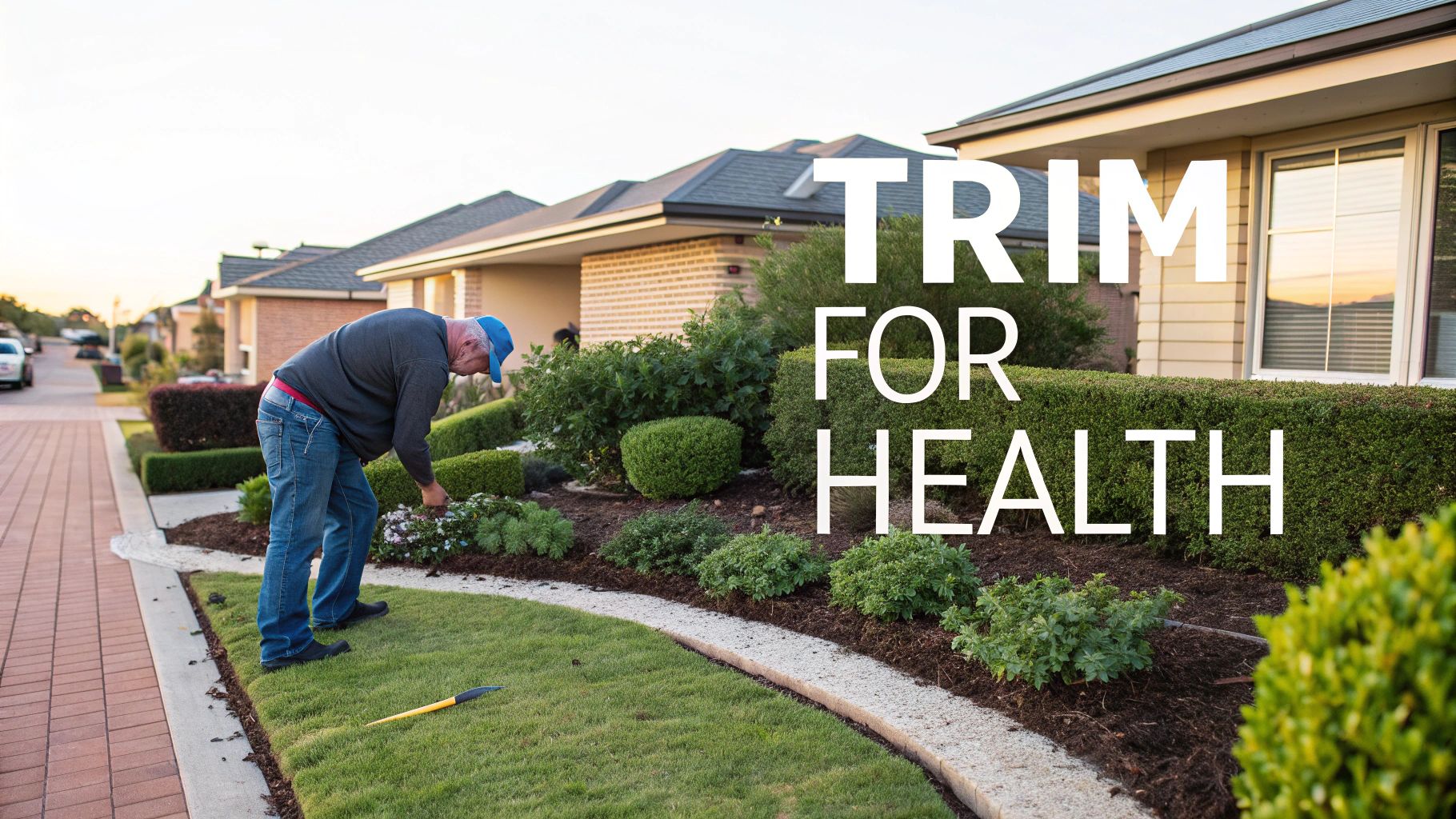
For many homeowners here in Perth, the thought of taking shears to a beloved plant brings on a wave of anxiety. We’ve all been there, wondering: Am I cutting too much off? Is this the right time of year? What if I kill it? That uncertainty can turn a simple garden task into a stressful ordeal.
But it’s time to shift that mindset. Think of trimming not as a risky chore, but as a powerful tool for cultivating a truly stunning garden. It goes way beyond just keeping things tidy; it’s one of the most impactful things you can do for the life and beauty of your landscape.
A Health Kick for Your Plants
At its heart, smart trimming is all about directing a plant's energy where it's needed most. When you snip away dead, damaged, or diseased branches, you're closing the door on pests and nasty pathogens looking for an easy way in. For example, removing branches showing signs of black spot on a rose bush stops the fungus from spreading and allows the plant to focus on producing healthy new leaves and flowers.
This simple act also opens up the plant, improving air circulation through the branches. That’s a huge deal for preventing fungal diseases, which love to take hold in damp, stagnant conditions. By clearing out the clutter, you're encouraging the plant to put its resources into producing strong new growth, which means lusher foliage and more flowers or fruit next season.
Boosting Kerb Appeal and Practicality
Let’s be honest, a well-kept garden seriously lifts your property's entire look. Thoughtful shaping creates clean lines and defined forms that make everything feel intentional and stylish. A crisply trimmed lilly pilly hedge, for example, can act as a formal "green wall," providing privacy and a sophisticated backdrop for your other plants. This is a current trend in suburbs like Cottesloe and Dalkeith, where manicured gardens are a fashionable extension of the home's architecture.
But the benefits aren't just cosmetic:
Let the Sun Shine In: Trimming back overgrown canopies allows sunlight to reach smaller plants and lawn underneath, giving your whole garden a chance to thrive.
Safety and Access: Overhanging branches can quickly become a trip hazard. Keeping pathways clear makes it safer and easier to move around your property.
Building a Stronger Plant: For many shrubs, pruning actually strengthens their overall structure, helping them stand up to strong winds and preventing weak limbs from snapping.
A well-pruned shrub isn't just tidy; it's a healthier, more resilient plant that actively contributes to the beauty and safety of your outdoor space. Understanding this is key to unlocking your garden's full potential.
Ultimately, the benefits ripple out to the entire garden. The same ideas apply when you’re creating structured, healthy borders, which is why regular trimming for hedges is so important.
Ready to ditch the hesitation and start shaping a healthier, more beautiful garden? The next sections will give you the confidence to get trimming. Or, if it all feels like a bit much, you can always call in the pros at Swift Trees Perth for expert tree maintenance and advice.
Alright, let's get into the nitty-gritty of your pruning toolkit.
Equipping Yourself with the Right Pruning Tools
Using the right tool when trimming bushes and shrubs is about more than just making the job easier—it’s absolutely fundamental to the health of your plants. A clean, precise cut from a sharp, well-suited blade heals quickly, minimising stress and slamming the door on disease. Heading into the garden with the wrong gear is like a surgeon using a butter knife; you'll get the job done, but it’s going to be messy and cause a lot of unnecessary damage.
Let's walk through the essential pruning toolkit so you've got exactly what you need for any task that comes your way. It's no secret that home gardening is booming across Perth, and this has really shaken up the tools market for the better. In fact, Australia's gardening tools sector is on track to hit USD 4.63 billion by 2033, with pruning tools leading the charge. This isn't just about buying stuff; it shows a real shift towards smarter, health-focused garden care where having the correct equipment is a must. You can read more about this market growth on the IMARC Group's website.
The Foundation: Your Hand Tools
For most of your day-to-day trimming, a few core hand tools will handle almost everything. These are the dependable workhorses of any gardener’s shed.
Bypass Secateurs (Hand Pruners): This will be your most-used tool, hands down. Bypass secateurs work like scissors, with two sharp, curved blades that glide past each other for a clean slice. They’re perfect for live stems and small branches up to about 2cm thick because they don't crush the plant's delicate tissues.
Anvil Secateurs: Unlike the bypass style, anvil secateurs have a single straight blade that closes onto a flat block (the anvil). This chopping action can crush soft, living stems, so they are best kept for snipping off dead, brittle, or dried-out wood.
Loppers: Think of loppers as secateurs on steroids, with long handles. That extra length gives you the leverage to cut through thicker branches—usually up to 5cm thick—without breaking a sweat. They are a lifesaver for reaching into the crowded centre of a dense shrub.
For Shaping and the Bigger Jobs
When you graduate from trimming individual branches to shaping entire shrubs or tackling serious growth, you’ll need to bring out the bigger guns. Getting those crisp, formal hedges you see in suburbs like Dalkeith isn't done with a pair of hand pruners.
If there's one thing to remember, it's this: sharpness is everything. A dull blade tears and crushes plant fibres, leaving a ragged wound that’s slow to heal and an open invitation for pests and diseases to move in.
Hedge Shears: With their long, straight blades, manual hedge shears are designed for creating those clean, formal lines on hedges and topiaries. They give you incredible precision and control for detailed shaping work.
Pruning Saw: For any branch too thick for your loppers, a pruning saw is your go-to. Most have a curved blade with aggressive teeth designed to cut on the pull stroke, which makes quick work of stubborn, woody growth.
Don't Forget Safety and Maintenance Gear
Your safety is just as important as the health of your plants. Trimming shrubs can send twigs and wood chips flying in all directions, so protecting yourself isn't optional.
Your Must-Have Safety Kit:
Durable Gloves: A solid pair of leather or reinforced synthetic gloves will save your hands from thorns, blisters, and scrapes.
Eye Protection: Always, always wear safety glasses or goggles. You only get one set of eyes, and they're no match for a rogue branch.
Tool maintenance is just as critical. After every session, give your blades a good wipe-down to get rid of sap and debris. It’s also smart to regularly sanitise them with a bit of methylated spirits or a diluted bleach mix to stop the spread of diseases from one plant to another. Keeping your tools sharp, clean, and rust-free means they'll work better and last for years.
If you’re looking at your garden and feeling a bit overwhelmed, or if you've got a big job on your hands, don't hesitate to give us a call. For expert advice and professional tree maintenance in the Perth area, contact Swift Trees Perth for a free, no-obligation quote.
Mastering Key Techniques for Trimming Bushes and Shrubs
With your tools sharp and ready, it’s time to get trimming. But successful pruning isn't about just snipping away randomly. It’s about making smart, deliberate cuts that guide your plant’s growth and give its health a serious boost.
Let's move beyond generic advice and get into the specific techniques you'll actually be using in your garden. Before you even think about shaping, though, every pruning session should start with a basic health check.
The Foundation: The Three Ds
The most important place to start any pruning job is by tackling the ‘Three Ds’: dead, damaged, and diseased wood. Think of this less as tidying up and more as essential plant hygiene. Removing this stuff stops problems from spreading and helps the plant focus its energy on growing strong and healthy.
Dead Wood: These branches are easy to spot. They're usually dry, brittle, and might have peeling bark or no buds at all. They're doing nothing for the plant and can be an open invitation for pests.
Damaged Wood: Keep an eye out for branches that are cracked, broken, or have been rubbing against others, creating wounds. These are weak points that compromise the whole plant's structure.
Diseased Wood: Anything showing signs of fungus, weird discolouration, or cankers needs to go immediately. Cut it out to stop the pathogen from spreading to the rest of the shrub.
When you make these cuts, always take the branch back to a point of healthy, living wood or right back to the main stem. It’s a simple move that instantly makes the plant look better and improves its overall vitality. Once this initial cleanup is done, you can move on to more strategic cuts.
Thinning Cuts for Health and Airflow
A thinning cut is when you remove an entire branch right back to where it started—either on a main stem or all the way to the ground. This technique is brilliant for opening up the structure of a really dense shrub.
By selectively taking out some of the inner branches, you let more sunlight and air circulate through the plant. This is a game-changer in Perth gardens, where the humidity can encourage fungal problems like powdery mildew on plants like crepe myrtles. A good thinning cut makes the shrub less dense without really changing its overall size, creating a healthier, more natural look.
Heading Cuts for Fuller Growth
A heading cut, on the other hand, is all about shortening a branch instead of removing it completely. When you trim the end of a stem, you remove the terminal bud, which produces hormones that stop lower buds from growing. Once it's gone, those dormant side buds get the signal to sprout, leading to a much fuller, bushier plant.
This is the technique you’ll lean on when shaping hedges or trying to get a dense form in shrubs like Westringia or Photinia. Just be careful not to overdo it. Repeated heading cuts can create a thick outer shell of leaves that shades out the plant’s interior, causing it to become bare inside. The best approach is usually a mix of both thinning and heading cuts.
The key takeaway is simple: Thinning cuts open a plant up, while heading cuts make it bushier. Understanding when to use each is the secret to effective trimming.
The Art of Shaping Your Shrubs
Shaping is where your practical skills meet your creative vision. The goal might be to maintain a plant's natural beauty or to create those sharp, geometric forms that are so popular in modern gardens. For instance, a current trend is to shape hardy plants like Westringia (Coastal Rosemary) into tight, spherical balls, which can be used as repeated elements in a contemporary garden design to create rhythm and structure.
For many native Perth shrubs like Grevilleas or Callistemons (bottlebrushes), the best approach is to simply enhance their natural, flowing shape. This usually involves some gentle thinning and a few light heading cuts to tidy up wayward branches. Whatever you do, avoid shearing these plants into hard shapes—it completely ruins their character.
When it comes to formal hedges, however, precision is everything. To get that crisp, clean line, you might even want to set up string guides to make sure your cuts are perfectly straight. These kinds of manicured hedges are a common feature in Perth garden design, used to create structure and "green walls."
This infographic is a great reminder of the simple but non-negotiable process for prepping your tools before every session.
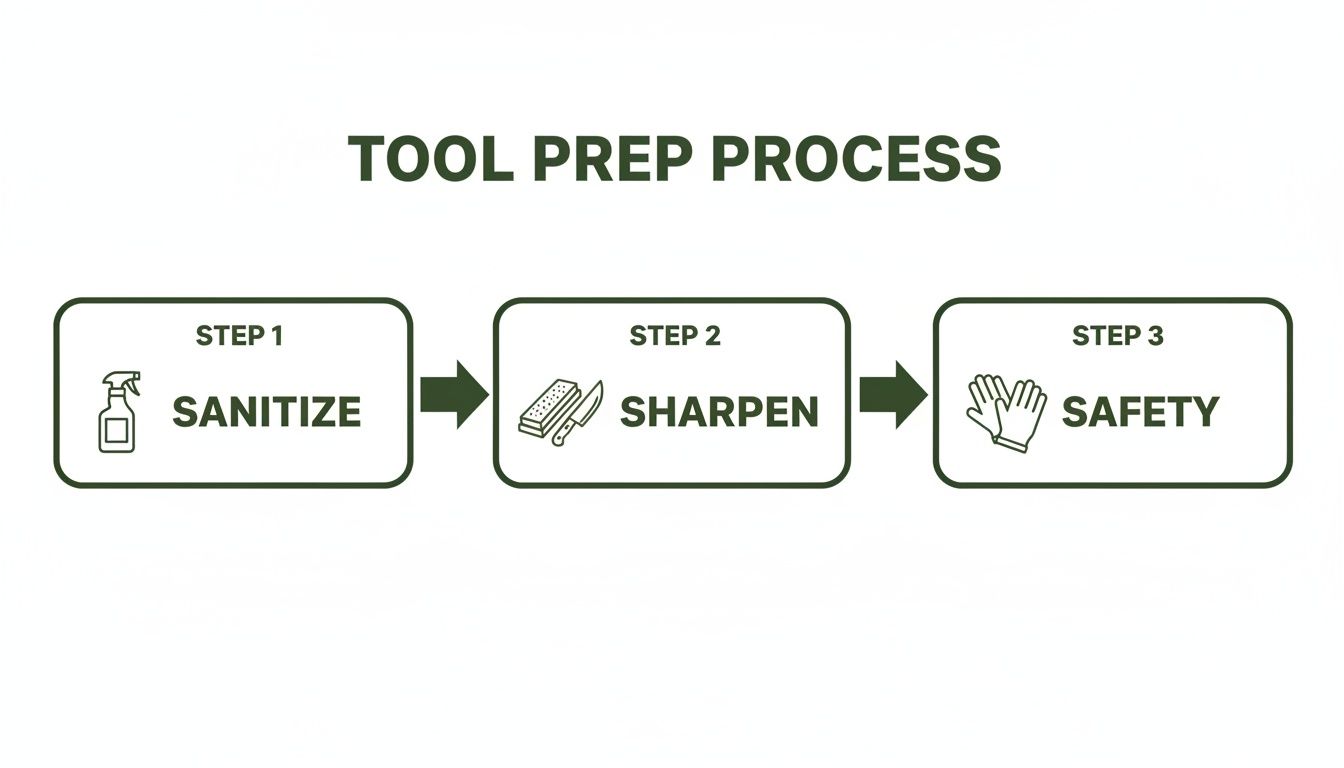
It really drives home that sanitising, sharpening, and safety are the three pillars of good tool prep. It's about protecting your plants and yourself. To dig a little deeper into different pruning methods, you can also explore these essential tree pruning techniques.
Rejuvenation: A Fresh Start for Old Shrubs
Every now and then, you’ll come across a shrub that's so overgrown, woody, and bare at the base that a simple trim just won’t cut it. This is where rejuvenation pruning comes in. It’s a drastic move, but it can be incredibly effective. It involves cutting the entire shrub right down to about 15-30cm from the ground.
This kind of hard prune shocks the plant into sending up a whole new flush of vigorous stems from its base, basically giving it a complete restart. It’s a high-impact strategy that’s best for hardy, multi-stemmed shrubs like Duranta, Hibiscus, or old roses that have seen better days. You'll want to do this in late winter, right before the spring growth spurt kicks in, to give the plant a full season to recover. It looks extreme, but it's often the only way to bring an old, tired plant back to its former glory.
Perfecting Your Pruning Calendar for the Perth Climate
In gardening, timing is everything. When it comes to trimming bushes and shrubs, a snip at the wrong moment can do more harm than good, potentially costing you a whole season of flowers or putting your plants under serious stress.
Perth's unique Mediterranean climate—with its hot, dry summers and mild, wet winters—demands its own rhythm for garden care. Following a generic pruning guide just won’t work here. A shrub that loves a winter trim in a cooler climate might really struggle if you prune it during our peak summer heat. Getting in sync with this local rhythm is the secret to healthier plants and more spectacular blooms, year after year.
The Golden Rule of Pruning
Honestly, a practical tip that will guide most of your timing decisions is knowing the difference between plants that flower on new wood versus old wood. This one bit of knowledge will guide 90% of your timing decisions.
Shrubs Flowering on New Wood: These plants grow their flowers on the new stems that shoot up this season. Think of summer favourites like roses and crepe myrtles. The best time to prune them is late winter or the very start of spring, right before they kick into gear. This encourages a big flush of new stems, which are the ones that will carry all the flowers.
Shrubs Flowering on Old Wood: These guys form their flower buds on last year's branches. Spring-blooming shrubs like bottlebrushes (Callistemon) and many Grevilleas are perfect examples. If you prune them in winter, you're literally cutting off all the potential flowers for spring. The right time to get the shears out is immediately after they finish flowering, giving them the rest of the year to grow the wood that will hold next year's show.
Knowing whether your shrub flowers on this year's growth or last year's is the secret to a successful pruning calendar. Get this right, and you'll always have a garden full of blooms.
A Season-by-Season Guide for Perth Gardens
Let's break the year down into a simple, actionable plan. Thinking ahead and preparing your garden for the seasons really pays off. For more ideas, check out our guide on how to get your garden ready for spring.
Late Winter to Early Spring (July-August) This is prime time for big structural pruning jobs, especially for those summer-flowering shrubs and for tidying up many of our natives. The plants are still dormant but are just about to burst into life, which means they'll heal up quickly.
Late Spring to Early Summer (October-December) Once your spring-flowering shrubs have finished their dazzling display, it's their turn. Prune them back as soon as the flowers fade to shape them up and encourage healthy new growth that will carry next year's buds.
High Summer (January-February) Tread carefully now. You want to avoid any heavy pruning during Perth’s intense summer heat. The combination of high temps and harsh sun can really stress a freshly cut plant, leading to sunburn on the leaves and branches. Just stick to some light tip pruning or deadheading to keep things looking tidy.
Autumn (March-May) As the weather cools down, autumn offers a great window for a general garden tidy-up. It’s a good time for a light shaping of evergreen hedges and shrubs to keep them looking sharp through the winter months.
Seasonal Pruning Guide for Common Perth Shrubs
To make things even easier, here’s a quick-reference table for some local favourites you'll find all over Perth.
Shrub Type | Primary Pruning Season | Notes and Tips |
|---|---|---|
Roses (Hybrid Tea, Floribunda) | Late Winter (July) | Prune them back hard to encourage strong new flowering stems. Always remove any dead or crossing canes. |
Bottlebrush (Callistemon) | After Flowering (Late Spring) | Trim just behind the spent flower heads. This promotes a really dense, bushy shape instead of a leggy one. |
Grevillea | After Flowering (Varies) | Give them a light prune to keep their shape. Be careful not to cut into old, bare wood as it often won't reshoot. |
Hibiscus | Early Spring (August) | Cut them back by about one-third. This encourages vigorous new growth and much larger flowers. |
Westringia (Coastal Rosemary) | Late Spring or Autumn | You can trim these lightly almost any time of year to maintain a dense, formal shape. They're very forgiving. |
Getting the hang of this seasonal calendar will completely change how you approach trimming your bushes and shrubs. It stops being guesswork and becomes a strategic part of making your garden look its best.
If you’re ever unsure about a specific plant or have a big pruning job that feels a bit daunting, don’t hesitate to get in touch. Contact Swift Trees Perth for all your professional tree maintenance needs and let our experienced team help your garden thrive.
Common Pruning Mistakes and How to Avoid Them
Even gardeners with the greenest thumbs can make a pruning mistake. When you’re trimming bushes and shrubs, a simple slip of the secateurs can easily set a plant back for an entire season. But the good news is, most of these common errors are easy to sidestep once you know what you’re looking for.
Learning what not to do is just as important as learning the right techniques. Think of it this way: every cut you make sends a message to your plant, and you want to be sure you're sending the right one.
Avoiding the Dreaded 'Topping' Cut
One of the mistakes we see is ‘topping’ a shrub—that’s when someone lops off all the main branches at the same height, giving it a flat-top look. It's usually a panic move to quickly shrink an overgrown plant.
But the result is a mess. The plant responds by sending up a thicket of weak, vertical shoots, creating an ugly, broom-like shape that’s structurally weak. Topping destroys the plant's natural form and the large, flat wounds become an open invitation for pests and disease. The better approach is always to use thinning cuts to reduce size while keeping the plant's shape and integrity intact.
A topped shrub is a stressed shrub. It reacts by sending up a flurry of weak growth, making it more vulnerable to pests, diseases, and storm damage. Always work with a plant's natural structure, not against it.
Finding the Right Balance: Too Much vs. Too Little
Pruning takes a bit of confidence, but that confidence can sometimes lead to mistakes at both ends of the scale. The real skill lies in finding that sweet spot between cutting too much and not cutting enough.
Timid Trimming: Being too cautious doesn't do much good. Just snipping the very tips of branches won't improve air circulation or remove old, unproductive wood. The shrub stays dense, cluttered, and more prone to problems.
Over-Pruning: On the flip side, getting too carried away is just as bad. Hacking off more than one-third of a shrub’s mass in one go can send it into shock. This depletes its energy reserves and makes recovery a real battle.
A good rule of thumb is to start by removing the 'Three Ds' (dead, damaged, and diseased wood). Then, step back, have a good look at the plant’s shape, and decide what to trim next.
The Anatomy of a Perfect Cut
How you make the cut is just as critical as where you make it. A frequent error is leaving a stub—a short bit of branch sticking out from the main stem. These stubs can’t heal over. They just die back slowly, creating a perfect entry point for insects and rot.
A proper cut should be made just outside the branch collar, which is the slightly swollen ring of tissue where the branch joins the stem. This lets the plant’s natural defences seal the wound properly. Likewise, when you’re shortening a stem, always cut about 6mm above a healthy, outward-facing bud. This encourages new growth to head out and away from the plant's centre, promoting better airflow and a more open structure.
By sidestepping these common mistakes, you’re not just tidying up your garden—you're playing an active role in the long-term health and strength of your plants. It’s all about pruning with purpose.
If you’re staring down an overgrown garden and feel out of your depth, professional help is only a call away. Contact Swift Trees Perth for professional and reliable tree maintenance services to get your shrubs pruned for perfect health and shape.
When to Call in a Professional for Your Garden
Look, while a bit of weekend pruning can be incredibly satisfying, some jobs just grow beyond the scope of a DIY project. Knowing when to hang up the shears and call in an expert is crucial—not just for the health of your garden, but for your safety and your property's integrity.
Sometimes, it's a simple matter of scale. That once-manageable lilly pilly hedge that’s now towering over your fence line? Tackling that safely and effectively requires specialised gear like elevated work platforms and long-reach trimmers. Trying to manage shrubs of that size without the right equipment isn't just a tough job; it's downright dangerous.
Situations That Demand an Expert Eye
Beyond just the sheer size of the plant, a few other scenarios are clear signals that it’s time to get a professional involved. These are the moments where a simple mistake could have pretty serious consequences.
Keep an eye out for these indicators:
Proximity to Hazards: If any trimming needs to be done near powerlines, it's a non-negotiable job for a qualified professional. The risk of electrocution is just too severe to even think about.
Complex Plant Health Issues: Have you noticed signs of serious disease, a stubborn pest infestation, or significant dieback? A quick trim might not be the fix. An arborist can properly diagnose the root cause and map out a treatment plan to actually save the plant.
Large-Scale Garden Overhauls: Planning a major garden renovation or trying to resurrect severely neglected, overgrown shrubs requires a strategic touch. Going in too hard can fatally stress the plants, undoing all your hard work.
It's no surprise that more and more Perth homeowners are turning to the experts. The Gardening Services industry in Australia has seen a 2.2% annual growth over the last five years and is now valued at around $4.1 billion. This isn't just a number; it shows a growing understanding that improper trimming can create real hazards and damage valuable plants.
When safety is on the line or a plant's survival is uncertain, calling a professional isn't an admission of defeat—it's a smart investment in your property's value and your own peace of mind.
If you're keen to deepen your own knowledge, pursuing a Certificate of Horticulture is a great way to understand what the pros know. It also helps to understand the specific role of an arborist and when their specialised skills are required; you can learn more in our quick guide on the topic.
For any job, big or small, don't hesitate to reach out for advice. For expert care and a free, honest quote in the Perth area, contact the experienced team at Swift Trees Perth to handle all your tree maintenance needs.
Your Shrub Trimming Questions, Answered
Got a few lingering questions? It's completely normal. Here are some quick, straightforward answers to the things Perth homeowners most often ask us about keeping their shrubs in top shape.
How Often Do My Shrubs Need a Trim?
Honestly, it all comes down to the plant itself and the look you're going for. If you've got formal hedges, they'll need a light tidy-up every four to six weeks during the main growing season (spring and summer) to keep those lines crisp.
For most other informal shrubs, one good structural prune a year is usually plenty. The best thing you can do is just watch your plants. Fast growers like lilly pilly or Duranta will let you know when they're getting unruly and need more regular attention to keep them from taking over.
Is It Possible to Kill a Shrub by Pruning Too Hard?
In a word, yes. It's a common mistake we see. Hacking off more than a third of the plant's total growth at once sends it into shock. This severe stress makes it an easy target for pests and diseases, and sadly, it might not bounce back.
Some tough, hardy shrubs can handle a drastic 'rejuvenation prune', but it’s a high-stakes move best left for very specific, overgrown situations. If you’re staring at a huge, tangled shrub and feel unsure, the safest bet is to trim it back gradually over a couple of seasons. Or, just give an expert a call.
What’s the Difference Between Trimming and Pruning?
Great question. People use these terms interchangeably all the time, but for us in the business, they mean slightly different things.
Trimming is all about the aesthetics—the haircut, if you will. It’s about shaping the outside of the plant to keep it looking neat. Think of shearing a hedge into a perfect rectangle or neatening up a topiary ball.
Pruning, on the other hand, is more like a health check-up. This is where you selectively remove specific branches—the dead, diseased, or awkward crossing ones—to improve the plant's overall structure and health. It lets more light and air into the centre, encouraging strong, vibrant growth from the inside out.
A truly great garden needs both. Trimming creates that beautiful, polished look, while smart pruning builds the healthy foundation that makes it all possible.
Feeling confident is key, but some jobs are best left to the experts. For safe, professional tree and shrub care that enhances your garden's health and beauty, contact Swift Trees Perth today for a free, no-obligation quote. Our team has the skills and equipment to handle any challenge, ensuring your garden looks its absolute best.

Comments