
Perth Guide: How to kill a tree stump for good

That stubborn tree stump isn't just an eyesore; it's a tripping hazard, a magnet for pests like termites, and a major obstacle standing between you and your dream garden layout.
To finally kill a tree stump and reclaim your space, you have a few solid options.
You can speed up its natural decay with chemical treatments, take a slower but more natural approach, or go for immediate results with physical removal, either by hand or with professional grinding.
Reclaiming Your Garden From Unwanted Stumps
For Perth homeowners, dealing with an unwanted tree stump is a common backyard battle. It’s far more than just an aesthetic issue—a lingering stump can quickly become a significant problem. Over time, it can attract termites, ants, and other pests that might eventually threaten your home. It can also host nasty fungal diseases, like Armillaria root rot, which can spread through the soil and infect the healthy plants you actually want in your garden.
Beyond the biological risks, a stump just plain gets in the way. It stops you from levelling out your lawn, planting a new garden bed, or setting up that perfect outdoor entertaining area. It’s a dead end for your landscaping plans and a constant, frustrating reminder of a job half-done.
Fortunately, you have several ways forward. Each one strikes a different balance between cost, effort, and how quickly you get the job done.
Making the Right Choice on how to kill a tree stump for good
Deciding on the best method usually comes down to three things: how quickly you need it gone, your budget, and how much sweat you're willing to put in.
Patience and a Small Budget: If time is on your side, natural or chemical decay methods are very cost-effective and require minimal physical labour.
Immediate Results: For those who want the problem solved now, manual removal or professional stump grinding offers instant gratification, though with a higher price tag or a lot more effort.
Safety and Convenience: For big, stubborn stumps or those sitting dangerously close to structures, calling in the professionals is easily the safest and most efficient solution.
This quick decision tree helps you visualise the options based on whether speed, cost, or ease is your top priority.
The guide shows that while DIY methods can be cheaper, professional grinding is the fastest and often easiest way to get complete removal. Understanding these trade-offs is the first step toward getting your garden space back.
It's also worth remembering the stump is only half the story. The root system can be just as problematic. You can learn more about how to remove tree roots without damaging your property in our detailed guide. If the whole job feels too big or complex, don't hesitate to reach out.
Comparing Stump Removal Methods at a Glance
To make your decision even easier, here’s a quick breakdown of the most common stump removal methods we see here in Perth. This table compares them side-by-side, so you can see the trade-offs at a glance.
Method | Effectiveness | Typical Cost | Effort Level | Timeframe |
|---|---|---|---|---|
Stump Grinding | High (Complete Removal) | Moderate to High | Low (for you) | 1-3 hours |
Chemical Removal | Moderate (Kills & Softens) | Low | Low | 6-12 months |
Manual Removal | High (If successful) | Low (DIY) | Very High | 1-2 days |
Burning | Moderate (Surface level) | Low | Moderate | Several hours |
Natural Decay | Low (Slowest method) | Free | Very Low | 3-7 years |
As you can see, there’s no single "best" answer—it all depends on your priorities. If you need that space cleared for a project next weekend, grinding is your only real option. But if you're happy to wait and want to save some money, a chemical approach might be perfect.
Chemical Solutions and Natural Decay Methods
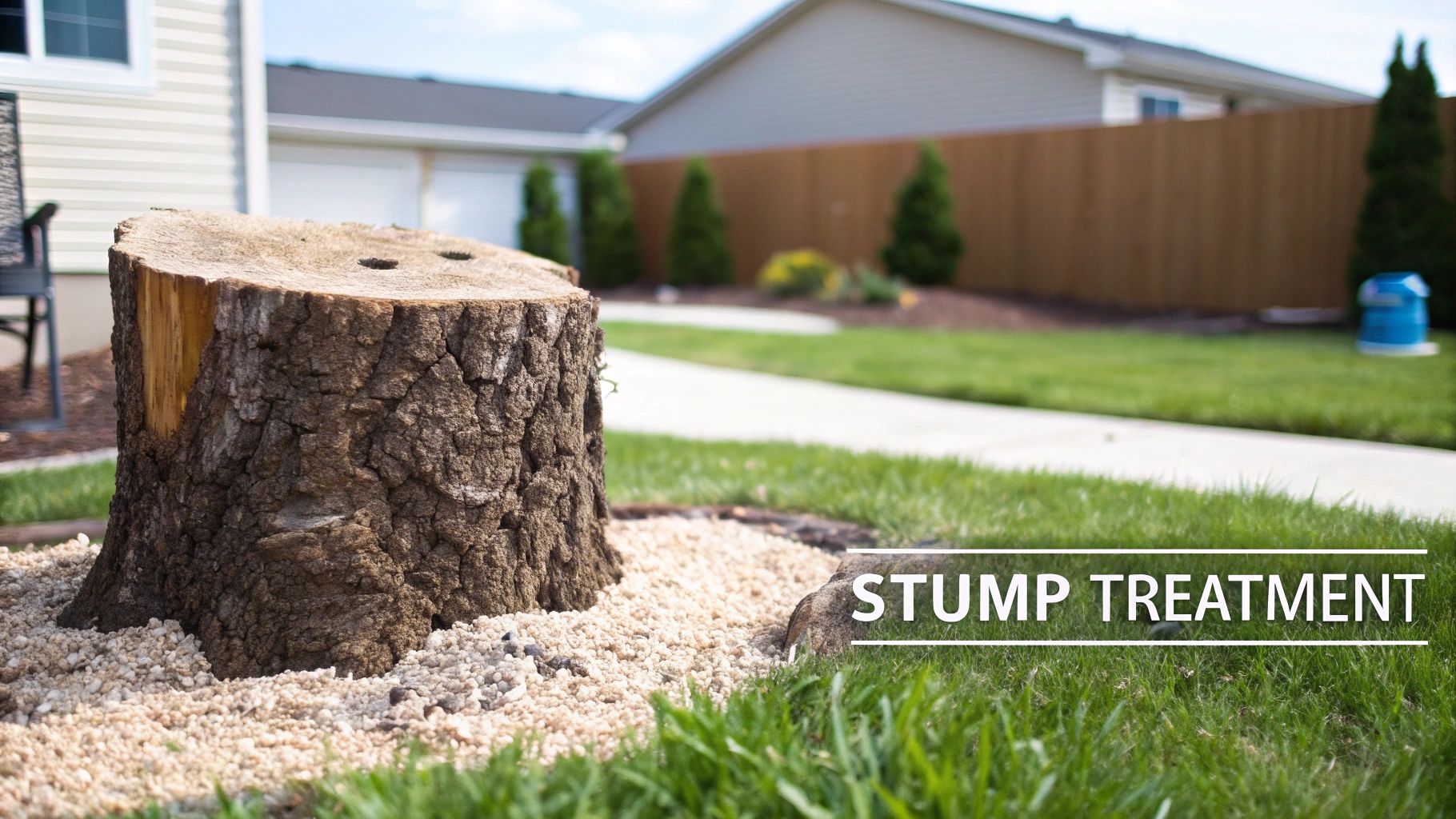
When you decide to kill a tree stump, you’re really choosing between speed and patience. On one end, you have chemical treatments that fast-track the rot, and on the other, you have natural decay methods that take a gentle, hands-off approach. Both paths will get you there, but the journey is very different.
The chemical route is a favourite for DIYers because it’s effective without demanding a lot of physical effort, and it won't break the bank. These substances work by supercharging the natural decomposition process, turning solid wood into a soft, spongy mess that’s easy to break up and haul away. It's the perfect middle-ground if you aren't in a massive hurry but want a low-labour solution.
Then there's natural decay—the ultimate "set it and forget it" method. This is for the eco-conscious gardener who'd rather skip the chemicals and let nature do its thing, maybe with a little nudge. It demands the most patience but costs virtually nothing and has zero impact on your garden's ecosystem.
Accelerating Decay With Chemical Stump Killers
For a solution that's much faster than nature alone, chemical stump killers are incredibly effective. These products don't just dissolve the wood; they create the perfect environment for fungi and bacteria to thrive, causing the stump to rot away from the inside out.
The most common active ingredient you’ll come across is potassium nitrate. Think of it as a high-energy feast for the microorganisms that break down wood. It provides a huge dose of nitrogen and acts as a powerful oxidiser, giving these tiny decomposers everything they need to tear through the tough lignin and cellulose in the wood at a rapid pace.
Proper application is everything here, both for success and for safety.
The goal is to get the chemical deep into the heart of the stump.
The timeline can vary wildly, from a few months to over a year. A dense Perth hardwood like Jarrah will put up a much longer fight than a soft pine stump. Check on it every few months. Once it’s soft and spongy, you can easily break it apart with an axe.
Using Epsom Salt: A Slower, Gentler Option
If you're wary of potent chemicals but still want to give nature a boost, Epsom salt (magnesium sulphate) is a popular alternative. It works differently from potassium nitrate. Instead of feeding the decomposers, Epsom salt kills the stump by drawing all the moisture out of the wood, effectively dehydrating it.
The process is the same: drill holes, fill with Epsom salt, add water, and cover. Just be prepared for a longer wait. You'll likely need to reapply the salt every few weeks as it gets absorbed. While it's considered more garden-friendly, be aware that high concentrations of magnesium sulphate can still mess with the nutrient balance in your soil, so apply it carefully.
The Organic Approach: Encouraging Natural Decay
For anyone wanting a completely chemical-free method, you can kill a tree stump just by creating an environment that encourages decomposition. This is by far the slowest method, potentially taking several years, but it's also the most environmentally friendly and requires the least amount of upfront work.
The whole trick is to create a dark, moist, and nitrogen-rich spot right on top of the stump. This is like putting out a welcome mat for all the fungi, bacteria, and insects that love to break down wood.
Steps to Speed Up Natural Rot:
Add Nitrogen: Pile high-nitrogen organic materials directly onto the stump. Fresh grass clippings, kitchen compost, or aged manure are all fantastic options. This is the "food" the decomposers need.
Cover to Trap Moisture: Cover the entire pile and stump with a dark tarp or a thick plastic sheet. Use bricks or rocks to weigh down the edges, blocking out all sunlight and trapping moisture inside.
Be Patient: Now, you just let nature do its thing. Over many months and years, that combination of darkness, moisture, and nitrogen will turn the stump into rich, crumbly soil.
This method essentially composts the stump right where it stands. It won’t clear the space overnight, but if the stump is tucked away in a corner of your garden, it's a wonderfully low-impact solution.
Manual Removal and Professional Stump Grinding
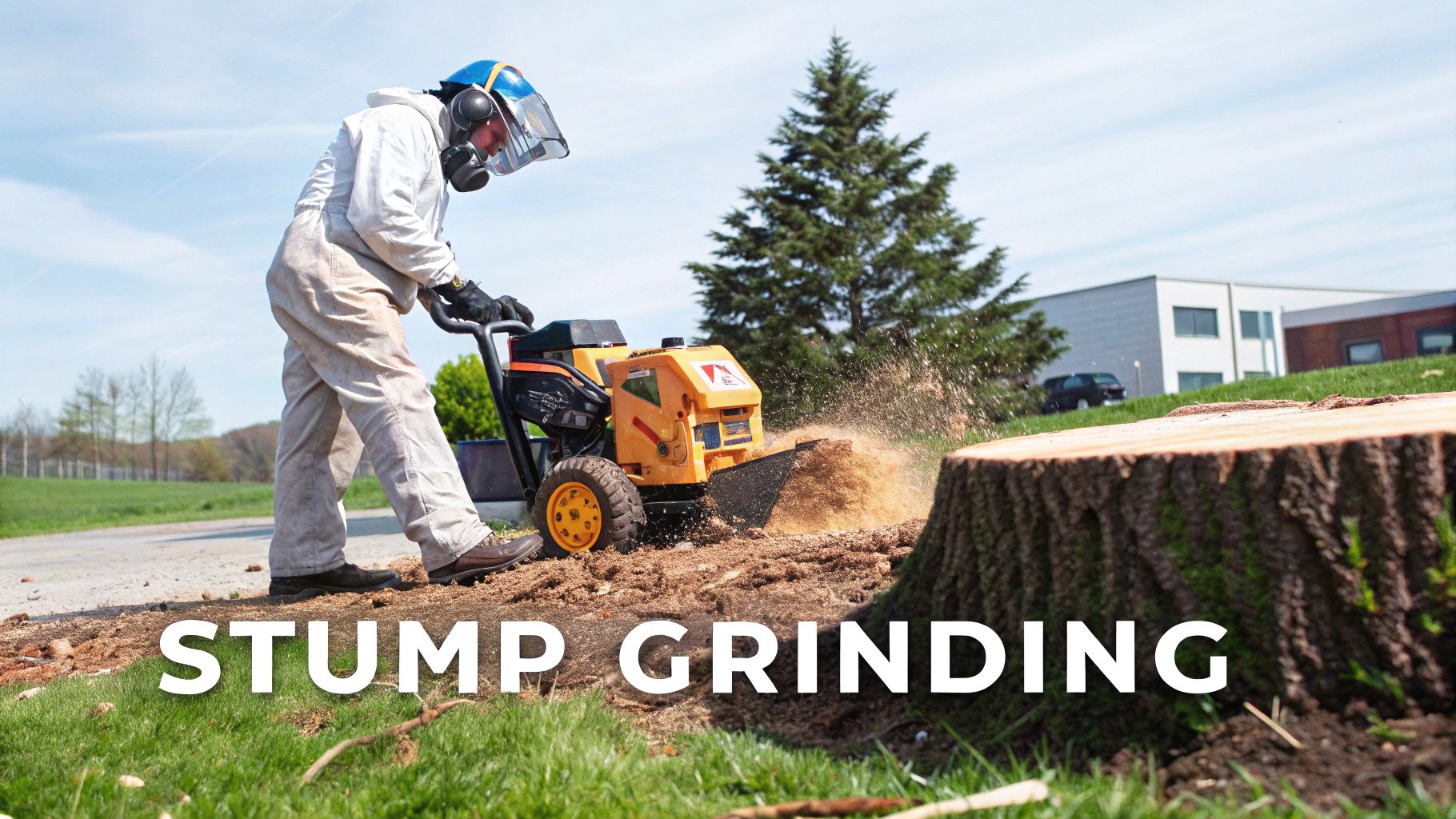
Sometimes, patience just isn't an option. When you're staring at an ugly stump that’s holding up your landscaping plans, waiting months or years for chemical or natural decay to work its magic feels like an eternity. If you want that stump gone by the end of the weekend, you need a more direct approach.
This is where active removal comes in. You’ve got two main paths: the old-fashioned, back-breaking effort of digging it out by hand, or the fast, efficient power of professional stump grinding. Both get the job done, but the cost, effort, and experience are worlds apart.
The Honest Truth About Manual Stump Removal
Going the manual route is all about pure grit and determination. You're literally digging, chopping, and wrestling a stump out of the ground with your own two hands. It can be a fantastic option for smaller stumps from shrubs or young trees, and there's a real sense of accomplishment when you finally pull that last root free.
But let's be realistic: this is seriously hard work.
It's you versus a stubborn, tangled network of roots anchored deep in the ground.
Even a small gum tree stump, say 30cm in diameter, can put up a hell of a fight.
You could easily spend hours with a shovel and mattock, battling through Perth’s tough, clay-like soil just to expose the main anchor roots.
Essential Gear for the Fight:
Heavy-Duty Shovel and Mattock: Your primary weapons for digging a trench around the stump and breaking up that compacted earth.
Axe or Root Saw: Once the roots are exposed, you need something sharp to sever them. A reciprocating saw with a pruning blade can be a lifesaver here.
Digging Bar: This heavy steel bar is your best friend for prying and leveraging the stump once the main roots are cut.
The process itself is straightforward but gruelling. You dig a wide trench, hunt down every major root you can find, cut it, and then use the digging bar to wrench the stump out. It’s a rewarding project, but only if you have the physical stamina and a weekend to spare.
The Ultimate Solution: Stump Grinding
When you’re up against a big, dense hardwood stump—or you simply value your time and your back—stump grinding is the undisputed champion. This isn't about removal; it's about complete obliteration. A powerful machine with a high-speed cutting wheel methodically chews away at the stump.
The grinder turns the entire stump and its main root ball into a pile of wood chips and mulch, grinding it down to 15-30cm below ground level. This effectively erases it from your landscape, letting you immediately fill the hole with soil and plant grass, a new garden bed, or whatever you had planned.
Stump removal in Australia is dominated by professional grinding for a good reason. Stumps are incredibly tough, and specialised machinery gets the job done right. Most Aussies choose to hire the pros, with jobs typically costing anywhere from $350 to $800 or more, depending on the stump's size and how easy it is to get to.
Stump grinding isn’t just about brute force; it’s about precision. A skilled operator can navigate around underground pipes, paving, and delicate garden beds, making sure the stump is removed without causing any collateral damage.
Renting vs. Hiring: Which is Right for You?
You can rent a stump grinder, but it’s a decision that needs careful thought.
These machines are powerful, heavy, and can be dangerous if you don’t know what you’re doing. For a one-off job, hiring a professional is almost always the smarter, safer, and more cost-effective choice.
Think about it: you rent a grinder for a big Jarrah stump. You’ve got to sort out transport, figure out how to operate it safely, and then spend hours grinding it down.
In contrast, a professional crew like Swift Trees Perth can often have the same job done in under an hour, handle the clean-up, and they’re fully insured. It’s worth knowing what you’re paying for; our guide on the difference between stump grinding and stump removal in Perth can help clarify what's best for your yard.
Ultimately, the choice between manual removal and professional grinding is a trade-off: your money versus your time and effort. For a small stump and a tight budget, a weekend of hard yakka might be worth it. For anything larger, tougher, or more complex, letting an expert handle it is an investment in safety, speed, and a perfect result.
Understanding Stump Removal Costs in Perth
Let's be honest, budgeting is usually the first thing on your mind when you decide to kill a tree stump. The final figure on the invoice can swing wildly, so getting a handle on the key cost drivers here in Perth is essential for making a smart decision. It's never just about the stump's size; it’s a mix of the method you pick, the type of tree, and how tricky the job itself is.
The DIY route, especially with chemical stump killers, looks like the cheapest option at first glance. You’re looking at the cost of some potassium nitrate, maybe a new drill bit, and a tarp. All up, you might get away with spending less than $50. The real cost here, though, is time. This method is a slow burn and can easily take a year or more to work, putting all your garden plans on hold indefinitely.
When you need that stump gone now, the costs start to climb. Hiring a stump grinder for the weekend might seem like a good middle ground, but it has its own set of expenses. You've got the rental fee, the fuel, potential delivery charges, and the cost of proper safety gear. A one-day rental in Perth can easily set you back a few hundred dollars before you’ve even pulled the starter cord.
Breaking Down Professional Quotes
Hiring a professional service like Swift Trees Perth gives you the clearest outcome, but the quote will be based on a few specific things. An experienced arborist doesn't just see a stump; they assess the entire situation.
Diameter is King: The biggest factor, hands down, is the stump's diameter, measured at its widest point right at ground level. A little 20cm stump is a quick job. A massive 100cm stump from an old gum tree? That’s a different beast entirely, needing more time, more powerful gear, and a lot more grunt work.
Wood Density Matters: The type of tree makes a huge difference. A soft pine stump grinds away without much fuss. On the other hand, a dense, stubborn hardwood like a Western Australian Jarrah or Marri will put up a serious fight, dulling the grinder's teeth and demanding more power—all of which gets factored into the price.
Accessibility and Complexity: Is the stump sitting pretty on a flat, open lawn, or is it wedged between a retaining wall and your prize-winning roses? Tricky access, sloping ground, or a complex root system tangled around pipes or paving will add to the labour time and, naturally, the cost.
Real-World Perth Scenarios
To put it all into perspective, let's talk numbers. Across Australia, the cost to get rid of a tree stump can be all over the place. While the average cost hovers around $225, it can be as low as $40 for a simple job or shoot past $1,000 for a true monster.
Here’s a practical example: grinding a 50cm softwood stump might cost you around $100. A hardwood stump of the exact same size could easily be double that at $200—a perfect illustration of how wood density impacts the final bill.
When you're weighing up your options, think about the total value, not just the upfront price. A professional service brings expertise, efficiency, insurance, and the peace of mind that the job will be done safely and correctly, with no nasty surprises or damage to your property.
For a deeper dive into local pricing, check out our detailed guide on the real cost of removing a tree stump in Perth, which breaks it down with even more specific examples.
Ultimately, you're balancing your budget against your timeline and the effort you're willing to put in. A DIY chemical approach is cheap, sure, but it's a marathon, not a sprint. For immediate, guaranteed results without the risk and hassle, calling in a professional is an investment in your property.
Safety Measures and Perth Council Rules
Before you even think about tackling that stump, it’s crucial to shift your focus from how to how safely. It’s easy to underestimate the risks, but overlooking safety and local Perth regulations can quickly turn a weekend project into a dangerous and costly disaster. Each removal method has its own set of hazards that demand respect.

Chemical and Physical Safety
If you're using chemical stump killers like potassium nitrate, your personal protective equipment (PPE) is non-negotiable. At the very least, you’ll need thick, chemical-resistant gloves and wrap-around safety glasses. A stray splash of these potent chemicals can cause serious skin irritation or eye damage in a heartbeat.
You also need to protect your garden. To stop chemical runoff from poisoning your prized roses or veggie patch, build a small mound of soil around the stump's base before you pour. This simple barrier contains any spills and makes sure the solution goes exactly where it's needed—into the stump.
For the more hands-on methods like manual digging or stump grinding, the safety checklist gets longer. Digging a stump out by hand involves a lot of repetitive bending, heavy lifting, and forceful chopping, which puts your back, shoulders, and knees at risk. Always lift with your legs, not your back, and wear steel-capped boots to save your toes from a misplaced axe or mattock.
Stump grinders are incredibly powerful machines and demand your full attention.
The noise they make can easily top 85 decibels, the point where hearing damage can occur.
Good quality earmuffs or earplugs are an absolute must. Flying debris is another major hazard, so safety glasses and sturdy work boots are essential.
A little tip from the field: modern safety gear is so much better than it used to be. It’s not just about function anymore; it’s designed for comfort. You can get lightweight, breathable work shirts with UV protection and flexible gloves that don’t ruin your dexterity. Investing in gear you'll actually want to wear is one of the smartest safety moves you can make.
Navigating Perth Council and Utility Rules
Beyond your personal safety, you’ve got to think about your legal responsibilities. The good news for Perth residents is that removing a dead stump on your private property generally doesn’t require a council permit. However, that can change if the tree was a protected species before it was removed or if the stump is on the verge.
The most critical check you absolutely must perform is for underground services. Hitting a water main, gas line, or communications cable with a grinder—or even just a shovel—can lead to massive repair bills and create a seriously dangerous situation.
Luckily, there’s a free and essential service to stop this from happening.
Dial Before You Dig: Before you start any digging, you must contact Dial Before You Dig online. They provide plans from all the local utility companies showing the approximate location of underground pipes and cables on your property. This is a non-negotiable first step for any excavation.
Finally, while burning might seem like a simple, old-school way to kill a tree stump, it's almost never a legal or practical option in suburban Perth. Most councils have strict fire restrictions, especially during the high-risk summer months. Getting a permit for an open-air fire is next to impossible.
When the DIY risks and the maze of local rules start to feel like too much, it's a clear sign to call in the professionals.
When to Call in a Professional for Stump Removal
While there’s a certain satisfaction in a DIY job well done, some projects are best left to those with the right tools and expertise. Knowing when to put down the shovel and pick up the phone is often the smartest move a homeowner can make, especially when a stubborn stump stands in your way.
There are a few clear signs that a stump is well beyond a weekend project. If you're dealing with a massive hardwood stump, particularly from a dense species like Jarrah or Marri, the physical effort or chemical wait time just isn't practical. Its sheer size and deep root structure demand the power of commercial-grade equipment.
Scenarios Demanding Expert Help
Certain situations introduce risks that only a professional is equipped to handle safely. If you’re facing any of these challenges, calling in an expert is the most sensible choice.
Proximity to Structures: Stumps right next to your home's foundation, fences, retaining walls, or underground utilities need precision. One wrong move can lead to some seriously expensive damage.
Challenging Terrain: Is the stump on a steep slope or in a hard-to-reach spot? This makes manual removal dangerous and grinder access almost impossible for anyone without specialised gear.
Multiple Stumps: If you need to clear several stumps at once, the time and cost of renting equipment or applying chemicals to each one quickly adds up. A professional service is far more efficient in this case.
The real value of a professional service isn’t just about the heavy machinery. It's their experience in assessing complex root systems, navigating potential hazards, and carrying comprehensive insurance that protects your property from any unforeseen issues.
The Professional Advantage
Of course, cost is a major factor, and pricing varies based on the job's specifics. For a bit of perspective, the cost of stump removal in Melbourne typically ranges from $120 to $500, influenced by local tree types and access.
The type of wood is a key factor here. A 50 cm hardwood stump might cost up to $200 to grind, whereas a softwood stump of the same size could be just $100. Hardwoods common in WA, like Jarrah, are tough work and priced accordingly.
Don't let a difficult stump become a bigger, more expensive problem. For a safe, swift, and correctly handled solution to kill a tree stump and reclaim your yard, it’s time to call in the experts.
Your Stump Removal Questions Answered
If you’re staring at an ugly stump in your Perth garden, you’re not alone. We get asked a lot of the same questions by homeowners trying to figure out the best way forward. Getting the right info helps you pick the best method to kill a tree stump and know what to expect.
How Long Does a Chemical Stump Killer Take?
Let's be clear: using chemical products like potassium nitrate is a waiting game, not an overnight fix. You can realistically expect it to take anywhere from 6 weeks to 12 months for the stump to get soft enough for you to break it apart.
The exact timeline really depends on what you're dealing with. A massive, dense Jarrah stump will stubbornly hang on for much longer than a small pine stump, especially during one of Perth's long, dry summers when the decay process slows right down.
Do the Roots Die With the Stump?
Yes, absolutely. Once the stump is officially dead, it can no longer send nutrients down to its root system. Without that lifeline, the roots effectively starve, die off, and begin to decay in the ground.
This is one reason stump grinding is so effective. It doesn't just chew up the stump; it obliterates the crown and the top section of the main root ball, instantly killing any chance of the tree trying to sprout back.
It's a common myth that the roots will keep spreading once the stump is gone. The truth is, the entire system dies together. As a bonus, those decaying roots will slowly enrich the surrounding soil over the next few years.
Can I Plant a New Tree in the Same Spot?
It's tempting, but it’s best not to. After grinding, the spot will be filled with a mix of wood chips and soil, which isn't the best environment for a new tree to establish strong roots.
For the best results, you should dig out most of this woody mix and backfill the hole with fresh, nutrient-rich topsoil. If you went the chemical route, give it at least a year for any residue to break down. A pro tip is to plant your new tree slightly offset from the old stump’s centre—this gives its roots a much better shot at thriving in undisturbed soil.
Don't let a stubborn stump win the battle for your backyard. For professional advice and a fast, clean solution, Swift Trees Perth has the experience and the right gear to handle all your tree maintenance needs.
Comments