
Cutting Back Fruit Trees A Perth Gardener's Guide

Giving your fruit trees a good prune isn't just a garden chore—it's the key to getting healthier growth and much better harvests with just a few smart cuts. Here in Perth, with our Mediterranean climate, the best time to prune is typically right after harvest. This timing helps prevent diseases and shapes your trees for a fuller, more productive canopy.
Practical example: In one suburban backyard, a carefully pruned peach tree yielded over 60 plump fruits after shaping it into an open vase form—an approach now featured in trendy garden tours across Perth. Urban garden designers in Perth have embraced espaliered fig walls and citrus topiaries as chic, living decor statements.
Why Pruning Is Your Tree's Best Friend
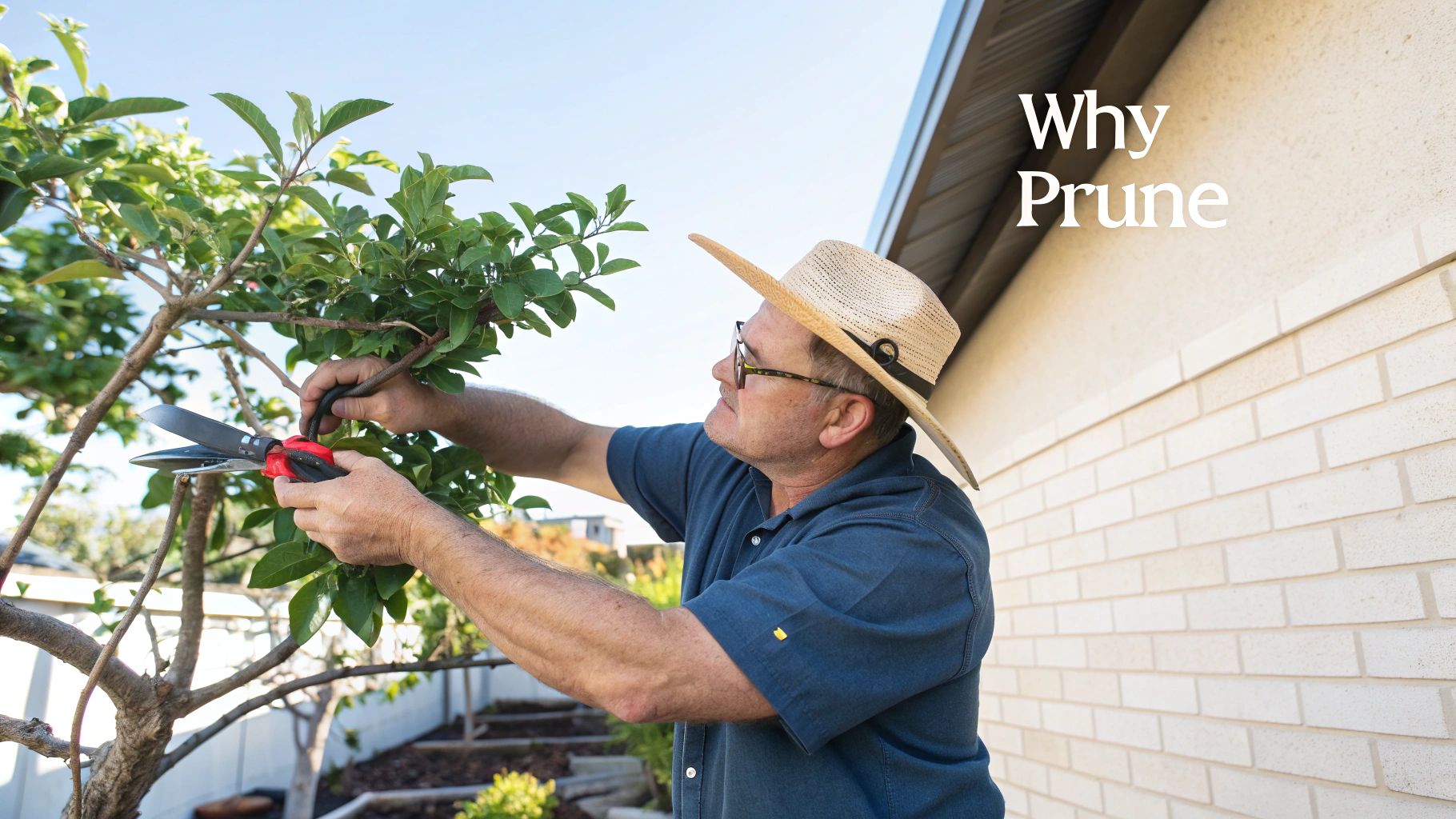
Proper pruning is so much more than just a quick trim. When you do it right, you're removing dead or diseased wood, which immediately boosts airflow through the branches and lets more sunlight reach the ripening fruit. It’s a game-changer.
For example, one local gardener turned her overgrown lemon tree into a stylish, multi-tiered topiary, which not only looks chic but increased fruit yield by 40%.
We're talking about real benefits here:
It gets rid of branches that block sunlight, so your fruit ripens evenly.
It improves air circulation, which seriously cuts down the risk of fungal outbreaks.
It tells the tree where to send its energy—to the strong branches that will produce bigger, better harvests.
In fact, seasoned gardeners often see a 30% increase in fruit size after making strategic thinning cuts. Think about those backyard apricot trees that get overcrowded with "watersprouts"—those fast-growing vertical shoots that just steal nutrients. A few snips can make all the difference.
A balanced canopy can halve the risk of fungal disease and double the potential for blossoms come springtime.
In Perth, our warm winters mean we have to be strategic. For stone fruit like peaches, nectarines, and plums, pruning in late summer avoids a nasty condition called gummosis. Getting the timing right is vital.
Have a Goal for Every Cut
Before you start snipping away, it’s crucial to have a clear plan. Beginners often make the mistake of trimming indiscriminately, which can ruin the tree's shape or lead to weak, bushy regrowth.
Instead, focus your efforts on these targets:
Dead or Diseased Branches: These are the first to go. They're doing nothing for your tree.
Crossing Limbs: Any branches that rub against each other create wounds and invite disease.
Watersprouts: Those upright shoots drain energy and create too much shade.
Renewal Pruning: On older trees, this technique triggers fresh, productive growth.
Renewal pruning, in particular, keeps older trees in the game, ensuring they remain productive for many more seasons. For the home gardener, applying these precise cuts brings immediate rewards.
Fashionable insight: Espaliered apples trained in geometric patterns add a modern art vibe to narrow spaces, making your orchard as stylish as it is productive.
You can also get creative. Modern espalier shapes, where trees like apples and figs are trained flat against a wall, are not only a stylish garden feature but also a brilliant way to maximise a small space. They become living art!
This focus on smart management is reflected across the entire industry. Australia’s fruit production value hit an impressive $6.8 billion in 2023-24, but this success relies on active management as consumer tastes shift. For instance, table grape production fell by 46,000 tonnes while avocado production surged by 36,000 tonnes. It’s a clear signal that gardeners need to be proactive, cutting back underperformers and encouraging the trees that thrive. You can read more about these Australian fruit production trends in the full analysis.
“Pruning isn’t punishment for trees but a roadmap to their best performance,” notes one of our tree surgeons here at Swift Trees Perth.
Regularly cutting back your fruit trees builds a strong framework for future growth. It also means you’re less likely to need drastic, costly tree surgery down the track. Over time, consistent, healthy pruning means fewer diseases and more predictable, bountiful harvests.
Ready to get started? If you’re dealing with large, tangled branches or the job feels a bit beyond simple maintenance, it's always best to get an expert opinion. Contact Swift Trees Perth for reliable tree maintenance that will keep your backyard orchard thriving for years to come.
Your Essential Pruning Toolkit
Before you make a single cut, you need to gear up. Getting your hands on the right tools isn't just about making the job easier—it's absolutely critical for the health of your trees and your own safety. A blunt or poorly chosen tool can crush delicate plant tissue, leaving a ragged wound that struggles to heal and practically rolls out the welcome mat for disease.
Think of your pruning gear as surgical instruments for your garden. The whole point is to make clean, precise cuts that the tree can seal over quickly and efficiently. This is why investing in good quality tools pays for itself, season after season.
Practical example: A Japanese steel pruning saw, with its ultra-sharp teeth, can slice through thick elders smoothly, making it ideal for the sleek lines favoured in minimalist garden designs.
The Tools You Can't Do Without
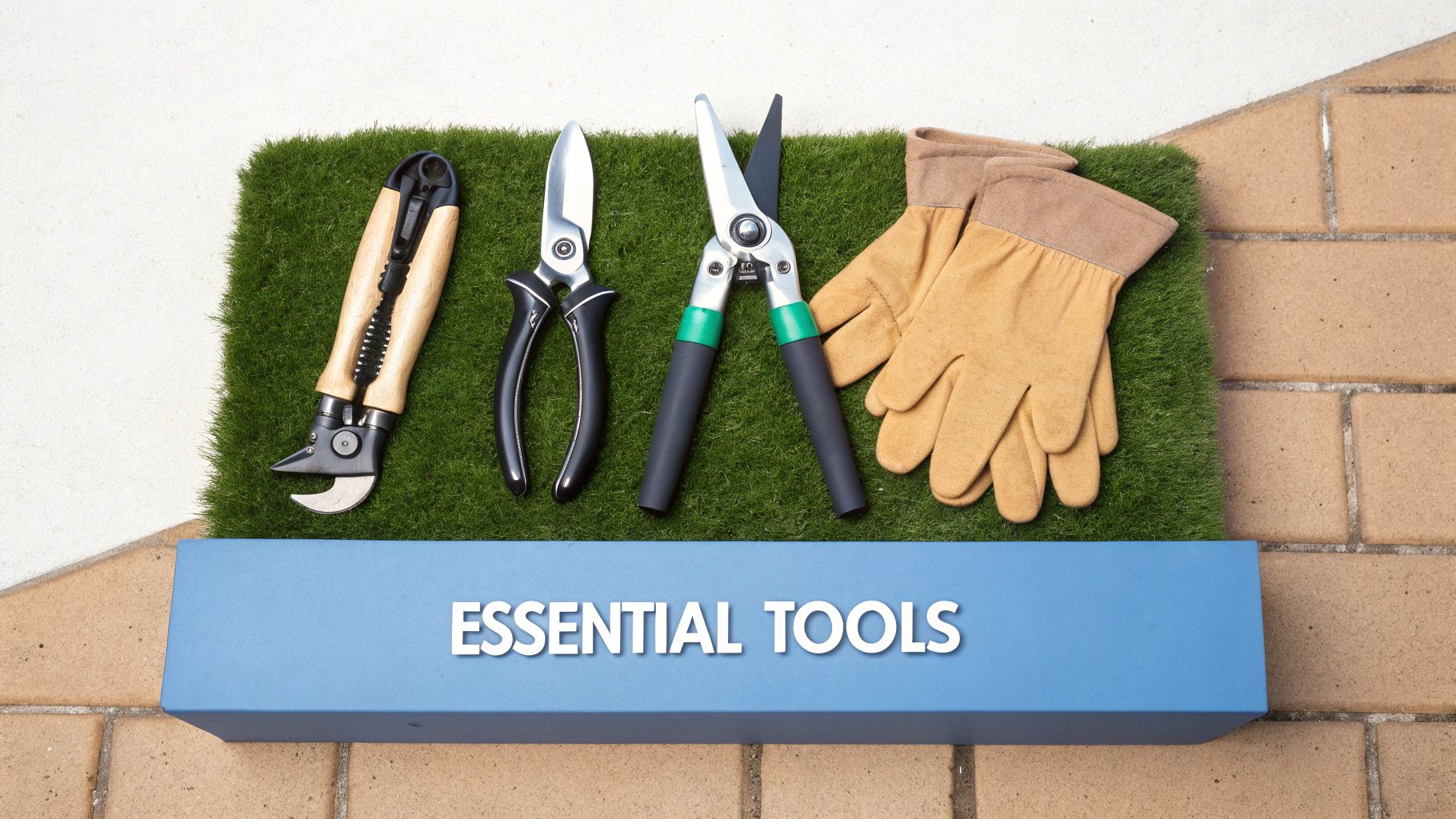
For most backyard orchards here in Perth, you really only need a few key items. Don't get overwhelmed by the wall of options at Bunnings; just focus on mastering these three essentials.
Bypass Secateurs: These are your workhorse for small branches, usually anything up to 2 cm thick. Their scissor-like action slices cleanly through living wood without crushing the cells.
Bypass Loppers: When you graduate to branches between 2 cm and 5 cm, loppers give you the extra leverage you need. The long handles let you reach deeper into the tree and apply more force with far less effort.
A Pruning Saw: For anything thicker than 5 cm, a pruning saw is a must. Its sharp, often curved blade is designed to cut on the pull stroke, which gives you better control and stops the blade from jamming up.
It can be tempting to grab anvil-style pruners, where a single blade crushes down onto a flat surface. While they’re okay for snipping off dead twigs, they are a disaster for live wood. They crush living stems and cause unnecessary damage. Always, always choose bypass tools for live branches.
Get the Right Gear (And Look After It!)
Having the right pruning tools is one thing, but keeping them in top shape is just as important. Here’s a quick rundown of the essentials every Perth gardener should have in their shed.
Essential Pruning Tools and Their Uses
Tool | Best For | Pro Tip |
|---|---|---|
Bypass Secateurs | Small, delicate cuts on branches up to 2 cm. Ideal for shaping and detailed work. | Keep a small whetstone in your pocket to give the blade a quick sharpen mid-job. |
Bypass Loppers | Branches between 2 cm and 5 cm. Great for thinning out a crowded canopy. | Look for a pair with extendable handles. They give you extra reach without needing a ladder. |
Pruning Saw | Limbs thicker than 5 cm. Essential for removing larger, misplaced branches. | Let the saw do the work. Use smooth, long strokes on the pull action for the cleanest cut. |
Gloves | Protecting your hands from scratches, splinters, and sap. | Leather or reinforced synthetic gloves offer the best protection against thorns and rough bark. |
Safety Glasses | Shielding your eyes from sawdust, twigs, and other flying debris. | Make it a habit to put them on before you even pick up a tool. You only get one pair of eyes! |
Methylated Spirits | Sterilising your tools between trees to prevent the spread of disease. | Keep a small rag and a bottle in your tool bucket. A quick wipe is all it takes. |
Properly maintained tools not only perform better but also last a lifetime. A few minutes of cleaning and sharpening after each use makes a world of difference.
Tool Care and Safety First
Sharp, clean tools are your best friend in the garden. They slice effortlessly and are your number one defence against spreading disease. Before you start and after you finish, take a few minutes for some basic maintenance.
Sterilising your tools is one of the most impactful yet overlooked steps in tree care. A quick wipe with methylated spirits between each tree can prevent the spread of fungal spores and bacteria, protecting your entire garden.
Beyond looking after your gear, looking after yourself is paramount. This is especially true when you're working off the ground.
Protect Yourself: A good pair of gardening gloves and some safety glasses are non-negotiable. They’ll save you from countless scratches and stop debris from flying into your eyes.
Ladder Safety: Make sure your ladder is on solid, level ground before you even think about climbing it. And never overreach—it’s always safer to climb down and move the ladder.
Plan Your Cuts: Before you start sawing a larger branch, figure out where it's going to fall. You don't want any nasty surprises for yourself, your fence, or your windows.
Taking these simple precautions ensures every pruning session is a good one. If you're looking at a big job or just don't feel confident tackling it yourself, there's no shame in calling in the pros. The experienced team at Swift Trees Perth has the right equipment and know-how for any tree maintenance job, big or small. Contact us today for a free, honest quote.
A Perth Pruning Calendar For Common Fruit Trees
Timing is everything when it comes to cutting back fruit trees, and Perth's unique climate has its own rulebook. Getting to know your tree's natural rhythm is the real secret to unlocking an impressive harvest. If you get the timing wrong, you could stress the tree or, worse, invite disease. Get it right, and you’ll be rewarded with vigorous growth and baskets of beautiful fruit.
Fashion-forward gardeners are now pairing stone fruit trees with ornamental shrub borders to create a living art installation. The two main pruning seasons offer different benefits. Winter pruning, done when the tree is dormant, is like giving it an invigorating haircut that kickstarts strong, new growth in spring. Summer pruning, on the other hand, is all about management—keeping the tree's size in check and pushing its energy toward ripening the fruit it already has, rather than making more leaves.
Winter: The Season for Big Decisions
For most fruit trees, winter is the main event. It's when you make the big structural calls. With the branches bare, you get a crystal-clear view of the tree's framework, making it easy to spot problems like crossing limbs or branches that are just too close together. This is your chance to make the shaping cuts that will define the tree for years to come.
Deciduous trees like apples and pears are perfect candidates for a winter prune. Here in Perth, from June to August while they're fully dormant, you can safely remove up to a third of last year's growth. This encourages the tree to develop new fruiting spurs and sets the stage for a fantastic spring blossom.
A well-timed winter prune is like a reset button for your tree. By removing unproductive wood, you're telling it exactly where to focus its energy when it wakes up in spring—leading directly to better quality fruit.
But remember, not all trees appreciate a winter trim. It’s crucial to know which ones to leave alone until the weather warms up.
Summer Pruning to Tame the Growth
Summer pruning, usually from December to February, is a more delicate affair. This isn’t about structure; it’s about refinement. You can snip off those vigorous, upright shoots (often called watersprouts) that are shading the developing fruit. A light trim also improves air circulation during Perth's humid spells, which helps keep fungal issues at bay.
Stone fruits—we're talking peaches, nectarines, plums, and apricots—are the stars of the summer pruning show. Pruning these trees in winter can expose them to nasty fungal diseases like gummosis, which causes the tree to ooze a sticky, amber-like sap.
By waiting until late summer, right after you’ve picked the last of their delicious fruit, you give the cuts time to heal in warm, dry weather. For a deeper dive on this, our guide on when to prune fruit trees in Perth offers more detailed advice. This simple timing trick dramatically reduces risk and keeps your stone fruit trees healthy and productive.
What About Evergreen Favourites Like Citrus?
Citrus trees, a staple in so many Perth backyards, are a bit more forgiving and don't really follow the strict dormant/growing season rules. You can give them a light tidy-up pretty much any time of year, just by removing dead twigs from inside the canopy.
For more significant structural work, the best time is late winter or early spring. You want to wait until the risk of frost has passed but get in there before the new spring growth really kicks into gear. This strategy is actually mirrored in large-scale agriculture. Australia’s commercial citrus industry, for example, strategically manages vast orchards of navels and Valencias by cutting back less profitable varieties to focus on premium fruit. You can apply the same logic in your backyard, making smart cuts to encourage the best possible harvest. You can learn more about how the pros do it by checking out these insights on Australia's citrus industry trends.
Knowing when to act is just as important as knowing how to cut. If you're feeling a bit uncertain about the timing or the scale of the job, don’t hesitate to get some expert advice. For any of your tree maintenance needs, contact Swift Trees Perth and our friendly team will help your garden thrive.
Mastering the Most Important Pruning Cuts
Now that you've got the right tools and your timing is sorted, it’s time to get down to the actual cuts. Good pruning isn’t about hacking away lots of wood. It's about making a few smart, deliberate cuts to guide the tree’s growth and make it more productive. Every single snip should have a purpose.
Before you even think about shaping, every pruning session should start with a basic health check. Your first job is always to get rid of what we arborists call the '3 Ds'.
Dead: Look for any branches that are brittle, grey, and show no signs of life. They're just dead weight.
Diseased: Get rid of any wood with cankers, weird growths, or discolouration. Removing this stops the problem from spreading.
Damaged: This includes branches broken by wind, limbs rubbing against each other, or anything else that's been injured.
Cleaning out this unproductive wood is an instant win for the tree's health. It also gives you a much clearer view of its structure, which makes the next steps a whole lot easier.
The Two Cuts Every Gardener Must Know
Once the '3 Ds' are out of the way, your pruning will boil down to two basic types of cuts: thinning and heading. Understanding the difference is critical because they trigger completely different responses from the tree.
A thinning cut removes an entire branch right back to where it started—either at the main trunk or a larger limb. This is your go-to move for opening up a crowded canopy, improving airflow, and letting sunlight get right into the tree's core. It doesn't stimulate a huge amount of new growth, which is perfect for managing the tree's shape without creating a thicket of new shoots.
On the other hand, a heading cut just shortens a branch instead of removing it. This kind of cut encourages growth from the buds just below where you snipped, leading to denser, bushier growth. It’s really useful for encouraging side-branching on young trees to help them develop a strong framework.
The secret to a fast-healing cut is locating the branch collar—that slightly swollen, wrinkled area where a branch joins a larger limb. Always make your thinning cuts just outside this collar, angled away from the trunk. Cutting into the collar damages the tree's natural healing tissues, but leaving a long stub just invites rot.
Shaping Your Tree for Success
Beyond the basic cuts, you can use shaping strategies to turn your fruit tree from a tangled mess into a productive and beautiful feature. The shape you aim for really depends on what kind of fruit you’re growing.
Open Vase Shape: This is the classic choice for stone fruit like peaches, plums, and apricots. You remove the central leader (the main upright trunk) to create a bowl-like shape with three to five main scaffold branches. This structure lets maximum sunlight and air into the centre of the tree, which is essential for ripening stone fruit and preventing disease.
Central Leader Shape: This one is ideal for apples, pears, and cherries. You maintain a dominant central trunk with well-spaced horizontal branches spiralling around it, a bit like a Christmas tree. It creates a very strong and productive structure.
This infographic gives you a simplified seasonal calendar for tackling these cuts here in Perth.
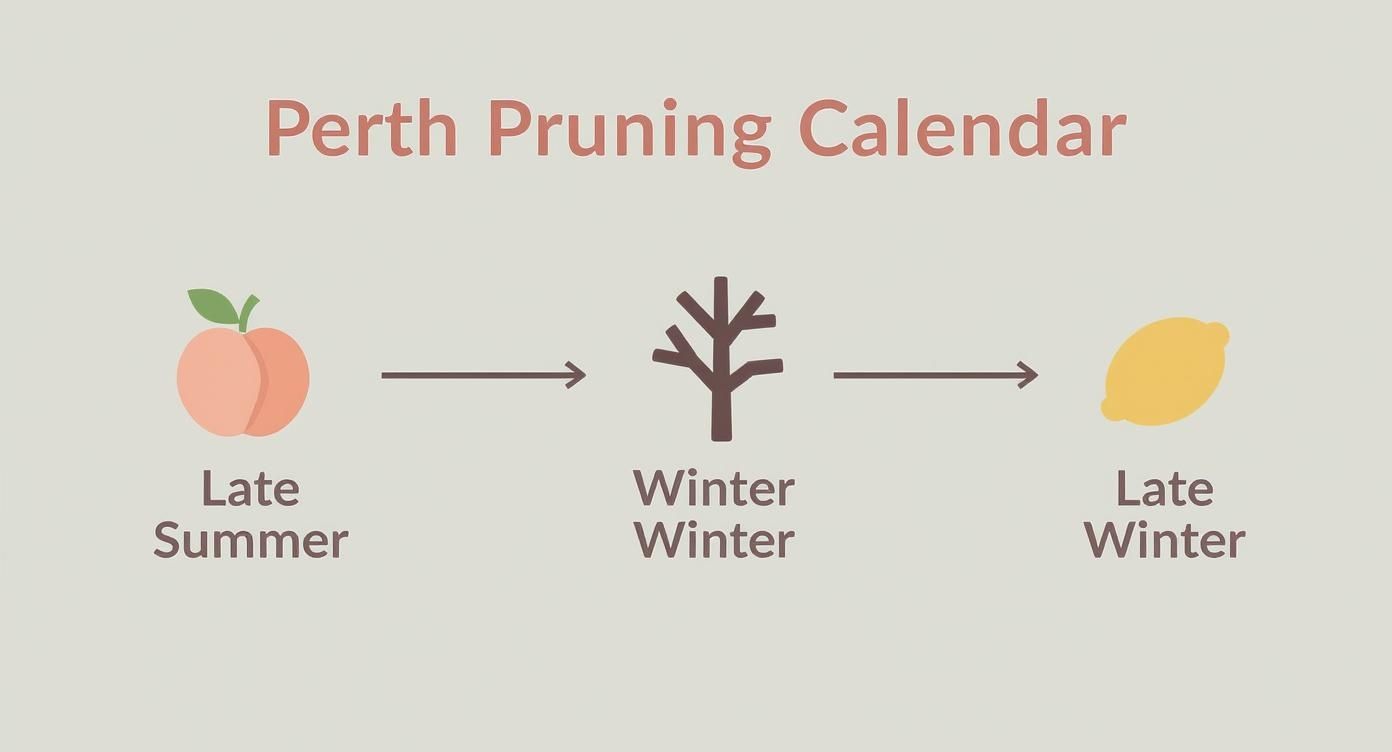
As the guide shows, there are distinct pruning windows for different fruit types. It’s a great reminder to prune stone fruit in late summer and wait to tackle citrus until the risk of frost has passed.
This kind of strategic thinking isn't just for backyard gardeners. The Australian horticultural industry has seen the number of broadacre farms decline by 33% as the industry consolidates. Larger, more specialised farms use aggressive cutting and renewal cycles, removing underperforming trees to boost the whole orchard's productivity. It’s a powerful lesson in just how valuable strategic pruning is.
If you want to dive deeper into these techniques, you might find our guide on how to prune fruit trees for a better harvest helpful.
Feeling a bit overwhelmed by a particularly tangled tree or just not sure where to start? Cutting back fruit trees correctly is a real skill. For professional advice and expert tree maintenance, contact Swift Trees Perth and let our experienced team bring out the best in your garden.
Aftercare and Common Mistakes To Avoid
Your work isn't quite finished once you've made that final cut. Good aftercare is what really sets your tree up for a quick recovery and a bumper crop next season. It all starts with a thorough clean-up.
Don't just leave pruned branches and fallen leaves lying around the base of the tree. That’s like rolling out the welcome mat for pests and diseases. Fungal spores love to hang out on dead plant material, just waiting for a chance to reinfect your tree. Get everything cleared away, and you’ll dramatically reduce the risk of future headaches.
To Seal or Not To Seal
Back in the day, it was common practice to paint over pruning cuts with a sealant. We now know that's one garden myth that needs busting. For the vast majority of cuts you'll make on a fruit tree, it’s far better to let them heal naturally in the open air. A clean, sharp cut made just outside the branch collar is all a tree needs to form its own protective callous.
Pruning sealants can actually do more harm than good. They tend to trap moisture right against the wound, creating a damp, dark environment that’s perfect for fungus and rot to take hold. It's best to trust the tree’s natural healing process.
There might be a rare exception for a specific disease or an unusually large wound, but for the typical Perth backyard, letting the cuts breathe is the healthiest option.
Recognising the Signs of Over-Pruning
It’s easy to get a bit carried away with the secateurs—we've all been there. But over-pruning puts a tree under serious stress, often triggering a panic response that does more harm than good. If you can spot the warning signs, you can avoid making the same mistake again.
Keep an eye out for these tell-tale signs you’ve been a little too enthusiastic:
A sudden explosion of watersprouts: These are weak, vertical shoots that the tree frantically pushes out to replace the leaf cover it just lost. They won’t produce fruit and just drain the tree's energy.
Sunscald on the bark: When you remove too much of the canopy, you expose bark that’s always been in the shade to Perth's harsh sun. This can cause it to crack, peel, and get damaged.
A disappointing harvest: If you cut off too much of the fruiting wood from the previous year, there simply won't be enough buds left to produce a good crop.
A good rule of thumb is to never remove more than 25-30% of a tree’s total canopy in a single year. If a tree needs a major overhaul, it's much safer to spread that corrective work over two or three seasons. Understanding these common DIY tree care mistakes is one of the best ways to ensure your trees stay healthy for the long haul.
If your trees are getting too big to manage, are dangerously overgrown, or need significant shaping, it’s always best to call in a professional. For any complex tree maintenance across Perth, the experienced team at Swift Trees Perth has the skills and equipment to get the job done safely and correctly. Contact us today for a free quote.
Your Top Fruit Tree Pruning Questions Answered
If you’re a Perth gardener, you’ve probably wondered when the best time is to get the secateurs out, especially during our long, warm summers.
Let's clear up some of the most common questions about timing, techniques, and what to do with specific trees so you can prune with confidence.
Can I Prune My Fruit Trees in Summer in Perth?
Absolutely. In fact, summer pruning is a great strategy here in Perth. It's the perfect time to get rid of those vigorous, upright shoots called watersprouts and keep the overall size of your tree in check.
For stone fruits like apricots, peaches, and cherries, a good trim right after you’ve harvested the last of the fruit can seriously reduce the risk of disease. A lighter canopy in summer also means better sunlight penetration for any late-ripening fruit.
A few key benefits of a summer prune include:
Improving air circulation, which helps cut down the chance of fungal diseases.
Directing the tree's energy into ripening fruit instead of growing more leaves.
Allowing cuts to heal quickly in dry weather, lowering the risk of rot.
Quick Tip: Always give your tools a wipe-down with a disinfectant between trees. It’s a simple step that goes a long way in stopping the spread of fungi and bacteria from one plant to another.
How Much Should I Cut Back a Newly Planted Tree?
This one can feel a bit brutal, but it's crucial for the tree's future. When you first plant a fruit tree, you should cut the main stem back by about one-third.
Why? It helps balance the top growth with the root system, which has been disturbed during transplanting.
At the same time, shorten any side branches back to just two or three buds. This encourages the tree to develop a low, strong framework that will support heavy crops for years to come. Think of it as setting your young tree up for a long, productive, and resilient life.
My Lemon Tree is Full of Dead Twigs. What Should I Do?
This is a classic issue with citrus trees. It usually happens when the dense outer leaves create too much shade, causing the inner wood to die off.
The fix is straightforward. Grab a clean pair of bypass secateurs and snip out all those dead twigs. This simple tidy-up immediately opens up the canopy, letting light and air back into the centre of the tree.
Do My Dwarf Fruit Trees Still Need Pruning?
They sure do. Just because they're small doesn't mean they can be ignored. Dwarf varieties benefit from the same annual pruning routine as their full-sized relatives.
You'll still need to remove any dead or crossing branches and shape the canopy to make sure every single fruiting bud gets enough sunlight to produce quality fruit.
"Clean cuts made close to the branch collar are key. They help trees heal much faster and keep them free from disease."— A local Perth arborist
If you’re looking at larger, older trees that you can’t safely reach or manage on your own, remember that professional help is always just a quick phone call away.
Ready to elevate your garden’s style and harvest? For tailored, fashionable pruning solutions and reliable care, contact Swift Trees Perth for your tree maintenance needs.
Comments