
8 Quick Growing Trees for Privacy in Australia (2025 Guide)

In our increasingly dense neighbourhoods, creating a private sanctuary at home has become more valuable than ever. A well-chosen living fence not only blocks unwanted views and dampens noise but also enhances your property's aesthetic, supports local wildlife, and can even boost its market value. However, the thought of waiting a decade for a hedge to mature is a common deterrent for many homeowners.
This guide is designed to solve that exact problem. We are diving deep into the world of quick growing trees for privacy, moving beyond generic advice to give you actionable insights tailored for Australian gardens, particularly the unique climate and soil conditions here in Perth. We will explore eight standout species, from the robust Leyland Cypress to elegant screening bamboos, comparing their growth rates, visual appeal, and maintenance needs.
Our goal is to provide you with the practical knowledge needed to make an informed choice and start enjoying your secluded paradise in just a few seasons. Forget flimsy fences and sterile brick walls; it’s time to cultivate a vibrant, green barrier that grows with you, transforming your yard into a genuine retreat. Let's get started.
1. Leyland Cypress (x Cuprocyparis leylandii)
When rapid privacy is the top priority, the Leyland Cypress is often the first tree that comes to mind, and for good reason. This vigorous hybrid conifer is one of the most popular quick growing trees for privacy, valued for its incredible growth rate and dense, year-round foliage. It can surge upwards by 90-120 centimetres per year in ideal conditions, forming a solid wall of feathery, soft-green foliage that effectively blocks sightlines and dampens noise.
Why Choose Leyland Cypress?
The primary appeal of the Leyland Cypress is its speed. It's the perfect choice when you need to screen out a new development, a busy road, or an intrusive neighbour as quickly as possible. Its dense growth habit means that when planted correctly, it creates an impenetrable living fence. This makes it a frequent choice for lining property boundaries in suburban neighbourhoods across Perth and for screening commercial properties from public view. For a fashionable touch, consider using them as a backdrop to a colourful perennial border, where their uniform green makes vibrant flowers pop.
Planting for a Perfect Screen
Achieving a dense, uniform hedge requires strategic planning from the start. Follow these expert tips for a successful screen:
Spacing: For a fast-forming, dense screen, plant your trees 1.8 to 2.5 metres apart. This spacing allows them to grow together within about three years without becoming overly crowded.
Watering: Consistent moisture is crucial, especially in Perth's dry climate. Water deeply twice a week during the first two growing seasons to establish a strong root system. A drip irrigation system is a highly effective way to ensure consistent moisture.
Soil: While adaptable, this hybrid thrives in well-drained soil. Avoid planting in heavy, waterlogged clay, as this can lead to root diseases.
Pruning: Annual pruning in late spring is vital to maintain your desired height and shape. Regular trimming encourages the dense, bushy growth needed for a solid privacy barrier.
The following chart illustrates the impressive growth trajectory you can expect from a well-maintained Leyland Cypress, making it one of the best quick growing trees for privacy.

This visualisation highlights how a small sapling can transform into a substantial screen in just a few years, reaching a formidable height of nearly 20 metres within 15 years.
While its rapid growth is a major benefit, it also means a commitment to regular maintenance is essential to prevent it from becoming unmanageable. If you need assistance with planting, pruning, or maintaining your privacy screen, contact Swift Trees Perth for expert advice and professional tree care services.
2. Thuja Green Giant (Thuja standishii x plicata)
The Thuja Green Giant is a robust hybrid arborvitae that has become a landscaping superstar, renowned for its combination of speed and resilience. This evergreen conifer is another top contender for quick growing trees for privacy, shooting up an impressive 90-150 centimetres per year under optimal conditions. It boasts lush, deep green foliage that holds its vibrant colour throughout the year, forming a dense, uniform pyramidal shape that provides a fantastic natural screen with minimal effort.
Why Choose Thuja Green Giant?
Thuja Green Giant's main advantage is its exceptional adaptability and resistance to common pests and diseases that can plague other evergreens. It stands up well to wind, ice, and even periods of drought once established, making it a low-risk, high-reward choice for Perth property owners. Its naturally neat shape means it requires far less pruning than other fast-growing screen trees, making it ideal for those seeking a low-maintenance solution for blocking out neighbours or unsightly views. Its hardiness has made it a popular choice for large-scale commercial screenings and suburban privacy hedges alike. A modern landscaping trend is to plant them in a staggered row, creating a softer, more textured screen than a rigid straight line.
Planting for a Perfect Screen
To cultivate a thriving and effective Thuja Green Giant hedge, a proper start is essential. Follow these professional guidelines for a successful living fence:
Spacing: For a dense privacy wall, position your trees approximately 1.5 to 1.8 metres apart. This spacing encourages their canopies to merge within a few years, creating a solid, seamless barrier.
Watering: Young trees need consistent moisture to establish deep roots, especially during Perth's hot, dry summers. Water deeply once or twice a week for the first few years.
Soil: This versatile tree performs well in a wide range of soil types but thrives in moist, well-drained conditions. Ensure the planting area does not become waterlogged.
Pruning: One of the Thuja Green Giant’s best features is its minimal need for pruning. A light trim in late spring is usually all that’s required to maintain its shape. You can explore more seasonal tree care tips from Perth experts to keep your hedge in top condition.
The impressive growth rate and minimal upkeep solidify the Thuja Green Giant's place as one of the best quick growing trees for privacy.
Its strong growth and graceful form make it an excellent choice, but even low-maintenance trees benefit from expert care. For professional planting or ongoing maintenance of your Thuja Green Giant screen, contact Swift Trees Perth for unparalleled tree care services.
3. Hybrid Willow (Salix hybrid varieties)
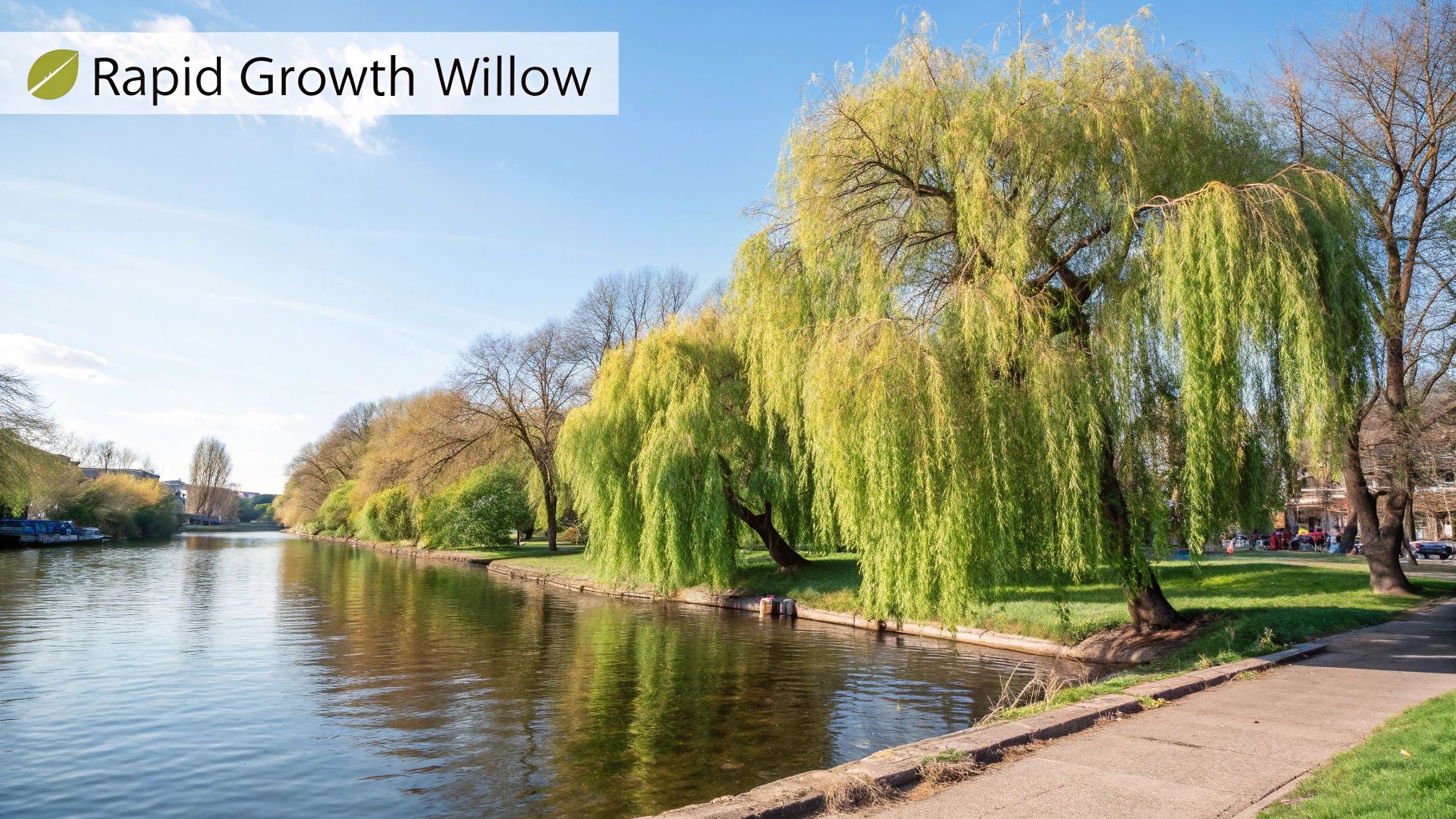
For sheer, unadulterated speed, few options can compete with the Hybrid Willow. These remarkable deciduous trees are among the absolute fastest quick growing trees for privacy, capable of shooting up an astonishing 1.8 to 3.6 metres per year in ideal conditions. Developed by crossing various willow species, they are specifically selected for vigorous growth and a dense branching structure, making them an excellent choice for homeowners needing a screen in a hurry.
Why Choose Hybrid Willow?
The primary draw of the Hybrid Willow is its dramatic growth rate. If you need to establish a very tall screen in just a few seasons, this is the tree for the job. While it does lose its leaves in winter, its thick, interwoven branches still provide a substantial visual barrier, effectively obscuring views. This rapid growth also makes it a popular choice for agricultural windbreaks and for providing temporary screening around new construction sites in Perth. A practical example is planting a row to quickly block the view of a neighbouring extension while a slower-growing, permanent evergreen screen establishes behind it.
Planting for a Perfect Screen
Harnessing the Hybrid Willow's incredible growth potential requires the right approach from the beginning. Follow these expert tips for a successful living fence:
Spacing: For a dense wall of branches, plant your saplings just 1.2 to 1.8 metres apart. This close spacing encourages them to grow together quickly, forming an interlocking screen.
Watering: Willows are famously thirsty trees. Provide abundant, deep watering, especially during Perth’s hot, dry summers, to fuel their rapid growth. A soaker hose or drip system is ideal.
Location: Be strategic with placement. Their aggressive, water-seeking root systems mean you should plant them at least 15 metres away from buildings, septic systems, and underground water lines.
Maintenance: To control height and encourage bushier growth, you can coppice (cut back hard) the trees every 3-5 years. For a denser winter screen, consider planting a double row in a staggered pattern.
The video below offers a visual guide on how these trees can be used to create an effective privacy screen.
While their speed is a huge advantage, it demands a commitment to managing their growth and water needs. If you need help selecting the right location or maintaining your willow screen, contact Swift Trees Perth for expert advice and professional tree care services.
4. Eastern White Pine (Pinus strobus)
For those seeking a softer, more graceful privacy solution, the Eastern White Pine offers a beautiful alternative to denser conifers. This majestic North American native is prized for its long, feathery blue-green needles that create a delicate texture while still providing excellent year-round screening. It's one of the fastest-growing pines, capable of adding 60-90 centimetres of height per year when young, quickly establishing an elegant and effective natural barrier.
Why Choose Eastern White Pine?
The Eastern White Pine is the ideal choice for creating a naturalistic, less formal screen that blends seamlessly into the landscape. Its soft appearance helps to dampen sound and block sightlines without creating a harsh, solid wall. This makes it a popular choice for larger properties or for homeowners in Perth looking for a screen that also offers significant wildlife habitat. Its adaptability to various soil types and impressive stature make it a stately and practical addition to any privacy planting. For a fashionable look, incorporate up-lighting to highlight its beautiful texture at night, turning your privacy screen into a dramatic landscape feature.
Planting for a Perfect Screen
Achieving a lush, healthy pine screen requires attention to its specific needs, especially in the Perth climate. Follow these expert tips for a thriving living fence:
Spacing: For a natural-looking screen, plant your trees 3.5 to 4.5 metres apart. This spacing allows each tree to develop its characteristic graceful form while their lower branches interlock to form a continuous visual barrier.
Soil: This pine prefers slightly acidic, well-drained soil. Amending sandy Perth soils with organic matter can help retain moisture and provide necessary nutrients.
Watering: Young pines require consistent deep watering, particularly during their first few years and through Perth's hot, dry summers. A soaker hose or drip system is an efficient way to deliver water directly to the root zone.
Pruning: Light pruning, often called "candling," in early spring can encourage denser, bushier growth. This involves pinching back the new candle-like shoots before the needles fully emerge.
While the Eastern White Pine is a stunning and fast-growing option, it requires proper placement and care to flourish. For expert advice on planting, pruning, or maintaining your pine screen, contact Swift Trees Perth for professional tree care services.
5. Nellie Stevens Holly (Ilex × 'Nellie R. Stevens')
For those seeking both rapid screening and year-round ornamental appeal, the Nellie Stevens Holly is an exceptional choice. This broadleaf evergreen hybrid is a standout amongst quick growing trees for privacy, admired for its dense growth, glossy deep green leaves, and vibrant red berries. It can grow an impressive 60-90 centimetres per year, forming a thick, lush barrier that provides a beautiful backdrop to any garden while effectively blocking views.
Why Choose Nellie Stevens Holly?
The primary allure of the Nellie Stevens Holly is its perfect blend of function and beauty. Unlike some purely functional privacy trees, it offers significant aesthetic value with its classic, pyramid-like shape and bright berries that persist through winter, providing food for birds. Its dense branching structure creates an almost impenetrable living wall, making it a popular choice for elegant privacy hedges in upscale Perth suburbs and for adding a touch of class to commercial property boundaries. For example, it can be used to elegantly screen a swimming pool area, with its non-thorny leaves making it a family-friendly choice.
Planting for a Perfect Screen
To cultivate a dense and vibrant holly screen, careful planning and consistent care are key. Follow these expert tips for a thriving hedge:
Spacing: For a solid privacy hedge, plant your hollies 1.2 to 1.8 metres apart. If you prefer a more informal screen with individual tree forms visible, space them 2.4 to 3 metres apart.
Pollination: While Nellie Stevens is a female clone and produces some berries on its own, berry production will be far more abundant if a male pollinator, like the 'Edward J. Stevens' holly, is planted nearby.
Soil and Watering: This holly thrives in well-drained, slightly acidic soil. Water deeply and regularly during the first two growing seasons to establish a robust root system, which is crucial in Perth's dry climate.
Pruning & Pests: Prune in late winter just before new spring growth emerges to shape the trees and maintain their density. While hardy, keep an eye out for common pests like spider mites, especially during hot, dry spells. Proactive monitoring can prevent significant issues; you can learn more about how to identify and treat common tree pests.
This combination of fast growth and striking appearance makes the Nellie Stevens Holly one of the most versatile and quick growing trees for privacy available.
While relatively low-maintenance once established, proper planting and occasional pruning are essential to ensure your holly screen remains healthy and attractive. For expert assistance with planting, shaping, or maintaining your privacy hedge, contact Swift Trees Perth for professional advice and tree care services.
6. Italian Cypress (Cupressus sempervirens)
For those seeking privacy with a touch of Mediterranean elegance, the Italian Cypress is an unmatched choice. This iconic conifer is celebrated for its dramatic, narrow, and columnar form that brings a sophisticated, formal aesthetic to any landscape. It grows at a respectable rate of 60-90 centimetres per year, forming a striking vertical screen of dense, dark green foliage that is perfect for tight spaces where wider trees would be impractical.
Why Choose Italian Cypress?
The unique appeal of the Italian Cypress lies in its slender, architectural silhouette. It provides exceptional privacy without consuming valuable garden space, making it one of the best quick growing trees for privacy in modern, compact properties or narrow side yards. Its naturally tidy column, typically only 90-150 centimetres wide, creates a formal, high-end look often seen in Tuscan-style villas and upscale resort landscapes. A fashionable application is to plant them in a row to frame a grand entrance or line a driveway, creating an instant sense of luxury and height.
Planting for a Perfect Screen
To cultivate a healthy and visually stunning Italian Cypress screen, careful planning is essential. Follow these expert tips for a successful installation:
Spacing: For a seamless, formal hedge, plant your trees 90 centimetres to 1.2 metres apart. This close spacing encourages them to form a solid, living wall that maximises privacy.
Sunlight: This Mediterranean native demands full sun. Ensure your chosen location receives at least six to eight hours of direct sunlight daily to promote dense growth and vibrant colour.
Soil: Excellent drainage is non-negotiable. Italian Cypress is susceptible to root rot in heavy, waterlogged soils. Planting in raised beds or amending heavy clay with organic matter is highly recommended.
Support: Young trees are slender and can be vulnerable to strong winds. Staking them for the first two to three years provides crucial support, ensuring they grow straight and establish a strong root anchor.
While the Italian Cypress is relatively low-maintenance, its specific soil and sun requirements are critical for its success. If you need expert advice on site selection or professional planting to ensure your privacy screen thrives, contact Swift Trees Perth for tailored tree care solutions.
7. Bamboo (Phyllostachys and Bambusa species)
For those seeking the absolute fastest privacy solution, bamboo stands in a class of its own. Technically a woody grass, not a tree, its growth rate is phenomenal, with some varieties establishing a dense screen in just one or two seasons. Individual canes can grow several centimetres per day during the peak growing season, creating a lush, exotic-looking barrier with graceful, arching canes and leaves that rustle soothingly in the wind.
Why Choose Bamboo?
The primary reason to choose bamboo is its unmatched speed. It can create a full-height, year-round screen much faster than almost any other plant, making it ideal for tight urban spaces, modern landscape designs, or Asian-inspired gardens. Its unique vertical lines and vibrant green colour offer a contemporary aesthetic that works exceptionally well for screening patios, courtyards, and narrow property lines in Perth suburbs. The key is selecting the right type: clumping varieties grow in a tight, manageable clump, while running types can spread aggressively if not contained. A practical example of stylish use is planting clumping bamboo in large, modern planter boxes to define a patio space without permanent planting.
Planting for a Perfect Screen
Achieving a beautiful, non-invasive bamboo screen requires careful selection and planting. Follow these expert tips for a successful installation:
Variety Selection: Crucially, choose clumping varieties like Bambusa multiplex 'Alphonse Karr' to avoid aggressive spreading. If you must use a running type (Phyllostachys), a professionally installed HDPE rhizome barrier at least 75cm deep is non-negotiable.
Watering: Water deeply and regularly during the first year to help the plant establish its root system. Once mature, many clumping varieties are surprisingly drought-tolerant, a useful trait in Perth's climate.
Soil: Bamboo thrives in fertile, well-drained soil. Amending your soil with organic compost before planting will give it a strong start.
Maintenance: To keep the screen looking tidy and vibrant, thin out old or dead canes annually at ground level in the spring. A high-nitrogen fertiliser applied in spring will also boost new growth.
While bamboo is a fantastic screening plant, it's worth noting its fire-retardant properties are lower than some other species. For properties in high-risk areas, you can explore more options by reading about our recommended fire-resistant trees for bushfire-prone areas.
The rapid growth of bamboo requires an initial understanding of its habits to ensure it remains a beautiful feature, not a future problem. For expert advice on selecting the right variety or installing a proper root barrier, contact Swift Trees Perth for professional guidance and planting services.
8. American Arborvitae (Thuja occidentalis)
For a classic, hardy, and low-maintenance living fence, the American Arborvitae is a time-tested champion among quick growing trees for privacy. Also known as Northern White Cedar, this North American native offers a respectable growth rate of 30-60 centimetres per year. Its defining feature is its dense, fan-like sprays of soft, scale-like foliage that create a solid screen, often with a naturally neat, pyramidal shape that requires minimal pruning.
Why Choose American Arborvitae?
The primary advantage of American Arborvitae is its exceptional cold hardiness and longevity, making it a reliable choice where more tender species might fail. It provides a lush, deep green backdrop that is perfect for traditional property boundaries and formal garden designs. Widely used in historical landscape restorations and as effective windbreaks, its dense form is ideal for blocking sightlines and creating a sense of established permanence in the landscape. A practical use is creating a "green wall" to hide functional but unattractive areas like compost bins or air conditioning units.
Planting for a Perfect Screen
To cultivate a dense and healthy Arborvitae hedge, careful planning and consistent care during its early years are essential. Follow these expert tips for a successful screen:
Spacing: For a tight-knit privacy hedge, plant individual trees 1 to 1.2 metres apart. For a slightly more open screen, a spacing of 1.8 to 2.5 metres is suitable.
Watering: Consistent moisture is crucial for establishment, particularly in Perth's climate. Water deeply and regularly during the first two growing seasons to encourage a robust root system.
Soil: This tree prefers moist, well-drained soil. It is adaptable but will struggle in extremely hot, dry sites or heavy, waterlogged clay.
Pruning: One of its best features is its minimal need for pruning. A light trim in late spring is all that's required to maintain its shape and density. Avoid cutting back into old, leafless wood.
While robust, American Arborvitae still requires proper care to thrive and form the perfect screen. If you need help with soil preparation, planting, or ongoing maintenance for your hedge, contact Swift Trees Perth for expert advice and professional tree care services.
Quick-Growing Trees Privacy Comparison
Tree/Plant | Implementation Complexity 🔄 | Resource Requirements ⚡ | Expected Outcomes 📊 | Ideal Use Cases 💡 | Key Advantages ⭐ |
|---|---|---|---|---|---|
Leyland Cypress | Moderate pruning and watering needed; pruning annually to control size | Significant water during establishment; tolerates poor soils | Fast growth (3-4 ft/yr), dense evergreen screen in 2-3 years | Privacy screens, noise barriers, suburban lines | Very fast growth, dense year-round screening, low maintenance once established |
Thuja Green Giant | Moderate; requires spacing and minimal pruning | Moderate water especially in dry periods; fertilizer recommended | Rapid growth (3-5 ft/yr), dense screen in 3-5 years, long lifespan (40+ years) | Suburban and commercial screening, temperate climates | Excellent disease resistance, durable in various climates, deer resistant |
Hybrid Willow | Medium-high; coppicing recommended every 3-5 years | High water needs, especially in summer; spacing for root safety | Extremely fast growth (6-12 ft/yr), seasonal screening without winter leaves | Wet soils, erosion control, temporary screening | Fastest growth, adaptable to wet soils, easy propagation |
Eastern White Pine | Low-moderate; light pruning, monitoring for pests | Moderate water; tolerates poor soils but sensitive to road salt | Moderate growth (2-3 ft/yr), long-lived (200+ years), year-round screen | Naturalistic screens, wildlife habitat, northern climates | Native species, excellent wildlife support, cold hardy |
Nellie Stevens Holly | Moderate pruning to prevent legginess, cross-pollination needed | Regular watering first 2 years; fertilizer for acid soils | Moderate growth (2-3 ft/yr), dense screen with ornamental berries | Southern warm, humid climates, ornamental privacy | Ornamental berries, heat and drought tolerant, deer resistant |
Italian Cypress | Low; minimal pruning, staking young trees recommended | Drought tolerant; excellent drainage required | Moderate growth (2-3 ft/yr), narrow columnar screen for tight spaces | Narrow spaces, formal gardens, Mediterranean climates | Narrow form ideal for tight spots, drought tolerant, architectural appeal |
Bamboo | Medium; rhizome barriers needed for running types, thinning old canes | Moderate water during establishment; drought tolerant when mature | Very fast growth (3-5+ ft/yr), year-round dense screen with tropical look | Modern or Asian-inspired designs, urban tight spaces | Fastest growing (canes rapid), drought tolerant, unique aesthetic |
American Arborvitae | Low; minimal pruning, monitoring for pests required | Moderate moisture needed; tolerates wide soil types | Slow growth (1-2 ft/yr), dense screen with long lifespan (50+ years) | Cold northern climates, low-maintenance privacy | Superior cold hardiness, native species, low maintenance |
From Planting to Perfection: Maintaining Your Living Privacy Screen
The initial selection process is critical. By now, you understand that matching the right tree to your specific Perth conditions, considering soil type, sun exposure, and available space, is the foundational step for success. Whether you chose the robust Thuja Green Giant for its resilience or a clumping bamboo for its modern aesthetic, you've made an informed decision based on growth rate, ultimate size, and maintenance needs. This careful planning prevents future headaches and ensures your screen thrives rather than just survives.
Mastering the Art of Maintenance
Planting is just the beginning. The real magic in crafting an effective and beautiful screen lies in consistent, intelligent maintenance. Remember, "quick growing" can quickly become "overgrown" without a proper care strategy.
Strategic Pruning for Density: Don't just shear the top. The most effective privacy screens are dense from the ground up. Encourage this by lightly trimming the sides of your trees during the growing season. This stimulates lateral branching, creating the thick, impenetrable wall you desire. For a more fashionable, contemporary look, avoid rigid, box-like shapes and instead prune to enhance the tree's natural form, keeping it tidy but not overly formalised.
Watering for Establishment: Perth's hot, dry summers can be brutal on young trees. Deep, infrequent watering during the first one to two years is paramount. This encourages roots to grow deep into the soil, searching for moisture and creating a resilient, drought-tolerant foundation for the future. A simple soil moisture check before watering can prevent over-saturating the roots.
Proactive Health Checks: Regularly inspect your trees for signs of pests or disease. Early detection is key to managing issues before they compromise the health and appearance of your entire screen. Look for discoloured leaves, unusual spots, or insect activity. A healthy screen is a strong screen.
Creating a lush, vibrant wall of green is a deeply rewarding endeavour. You're not just blocking a view; you're cultivating a sanctuary, improving your local ecosystem, and adding significant value to your property. While the journey from sapling to screen requires dedication, the result is a beautiful, dynamic, and living feature that no manufactured fence can replicate.
Feeling overwhelmed by the prospect of pruning a fast-growing hedge or ensuring its long-term health? The qualified arborists at Swift Trees Perth specialise in shaping and maintaining living privacy screens to perfection. Contact Swift Trees Perth today for a free estimate and ensure your investment grows beautifully for years to come.
Comments